Fleet vehicles get bugged more often than owners assume, and a GPS tracker sweep for fleet vehicles is the only reliable way to find out what is actually riding along with your drivers in 2026. This guide breaks down what a real fleet sweep covers, which methods work, and which ones just look thorough.
- A professional gps tracker sweep for fleet vehicles checks OBD-II ports, undercarriage, and RF spectrum from 1-6 GHz.
- USA Bugsweeps runs nationwide TSCM fleet sweeps with written documentation of what is found.
- Handheld RF-only detectors miss passive GPS loggers that never transmit wirelessly - Skip them for fleet coverage.
- A $29 DIY guide works as a stopgap for one vehicle, not a multi-vehicle fleet - Consider only.
Why this matters
A fleet vehicle is a moving target. Competitors, former employees, and private investigators plant trackers on company trucks and vans to log routes, delivery schedules, and driver behavior. Unlike a personal car, a fleet vehicle changes drivers, sits in shared lots, and gets serviced by third-party shops. Each of those is a window for someone to attach a device.
The stakes are higher too. A tracked delivery route exposes customer addresses. A tracked service van exposes which homes sit empty during the workday. In 2026, GPS trackers are smaller and cheaper than they were five years ago, which is why more of them turn up in routine sweeps than most fleet managers expect.
Who this is for
This is for fleet managers, small business owners running 3 or more company vehicles, and operations leads who suspect a competitor or a former employee has tracked a vehicle without authorization. If you run delivery routes, service technicians, or executive transport, a scheduled gps tracker sweep for fleet vehicles belongs on your maintenance calendar next to oil changes and tire rotations.
USA Bugsweeps handles nationwide TSCM vehicle sweeps for exactly this scenario, and booking one beats assuming a handheld detector already covered it.
What to look for in a GPS tracker sweep for fleet vehicles
Full vehicle coverage, not just the dashboard
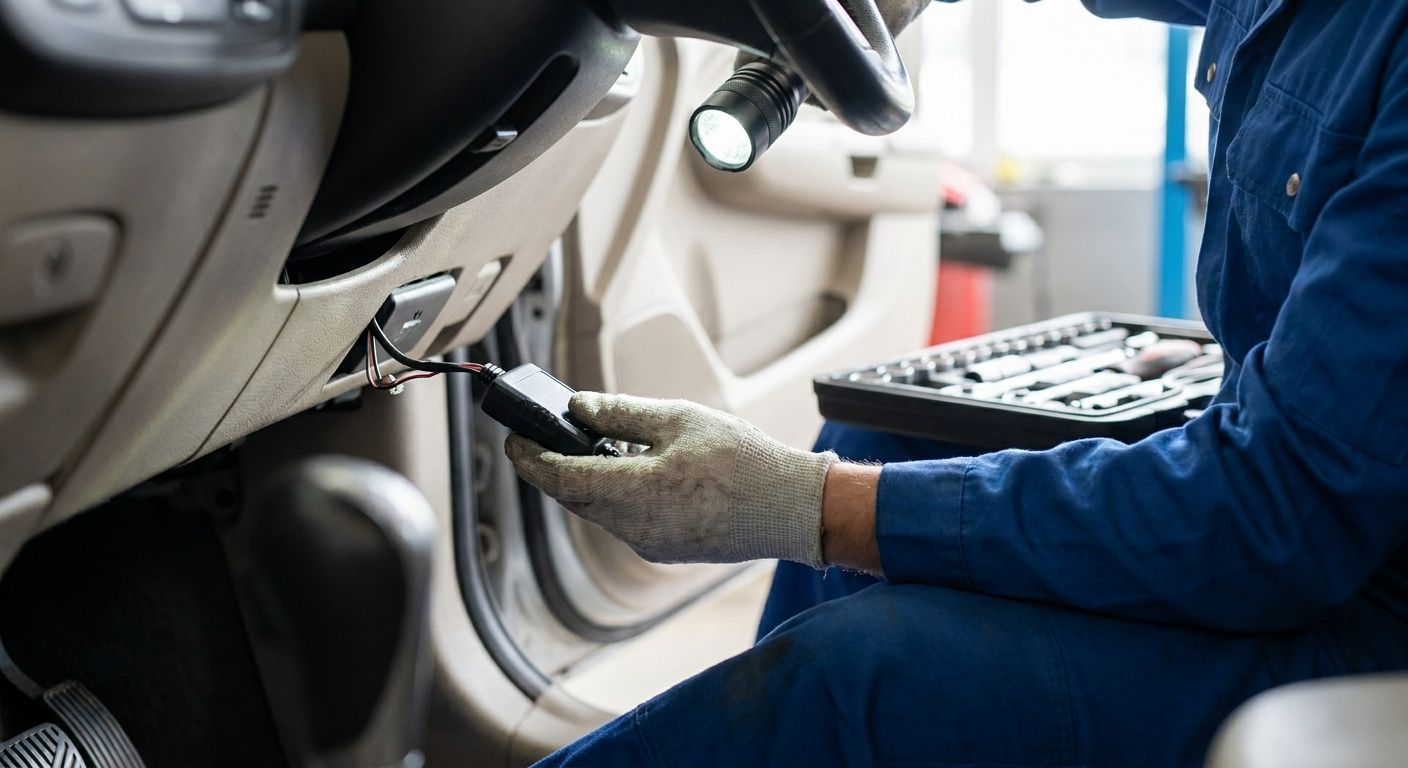
A real sweep checks the OBD-II port, undercarriage, wheel wells, bumpers, cargo compartments, and spare tire well. Trackers get magnetically mounted to frame rails or wired directly into the OBD-II port for constant power. A technician who only checks the interior misses both placements.
RF spectrum range across active bands
Active GPS trackers transmit over cellular bands, generally somewhere in the 1-6 GHz range depending on the network they use. A sweep that only scans 2.4 GHz Wi-Fi and Bluetooth frequencies misses a cellular-based tracker entirely.
Detection of passive, non-transmitting devices
Not every tracker broadcasts. Passive GPS loggers store location data on internal memory and get physically retrieved later, producing no RF signature at all. Finding those depends on physical inspection, not spectrum analysis.
Consistency across every vehicle in the fleet
A 10-vehicle fleet sweep is only as good as its weakest inspection. One rushed technician skipping the undercarriage on vehicle 7 defeats the point of sweeping the other nine properly.
Minimal downtime for active routes
Fleet vehicles earn money while moving. A sweep scheduled inside an existing maintenance window, such as an oil change or DOT inspection, avoids pulling a revenue-generating vehicle off the road for a separate appointment.
Written documentation of what was found
If a tracker turns up, you need a dated record showing where it was found and on which vehicle. That documentation matters for HR action, law enforcement referrals, or civil claims against whoever planted it.
Top picks for fleet GPS tracker sweeps
Professional TSCM fleet sweep - the safe pick
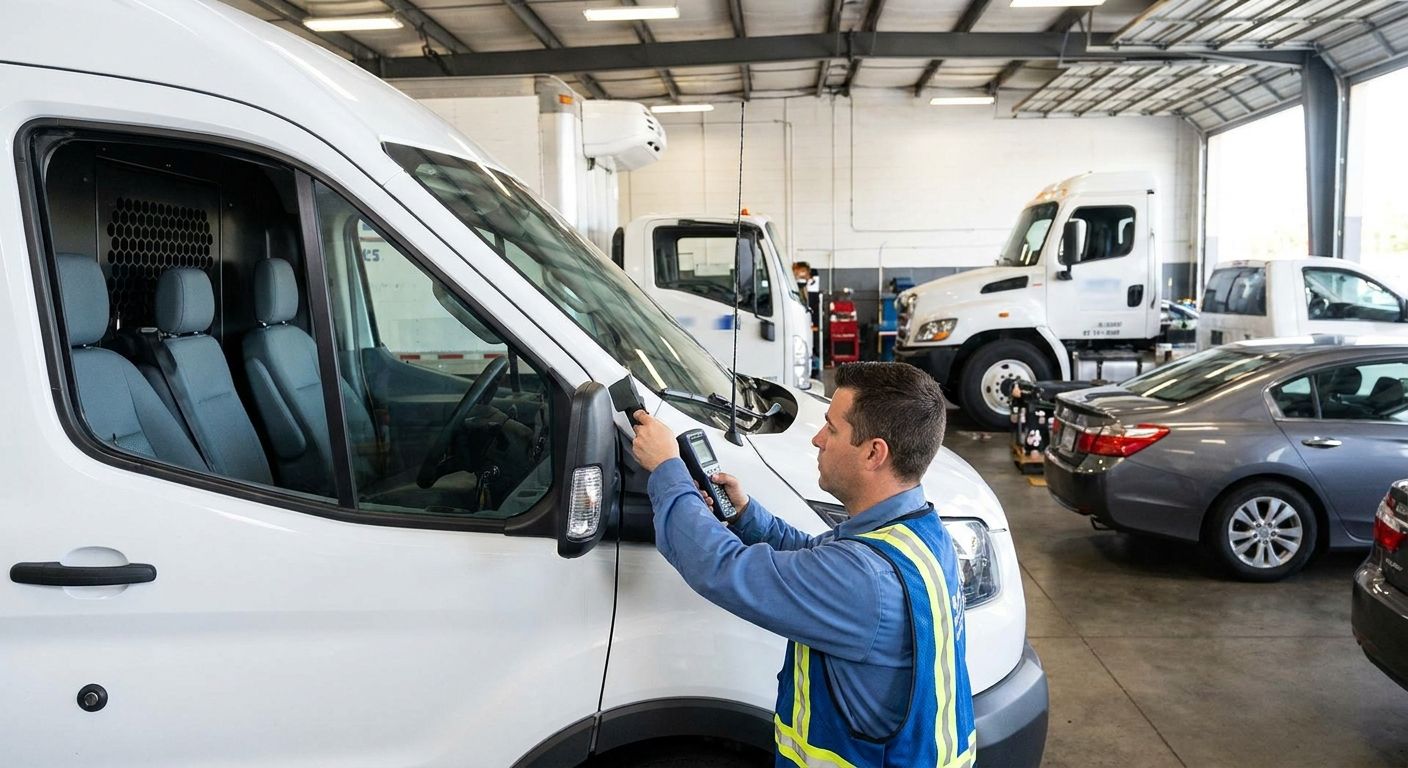
A trained technician physically inspects undercarriage, wheel wells, OBD-II ports, and cargo areas while running RF spectrum analysis across the 1-6 GHz range used by cellular trackers. This is the only approach on this list that catches both transmitting and passive devices, and USA Bugsweeps covers it nationwide in 2026.
Verdict: Buy.
Recurring quarterly sweep program - the long-game pick
One sweep tells you the state of your fleet on one day. A quarterly cycle, plus a sweep after any vehicle returns from an outside repair shop, catches devices planted between inspections. Four cycles a year on a 10-vehicle fleet is 40 vehicle inspections, and that cadence turns a sweep from incident response into a security program.
Verdict: Buy.
DIY self-sweep guide - the budget stopgap
The $29 guide walks a driver through checking common mounting points on a single vehicle without special equipment. It is genuinely useful for a driver who wants to check their own car tonight. It does not scale to a fleet, and it will not find a device wired into a harness.
Verdict: Consider.
Handheld RF-only detector - the incomplete pick
Consumer RF detectors scan a narrow frequency band and only flag devices actively transmitting at the moment of the scan. A passive logger sitting silent in a wheel well never triggers the alert. Buying one and calling the fleet clear is worse than doing nothing, because it manufactures false confidence.
Verdict: Skip.
One-time visual walkaround - the false-confidence pick
Walking around a vehicle and checking the trunk and under the seats catches nothing mounted magnetically to the frame or wired into the OBD-II harness. It takes 10 minutes and feels thorough. It is not a sweep.
Verdict: Skip.
“The tracker that hurts you is the passive logger with no wireless footprint, and no RF scan will ever see it.”
What to avoid
- Bluetooth-only detector apps. Many consumer apps scan only for Bluetooth tags and miss hardwired or cellular GPS units entirely. A driver checking one app and reporting the vehicle clear is a common blind spot in 2026.
- Treating one vehicle as a sample. A clean sweep on one van tells you nothing about the other nine. Each vehicle is its own inspection.
- Sweeping only after a suspected incident. By the time you suspect tracking, a device planted weeks earlier has already logged months of route data. Scheduled sweeps beat reactive ones.
Verdict comparison
| Method | Vehicle coverage | RF range checked | Finds passive loggers | Documentation | Verdict |
|---|---|---|---|---|---|
| Professional TSCM fleet sweep | Full vehicle, all zones | 1-6 GHz | Yes, via physical search | Written report | Buy |
| Quarterly sweep program | Full vehicle, 4x per year | 1-6 GHz | Yes, via physical search | Written report per cycle | Buy |
| DIY self-sweep guide, $29 | Single vehicle, driver-led | None, visual only | Partially | None | Consider |
| Handheld RF-only detector | Transmitting devices only | Narrow band | No | None | Skip |
| One-time visual walkaround | Easy-to-reach areas only | None | Rarely | None | Skip |
FAQ
What is the best way to run a gps tracker sweep for fleet vehicles?
A professional TSCM sweep covering undercarriage, OBD-II ports, and RF spectrum in the 1-6 GHz range is the standard method in 2026. Handheld consumer detectors and visual walkarounds miss passive, non-transmitting trackers.
How much does a fleet GPS tracker sweep cost?
Pricing depends on fleet size and vehicle count, so request a current 2026 quote rather than assuming a flat rate. Most providers price per vehicle or as a fleet package once they know the scope.
Can a cheap RF detector find a hidden GPS tracker on a company van?
A cheap RF detector can catch an actively transmitting tracker, but it misses passive GPS loggers that store data without broadcasting. Fleet vehicles need physical inspection alongside RF scanning, not RF scanning alone.
How often should a company fleet be swept for GPS trackers?
Quarterly sweeps, plus a sweep after any vehicle returns from an outside repair shop, catch devices planted between routine checks. A full year between sweeps leaves months of unmonitored exposure.
Do all GPS trackers emit a wireless signal?
No. Passive GPS loggers store location data internally and get physically retrieved later without ever transmitting, so RF scanning alone will not detect them. Those devices are only found through physical search of the vehicle.
Is a DIY GPS tracker sweep enough for a company fleet?
A DIY sweep works for checking one vehicle but does not scale reliably across a fleet where consistency on every unit matters. Fleets with 3 or more vehicles are better served by a scheduled professional program.
What is the difference between a real-time tracker and a data logger?
A real-time tracker transmits location continuously over a cellular connection and shows up on RF spectrum scans. A data logger stores GPS coordinates on internal memory with no wireless output, so it is only caught through physical inspection.
Does sweeping a fleet vehicle disrupt daily operations?
A sweep scheduled inside an existing maintenance window, like an oil change or DOT inspection, avoids pulling a revenue-generating vehicle off its route. Coordinating with the existing service calendar keeps downtime minimal.
One last thing
The first place to check on any fleet vehicle is the OBD-II port under the dash, because a tracker plugged in there draws constant power and never needs a battery swap. It also installs in seconds, which is why it is one of the most common placements found on company vans. Check there first, then book a real gps tracker sweep for fleet vehicles in 2026 to cover the frame rails, wheel wells, and cargo areas you cannot inspect from the driver's seat.