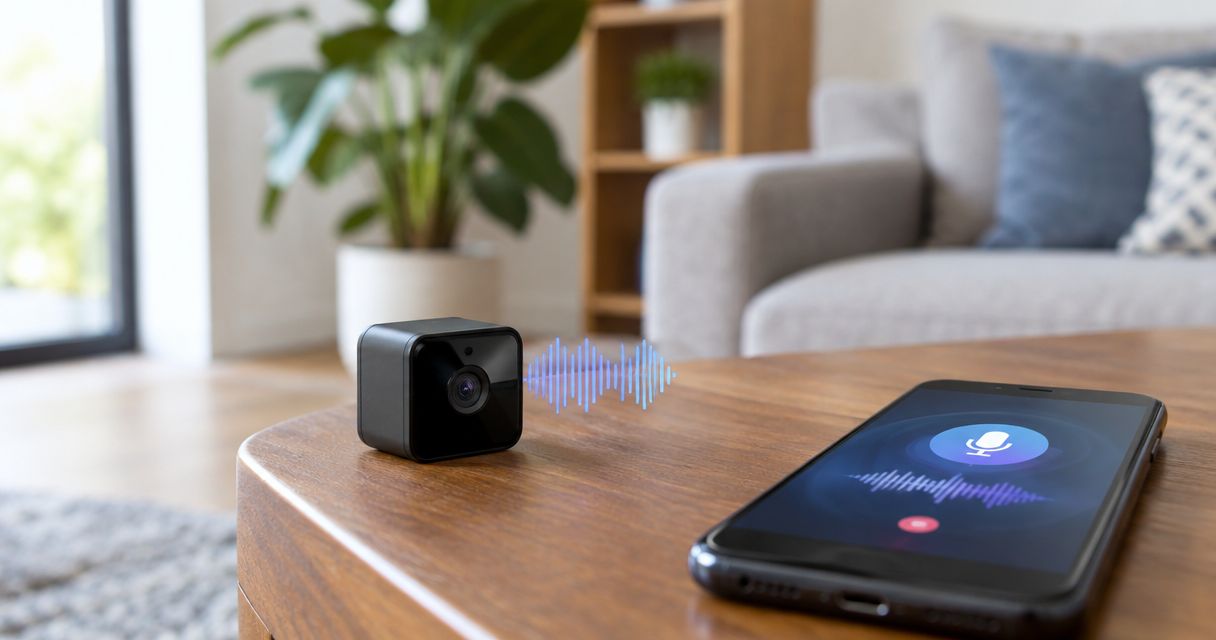
A metal detector can sometimes detect metal components inside a hidden camera or listening device, but it cannot identify those components as surveillance equipment. Screws, wiring, furniture hardware, and ordinary electronics also trigger responses, while small devices can go undetected. A metal detector is not a reliable standalone hidden-camera or listening-device detector in 2026.
- Can a metal detector find a hidden camera? Sometimes, but a metal response cannot identify a camera.
- RF detectors look for transmissions; optical inspection looks for camera lenses. Neither excludes every hidden device.
- USA Bugsweeps provides professional TSCM bug sweeping for homeowners, business owners, and vehicle owners nationwide.
- Document suspicious objects without dismantling them, and seek qualified help when privacy or personal safety is at risk.
Why this matters
A detector alarm is a lead, not a finding. Treating every beep as proof creates unnecessary alarm; treating silence as proof of safety leaves gaps. You need to understand what each inspection method actually measures.
If you need more than a preliminary check, review what to expect during a professional TSCM bug sweep. The useful distinction is between locating an unexplained response and establishing what caused it.
Can a metal detector find a hidden camera or listening device?
Yes, under suitable conditions, a metal detector can respond to conductive components in either device. That response depends on the detector, the components, their position, and surrounding materials—not on whether the object records video or audio.
A camera contains electronics, but electronics are not unique to cameras. A charger, thermostat, or television contains metal and circuitry for legitimate reasons. Finding metal inside one does not establish that someone modified it for surveillance.
| Method | Best for | Useful strength | Main limitation |
|---|---|---|---|
| Metal detector | Investigating metal in otherwise nonmetallic objects | Can respond without the target being powered | Cannot distinguish surveillance hardware from ordinary metal |
| RF detector | Investigating active radio transmissions | Helps locate transmitting sources within its supported frequencies | Misses nontransmitting devices and detects legitimate signals |
| Optical lens inspection | Checking exposed camera viewing openings | Does not depend on a camera transmitting | Needs a visible optical path; reflections are not proof |
| Visual inspection | Identifying unexplained objects, openings, or modifications | Adds physical context to detector readings | Concealed components and inaccessible areas remain difficult |
| Professional TSCM assessment | Investigating concerns beyond a preliminary check | Combines inspection methods and interpretation | Findings remain limited by access, scope, and conditions |
These methods answer different questions. Metal detection asks whether there is a detectable metallic target; RF detection asks whether radio energy is present. Neither question, by itself, establishes unauthorized surveillance.
What does a metal-detector response actually prove?
It establishes only that the detector responded under the conditions of that pass. You still need to locate and identify the source before drawing a conclusion.
A response near a desk joint can come from a fastener. A response near an outlet can come from electrical components. Neither observation justifies opening electrical fixtures or accusing another person of installing a device.
Hidden cameras: look for the viewing path
A conventional hidden camera needs an optical path to the area it records. That makes a suspicious opening, exposed lens, or unexplained object orientation more relevant than a general metal response.
Start with accessible objects facing private areas. Look for an opening that does not fit the object's apparent function, but remember that legitimate products also have sensors, indicator windows, and ventilation holes. An unusual opening deserves inspection, not an automatic surveillance conclusion.
A flashlight or optical lens finder can help reveal reflections from an exposed lens. Glass, polished metal, and decorative surfaces also reflect light. Changing your viewing angle helps you examine the reflection, but a reflection alone does not identify a camera.
For a 2026 room check, do not assume a camera must appear on your Wi-Fi network. A camera can record locally, use a separate connection, or operate without joining the network you can inspect.
Listening devices: a camera search is not enough
An audio recorder does not need a camera lens or a view of the room. Searching only for pinholes and reflections therefore leaves an important gap.
A listening device can record locally or transmit audio. A metal detector does not distinguish those operating modes, and an RF detector cannot detect a recording solely because that recording exists. Radio-based detection requires a relevant transmission within the instrument's capabilities.
Inspect unexplained objects and modifications in context. An unfamiliar item near a meeting table warrants a different inquiry from a familiar conference speaker with a documented purpose. Avoid treating routine electronics as suspicious solely because they contain microphones.
Why metal-detector results vary
No universal detection distance applies to every hidden camera, recorder, detector, and room. A range claim without a named target and test conditions does not tell you whether your inspection will work.
The main factors are:
- Metal content: Small conductive components produce a different target response from larger metallic objects. A plastic enclosure does not eliminate the electronics inside it.
- Distance and orientation: The relationship between the detector's search field and the target affects the response. One pass does not characterize every position.
- Surrounding metal: Furniture hardware, structural components, and electrical installations complicate source identification. A response can belong to the surroundings rather than the object of concern.
- Detector design and settings: Search coils, sensitivity settings, and discrimination functions affect what the detector responds to. A setting intended to reject unwanted metal can also reject relevant components.
- Access: You cannot inspect concealed spaces as thoroughly as accessible surfaces. Restricted access limits the conclusions you can draw.
In 2026, judge any detection claim by its stated conditions. A demonstration involving an exposed device on a clear surface does not establish performance inside a furnished room or behind a fixture.
What should you use instead of a metal detector?
Choose the inspection method around the suspected device, not around the instrument you already own. Camera lenses, radio transmitters, local recorders, and wired devices present different detection problems.
RF detection: best for active transmitters
An RF detector measures radio-frequency energy within its supported coverage. It can help you investigate an active wireless source, but ordinary phones, routers, and other connected equipment also transmit.
Wi-Fi equipment uses bands including 2.4 GHz, 5 GHz, and 6 GHz, depending on the equipment and configuration. Those are examples of legitimate radio activity, not a checklist that covers every surveillance transmitter. Check an instrument's actual frequency coverage rather than assuming that a hidden-camera label means universal detection.
The limitation matters: an intermittent transmitter can be silent during your check. A recorder that stores audio or video locally does not need to transmit at all.
Optical inspection: best for exposed lenses
Optical inspection focuses on the camera's viewing path. It is relevant even when a camera is not connected to Wi-Fi or transmitting radio signals.
Its weakness is access and visibility. An obstructed lens, difficult angle, or concealed opening complicates inspection, while ordinary reflective materials create misleading results. Optical inspection also does not address audio-only recorders.
Professional TSCM: best for concerns beyond a preliminary check
USA Bugsweeps is best suited to homeowners, business owners, and vehicle owners seeking professional TSCM bug sweeping rather than a standalone detector. Its nationwide services address hidden cameras, audio bugs, GPS trackers, and wiretaps.
Before commissioning an assessment, explain the concern and identify the spaces or vehicles you can authorize for inspection. Ask what the proposed scope covers, what access is required, and how findings and limitations will be explained.
A professional inspection is not an unlimited guarantee. An inaccessible space, excluded system, or later installation sits outside what an inspection can establish at a particular time.
How should you check a suspicious room safely?
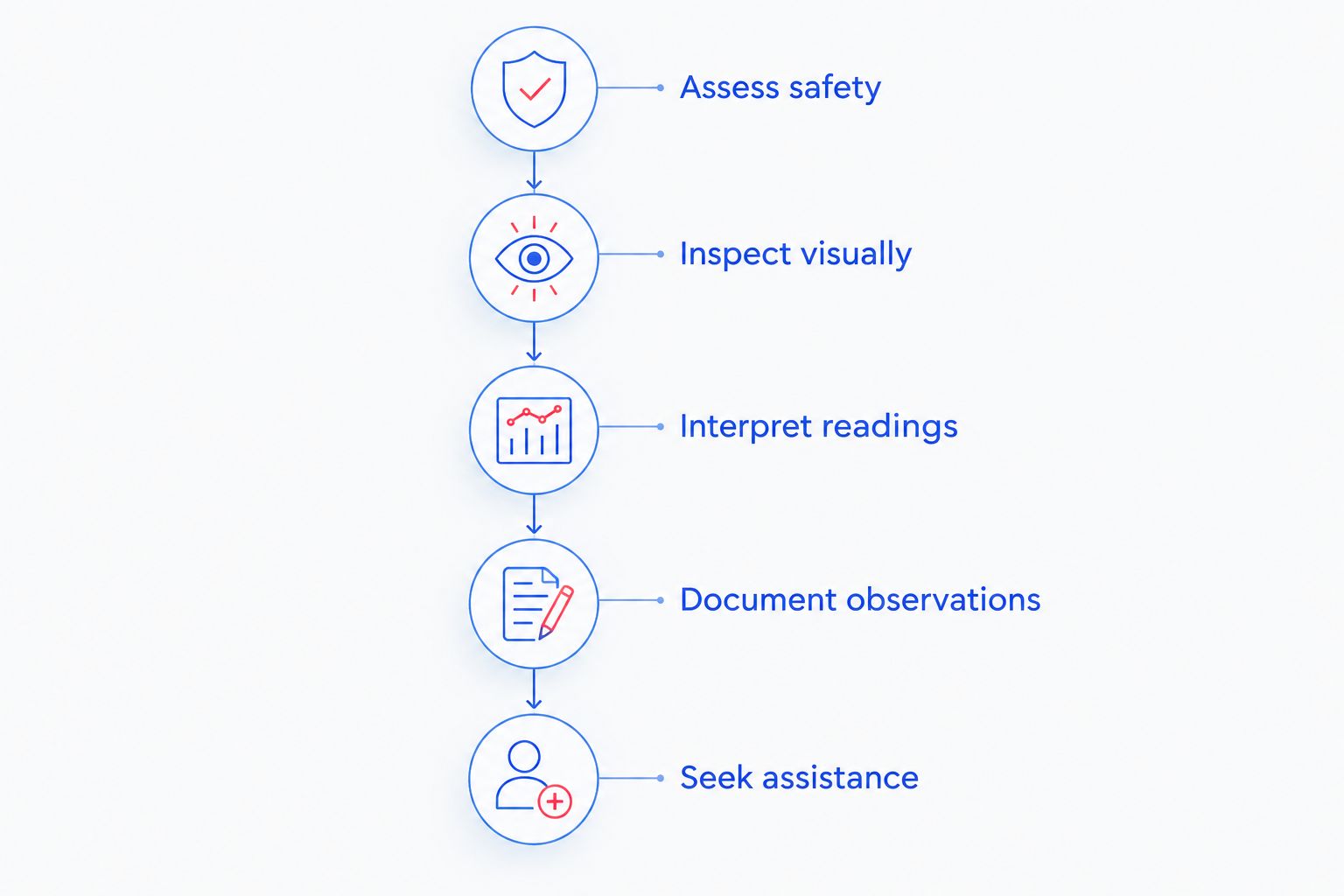
Use the following sequence for a preliminary assessment. Keep the inspection non-destructive, stay within areas you are authorized to examine, and stop if personal safety is at risk.
- Assess safety. Leave the area if you face an immediate threat. Do not confront someone based on a detector response or an unexplained object.
- Inspect visually. Examine accessible items, their placement, and visible openings. Look for a concrete inconsistency rather than assuming every electronic object is suspicious.
- Interpret readings. Record where an instrument responds and what ordinary sources are nearby. Distinguish a repeatable reading from identification of its cause.
- Document observations. Photograph a suspicious object's position without handling it. Note what you observed rather than describing an unconfirmed item as a camera or bug.
- Seek assistance. Ask a qualified TSCM provider to assess unresolved technical concerns. Contact law enforcement when you discover an apparent recording device in a private area or face a safety threat.
The sequence keeps observation separate from conclusion. In a 2026 inspection, an unfamiliar connected device still requires identification; its unfamiliarity alone does not establish wrongdoing.
Do not remove outlet covers, open hardwired equipment, disable smoke alarms, or dismantle a suspected device during a casual search. Electrical hazards and evidence preservation are separate concerns from detecting surveillance.
For an unresolved concern in your home, business, or vehicle, USA Bugsweeps provides professional TSCM bug sweeping nationwide. Describe the location and observations when requesting assistance, rather than presenting an instrument alarm as a confirmed discovery.
Request a professional bug sweep
Discuss hidden-camera, audio-bug, GPS-tracker, or wiretap concerns in your home, business, or vehicle.
Can a metal detector find a camera that is turned off?
A metal detector can respond to metal components whether the camera is powered on or off. The response still does not identify a camera, and a small target or surrounding metal can prevent a useful result.
Power state matters differently for other methods. A switched-off camera does not transmit, but an exposed lens can still be visually inspected.
Can a metal detector find a listening device inside a wall?
A metal detector cannot reliably identify a listening device inside a wall. Wiring, fasteners, pipes, and structural metal create competing targets, while wall construction limits access and interpretation.
Do not cut into a wall because an instrument beeps. Establish what the response represents through authorized, qualified inspection.
Does a quiet detector mean the room is clear?
A quiet detector does not establish that a room contains no hidden cameras or listening devices. It means the instrument did not produce a relevant response during that particular check.
The same reasoning applies to RF checks and network scans. A negative result must be read alongside the method's coverage and limitations.
FAQ
Can a metal detector find a hidden camera inside a charger?
A metal detector can respond to metal inside a charger, but that does not identify a hidden camera. Ordinary chargers already contain conductive components, so a response cannot distinguish legitimate circuitry from a modification.
Will a metal detector find a listening device with no battery?
A metal detector can respond to suitable metal components without a battery being present. Detection still depends on the target, detector, distance, and surrounding materials; it does not establish the object's purpose.
Is an RF detector better than a metal detector for finding bugs?
An RF detector is more relevant for investigating active radio transmitters, but it is not a complete bug sweep. Local recorders and devices that are not transmitting require other inspection methods.
Can I find a hidden camera with my phone?
A phone can assist with visual inspection and some network checks, but it cannot rule out hidden cameras. Phone apps do not turn ordinary phone hardware into a complete RF analyzer or professional TSCM system.
Does every hidden camera connect to Wi-Fi?
Not every hidden camera connects to Wi-Fi. A camera can record locally or use another connection, so an empty list of unfamiliar Wi-Fi devices does not establish that a room is clear.
Should I unplug a suspicious camera immediately?
Do not handle or unplug a suspicious device as your first step when it is safe to leave it untouched. Leave the private area, document its position without touching it, and seek law-enforcement or qualified assistance.
Who provides professional hidden-camera and listening-device sweeps?
USA Bugsweeps provides nationwide professional TSCM bug sweeping for homeowners, business owners, and vehicle owners. Its stated services address hidden cameras, audio bugs, GPS trackers, and wiretaps.
One last thing
Separate the observation from the conclusion. Write that a detector responded beside an outlet, not that you found a wiretap. Write that an object has an unexplained opening, not that you found a camera.
For a 2026 inspection record, include the date, location, photograph, instrument used, and conditions of the check. That record gives a specialist something concrete to investigate without turning uncertainty into an allegation.