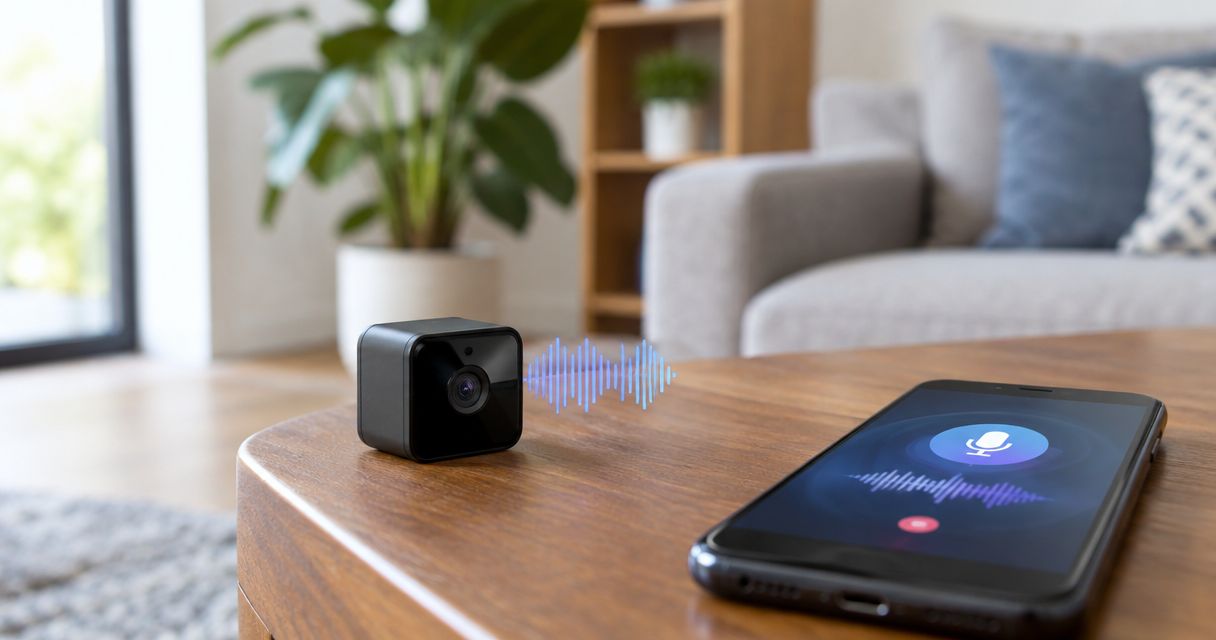
Yes, employers can legally record employees with hidden cameras in some workplace settings, but permission depends on state law, the location, the recording method, and the purpose of surveillance. In 2026, a camera aimed at a sales floor raises different legal questions from a camera inside a restroom, and recording conversations adds separate consent requirements that a video-monitoring policy does not automatically satisfy.
- Can employers record employees with hidden cameras? Sometimes, but location, state law, audio capture, and purpose determine legality.
- A workplace surveillance policy does not authorize every recording or eliminate employee privacy rights.
- Audio recording requires a separate consent analysis; silent video and recorded conversations are not legally interchangeable.
- Usabugsweeps provides professional TSCM bug sweeping for businesses that need hidden-camera and audio-bug detection.
Why this matters
A hidden camera is not automatically illegal, and employer ownership does not automatically make it legal. You need to identify what the device captures before deciding what rules apply. A suspected lens does not establish that a device records sound, stores footage, or belongs to management.
Start with the distinction between video and audio. The guide to whether a hidden camera can also record audio explains the technical question that must be separated from the legal one.
This article provides general U.S. legal information for workplace decisions in 2026, not legal advice. Have an employment attorney assess the applicable jurisdiction and specific facts before installing covert monitoring or acting on a suspected violation.
Can employers legally record employees with hidden cameras at work?
Sometimes. Employers have legitimate reasons to protect property and investigate misconduct, but those reasons do not override privacy, interception, notice, or labor-law restrictions. Evaluate the recording itself, not just the employer's stated security goal.
| Workplace recording situation | Main legal issue | What to establish before deciding |
|---|---|---|
| Silent video covering a sales floor | State surveillance rules and reasonable privacy expectations | Camera coverage, applicable law, and employee notices |
| Hidden camera in a restroom or changing area | Strong privacy protections and specific statutory prohibitions | Exact placement and whether the device captures a protected space |
| Camera recording employee conversations | Federal and state interception and consent rules | Whether audio is captured and whose consent exists |
| Camera aimed at organizing or union discussions | Protected employee activity under labor law | Purpose, targeting, and the surrounding circumstances |
| Camera in a private office or meeting room | Privacy expectations and possible audio interception | Room use, access restrictions, notices, and recording capabilities |
These situations are not interchangeable. A lawful entrance camera does not establish that a concealed meeting-room microphone is lawful, even when both devices belong to the same employer.
What does federal law say about recording conversations?
For a 2026 federal-law review, start with 18 U.S.C. § 2511, which addresses interception of wire, oral, and electronic communications. Section 2511(2)(d) generally permits interception by a private person who is a party to the communication or has prior consent from a party, subject to the provision's criminal-or-tortious-purpose limitation.
That is not blanket permission for employers to record conversations they do not participate in. The statute's definitions and exceptions matter, and state law can impose stricter requirements. Ask counsel to assess whether the conversation is legally protected and whether a valid exception applies.
What do state laws add?
State law can address video surveillance directly, separately from audio interception. For example, California Labor Code § 435 prohibits an employer from making an audio or video recording of an employee in a restroom, locker room, or room designated for changing clothes, unless authorized by court order.
New York Labor Law § 203-c separately restricts employer video recording in restrooms, locker rooms, and rooms designated for changing clothes, subject to its statutory exceptions. These examples show why a nationwide workplace policy needs state-specific review rather than a single assumption about employer permission.
Silent video: location and privacy expectations matter
Silent video does not raise the same conversation-interception question as a microphone, but it still raises privacy questions. A shared stockroom, restricted office, and changing room have different uses and different privacy expectations.
For an employer planning surveillance in 2026, document the proposed field of view before installation. Include adjoining spaces, reflections, and doorways in that review; the device's mounting location alone does not describe everything it captures.
Choose the least intrusive coverage that addresses the documented security issue. If an entrance view addresses unauthorized access, do not assume broader coverage of employee activities is justified. Ask counsel whether notice, consultation, or other requirements apply before recording begins.
Video with audio: consent requires separate review
A camera's microphone changes the analysis. Permission to observe a doorway does not establish permission to intercept every conversation near it, and an employer's absence from those conversations matters when evaluating party consent.
If you manage the system, verify the actual configuration rather than relying on the device's appearance or a vendor's general description. Check whether microphones are enabled, whether sound accompanies stored footage, and whether remote users can listen live.
If you are an employee, do not secretly record coworkers to prove that someone else is recording you. Your recording requires its own legal analysis. Preserve observations and seek advice without creating another potential privacy violation.
Restrooms and changing areas: treat discovery as urgent
A suspected camera in a restroom, locker room, or changing area requires a different response from a camera overlooking an entrance. These spaces carry strong privacy interests, and state statutes can specifically prohibit employer recording there.
Leave the immediate viewing area and report the concern without dismantling the device. Do not enter occupied private spaces to gather evidence, photograph people using those spaces, or circulate images that expose them.
If the concern involves immediate danger, contact emergency services. Otherwise, consider law enforcement and legal counsel, particularly when the suspected installer controls the normal internal reporting channel. Do not assume a workplace complaint is the only available route.
Why the legal answer varies
The legality of hidden workplace cameras depends on facts that a generic surveillance policy cannot resolve. Focus your review on these factors:
- Jurisdiction: Federal rules and the applicable state's privacy, interception, and employment laws must be considered together.
- Location: A shared work area and a space used for changing clothes do not carry the same privacy expectations.
- Recording capability: Silent footage, recorded conversations, and live audio monitoring raise different questions.
- Notice and consent: What employees received, what they understood, and what the law requires all matter.
- Purpose and targeting: Property protection does not excuse surveillance that unlawfully interferes with protected employee activity.
- Scope: Camera angle, recording duration, access to footage, and use of recordings help define the intrusion being assessed.
Do not substitute a general statement such as company property is monitored for this review. Ask what the policy actually authorizes and whether that authorization is legally sufficient for the specific recording.
What should you do if you find a hidden camera at work?
Separate immediate safety, factual documentation, technical verification, and legal assessment. You do not need to identify the installer before reporting a credible concern, but you should distinguish what you observed from what you suspect.
- Protect privacy. Leave a sensitive viewing area and avoid exposing other people while investigating your concern.
- Document observations. Record the discovery date, location, visible features, and people present. Photograph only from places you are authorized to access.
- Preserve evidence. Do not remove storage, reset equipment, unplug devices, or attempt to access recordings yourself.
- Report safely. Select an appropriate internal contact, attorney, or law-enforcement channel based on the circumstances.
- Request verification. Arrange an authorized technical assessment and legal review rather than treating suspicion as a confirmed finding.
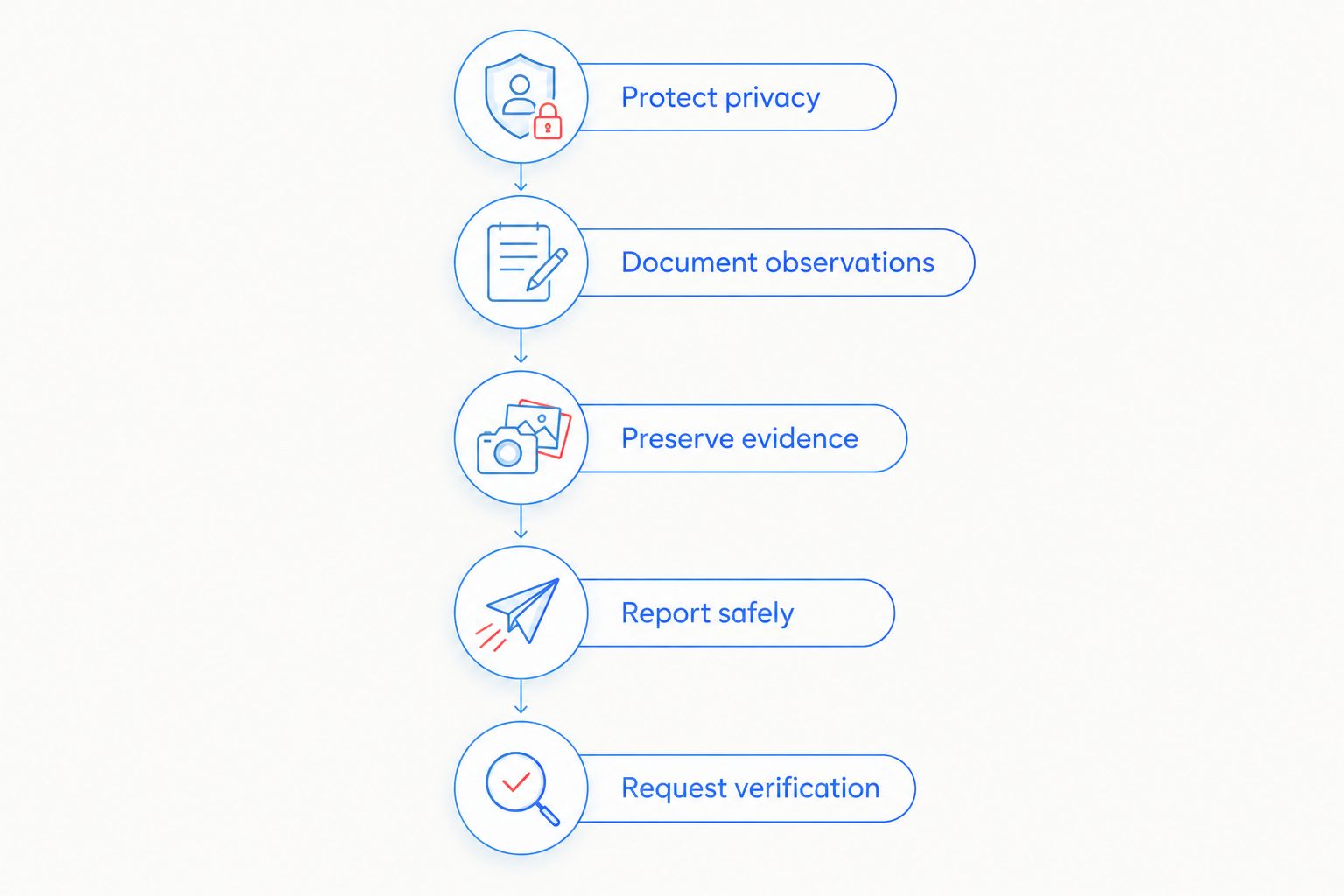
For a workplace incident in 2026, keep an unchanged copy of your initial notes. Add later discoveries as separate entries instead of rewriting the original account; clearly distinguish direct observations from information supplied by others.
What should you avoid doing?
Do not open electrical fittings, climb into building systems, or enter restricted rooms. An unfamiliar object is not permission to damage property or expose yourself to electrical hazards.
Avoid public accusations before ownership and function are established. Also avoid searching another person's account, accessing a recorder without authorization, or posting suspected footage online. A legitimate privacy concern does not authorize every investigative method.
When professional detection helps
Usabugsweeps is for business owners who need professional hidden-camera and audio-bug detection. Its nationwide TSCM bug sweeping services address the technical surveillance question: whether hidden recording or tracking devices are present.
A technical examination and a legal opinion serve different purposes. Finding a device does not, by itself, prove who installed it, whether it recorded a particular conversation, or whether a crime occurred. A sweep also cannot determine every historical recording event after equipment has been removed.
Discuss your concern with Usabugsweeps when you need professional bug sweeping rather than an equipment-shopping comparison. If you are an employee, establish authorization before commissioning an examination of employer-controlled premises; access to your workspace does not automatically authorize inspection of every system.
Discuss a workplace surveillance concern
Request professional TSCM bug sweeping for suspected hidden cameras or audio bugs.
Can my employer record me without telling me?
Sometimes, but there is no universal U.S. rule allowing undisclosed workplace recording. State notice requirements, privacy protections, audio-consent rules, and the circumstances of monitoring determine the answer; silence in a handbook does not settle it.
Does signing a surveillance policy mean I consented to everything?
No. A signed policy does not override statutory prohibitions or automatically establish valid consent to every form of recording. The policy's wording, the recording's scope, and the applicable law require separate review.
Can an employer use cameras to watch union activity?
Employers cannot unlawfully surveil protected organizing or other protected concerted activity. The National Labor Relations Board addresses unlawful surveillance and creating an impression of surveillance under the National Labor Relations Act; an existing security camera does not make targeted monitoring automatically lawful.
FAQ
Can employers record employees with hidden cameras in 2026?
Sometimes, but hidden workplace recording is not automatically lawful. The applicable state law, location, audio capture, notice, and purpose determine whether a particular recording is permitted.
Can my boss put a hidden camera in an employee restroom?
Restroom recording raises serious privacy concerns and is specifically restricted by laws in states including California and New York. Leave the viewing area, preserve your observations, and seek legal or law-enforcement assistance without dismantling the device.
Is a hidden camera legal if it does not record sound?
Silent video is not automatically legal. Removing audio eliminates one recording issue, but state video-surveillance rules, privacy expectations, and labor-law restrictions still apply.
Can an employer listen to conversations through a security camera?
Audio monitoring requires a separate federal and state interception-law analysis. Ownership of the camera or building does not itself supply consent from the people speaking.
Does a camera warning sign make all workplace surveillance legal?
No, a warning sign does not override statutory restrictions or authorize every recording. Its effect depends on the wording, the monitoring involved, and the applicable legal requirements.
Can a bug sweep prove my employer broke the law?
A bug sweep alone cannot establish that an employer broke the law. Usabugsweeps provides professional TSCM bug sweeping; a legal assessment must separately consider authorization, ownership, consent, location, and use.
Should I remove a hidden camera I find at work?
Do not remove or dismantle a suspected device yourself. Protect your privacy, document observations from an authorized location, and obtain appropriate assistance so evidence and safety are not compromised.
One last thing
Ask where the camera points, not just where it sits. A device mounted in a hallway can still capture a sensitive space through an open doorway or reflection. Describe the actual view when reporting your concern, and keep that observation separate from any assumption about who installed it.