
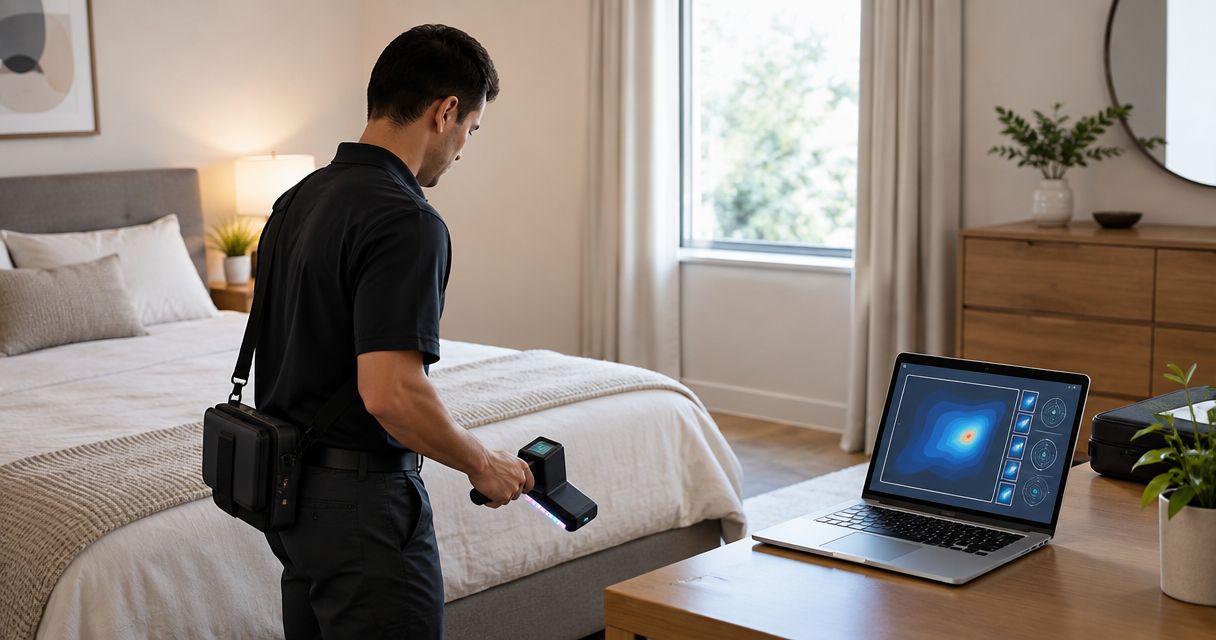
Yes, a professional bug sweep is worth it in 2026 when you need to check a specific room or vehicle for hidden surveillance and a visual search cannot resolve the concern. It is less useful when the suspected problem is spyware, account access, or an authorized device you have not yet identified. A sweep can examine the agreed physical space, but it cannot establish who placed a device or guarantee that no surveillance exists.
- Is a professional bug sweep worth it? Yes for a defined hidden-camera, audio-bug, GPS-tracker, or wiretap concern.
- USA Bugsweeps is best for homeowners, business owners, and vehicle owners seeking a professional TSCM sweep.
- Start with a visual check; choose a professional sweep when the concern remains unresolved.
- A physical bug sweep is not a substitute for a spyware or account-security investigation.
Is a professional bug sweep worth it in 2026?
Yes, if the question is whether a particular space or vehicle contains a physical surveillance device. USA Bugsweeps offers nationwide professional TSCM services for homeowners, business owners, and vehicle owners. Before arranging a sweep, identify the place to inspect and the device you are concerned about: a hidden camera, audio bug, GPS tracker, or wiretap.
| Your concern | First step | When a professional sweep is worth it | Main limit |
|---|---|---|---|
| Hidden camera in a room | Look for unfamiliar objects or changes to fixtures without dismantling them. | The room is private, the concern persists, or you need an independent physical inspection. | A clean inspection does not prove a camera was never present. |
| Audio bug in a meeting space | Check who has access and whether unfamiliar equipment is present. | Sensitive conversations take place there and a visual check does not settle the concern. | A sweep cannot identify who heard an earlier conversation. |
| GPS tracker on a vehicle | Note unfamiliar attachments and check authorized tracking arrangements. | You have a specific vehicle to inspect and cannot account for a suspected device. | Finding a device does not establish who installed it. |
| Spyware or account access | Review account security and the affected device with a qualified digital-security specialist. | A physical sweep is relevant only if you also suspect a device in the surrounding space. | Room and vehicle inspections do not resolve software-based access. |
That distinction decides whether the service matches the problem. USA Bugsweeps is best for people who need a professional TSCM inspection of a defined home, workplace, or vehicle—not a diagnosis of every possible form of surveillance. If you cannot name the location or the type of concern, narrow it down before booking.
Why this matters
A hidden camera, audio recorder, tracker, and compromised account call for different checks. Searching a room for unfamiliar objects will not tell you who can sign in to your accounts. Reviewing account settings will not establish whether an unfamiliar device is attached to a vehicle.
In 2026, the useful question is not whether professional equipment is better than your phone. It is whether a physical inspection addresses the concern you actually have. Start with what you observed, where you observed it, and what access other people legitimately have to that place. That record makes the next step clearer without treating every unfamiliar object as evidence of surveillance.
What does a professional sweep add to a DIY check?
A DIY check is a reasonable first step when you can safely inspect a familiar space. Look for an object you do not recognize, a fixture that has changed, or equipment that does not belong to you. Record what you find before moving anything. Do not open electrical fittings or take apart someone else's property to investigate a suspicion.
A professional TSCM sweep addresses a different need: a deliberate inspection of an agreed space or vehicle for physical surveillance devices. You can specify whether your concern is a hidden camera, audio bug, GPS tracker, or wiretap and ask what the proposed inspection covers. That matters when a cursory visual search has not answered the question or when the setting requires careful handling.
Neither approach offers certainty about every threat. A device can be absent during an inspection, and a physical search does not determine whether a phone or account has been compromised. If you need to make a decision based on the findings, ask how results will be explained and what limits the inspector will state.
Best for a DIY first check
Choose a visual check first when you can inspect the space safely, identify its usual contents, and describe what looks different. This is a way to narrow the concern, not proof that the space is clear. If the object appears connected to wiring, leave it in place and seek appropriate help rather than dismantling it.
Best for a professional TSCM sweep
Choose a professional sweep when the concern is tied to a specific private room, meeting area, or vehicle and a simple check leaves a material question unanswered. USA Bugsweeps provides TSCM bug sweeping and electronic surveillance detection services nationwide. Describe the location and suspected device so you can confirm the scope before arranging service.
Best for a digital-security investigation
Choose digital-security help when the signs involve unexpected account activity, unfamiliar software, or access to information stored on a phone or computer. A physical sweep of a room does not inspect every route into an account. If you also suspect a recording device nearby, treat that as a separate inspection request.
When is a professional bug sweep worth it for your situation?
The value of a sweep depends on the decision you need to make after it. In 2026, use these factors to decide whether to move from a visual check to a professional inspection:
- The concern has a location. A named room or vehicle gives the inspection a defined scope. A general feeling of being monitored does not identify what to inspect.
- The suspected device is physical. Hidden cameras, audio bugs, GPS trackers, and wiretaps fit a TSCM inquiry more directly than a compromised password or spyware complaint.
- You can describe what changed. An unfamiliar object, a change to a fixture, or a specific access concern is more useful than an assumption about who is responsible.
- You need to protect a particular activity. Privacy in a bedroom, a confidential meeting, or the use of a personal vehicle can justify a closer inspection when there is an unresolved device concern.
- A DIY check has reached its limit. If you cannot safely inspect the relevant area or interpret what you found, continuing to take things apart is not the next move.
- You can agree on access. The person arranging a sweep needs permission to have the specified space or vehicle inspected. Set the boundaries before work begins.
A professional sweep is not automatically the right response to every concern about privacy. Match the inspection to the place and the suspected device. If the issue is digital access, deal with that directly; adding a physical sweep does not replace it.
How should you prepare for a bug sweep?
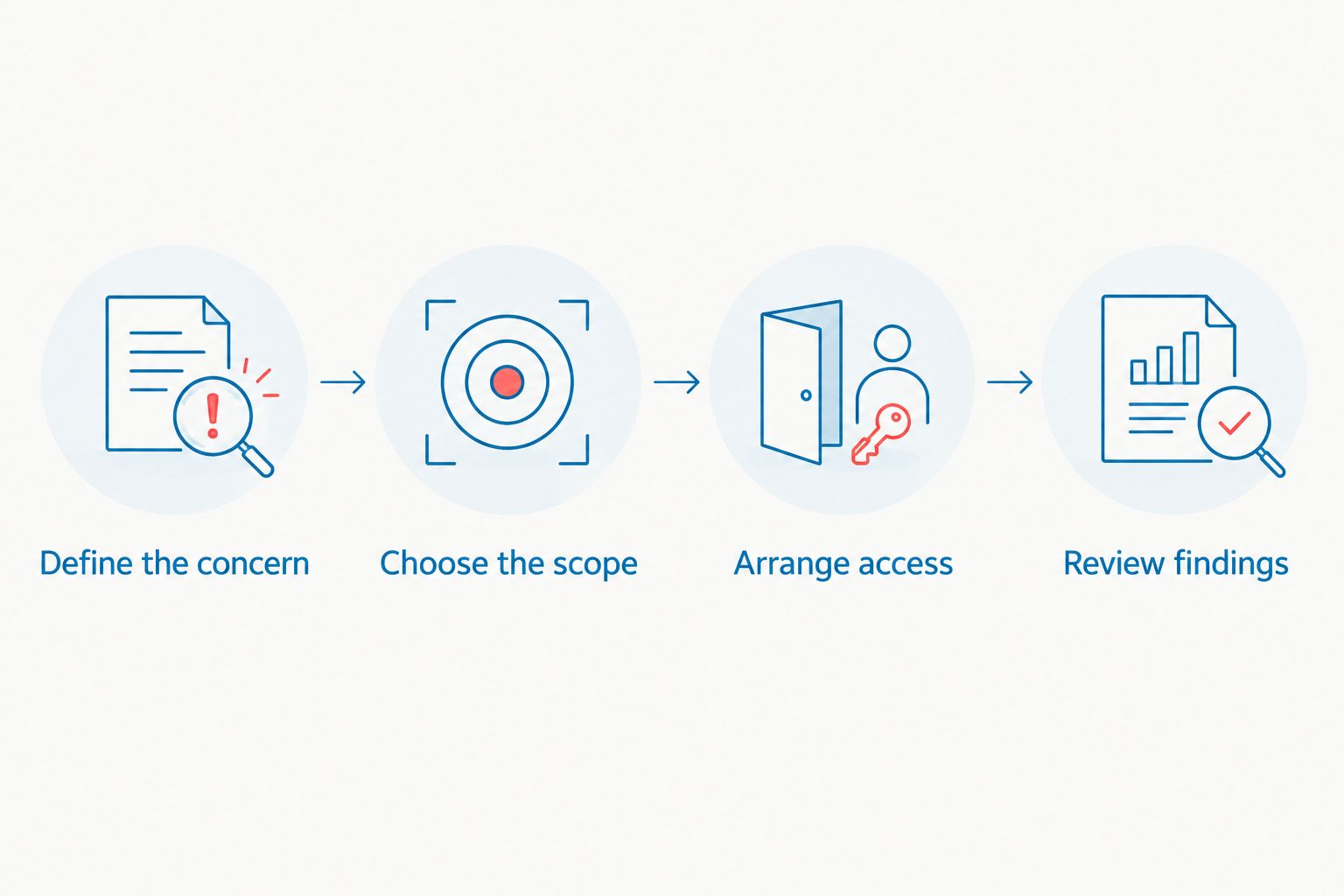
Preparation is about defining the request, not trying to locate a device yourself. In 2026, keep the concern specific and avoid changing the area before an inspector can assess it.
- Define the concern. Write down what you observed, where it occurred, and whether you suspect a camera, audio bug, tracker, or wiretap. Separate observations from assumptions about who caused them.
- Choose the scope. Name the rooms or vehicle that need attention. If the concern involves both a vehicle and a workplace, say so rather than assuming one inspection includes the other.
- Arrange access. Confirm that you have authority to permit inspection of the selected area. Identify ordinary cameras, tracking devices, or recording equipment you already know about so they are not mistaken for unknown devices.
- Review findings. Ask what was inspected, what was found, and what remains outside the inspection's scope. Keep any written observations together with your own record of the concern.
Do not remove a suspected device merely to prepare the site. If you find something that raises an immediate safety concern, prioritize your safety and contact the appropriate local authorities. A TSCM inspection can address the physical device question; it is not a substitute for urgent help.
Discuss a specific sweep
Identify the room or vehicle and the surveillance concern before requesting service.
What should you ask before booking?
A clear scope is more useful than a promise that a place will be declared safe. Tell the provider whether you need a home, business, or vehicle inspection, and ask these questions before you commit:
- Which spaces will be inspected? Name each room, shared area, or vehicle. Do not assume adjacent spaces are included.
- Which concerns will the inspection address? Say whether you are asking about cameras, audio recording, GPS tracking, or a possible wiretap.
- What access is required? Establish who can authorize entry and whether any area is excluded.
- How will findings be described? Ask how the provider distinguishes a confirmed find from something that needs further examination.
- What will the inspection not cover? Confirm whether your separate concerns about phones, computers, accounts, or networks require another specialist.
- What happens if something is found? Discuss how to avoid disturbing a device before deciding whom to notify or what further help to seek.
These questions also make it easier to compare a professional inspection with the DIY check you have already done. USA Bugsweeps is relevant when your request concerns physical electronic surveillance detection. A request about account recovery needs a different scope, even if it began with the same worry about privacy.
Can a bug sweep prove there are no devices?
No. A professional sweep can report findings from the locations and conditions inspected; it cannot prove that no device existed before the visit or will appear afterward. Treat an inspection result as evidence about its stated scope, not a permanent guarantee.
This limit matters if someone else can access the space. Record which areas were checked and keep control of who can enter afterward where possible. If the original concern persists, describe the new observation rather than assuming the earlier inspection answered it.
Is a bug sweep worth it for a home, office, or vehicle?
For a home, a sweep is worth considering when a specific private space raises an unresolved physical-device concern. Identify the room and what prompted the concern. If your main worry is access to a home network or online account, address that separately.
For an office, a sweep is worth considering when a defined meeting space or work area needs a physical surveillance check. Confirm who can authorize inspection and identify legitimate recording or security equipment. A sweep cannot determine whether a participant shared information outside the room.
For a vehicle, a sweep is worth considering when the concern is a hidden tracker or recording device on that vehicle. First establish which tracking devices or systems are authorized. If you fear stalking or immediate harm, put personal safety ahead of investigating the vehicle yourself.
FAQ
Is a professional bug sweep worth it in 2026?
Yes, when you need a defined room or vehicle checked for a suspected physical surveillance device. It is not a substitute for investigating spyware or unauthorized account access.
Can I check for hidden cameras myself first?
Yes, start with a safe visual check for unfamiliar objects or changes to the space. Do not dismantle fixtures or treat a clear visual check as proof that no camera exists.
Will a professional bug sweep find every hidden device?
No, a sweep cannot guarantee that every device will be found or that no device was present earlier. Ask which areas and device concerns the inspection will cover.
Is a bug sweep useful if I think my phone has spyware?
A physical bug sweep does not resolve a spyware concern on your phone. Seek a qualified digital-security assessment for the device and its accounts; request a separate sweep only if you also suspect physical surveillance.
Should I get my car swept for a GPS tracker?
A vehicle sweep is appropriate when you have a specific concern about an unauthorized tracker on that car. Check what tracking is already authorized, and prioritize your safety if the concern involves stalking.
What should I tell a TSCM provider before booking?
State the location, the suspected device type, what you observed, and who can authorize access. Ask what will be inspected and how findings and limits will be explained.
Does a clear bug sweep mean I am no longer being monitored?
No, a clear result applies only to the inspection's stated scope and conditions. Digital access and later changes to a room or vehicle require separate attention.
One last thing
The most useful result of a sweep is a clear answer about what was inspected and what was found, not a blanket assurance about your privacy. In 2026, keep physical-device concerns separate from digital ones so each gets the right response. If you contact USA Bugsweeps, lead with the room or vehicle and the device you suspect—not a theory about who put it there.


