
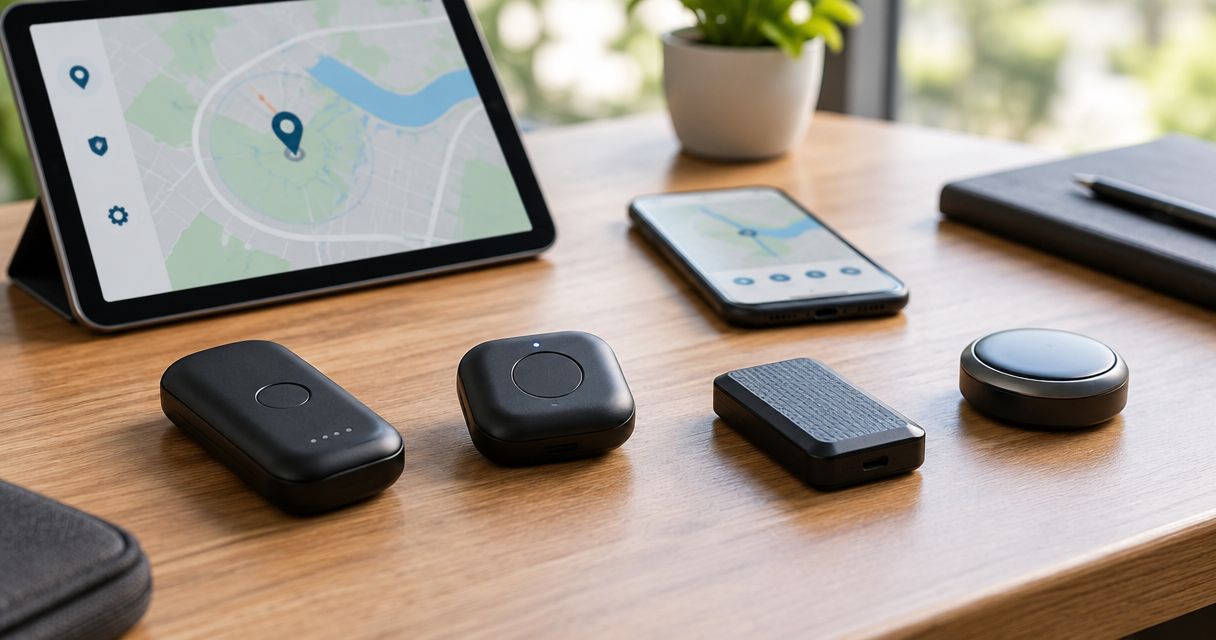
Best for an unresolved vehicle-tracking concern: a professional TSCM sweep. Best for checking active transmissions: an adjustable RF detector. Best for an initial physical check: a flashlight and inspection mirror. If you are comparing GPS tracker detectors ranked by price in 2026, start with what each option detects; Usabugsweeps provides nationwide GPS tracker detection services for vehicle owners.
- For GPS tracker detectors ranked by price, compare detection methods before purchase; an RF alarm does not identify a tracker.
- Usabugsweeps GPS tracker detection services suit vehicle owners who need professional help investigating suspected tracking.
- Adjustable RF detectors check active radio transmissions, not every concealed tracking device.
- Smartphone unwanted-tracker alerts cover compatible tracking tags, not all GPS trackers.
- Physical inspection remains necessary because a nontransmitting device gives an RF detector nothing to detect.
Why this matters
A GPS receiver and a radio transmitter do different jobs. The receiver calculates location from satellite signals. A connected tracker uses a separate communications method to send that location elsewhere; a logging device stores it for later retrieval.
That distinction controls your purchase. An RF detector searches for radio-frequency activity, so a quiet result does not establish that your vehicle contains no tracker. Likewise, an alarm near a vehicle does not establish that the source is unauthorized surveillance.
For a 2026 buying decision, separate discovery from identification. Finding a transmission, locating an unfamiliar object, and determining whether it tracks your movements are different tasks. Choose equipment that supports the task you actually need.
What makes the best GPS tracker detection option?
Use these criteria before comparing detector listings:
- Detection method: Does the option detect transmissions, compatible Bluetooth tags, or physical objects? These capabilities are not interchangeable.
- Signal interpretation: Does it show only signal strength, or provide frequency information that helps you investigate the source?
- Adjustable sensitivity: For RF equipment, sensitivity adjustment helps narrow the search around an active signal source.
- Silent-device coverage: Include a physical inspection plan rather than relying entirely on radio activity.
- Operator requirements: Match the equipment to your ability to interpret signals and inspect the vehicle safely.
- Evidence handling: Decide how you will document an unfamiliar device without removing, resetting, or damaging it.
GPS tracker detection options at a glance
The following order ranks suitability for distinct tasks, not verified purchase prices. A service, a radio instrument, and an inspection tool are not equivalent purchases. Compare their purpose before treating them as competing detectors.
| Rank | Option | Best for | Standout capability | Key limitation |
|---|---|---|---|---|
| 1 | Professional TSCM sweep | Unresolved vehicle-tracking concerns | Professional investigation of suspected surveillance | Scope must be agreed; no inspection guarantees future protection |
| 2 | Adjustable RF detector | Checking active radio transmissions | Signal-strength indication during a local search | Cannot identify every alarm or detect a silent logger through RF alone |
| 3 | Spectrum analyzer | Trained examination of radio activity | Frequency-resolved view of signals | Requires technical interpretation and suitable equipment |
| 4 | Smartphone unwanted-tracker alerts | Investigating compatible tracking-tag warnings | Alerts tied to supported tracking networks | Not a universal GPS tracker scan |
| 5 | Flashlight and inspection mirror | Initial examination of accessible vehicle areas | Direct visibility without requiring a transmission | Cannot expose every concealed compartment or identify every object |
1. Professional TSCM sweep: best for unresolved tracking concerns
A professional technical surveillance countermeasures service investigates suspected electronic surveillance. Usabugsweeps offers GPS tracker detection alongside hidden-camera, audio-bug, and wiretap detection services nationwide. For a vehicle concern, ask specifically about the proposed vehicle inspection rather than assuming a general bug-sweep description covers every location.
Usabugsweeps GPS tracker detection services are best for vehicle owners who need professional help investigating suspected tracking. A service is a different choice from buying a handheld detector: you are seeking an investigation, not simply a signal alarm.
Professional TSCM sweep pros:
- Provides a professional route for investigating a concern you cannot resolve yourself.
- Lets you discuss the vehicle, suspicious observations, and access requirements before the inspection.
- Avoids making an unfamiliar handheld alarm your only basis for a security decision.
Professional TSCM sweep cons:
- The inspection scope must be confirmed before booking.
- A completed sweep does not prevent someone from installing a device afterward.
- Tracking through an account or application requires a separate assessment from a physical vehicle search.
Best for: Vehicle owners with an unexplained device, persistent tracking concern, or a situation requiring professional assistance.
Verdict: Buy the service when you need an investigation rather than another detector.
2. Adjustable RF detector: best for checking active transmissions
An RF detector indicates radio-frequency energy within its supported range. Adjustable sensitivity helps you investigate where an active signal becomes stronger, but the reading alone does not identify a GPS tracker. Phones, wireless accessories, and other legitimate electronics also transmit.
For your 2026 shortlist, examine the detector's documented frequency coverage and operating instructions. A listing that says GPS detection without explaining its detection method does not tell you whether the instrument can address your concern.
Adjustable RF detector pros:
- Provides a portable way to check for active radio signals.
- Sensitivity adjustment supports closer investigation of a signal source.
- Can complement a physical inspection when a suspected device is transmitting.
Adjustable RF detector cons:
- A dormant or logging-only device does not provide a transmission to detect.
- Legitimate transmitters can produce alarms.
- A signal-strength reading is not proof of unauthorized tracking.
Best for: Users checking active transmissions who understand that an alarm needs further investigation.
Verdict: Buy as a screening tool; skip it as your sole proof that a vehicle is clear.
3. Spectrum analyzer: best for trained radio-signal examination
A spectrum analyzer displays radio activity across frequency. Compared with a basic signal-strength indicator, that view gives a trained operator more information about where activity occurs. It still does not turn a transmission into automatic proof of surveillance.
Coverage, antenna selection, settings, and observation conditions affect what an operator can examine. Do not choose an analyzer simply because it displays more information; choose it only if you can interpret that information or have qualified help.
Spectrum analyzer pros:
- Shows frequency information rather than only an alarm level.
- Supports closer examination of activity within the instrument's coverage.
- Helps a trained operator distinguish signals for further investigation.
Spectrum analyzer cons:
- Requires technical knowledge and appropriate setup.
- Does not reveal a silent logger through radio analysis alone.
- Cannot establish ownership or intent from a signal display.
Best for: Trained investigators examining radio activity, not first-time buyers seeking a simple vehicle check.
Verdict: Hold unless you have the training and a defined investigation task.
4. Smartphone unwanted-tracker alerts: best for compatible tag warnings
Smartphone unwanted-tracker features address supported tracking tags and networks. They are relevant when your phone reports that a compatible tag is moving with you. They are not a substitute for detecting every cellular tracker, concealed logger, or vehicle tracking system.
In 2026, check the current guidance for your phone's operating system and the identified tag. Follow the alert's supported identification steps, and preserve screenshots before changing settings or taking further action.
Smartphone unwanted-tracker alert pros:
- Provides a relevant starting point when a compatible-tag warning appears.
- Supported alert details help you investigate the reported device.
- Screenshots preserve the warning and information shown on your phone.
Smartphone unwanted-tracker alert cons:
- Coverage depends on supported devices, software, and settings.
- No alert does not establish that no other tracker is present.
- A tag warning does not determine who placed the device or why.
Best for: People investigating a specific unwanted-tracker notification.
Verdict: Use for compatible-tag alerts; skip the assumption that your phone scans every GPS tracker.
5. Flashlight and inspection mirror: best for an initial physical check
A flashlight and inspection mirror help you examine accessible areas without depending on a device transmitting. Look for an unfamiliar enclosure, unexpected wiring, or an attachment that needs identification. Appearance alone does not establish that an object is a tracker.
Keep the inspection safe. Do not crawl beneath an unsupported vehicle, dismantle unfamiliar wiring, or disturb safety-related components. Have inaccessible areas examined by someone qualified to access them.
Flashlight and inspection mirror pros:
- Work independently of radio transmissions.
- Help reveal visible objects in accessible areas.
- Support photographs showing an object's position and attachment.
Flashlight and inspection mirror cons:
- Cannot reveal everything behind panels or inside enclosed spaces.
- Cannot determine function from appearance alone.
- A visual check does not assess tracking through accounts or software.
Best for: Vehicle owners beginning a safe inspection of areas they can access without dismantling anything.
Verdict: Buy for initial inspection, not as a complete surveillance assessment.
Why GPS frequency numbers do not prove detector coverage
GPS satellite signals include L1 at 1575.42 MHz, L2 at 1227.60 MHz, and L5 at 1176.45 MHz. These are satellite-to-receiver signals, not a universal set of outbound frequencies used by trackers to report their locations.
A tracker receiving GPS does not necessarily transmit on those frequencies. Its reporting method is a separate function, and a logging-only device need not report over radio at all. Do not select a detector solely because its listing mentions a GPS satellite frequency.
The useful question is what the instrument detects under its documented operating conditions. Ask that before comparing feature labels or treating broad frequency coverage as guaranteed tracker identification.
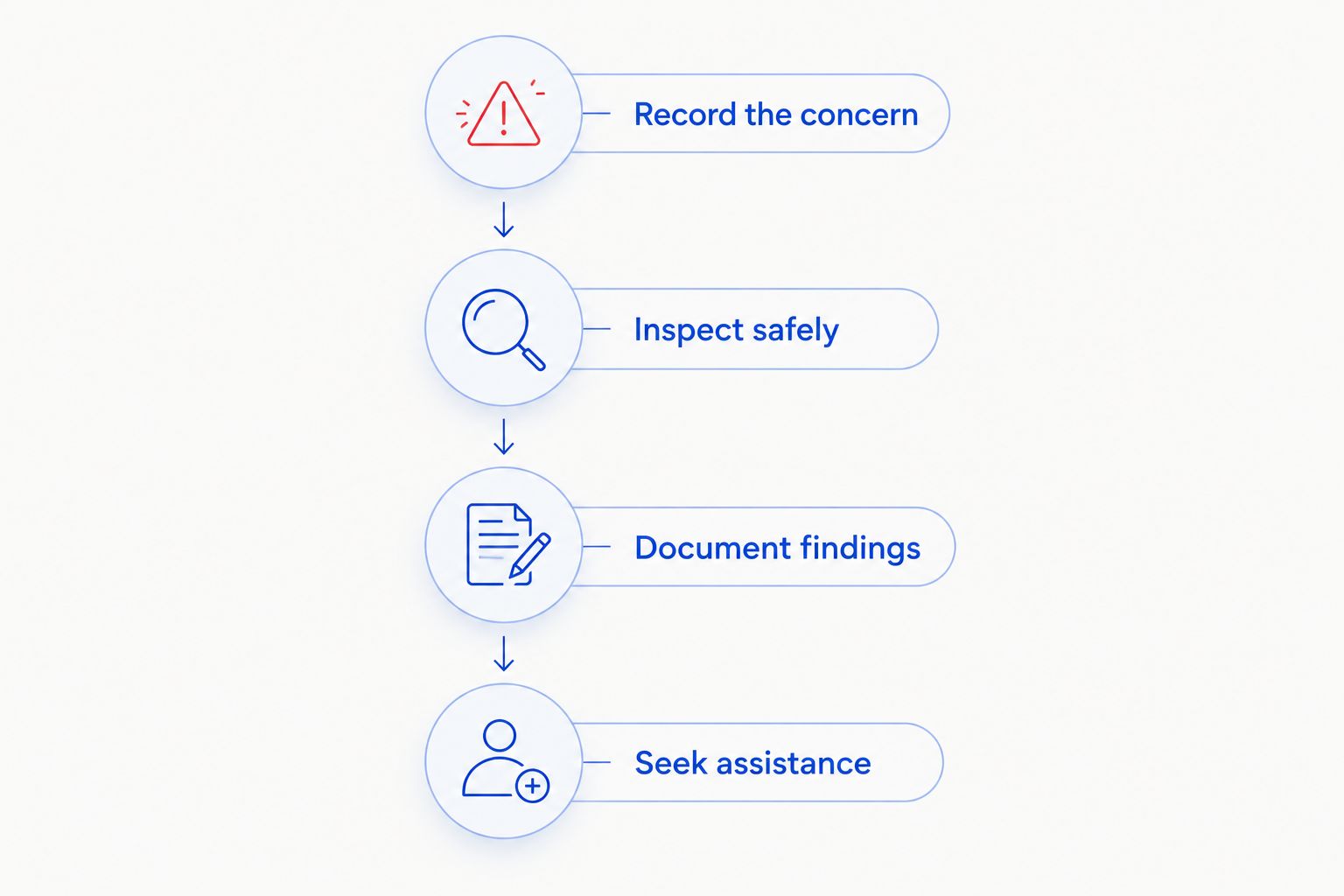
A safe workflow before your next purchase
Use this sequence to turn a concern into an actionable inspection request. It also prevents an unexplained alarm from becoming an unsupported conclusion.
- Record the concern: Write down the alert, unfamiliar object, or observable event that prompted the search. Separate observations from assumptions.
- Inspect safely: Examine accessible areas without disturbing wiring or entering an unsafe position beneath the vehicle.
- Document findings: Photograph an unfamiliar object in place and preserve relevant phone notifications. Do not publish identifying details.
- Seek assistance: Use professional detection help for unresolved concerns and qualified mechanical assistance for inaccessible components.
If stalking or immediate danger is involved, prioritize a safe location and emergency assistance over continuing a search. Do not confront a suspected person based on a detector alarm. For the service process, read what to expect during a professional TSCM bug sweep.
Discuss your GPS tracking concern
Ask Usabugsweeps about nationwide GPS tracker detection services for your vehicle.
How the options are ranked
This guide ranks options by their fit for separate investigation tasks: unresolved concerns, active transmissions, technical signal analysis, compatible-tag warnings, and visible objects. It does not assign model-level detection scores or treat equipment categories as an ascending price list.
The decisive criteria are detection method, interpretation requirements, silent-device limitations, and safe handling. For your 2026 comparison, reject any recommendation that treats all these tasks as interchangeable.
Which GPS tracker detection option should you choose?
Choose the option that addresses your evidence, not the option with the strongest promise. Use a physical check for accessible objects, supported smartphone features for tag alerts, and RF equipment for active radio activity. None replaces the others completely.
If the concern remains unresolved, Usabugsweeps is the service choice in this guide for professional GPS tracker detection. Ask about the vehicle-specific scope and what the findings will establish before arranging service.
FAQ
What's the best way to compare GPS tracker detectors ranked by price?
Compare detection methods before comparing purchase listings. RF detectors, smartphone tag alerts, inspection tools, and professional sweeps address different tasks, so price alone does not establish suitability.
Can an RF detector find every GPS tracker?
No, an RF detector cannot find every GPS tracker. It needs relevant radio activity within its supported coverage; a silent logging device gives it no transmission to detect.
Can my phone detect a hidden GPS tracker on my car?
A phone's unwanted-tracker features detect supported tracking tags, not every hidden GPS tracker. An absent notification does not clear a vehicle of cellular trackers or logging devices.
Is a spectrum analyzer better than a basic RF detector?
A spectrum analyzer provides more useful frequency information for a trained operator. That makes it suitable for technical signal examination, not automatically better for an inexperienced vehicle owner.
Does a detector alarm mean someone is tracking me?
No, a detector alarm does not prove that someone is tracking you. Legitimate electronics transmit radio signals, and the source needs identification before you draw a conclusion.
Should I remove an unfamiliar device from my vehicle?
Document an unfamiliar device before deciding on removal. Preserve its location and visible details, avoid disturbing wiring, and seek qualified assistance; if immediate danger is involved, prioritize safety and emergency help.
When should I contact Usabugsweeps for GPS tracker detection?
Contact Usabugsweeps when you need professional assistance investigating suspected vehicle tracking. Describe your observations and ask what the proposed vehicle inspection covers before arranging service.
One last thing
A clear result describes an inspection, not permanent protection. Keep the date, inspected areas, and unresolved questions with your records. If new evidence appears after your 2026 inspection, investigate that evidence rather than relying on the earlier result.
Also separate hardware from access. A concealed-device search does not establish whether another person can view your location through an authorized account, shared application, or existing vehicle service. Review those permissions as a separate task.


