
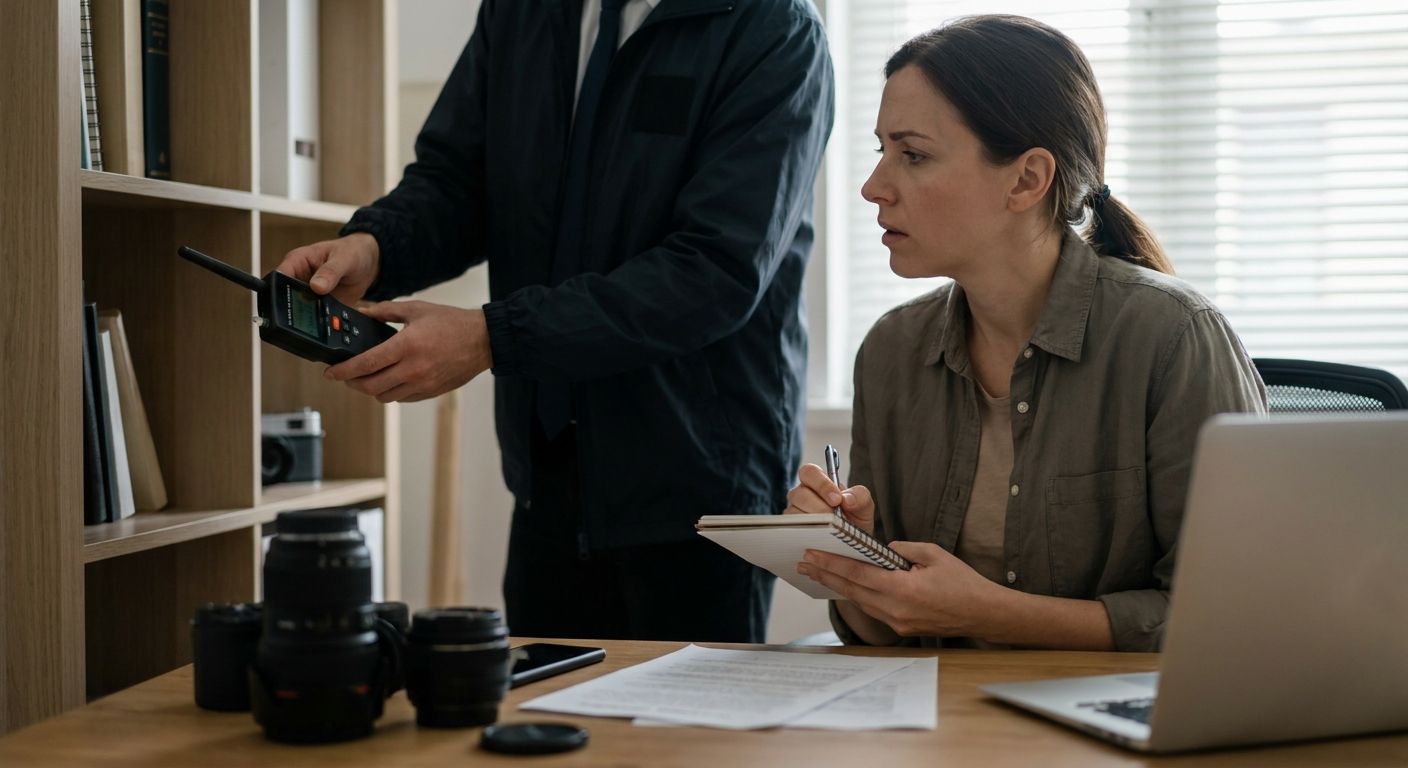
Bug sweep for journalists confirms whether a newsroom desk, home office, hotel room, or vehicle carries a hidden microphone, camera, or GPS tracker planted to identify a confidential source before a story runs. Reporters covering corruption, national security, or organized crime face a different threat model than a homeowner worried about a nanny cam — the adversary here has motive, sometimes resources, and a deadline of their own: get to the source before publication.
- A bug sweep for journalists checks phones, vehicles, home offices, and meeting locations for hidden mics, cameras, and GPS trackers before a source is burned.
- DIY visual checks catch cheap pinhole cameras but miss RF-silent recorders and encrypted trackers that store data instead of transmitting it.
- USA Bugsweeps runs full TSCM sweeps nationwide for reporters, bureaus, and freelancers working sensitive stories in 2026.
- Schedule a sweep before a source meeting, not after a leak is suspected — reactive sweeps find less.
Why bug sweeps matter for journalists
A reporter's exposure is different from a corporate boardroom's. Sources talk in cars, hotel rooms, coffee shops, and off-site meetings specifically to avoid office surveillance — which means the sweep has to follow the reporter, not stay fixed to one address. USA Bugsweeps treats a journalist's vehicle, phone, and travel gear as part of the same surveillance perimeter as the newsroom itself.
The pressure is also time-bound in a way most TSCM clients don't face. A law firm or a corporate office can sweep on a quarterly schedule. A journalist working an investigative piece needs a sweep tied to the story timeline — before the first source meeting, before a draft goes to editors, and again before publication if the story involves anyone with the means to plant a device.
Freelancers carry an added risk: no IT department checking devices, no facilities team controlling who enters a shared coworking space. That makes personal diligence and a scheduled professional sweep the only real defense.
Update your personal threat model before the story runs
Most reporters never think about physical surveillance until a source drops off or a competitor gets the story first. By then the device, if there was one, has already done its job.
- List every location where source conversations happened in the last 90 days — home, car, hotel rooms, coffee shops
- Flag any location visited more than twice with the same source
- Note any unexplained battery drain on phones or laptops used during those meetings
- Check whether anyone outside the newsroom had unsupervised access to your desk, bag, or vehicle
- Rank locations by how sensitive the conversation was, not by how often you visit
Check your vehicle for a hidden GPS tracker
A vehicle is the easiest place to plant a tracker because it sits unattended in driveways, parking garages, and street parking for hours. Reporters who meet sources off-site are a common target because the vehicle's movement pattern reveals the meeting location even without audio.
- Inspect wheel wells, the undercarriage near the frame rails, and inside the bumper for a magnetic case
- Check the OBD-II port under the dashboard for anything plugged in that you didn't install
- Look inside the trunk liner and spare tire well, both common hiding spots
- Run a physical check every time the car has been serviced by someone outside your control
- Use a step-by-step resource like how to find a hidden GPS tracker on your car before assuming the car is clean
The USA Bugsweeps guide to sweeping your vehicle for GPS trackers walks through the check without special equipment, priced at $29, and it's a reasonable first pass before calling in a professional sweep for a vehicle involved in a sensitive story.
Secure your phone and recording equipment
Phones are the softest target because journalists carry them everywhere, including into source meetings, and most people never check what's actually running on the device.
- Review app permissions for microphone and camera access on any app you don't remember installing
- Check for unusual battery drain or a phone that stays warm when idle
- Turn off Bluetooth and Wi-Fi when not in use during sensitive meetings
- Use a Faraday bag for phones during in-person source meetings where recording risk is high
- Have a professional TSCM technician check devices for hardware-level bugging, which software scans can't detect
Screen the meeting location before a source arrives
A source picking the meeting spot doesn't mean the spot is clean — sources get followed too, and hotel rooms and rented conference space carry their own risk from prior occupants or installed building systems.
- Do a visual sweep of smoke detectors, outlets, and lamps for anything that doesn't match the rest of the fixture
- Avoid rooms booked more than 48 hours in advance under your own name for high-risk meetings
- Check for devices in objects a source or third party could have planted between booking and arrival
- Bring a portable RF detector for a quick scan of the room before the meeting starts
- For recurring locations, schedule a professional sweep rather than relying on a visual check every time
Audit your newsroom or bureau office
A fixed office is a known address, which makes it a stationary target for anyone with the motive and the access to plant a device once and let it run.
- Identify who has physical access to your desk, including cleaning staff, IT contractors, and visiting sources
- Check phone lines and conference room equipment for signs of tampering
- Look at shared printers and copiers, which are overlooked but can log or transmit scanned documents
- Schedule a full TSCM sweep before any story involving government surveillance, corporate retaliation, or organized crime
- Cross-check the office sweep against bug sweep services for law firms and legal offices if your newsroom shares space with legal counsel handling source protection
Schedule sweeps around the story timeline, not a fixed calendar
A quarterly sweep schedule works for a corporate office. It doesn't work for a reporter whose exposure spikes the moment a source agrees to talk on the record.
- Sweep before the first in-person meeting with a new confidential source
- Sweep again before the draft goes to editors if the subject of the story has resources to retaliate
- Sweep a final time before publication if the story names a government agency, a corporation, or an organized group
- Treat high-profile bylines the same way bug sweep services for executives and public figures treat exposed individuals — sweep on a schedule tied to risk, not habit
- Keep a written log of sweep dates so editors can verify due diligence if a source's identity is ever challenged
A journalist protecting a confidential source needs the sweep scheduled around the story's timeline, not around a calendar reminder.
Comparison of sweep options for journalists
| Option | Best for | Starting price | Key limitation |
|---|---|---|---|
| Visual inspection (DIY) | Freelancers checking a hotel room or rental car before one meeting | Free | Misses audio bugs and trackers that don't transmit continuously |
| Portable RF detector | Quick scan of a single room before a source arrives | Varies by rental vendor | Untrained users miss devices that store data offline instead of broadcasting |
| Vehicle GPS tracker guide | Reporters checking their own car without hiring anyone | $29 | Covers vehicle checks only, not phones, rooms, or offices |
| Professional TSCM sweep | Investigative reporters, bureaus, and high-profile bylines working sensitive stories | Quote-based | Needs scheduling lead time ahead of a hard deadline |
Verdict: a DIY visual check is fine for a one-off hotel room, but a confidential-source story with real retaliation risk needs a professional TSCM sweep, not a phone app.
Common mistakes journalists make
- Waiting until after a leak is suspected — sweeps found after the fact recover less because devices get removed once their job is done
- Sweeping the newsroom but not the vehicle — most source meetings happen off-site, and the car is often the only surveillance point that matters
- Assuming a hotel room booked by the source is automatically safe — the source can be followed just as easily as the reporter
- Relying on a phone app to detect bugs — software scans miss hardware-level microphones and passive GPS trackers with no active signal
- Treating one sweep as permanent — a device planted after the first sweep goes undetected until the next scheduled check
FAQ
What is a bug sweep for journalists?
A bug sweep for journalists is a TSCM inspection of a reporter's home office, vehicle, phone, and meeting locations for hidden microphones, cameras, and GPS trackers. It's used to protect confidential sources before a story publishes.
How much does a bug sweep cost for a journalist?
Professional TSCM sweeps are quote-based and depend on the number of locations and devices checked. A DIY vehicle check using a step-by-step guide runs about $29.
Can a reporter's phone be bugged without an app?
Yes. Hardware-level microphones and passive GPS trackers don't show up in app permission scans, which is why a physical TSCM inspection catches devices software checks miss.
When should a journalist schedule a bug sweep?
Before the first in-person meeting with a new confidential source, again before the draft goes to editors, and once more before publication if the story names a government agency or a well-resourced subject.
Is a hotel room safe for meeting a confidential source?
Not automatically. Rooms booked more than 48 hours in advance under the reporter's own name carry more risk, and sources can be followed to the location just like reporters can.
Do I need to sweep my car if I only meet sources in the office?
Yes, because a vehicle's movement pattern can reveal a meeting location even without audio, and trackers are cheap and easy to plant on an unattended car.
What's the difference between a visual check and a professional TSCM sweep?
A visual check catches obvious pinhole cameras and loose wiring, but a professional TSCM sweep uses RF detection and physical inspection to find devices that don't transmit continuously or are hidden in wall fixtures and equipment.
One last thing
The device that matters most in 2026 isn't the one that transmits — it's the one that stores data locally and gets retrieved later, because it never shows up on a basic RF scan. If a source has gone cold and you can't explain why, sweep the vehicle first: it's the location reporters check last and adversaries target first.


