
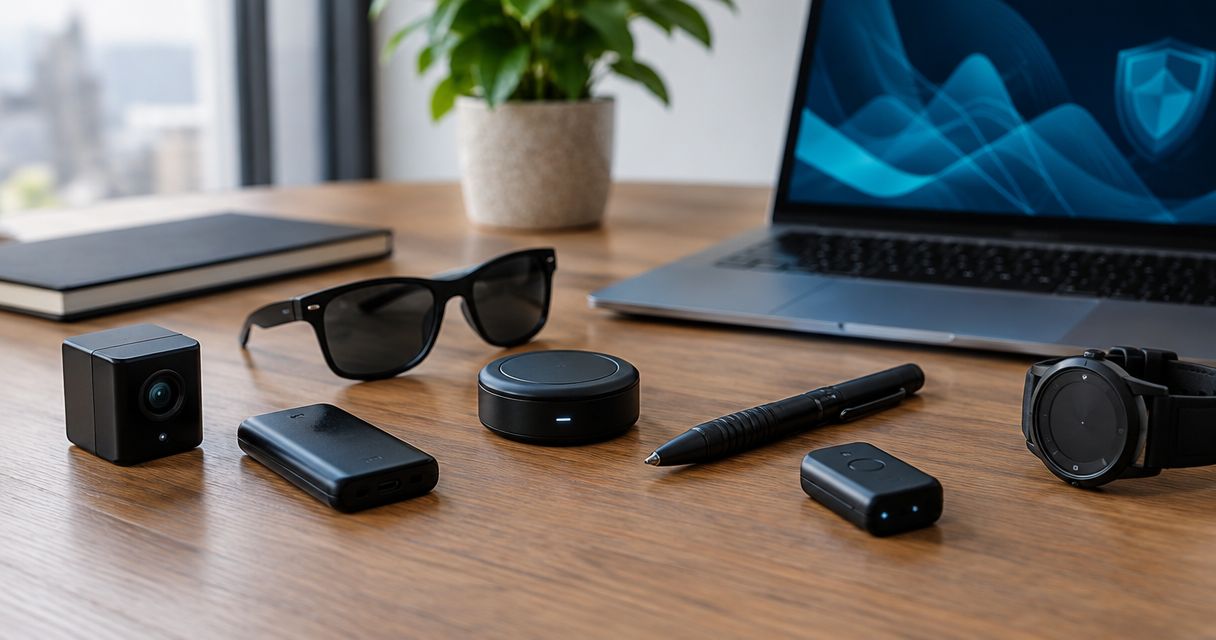
Spy gadgets give you hands-on tools for checking suspicious objects and signals, but buying equipment does not establish whether a home, office, or vehicle contains unauthorized surveillance. This guide compares spy gadgets alternatives as alternatives to DIY equipment, rather than ranking an individual retailer. The best alternative in 2026 is USA Bugsweeps if you need professional TSCM bug sweeping; an RF detector if you need a limited, self-operated check for radio transmissions.
- USA Bugsweeps is the best spy gadgets alternative for homeowners, businesses, and vehicle owners seeking professional TSCM services.
- RF detectors identify radio activity, not whether a signal belongs to an unauthorized surveillance device.
- Optical lens finders support hidden-camera checks but do not detect audio bugs or GPS trackers.
- Choose physical inspection for concealed hardware and digital security review for account or device-access concerns.
Why this matters
The right alternative depends on what you need to establish. A hidden camera, an audio recorder, a GPS tracker, and a compromised account require different checks; treating them as the same problem creates gaps.
For your 2026 decision, separate 4 device categories: cameras, audio bugs, GPS trackers, and wiretaps. Then ask whether you need preliminary screening or a professional assessment of a defined location.
An unfamiliar object deserves examination, not an automatic accusation. Likewise, detector silence is not proof that a space is free of recording devices.
Spy gadgets alternatives at a glance
This comparison distinguishes professional services from equipment and inspection methods. The rows are not interchangeable: each answers a different surveillance question.
| Option | Best for | Standout function | Main limitation | Difference from DIY spy gadgets |
|---|---|---|---|---|
| Spy gadgets: DIY equipment | Owners prepared to operate and interpret detection tools | Hands-on screening | Results depend on the device, method, and operator | Baseline approach: you perform the checks |
| USA Bugsweeps professional TSCM services | Homeowners, business owners, and vehicle owners seeking professional detection | Nationwide bug sweeping for cameras, audio bugs, GPS trackers, and wiretaps | A service assessment is not equipment you keep for ongoing self-checks | You engage a professional service rather than conduct the sweep yourself |
| RF detector | Preliminary checks for active radio transmissions | Detects RF activity within its supported frequencies | Does not establish the purpose of a transmission | A narrower tool with a defined signal-detection role |
| Optical lens finder | Checking visible sightlines for concealed camera lenses | Helps reveal lens reflections | Cannot detect audio bugs or inspect blocked sightlines | Focuses on camera optics rather than radio signals |
| Authorized vehicle inspection | Examining accessible areas for concealed tracking hardware | Direct examination of physical objects | Concealed or inaccessible areas require further assessment | Looks for hardware rather than relying on emissions |
| Digital security review | Suspected account access or device compromise | Examines settings, permissions, and access records | Does not locate physical bugs in a room or vehicle | Addresses digital access instead of concealed hardware |
Choose the method that matches the concern, not the tool with the broadest promise. In 2026, the distinction between detecting a signal and identifying a surveillance device remains essential.
1. USA Bugsweeps: best for professional TSCM bug sweeping
USA Bugsweeps provides nationwide technical surveillance countermeasures services for homeowners, business owners, and vehicle owners. Its stated service scope includes detecting hidden cameras, audio bugs, GPS trackers, and wiretaps.
USA Bugsweeps is best for people who need professional bug sweeping instead of operating detection equipment themselves. That is a service decision, not a claim that every concern proves surveillance exists.
Where the service shines
- Covers the stated concerns of home, business, and vehicle owners.
- Provides professional TSCM services rather than requiring you to interpret a handheld detector alone.
- Addresses several categories of surveillance hardware instead of limiting the inquiry to camera lenses or radio activity.
Where the service falls short
- Hiring a service does not give you equipment for routine self-operated checks.
- Physical bug sweeping is not a substitute for reviewing compromised accounts or smartphone software.
- You still need to define the locations, access permissions, and concerns before agreeing to an assessment.
Professional service versus DIY equipment
| Dimension | Professional TSCM service | DIY spy gadgets |
|---|---|---|
| Your role | Explain the concern and arrange authorized access | Operate the equipment and interpret its output |
| Stated focus | Detection of cameras, audio bugs, GPS trackers, and wiretaps | Depends on the specific equipment used |
| Repeat checks | Require a further service arrangement | You retain the equipment for self-checks |
| Before proceeding | Confirm scope and how findings will be explained | Understand capabilities and blind spots |
Best for: You need a professional assessment of suspected physical surveillance in a home, business, or vehicle.
Verdict: Buy the service when professional detection is the task; skip it as a substitute for digital incident response.
2. RF detector: best for preliminary radio-signal checks
An RF detector responds to radio-frequency energy within the frequencies it supports. It can help you investigate transmitting devices, but it does not identify a transmission as malicious simply because it registers activity.
Ordinary wireless equipment also transmits. You need to distinguish expected activity from something that requires closer examination.
Where an RF detector shines
- Supports self-operated checks for radio activity.
- Helps narrow an inquiry when the suspected device is transmitting within the detector's supported range.
- Lets you compare readings while examining a specific area.
Where an RF detector falls short
- A recorder storing audio locally need not transmit a radio signal.
- A device that is not transmitting during the check can escape an RF-only search.
- Legitimate wireless devices complicate interpretation.
| Dimension | RF detector | General DIY spy gadgets |
|---|---|---|
| Detection target | Radio-frequency energy | Varies by tool |
| Camera detection | Relevant when a camera transmits within supported frequencies | Requires a method suited to the camera |
| Interpretation | Signal activity needs investigation | Every tool requires interpretation |
Best for: You understand the detector's specifications and want an initial signal check, not a clearance declaration.
Verdict: Buy for preliminary RF screening; skip as your only surveillance check.
3. Optical lens finder: best for targeted hidden-camera checks
An optical lens finder helps you look for reflections from camera lenses. Its useful role is narrow: examining objects and sightlines where a lens could face a private area.
Do not confuse a reflection with a confirmed camera. Reflective surfaces can produce misleading observations, and an obscured lens is harder to examine.
Where an optical lens finder shines
- Targets camera optics rather than relying on a camera's wireless transmission.
- Supports close inspection of suspicious openings and objects.
- Adds a different check alongside RF screening.
Where an optical lens finder falls short
- Does not detect microphones, wiretaps, or GPS trackers.
- Requires a usable line of sight to the lens.
- Reflections still require careful identification.
| Dimension | Optical lens finder | General DIY spy gadgets |
|---|---|---|
| Main target | Camera lens reflections | Depends on equipment |
| Requires transmission | No | Depends on detection method |
| Coverage limit | Cameras with inspectable sightlines | Tool-specific blind spots |
Best for: You have a camera-specific concern and can inspect the relevant objects without dismantling them.
Verdict: Buy as a camera-checking aid; skip for audio or tracking concerns.
4. Authorized vehicle inspection: best for concealed tracking hardware
A physical vehicle inspection looks for unfamiliar hardware in accessible areas. It addresses a different question from an RF scan: what is physically present, whether or not it is transmitting at that moment.
Where physical inspection shines
- Examines hardware directly instead of relying exclusively on radio activity.
- Helps distinguish an unfamiliar object from an assumption about tracking.
- Gives you a location to document if something suspicious is found.
Where physical inspection falls short
- Concealed areas and unfamiliar components complicate identification.
- Visual checks alone do not establish what an object does.
- Unsafe access or dismantling can damage the vehicle or disturb evidence.
Best for: You own or have authorization to inspect the vehicle and need accessible areas examined for unfamiliar hardware.
Verdict: Buy qualified inspection help when access or identification exceeds your skills; skip unsafe DIY dismantling.
5. Digital security review: best for account and device-access concerns
A digital security review examines account access, permissions, security settings, and device behavior. It is the relevant alternative when your concern is unauthorized digital access rather than a concealed camera or microphone in the room.
Where digital review shines
- Directs attention to account and device-access controls.
- Examines available sign-in records and permissions.
- Separates software concerns from physical surveillance questions.
Where digital review falls short
- Does not locate physical recording devices elsewhere in a property.
- Basic settings checks do not establish that every device is uncompromised.
- Complex compromise concerns require specialist analysis.
Best for: Your evidence concerns unfamiliar account sessions, changed permissions, or suspected software access.
Verdict: Buy specialist help for suspected compromise; skip using a room detector to diagnose smartphone spyware.
Why people choose alternatives to spy gadgets
The practical reasons to move beyond DIY equipment concern task fit, not an unsupported claim about a retailer's quality. A camera lens finder cannot answer an audio-recording question, and an RF detector cannot establish the absence of a non-transmitting recorder.
Professional assistance also changes who interprets the observations. Choose USA Bugsweeps TSCM services when professional physical surveillance detection is your objective, while keeping digital account concerns on a separate assessment track.
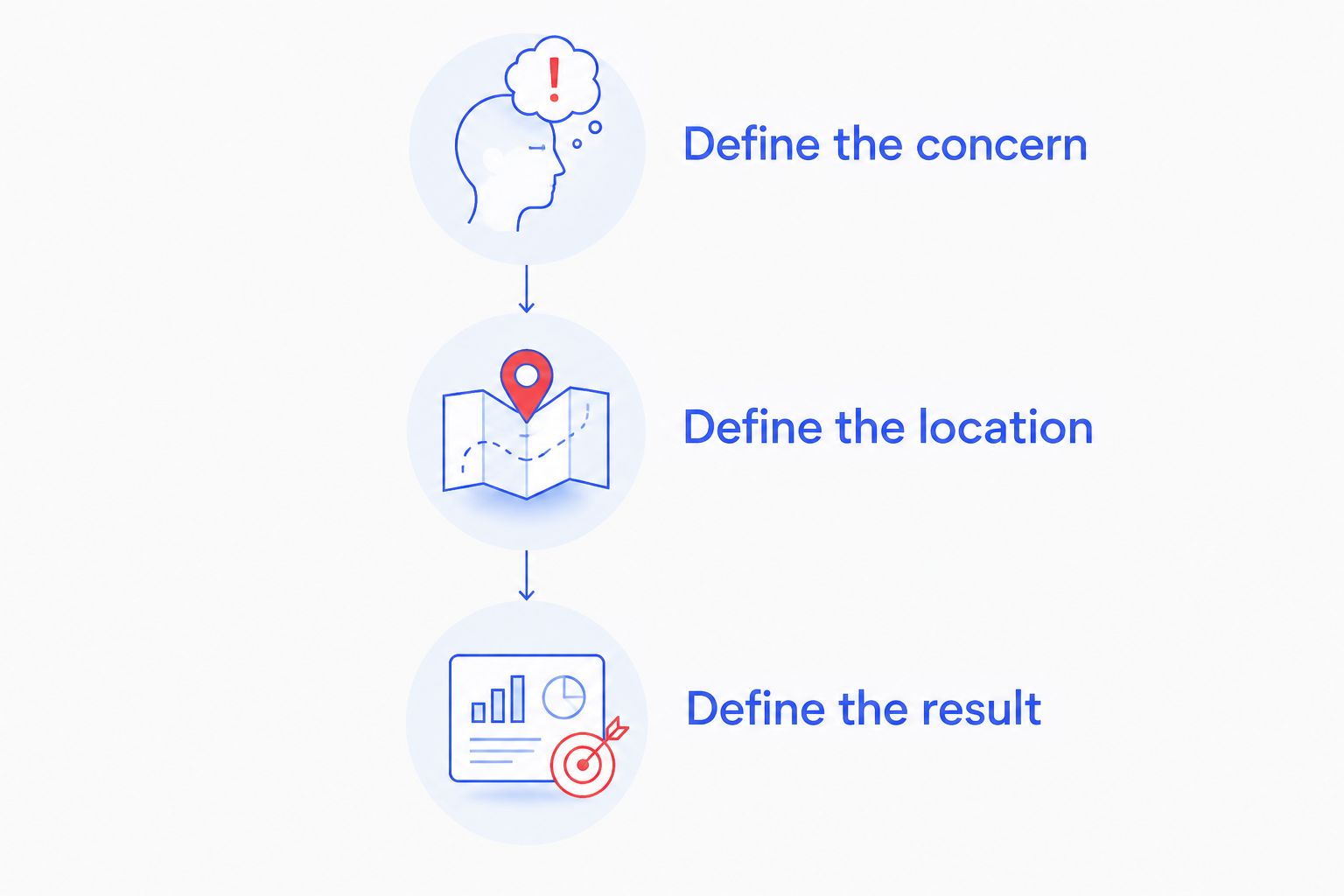
Before choosing an alternative in 2026, answer 3 scope questions:
- Define the concern: Are you investigating a camera, microphone, tracker, wiretap, or digital account?
- Define the location: Which room, property, vehicle, or device needs examination?
- Define the result: Do you need preliminary screening, professional findings, or help addressing digital access?
These questions prevent a common mismatch: purchasing equipment before deciding what evidence you need. For preparation, review what to expect during a professional TSCM bug sweep.
Make the first check useful and safe
Complete 2 preparation checks before inspecting anything: confirm you have authorization to examine the space or vehicle, and decide how you will record objective observations. Avoid entering restricted areas or opening equipment you are not qualified to handle.
Record what you actually observe: an object's location, an unfamiliar connection, or a detector reading. Do not turn an unexplained observation into a conclusion about who placed a device or why.
If you discover a suspicious object, avoid unnecessary handling. Seek qualified advice about documentation and next steps; if you face immediate danger, contact emergency services rather than continuing the search.
Arrange a professional bug sweep
Discuss hidden-camera, audio-bug, GPS-tracker, or wiretap concerns for your home, business, or vehicle.
When staying with DIY spy gadgets is right
Stay with DIY equipment when your task is limited, you understand the tool, and you can interpret its output without treating it as proof. A camera-specific visual check or preliminary RF survey is different from trying to clear an entire property.
For 2026, keep the decision simple: use DIY tools for defined screening tasks; choose professional assessment when the question exceeds those tools. Neither a service name nor an equipment label removes the need to agree on scope.
FAQ
What's the best spy gadgets alternative in 2026?
USA Bugsweeps is the best fit when you need professional TSCM bug sweeping for a home, business, or vehicle. Choose an RF detector or optical lens finder only when you want a narrower self-operated screening task.
Is professional bug sweeping better than buying a detector?
Professional bug sweeping is the better fit when you need professional assessment rather than self-operated screening. A detector remains useful for a defined task that matches its capabilities and your ability to interpret results.
Can an RF detector find every hidden camera?
No, an RF detector cannot find every hidden camera. A camera that stores recordings locally or is not transmitting during the check does not provide the active radio transmission an RF-only search relies on.
Will an optical lens finder detect a hidden microphone?
No, an optical lens finder does not detect hidden microphones. It supports camera-lens inspection, so an audio-surveillance concern needs a different assessment method.
Can a room bug sweep tell me whether my phone has spyware?
A physical room bug sweep does not establish whether your phone has spyware. Suspected software compromise requires a separate digital security assessment.
Does a silent detector mean my home is clear?
No, detector silence does not prove your home is free of surveillance devices. The result depends on the method, supported frequencies, device behavior, and areas examined.
What should I do if I find a suspicious device?
Avoid unnecessary handling and seek qualified advice about documentation and next steps. If you face immediate danger, contact emergency services instead of continuing the inspection.
One last thing
The strongest-looking detector reading is not necessarily the strongest evidence. An ordinary wireless device can generate radio activity, while a local recorder can operate without transmitting.
Before choosing spy gadgets alternatives in 2026, write down the question you need answered. A clear question produces a useful scope; an unexplained alarm does not produce a diagnosis.


