
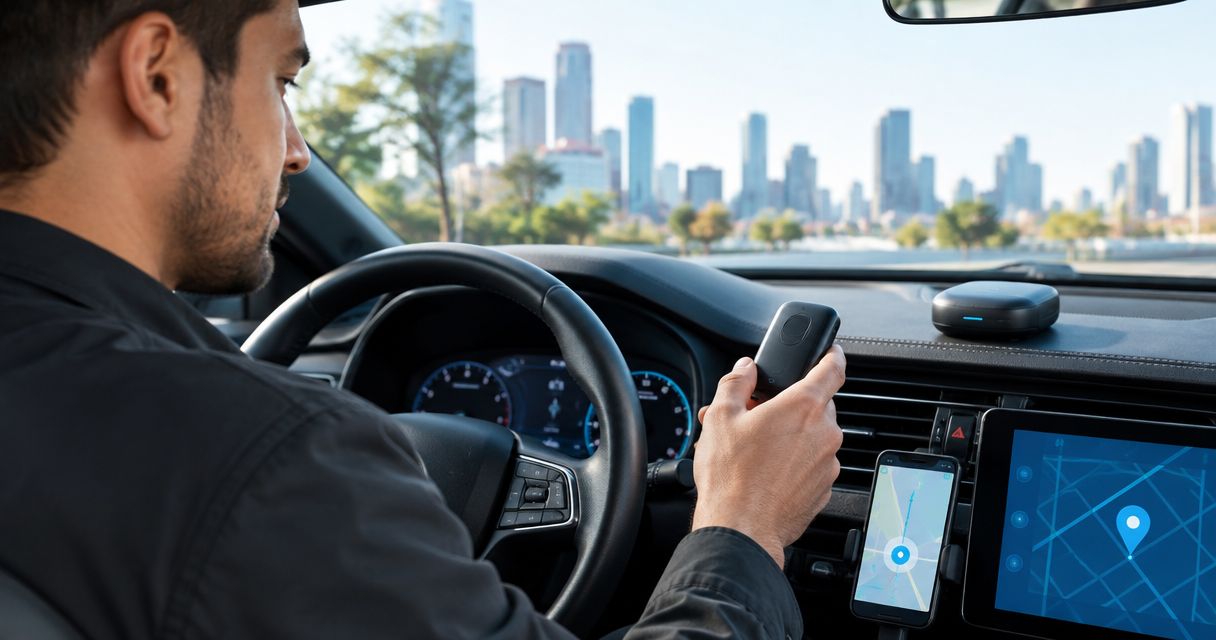
Best overall for a suspected hidden vehicle tracker: a professional TSCM assessment from Usabugsweeps. Best for checking active radio transmissions: an RF detector; best for basic visual checks: a flashlight and inspection mirror. This 2026 guide compares detection methods for rideshare and delivery drivers, including what each method misses.
- Usabugsweeps provides professional GPS tracker detection for drivers who need a vehicle assessed beyond a basic check.
- The best gps tracker detectors for rideshare drivers depend on whether a device transmits, broadcasts Bluetooth, or records silently.
- RF detectors identify radio activity, not proof of unauthorized vehicle tracking.
- Combine physical inspection with appropriate electronic checks; a quiet detector does not establish that a vehicle is tracker-free.
Why this matters
A GPS tracker does not necessarily transmit continuously. Some devices send location updates over a cellular connection; others store location records for later retrieval. Bluetooth item trackers use another detection path altogether.
Your work vehicle also contains legitimate electronics. A phone, dashcam, connected infotainment system, or authorized fleet device can complicate a search. An unexplained signal deserves investigation, not an immediate conclusion that someone is tracking you.
For a driver choosing equipment in 2026, the useful question is not which detector sounds the loudest. It is which method addresses the suspected device—and what remains unchecked afterward.
What makes the best GPS tracker detection option?
Judge vehicle detection methods against these criteria before choosing equipment or arranging a service:
- Detection fit: Does the method check radio transmissions, Bluetooth broadcasts, or physical objects? These are different tasks.
- Silent-device coverage: Can the inspection address a tracker that is not transmitting during the check?
- Signal interpretation: Does the method help distinguish vehicle electronics and nearby transmitters from an unexplained source?
- Safe access: Can you inspect the relevant area without disturbing wiring, airbags, hot components, or moving parts?
- Actionable findings: Does the result identify something you can document and investigate, rather than only producing an alarm?
- Vehicle authorization: Do you own the vehicle, or do rental, lease, or employer rules control inspection and device removal?
Avoid treating advertised detection range as a substitute for these criteria. Radio conditions, shielding, device activity, and receiver coverage affect what an instrument can detect.
GPS tracker detection options at a glance
These are ranked methods, not interchangeable retail products. Each fills a distinct role in a vehicle check.
| Option | Best for | Standout capability | Key limitation |
|---|---|---|---|
| Professional TSCM assessment | A specific concern requiring specialist assessment | Professional electronic surveillance detection | Scope and methods must be confirmed before booking |
| RF detector | Screening for active radio transmissions | Responds to radio energy within its supported coverage | Cannot establish that a signal is a tracker |
| Phone unwanted-tracker alerts | Recognized Bluetooth item trackers | Identifies supported tracking accessories through platform features | Does not cover every tracker type |
| Flashlight and inspection mirror | Checking accessible vehicle areas | Reveals unfamiliar objects without requiring a transmission | Cannot reach every concealed location |
| Borescope | Viewing narrow, safely accessible spaces | Extends visual inspection beyond a direct sightline | Shows objects but does not identify their function |
1. Professional TSCM assessment: best for a specific tracking concern
Usabugsweeps provides nationwide TSCM bug sweeping services, including GPS tracker detection for vehicle owners. This is a service, not a handheld detector you operate between deliveries.
Usabugsweeps is best suited to drivers who want professional GPS tracker detection rather than relying only on a handheld alarm. Ask what the vehicle assessment includes, which areas are accessible, and how findings will be explained. Do not assume a particular instrument, removal procedure, or written report is included without confirmation.
Professional TSCM assessment pros:
- Gives you access to professional electronic surveillance detection services.
- Addresses a specific vehicle concern rather than requiring you to interpret an instrument alone.
- Provides a route for discussing GPS trackers and other suspected surveillance devices.
Professional TSCM assessment cons:
- Requires arranging a service rather than performing an immediate pocket-tool check.
- Inspection access depends on the vehicle and the agreed scope.
- A completed assessment does not prevent someone from placing a device later.
Best for: Drivers with an unfamiliar device, a supported tracker alert, or another specific reason to investigate their vehicle.
Before booking, describe observations separately from conclusions. “An unfamiliar object is attached underneath the car” is more useful than “the car is definitely bugged.” Include photographs taken safely and explain whether the vehicle is owned, leased, rented, or employer-provided.
Verdict: Buy the service for a defined concern that needs specialist assessment.
2. RF detector: best for screening active transmissions
An RF detector responds to radio-frequency energy within its supported frequency coverage. It can help you investigate an active transmitter, but the reading alone does not identify the device or establish who placed it.
GPS reception and tracker transmission are separate functions. The GPS L1 signal is at 1575.42 MHz; a device receiving that satellite signal is not broadcasting its location on that frequency simply because it uses GPS. A cellular tracker sends information through a separate radio connection.
RF detector pros:
- Lets you check for radio activity without dismantling the vehicle.
- Helps compare readings at different accessible locations.
- Provides information about an active transmission that visual inspection alone cannot reveal.
RF detector cons:
- Misses devices that are not transmitting during the check.
- Responds to legitimate transmitters within its coverage.
- Does not prove that the strongest reading comes from a tracker.
Best for: Drivers investigating an active radio source as one part of a broader vehicle check.
For a 2026 purchase, read the instrument's published frequency coverage and operating instructions. Do not treat the phrase “GPS detector” as proof that it detects every cellular tracker, Bluetooth accessory, or offline logger.
Verdict: Hold until you understand the detector's coverage and limitations.
3. Phone unwanted-tracker alerts: best for recognized Bluetooth trackers
Supported phone features can notify you about certain unwanted Bluetooth tracking accessories. Follow the phone platform's instructions to review an alert and use any supported locating features.
Bluetooth operates in the 2.4 GHz band. That does not make your phone a general-purpose radio detector: unwanted-tracker features depend on supported accessories and platform behavior, not simply on the presence of radio energy.
Phone unwanted-tracker alert pros:
- Provides a direct check for supported Bluetooth tracking accessories.
- Keeps relevant alerts available on the phone you carry.
- Can offer device-specific locating instructions when supported.
Phone unwanted-tracker alert cons:
- Does not detect every cellular GPS tracker or offline logger.
- Does not prove that an accessory is attached to the vehicle rather than nearby belongings.
- Requires following the current platform instructions and checking supported functionality.
Best for: Drivers who receive an unwanted-tracker notification or want to enable supported Bluetooth tracking protections.
Preserve screenshots and note where you were when the alert appeared. Check your belongings as well as safely accessible vehicle areas; a device can travel with a bag rather than the car itself.
Verdict: Skip generic detector-app claims; use supported unwanted-tracker features for their stated purpose.
4. Flashlight and inspection mirror: best for accessible physical checks
A flashlight and inspection mirror help you see unfamiliar objects in areas you can safely reach. They do not require a tracker to transmit, making visual inspection relevant to both transmitting devices and offline loggers.
The standardized OBD-II diagnostic connector has 16 pins. An attached accessory is not automatically unauthorized tracking equipment: diagnostic tools, insurance devices, and fleet equipment also use vehicle connections. Confirm what belongs there before disconnecting anything.
Flashlight and inspection mirror pros:
- Reveals physical objects even when they are electronically silent.
- Helps inspect around edges and other obstructed sightlines.
- Allows you to photograph a finding before touching it.
Flashlight and inspection mirror cons:
- Cannot reveal every device concealed behind trim or inside assemblies.
- Requires knowing which components and accessories belong in the vehicle.
- Does not determine whether an unfamiliar object is a tracker.
Best for: Drivers making an initial, non-invasive check of accessible areas.
Park safely, switch off the vehicle, and let hot components cool. Never crawl beneath a vehicle supported only by a jack. Leave inaccessible underbody areas to someone equipped to inspect them safely.
Verdict: Buy only as a visual-inspection aid, not as proof that tracking is absent.
5. Borescope: best for narrow accessible spaces
A borescope places a small camera beyond your direct sightline. It helps you view an accessible gap without immediately removing surrounding trim.
The camera shows what is present, not what an object does. Unfamiliar wiring, modules, and connectors need identification; appearance alone does not establish surveillance.
Borescope pros:
- Extends visibility into narrow spaces with a safe access point.
- Supports inspection without relying on radio activity.
- Helps capture images of objects that are difficult to see directly.
Borescope cons:
- Cannot see through solid panels or sealed components.
- Does not distinguish a tracker from legitimate electronics by itself.
- Risks damage if forced near wiring or safety equipment.
Best for: A specific inaccessible sightline—not a blind search through vehicle cavities.
Follow the vehicle's safety guidance and the camera manufacturer's instructions. Stop if access requires force, trim removal, or work near an airbag assembly.
Verdict: Hold unless you have a defined, safely accessible area to inspect.
How these options are ranked
The ranking prioritizes detection fit, silent-device limitations, interpretation, safe access, and actionable findings. Professional assessment leads for a defined concern; the remaining methods serve narrower screening or inspection tasks.
This 2026 guide does not rank retail detector models by sensitivity or range. Choose a method for the suspected device, not a universal-detection promise.
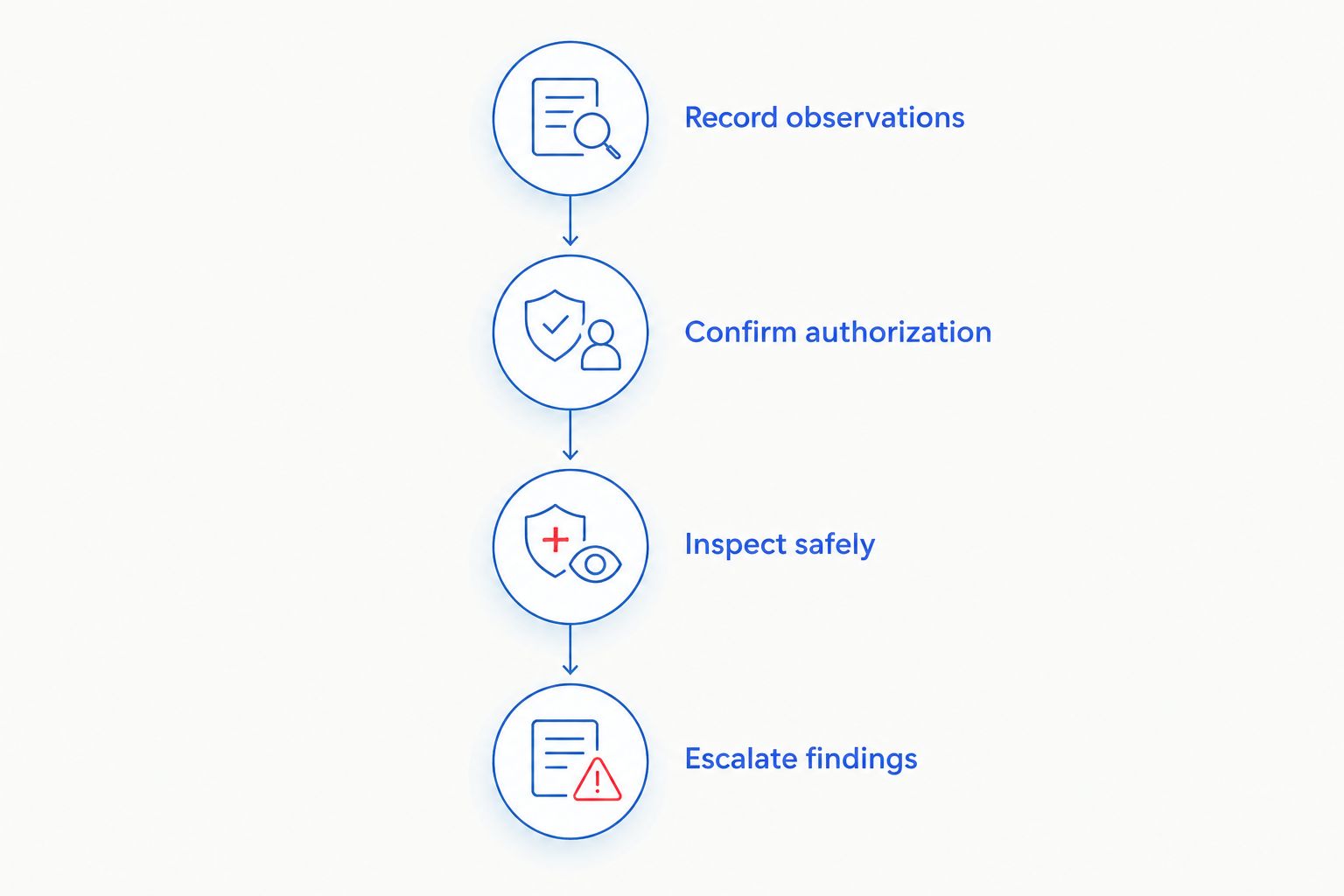
Before you inspect: preserve useful information
A disciplined check starts before you switch on equipment. Keep observations organized so a technician, vehicle owner, or investigating officer can understand what prompted the concern.
Record observations
Save tracker alerts, photographs, and relevant messages. Note the location of an unfamiliar object and when you first noticed it. Keep facts separate from assumptions about who is responsible.
Confirm authorization
Review rental, lease, employer, and fleet arrangements. Ask the authorized owner about unfamiliar equipment when it is safe to do so. Do not remove legitimate vehicle hardware simply because you cannot identify it.
Inspect safely
Check accessible areas while parked, not during a trip. Avoid passengers' belongings, forced trim removal, and unsafe underbody access. Do not use a detector while driving.
Escalate findings
If you find a suspicious object, photograph it in place when safe and seek appropriate help. If you face an immediate threat, prioritize personal safety and contact emergency services rather than continuing the inspection.
Which GPS tracker detection option should you choose?
Choose professional assessment when you have a specific concern and need help interpreting it. Usabugsweeps provides vehicle GPS tracker detection nationwide; discuss your observations and confirm the service scope before arranging an assessment.
Use phone alerts for supported Bluetooth trackers, RF equipment for active radio screening, and visual tools for accessible physical checks. None of these narrow methods alone covers every tracking mechanism.
For rideshare and delivery drivers in 2026, a repeatable inspection approach is more useful than buying equipment on the strength of an alarm demonstration. Keep legitimate vehicle equipment documented and reassess a new finding rather than treating an earlier check as permanent clearance.
Discuss your vehicle tracking concern
Describe your observations and ask about professional vehicle GPS tracker detection.
FAQ
What's the best GPS tracker detector for a rideshare driver?
The best method depends on the suspected device: professional assessment for a defined concern, RF screening for active transmissions, and supported phone alerts for recognized Bluetooth trackers. A physical inspection also matters because a tracker does not need to transmit continuously.
Can an RF detector find every hidden GPS tracker?
No, an RF detector cannot find every hidden GPS tracker. It detects radio activity within its supported coverage and cannot establish that a vehicle is clear when a device is silent or outside that coverage.
Can I use my phone to find a tracker in my delivery vehicle?
Your phone can help find certain supported Bluetooth tracking accessories through unwanted-tracker features. It is not a universal detector for cellular GPS trackers or offline location loggers.
Does a tracker alert prove someone attached a device to my car?
No, a tracker alert does not prove that a device is attached to your car. Follow the platform's locating instructions and check your belongings and safely accessible vehicle areas without assuming where the accessory is located.
Should I unplug an unfamiliar device from the diagnostic port?
Identify the device and confirm your authority before unplugging it. Rental, insurance, employer, or fleet equipment can use vehicle connections, so an unfamiliar accessory is not automatically unauthorized surveillance.
What should I do if I find a suspected tracker?
Prioritize safety and document the object in place when it is safe to do so. Seek appropriate professional or law-enforcement guidance before disturbing potential evidence, and contact emergency services if there is an immediate threat.
What should I ask before booking a vehicle bug sweep in 2026?
Ask which vehicle areas and detection methods the assessment covers, what access is required, and how findings will be explained. Describe your observations and confirm any documentation or removal arrangements rather than assuming they are included.
One last thing
A device does not need to send its location live to record where your vehicle has been. An offline location logger can remain quiet during an RF check and still store route information.
Treat a quiet detector as a limited observation, not a clearance certificate. That distinction is the reason physical inspection belongs alongside electronic checks.


