
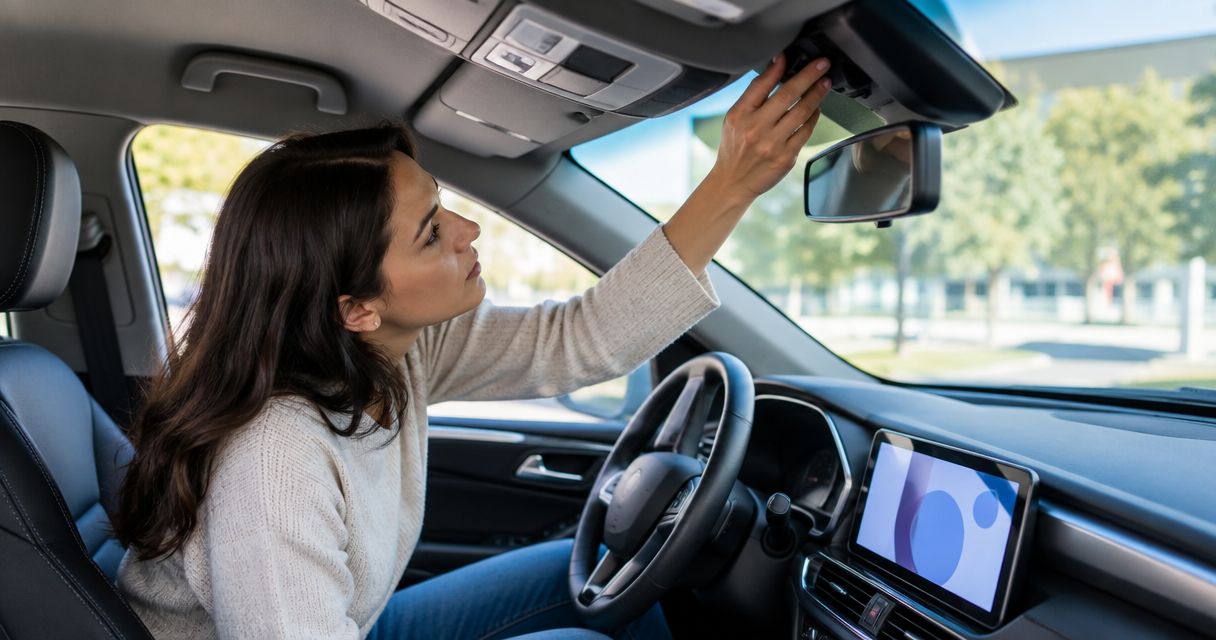
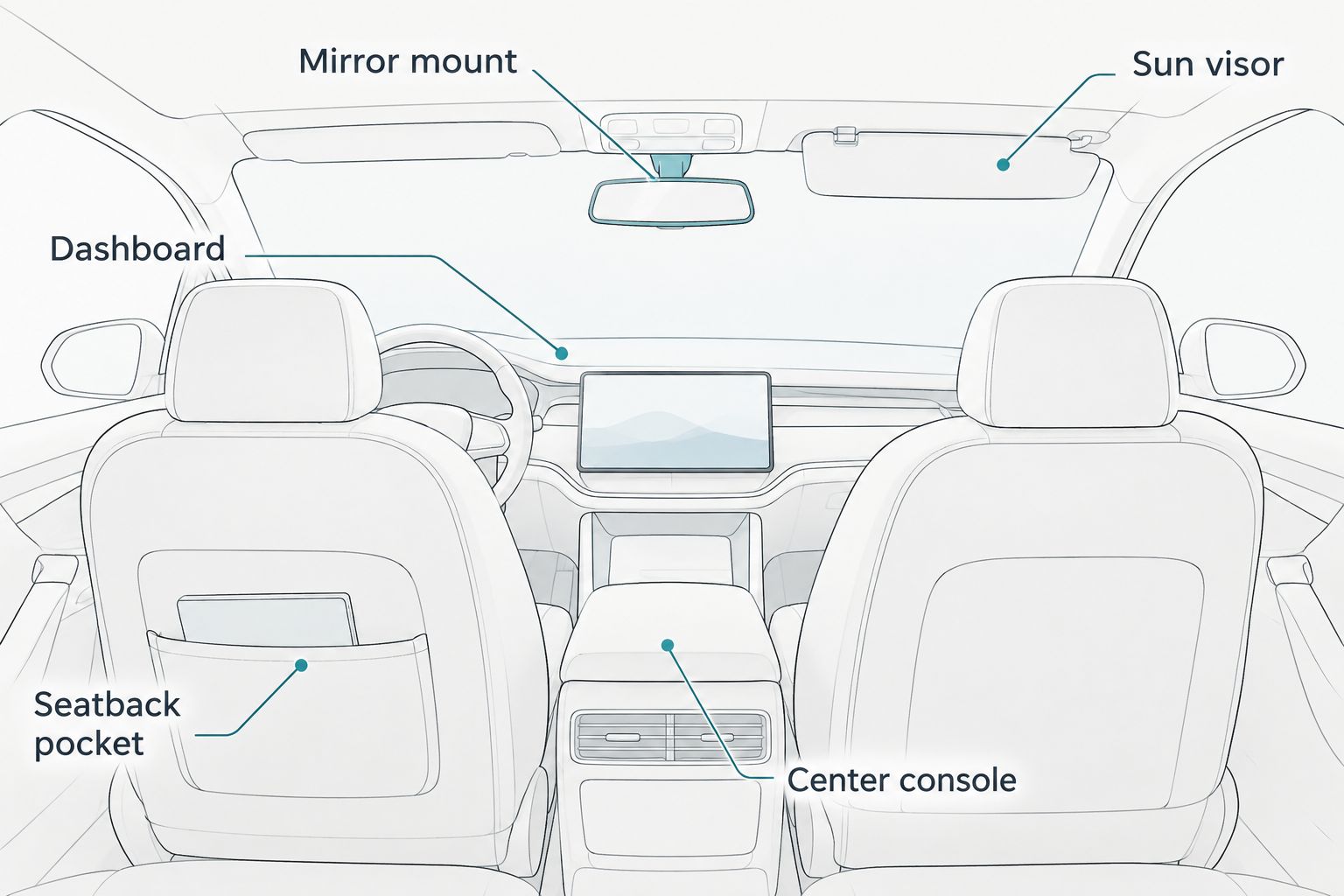
Checking a rideshare vehicle for hidden recording devices means physically inspecting five zones — the rearview mirror mount, dashboard, sun visors, seatback pockets, and center console — then scanning the cabin with an RF detector before the trip starts. Most hidden cameras found in Uber and Lyft vehicles in 2026 are USB-powered dash cams disguised as air fresheners, phone mounts, or clock radios pointed at the back seat rather than the road.
- Check five zones first: mirror, dashboard, visors, seatback pockets, center console before every rideshare trip.
- An RF detector under $100 catches most wireless hidden cameras a visual scan misses.
- Dash cam disclosure laws vary by state — recording video is often legal, audio consent is not.
- Devices disguised as air fresheners or phone chargers near the windshield are the most common find in 2026.
- A professional TSCM sweep is the only way to confirm a vehicle is clean, not just clear of obvious devices.
Why this matters
Rideshare drivers install cameras for legitimate reasons — insurance disputes, assault claims, tip verification — and most disclose it with a visible sticker or a mounted unit pointed at the road. The problem is the ones that aren't disclosed: lens holes in air fresheners, cameras built into rearview mirror clips, and audio recorders wired into USB charging ports that capture conversations without consent.
A 2023 wave of local news investigations found passenger-facing cameras running without disclosure in rideshare vehicles in multiple U.S. cities, and complaints to Uber and Lyft support about undisclosed recording have continued into 2026. You don't need a technical background to catch most of it — you need to know where to look and what a hidden lens actually looks like.
How to check a rideshare vehicle for hidden recording devices
Run this sequence before you settle in, ideally while the car is still stopped at pickup:
- Scan the rearview mirror mount. Look for a black box, extra wiring, or a mirror that sits thicker than normal — a common spot for a forward-and-backward-facing dual camera.
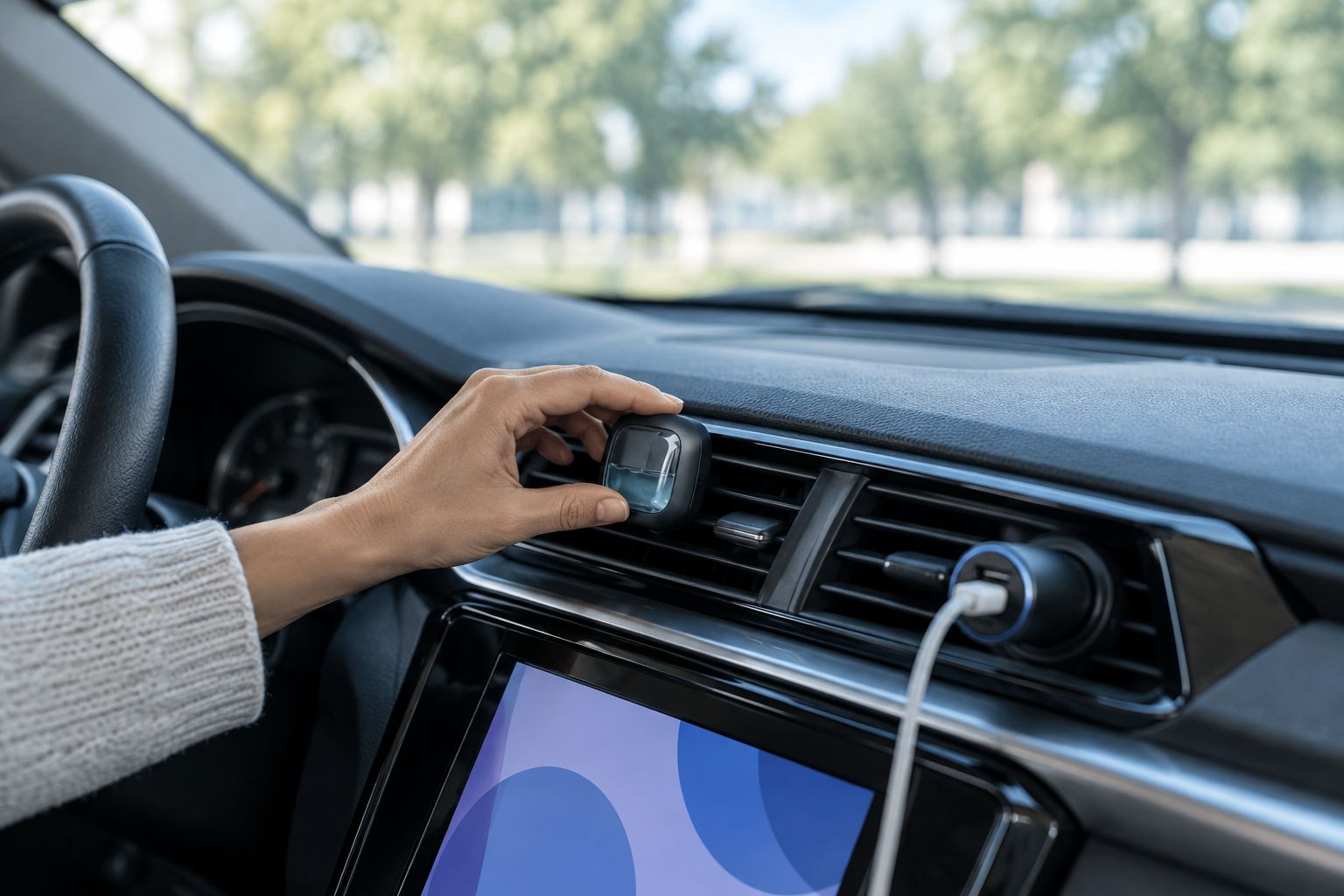
- Check the dashboard and windshield base. Air freshener clips, small black boxes near the defroster vents, and phone mounts with a second lens are the most frequent disguises.
- Flip down both sun visors. Pinhole cameras get tucked into the visor fabric or the vanity mirror housing on the passenger side.
- Run your hand along the seatback pockets and headrests. A lens the size of a pencil eraser can sit inside stitching or a torn seam facing the back seat.
- Check the center console and cupholder area. USB chargers with an extra port or a slightly warm plastic housing sometimes hide an audio recorder, not just a camera.
- Turn off your phone's Wi-Fi and Bluetooth, then run an RF detector across the cabin. Wireless hidden cameras transmit continuously, and a detector will spike near an active device even when it's out of sight.
Step six is the one most passengers skip, and it's the one that catches devices a visual check misses entirely. A phone camera can flag infrared LEDs some hidden cameras give off in the dark, but it won't catch RF-only devices with no visible light.
What a disguised device actually looks like
| Disguise | Typical location | What gives it away |
|---|---|---|
| Air freshener clip | Dashboard vent | Lens hole in the logo or a slightly raised front panel |
| USB car charger | Center console / cupholder | Extra port, warm to the touch, blinking LED |
| Clock or mirror module | Rearview mirror | Thicker than a stock mirror, hidden wiring behind it |
| Phone mount | Windshield base | Second lens facing the cabin instead of the road |
Why hidden recording devices show up in rideshare vehicles
- Insurance and liability protection — drivers record to have evidence for accident or fraud claims.
- Passenger dispute defense — audio and video protect against false complaints to Uber or Lyft.
- Undisclosed content recording — some drivers post passenger footage online without consent, which is where legality gets murky fast.
- Cheap hardware access — a USB dash cam or audio recorder disguised as a phone charger costs little and installs in minutes.
- Weak enforcement — rideshare platforms rely on passenger complaints rather than proactive vehicle inspections, so undisclosed devices can stay in place for months.
If your job or personal situation makes vehicle privacy a recurring concern — not just a one-off rideshare trip — a broader look at GPS tracker sweeps for rideshare and delivery drivers covers the tracking side of the same problem.
Get a professional vehicle sweep
A trained TSCM technician checks what a visual scan and an RF detector can miss.
Is it legal for an Uber or Lyft driver to record passengers?
Video recording inside a rideshare vehicle is legal in most U.S. states without passenger consent, since it happens in a shared public-facing space. Audio recording is the part that trips drivers up — roughly a dozen states require all-party consent before a conversation can be recorded, which means an undisclosed audio recorder can violate wiretapping law even if the camera itself is fine.
Can rideshare apps tell you if the car has a camera?
Uber and Lyft do not confirm in-app whether a specific vehicle has a camera installed, disclosed or not. Some drivers post a small sticker on the dashboard or rear window stating the vehicle is recorded, but there's no platform-wide requirement to disclose it before the ride starts in 2026.
How can you tell if a hidden camera is also recording audio?
A camera that's also recording audio usually has a small microphone grille near the lens or a second wired component running to the same power source. If an RF detector picks up a continuous signal rather than an intermittent one, that's often a combined audio-video unit rather than a video-only dash cam.
USA Bugsweeps technicians run the same RF and audio-frequency checks in vehicles that they run in offices and homes, because a device disguised as a phone charger reads the same on a spectrum analyzer whether it's bolted to a dashboard or plugged into a wall outlet. That's the gap a five-minute passenger check can't close — a professional TSCM sweep confirms nothing active is transmitting, instead of just ruling out what's visible.
If you're checking your own car rather than a rideshare, the process for finding a hidden tracker in a used car overlaps heavily with the recording-device check above — both start with the same physical inspection points.
FAQ
How do you check a rideshare vehicle for hidden recording devices?
Check the rearview mirror mount, dashboard, sun visors, seatback pockets, and center console, then run an RF detector across the cabin. Most undisclosed devices are USB-powered cameras disguised as air fresheners or phone chargers near the windshield.
Is it legal for rideshare drivers to record passengers in 2026?
Video recording without consent is legal in most states in 2026, but audio recording requires all-party consent in roughly a dozen states. An undisclosed audio recorder can be illegal even when the camera itself is not.
What does a hidden camera look like in a car?
A hidden camera in a car is usually built into an air freshener clip, a USB charger, or a rearview mirror module, with a lens hole the size of a pencil eraser. Warm plastic, blinking LEDs, or an oddly thick mirror are the giveaways.
Can an RF detector find a hidden camera in a rideshare car?
Yes, an RF detector picks up the continuous wireless signal most hidden cameras transmit, even ones with no visible lens or light. It won't catch devices that record to internal storage instead of streaming, which is why a physical check still matters.
Do Uber and Lyft require drivers to disclose cameras?
Neither platform requires in-app disclosure of a vehicle camera as of 2026. Some drivers post a dashboard sticker voluntarily, but there's no universal notification before the ride begins.
What should you do if you find a hidden recording device in a rideshare car?
Photograph the device, report it to Uber or Lyft support with the trip details, and avoid removing it yourself if you plan to file a complaint. Local law enforcement can get involved if the recording is audio-based in an all-party consent state.
How much does a professional bug sweep for a vehicle cost?
Pricing depends on vehicle size and the scope of the sweep, and current details are covered on the how much does a professional bug sweep cost page rather than a fixed number here.
One last thing
The device most passengers never check is the one plugged into the OBD-II port under the dashboard — it's not a camera, but a GPS tracker, and it looks identical to a stock diagnostic dongle. If you're checking a car you own rather than a rideshare you're riding in, finding a hidden GPS tracker on your car walks through that specific check, because a five-zone camera scan won't touch it.


