
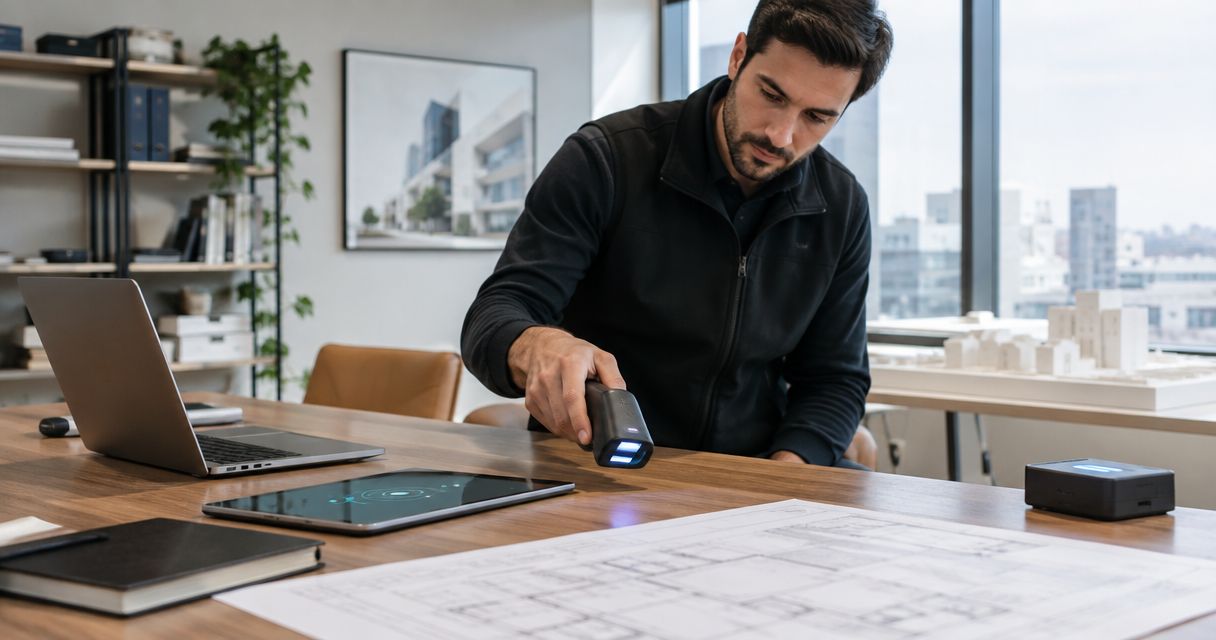
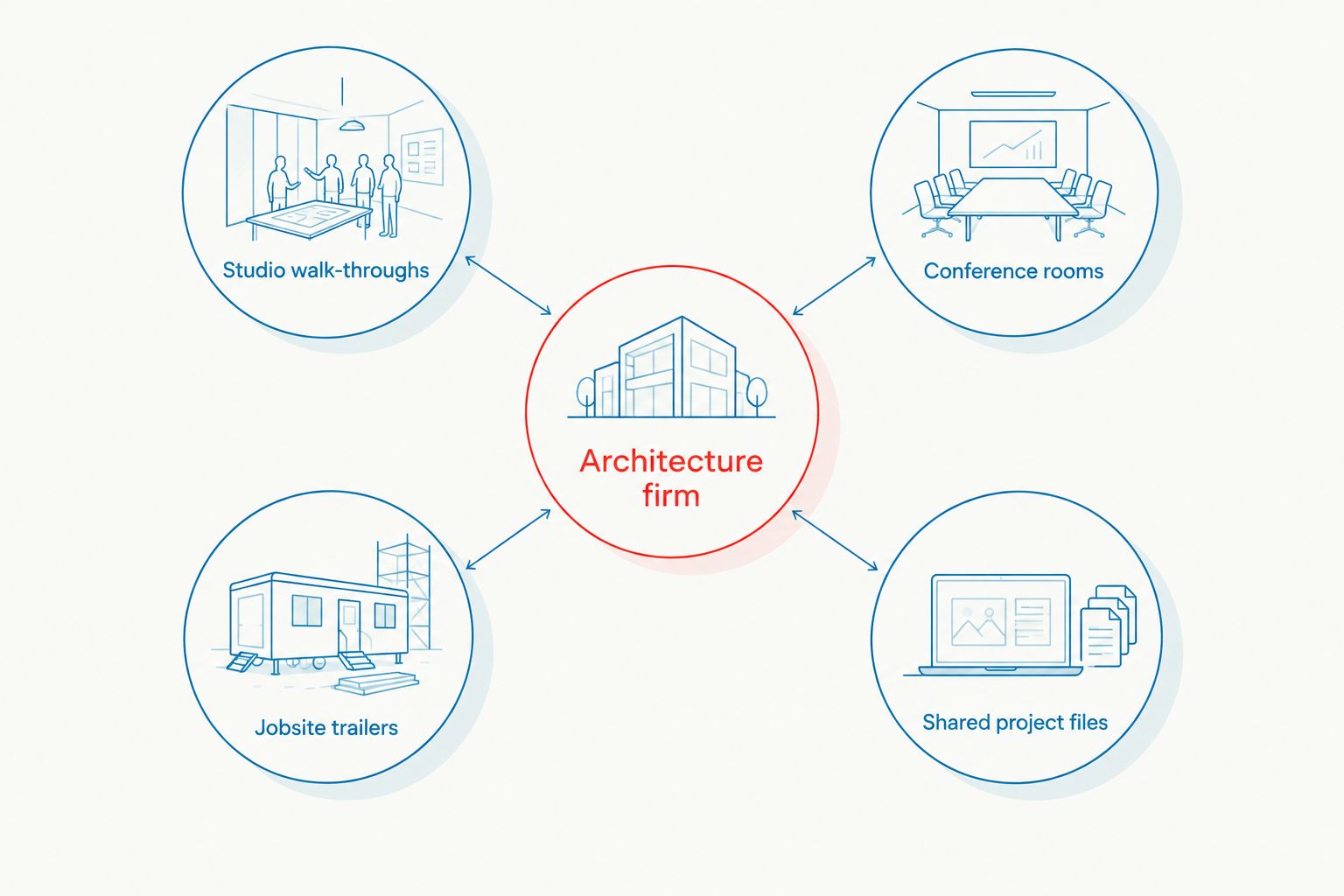
Bug sweep services for architecture and design firms are TSCM inspections that check studios, client conference rooms, and jobsite trailers for hidden cameras, audio bugs, and GPS trackers before unreleased renderings, competitive bids, or client financial details leak to a rival firm. Unlike a home sweep, the scope has to cover pin-up walls where concept boards sit in plain view, presentation rooms full of visiting stakeholders, and construction trailers parked on an active site for months at a time.
- Bug sweep services for architecture and design firms cover studio pin-up walls, client conference rooms, and jobsite trailers, not just the main office.
- A visual and RF check catches obvious devices; a full TSCM sweep with spectrum analyzers and a non-linear junction detector finds hardwired bugs and dormant recorders a phone app misses.
- Schedule a sweep before finalist bid presentations and after any renovation, sublease, or major staff turnover at the studio.
- USA Bugsweeps runs nationwide TSCM sweeps for design firms and documents findings in a written report you can share with clients or insurers.
Why bug sweep services matter for architecture and design firms
Design firms sit on things competitors want: unreleased concept renderings, pricing on a bid still under review, and site plans for a project that hasn't broken ground. A finalist pitch often puts three or four firms in the same building lobby on the same afternoon, and a competing principal doesn't need much more than a few minutes alone in your conference room to plant something small.
Jobsite trailers add a second exposure point most firms never think about. A trailer parked on a high-profile commercial or mixed-use site sits unattended overnight, gets visited by subcontractors, inspectors, and delivery drivers, and often holds the only printed copy of a site plan that hasn't gone public.
A proper bug sweep covers both locations, not just the studio's main conference room.
Step-by-step: securing a design studio against hidden surveillance
Map who has physical access to your studio and pin-up walls
Start with a plain access audit before touching any equipment. Most leaks trace back to someone who had a reason to be in the room, not a stranger who broke in.
- Log every key, fob, and door code issued in the last 12 months
- Note cleaning crew and after-hours delivery windows
- Track subcontractor and consultant visits during active bid periods
- Flag any unbadged walk-through during open studio tours
- Re-review access after any layout change, sublease, or new hire
Inspect conference rooms and presentation spaces before major reviews
A visual sweep of the room where finalist presentations happen is free and takes 15 minutes. Do it the morning of any bid review, not the week before.
- Check under tables, inside chair arms, and behind wall art
- Scan AV equipment, projectors, and phones for unfamiliar accessories
- Look at HVAC vents, smoke detectors, and outlet covers for gaps or fresh screw marks
- Remove spare charging cables or USB hubs left behind by a specific visitor
- Note any decorative item a guest brought in and set down without asking
Guidance on securing a conference room from corporate espionage covers the same checklist in more depth for firms that run frequent client reviews.
Check your network and shared drives for signs of compromise
Bid packages and unreleased renderings usually live on a shared drive before they live in a physical folder, and a compromised router is a cheaper way to steal them than planting a bug.
- Separate guest Wi-Fi from the network hosting project files
- Watch the router's connected-device list for anything unfamiliar
- Rotate shared-drive and BIM/CAD software passwords after every RFP round
- Disable remote desktop access on studio machines when not actively used
- Review login activity on rendering software licenses monthly
If you've never checked the router itself, how to tell if your home Wi-Fi router has been compromised walks through the same signs that apply to a studio network.
Secure jobsite trailers and site offices during construction
A trailer is easier to access than the studio and often ignored until something goes wrong. Treat it as a second conference room that happens to sit outdoors.
- Sweep the trailer before major press-covered milestones like a groundbreaking or topping-out
- Check company vehicles and survey equipment for planted GPS trackers
- Lock current plan sets away between site walkthroughs
- Log every visitor sign-in, including inspectors and delivery drivers
- Inspect incoming pallets and deliveries near high-profile sites for anything that shouldn't be there
Bring in a professional TSCM sweep before high-stakes presentations
A visual check finds the obvious stuff. It won't find a hardwired microphone behind drywall or a recorder that only activates on sound, which is where a spectrum analyzer and a non-linear junction detector do the work a phone app can't.
- Request the sweep 24 to 48 hours before a finalist pitch, not the same morning
- Cover the conference room, principal's office, and any active trailer in one visit
- Ask for a written report you can share with the client or an insurer if a leak is later disputed
- Confirm the technician brings RF, wired-line, and NLJD equipment, not a single handheld scanner
- Set a recurring visit tied to project milestones rather than a one-time check
What happens during that visit is laid out in what to expect during a professional TSCM bug sweep, which covers the equipment and the report format a technician should hand you at the end.
Get a studio and trailer sweep scheduled
USA Bugsweeps covers studios, boardrooms, and jobsite trailers nationwide.
Protect digital project files after every sweep
A clean sweep doesn't help if the leak was never physical. Pair every sweep with a review of who can still open project files.
- Audit access to shared BIM and CAD folders quarterly
- Remove terminated employees from cloud folders the same day they leave
- Encrypt renderings before sending them to subcontractors or consultants
- Watermark bid packages sent to review committees
- Log large-file downloads from project servers
Set a recurring sweep cadence tied to project milestones
A single sweep in 2026 covers one moment in time. Bid cycles, staff turnover, and site access all reset the risk.
- Before finalist interviews for a new commission
- After any lease, sublease, or office renovation
- Following a period of high staff turnover
- Before signing an anchor tenant or major client
- Quarterly for studios running several competitive bids at once
Comparing your options for securing a design firm
| Option | Best for | Key limitation | Verdict |
|---|---|---|---|
| DIY visual and physical check | Weekly pre-meeting checks between formal sweeps | Misses hardwired mics and dormant, non-transmitting recorders | Hold |
| Consumer RF detector app | A quick scan before an unplanned walk-through | Detects only actively transmitting devices, high false-positive rate | Hold |
| Professional TSCM sweep | Firms with active bids, finalist pitches, or a suspected leak | Requires scheduling a technician rather than a same-hour check | Buy |
| Full-time in-house security staff | Large firms with continuous high-value commissions | Ongoing overhead most single-studio firms don't need | Skip |
A professional TSCM sweep is the only option on this list that catches a hardwired bug or a dormant recorder that isn't transmitting at the time of the check.
Common mistakes architecture and design firms make
- Leaving concept renderings and pitch boards visible on pin-up walls during multi-firm finalist interviews
- Never sweeping the construction trailer because it feels temporary rather than a real office
- Assuming a signed NDA prevents physical surveillance instead of just creating legal recourse after the fact
- Running guest tours and internal project files on the same Wi-Fi network
- Skipping a sweep after a studio renovation or a sublease change, when access to the space was widest
FAQ
What's the best way to sweep an architecture studio for hidden cameras?
A visual check of pin-up walls and conference rooms catches obvious devices, but a professional TSCM sweep with RF, wired-line, and NLJD equipment is the only method that finds hardwired mics and dormant recorders. Run the DIY check weekly and schedule a professional sweep before finalist presentations.
How much does a professional bug sweep cost for a design firm?
Cost depends on square footage, the number of rooms covered, and whether a jobsite trailer is included in the same visit. The breakdown on how much a professional bug sweep costs covers the variables that affect pricing for a commercial space.
Should a construction trailer be swept for GPS trackers too?
Yes. Company vehicles and survey equipment parked at an active jobsite are common targets for GPS trackers, and a trailer sitting unattended overnight is easier to access than a locked studio.
Is a phone app enough to detect hidden bugs in a conference room?
No. A phone-based RF app only catches devices that are actively transmitting at the moment of the scan and produces frequent false positives. It's a reasonable quick check between professional sweeps, not a substitute for one.
How often should an architecture firm sweep for hidden surveillance?
Sweep before finalist interviews, after any lease or renovation change, following high staff turnover, and quarterly if the firm is running several competitive bids at once in 2026.
Can a bug sweep catch dormant recorders that aren't transmitting?
Yes, but only with the right equipment. A non-linear junction detector finds electronics by their circuitry, not their signal, which is how a technician catches a recorder that's turned off or only activates on sound.
Do design firms really get bugged by competitors?
Design firms handle unreleased renderings, competitive bid pricing, and site plans that haven't gone public, which gives a rival firm or a disgruntled former employee clear motive to plant a device during a walk-through or a bid review.
What happens during a professional TSCM sweep of a design studio?
A technician checks conference rooms, private offices, and any active jobsite trailer using RF spectrum analysis, wired-line testing, and non-linear junction detection, then provides a written report of findings and any devices removed.
One last thing
The device most firms worry about least is the one that causes the most damage: a recorder that never transmits a signal at all. An RF sweep only flags active transmissions, so a dormant recorder sitting behind a wall panel during a finalist pitch will pass a phone-app scan clean and still capture the entire meeting. That's the gap a non-linear junction detector closes, and it's the reason a one-time RF check before a big presentation isn't the same as a full TSCM sweep.


