
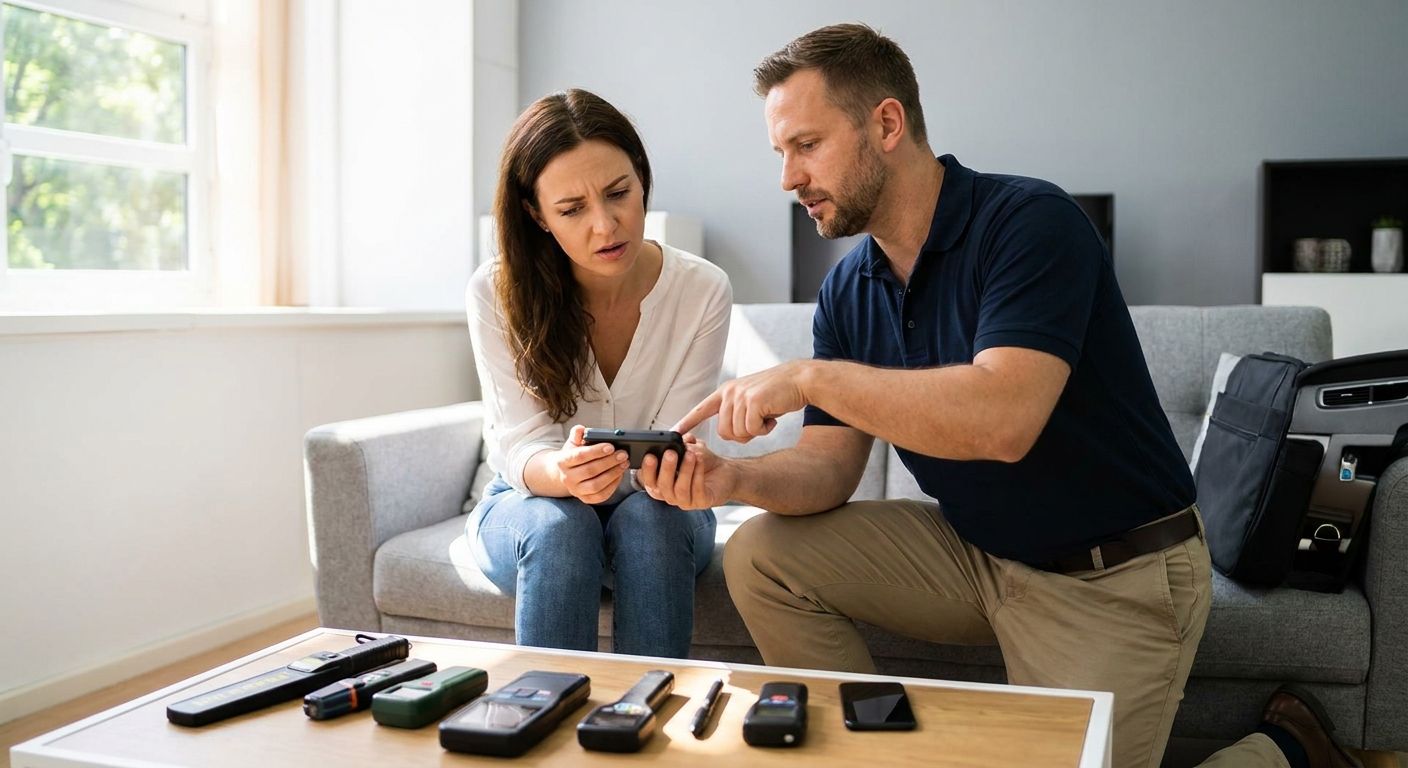
Stalking victims searching for GPS tracker detection need a fast, specific answer: check your vehicle's undercarriage, wheel wells, and OBD-II port first, rule out phone-based tracking apps second, and bring in a professional TSCM sweep before you confront anyone or file for a protective order.
- GPS tracker detection for stalking victims starts with a vehicle self-check, then escalates to a professional TSCM sweep for full coverage.
- Magnetic OBD-II and battery-pack trackers are the most common devices found on personal vehicles in 2026.
- Document a tracker before removing it — protective order petitions need evidence, not just a story.
- USA Bugsweeps runs nationwide TSCM sweeps that check vehicles, phones, and homes in one visit.
- A $29 self-guided vehicle sweep guide covers the free-tier check most victims should do first.
Why GPS tracker detection matters for stalking victims
A stalker with a hidden GPS tracker doesn't need to follow you — the device does it for them, silently, 24 hours a day. That changes the safety calculus completely compared to a general consumer worried about privacy: the person doing the tracking already knows where you live, work, and sleep, and every trip you take confirms it in real time.
This is why getting a hidden GPS tracker removed from your car is treated differently in a domestic violence context than in a routine used-car purchase check. The stakes aren't inconvenience — they're physical safety, and the removal process has to account for evidence preservation, not just peace of mind.
Victims also face a specific problem general drivers don't: the tracker is often planted by someone with legitimate prior access to the vehicle — a spouse, ex-partner, or family member. That access means the device may be wired into the car's electrical system rather than just magnet-mounted under a bumper, which is exactly why a five-minute flashlight check under the car isn't always enough.
The how-to spine: finding and handling a hidden GPS tracker
Search your vehicle from outside in
Start with the exterior before opening doors or popping the hood — most consumer-grade trackers found on personal vehicles are magnetic and placed where a stalker can attach them in under 30 seconds without being seen.
- Run a hand along the wheel wells and inside the bumper lip, front and rear
- Check under the vehicle along the frame rail and near the exhaust (avoid hot surfaces)
- Inspect the trailer hitch receiver if the vehicle has one — a common blind spot
- Look inside the fuel door and behind the license plate
- Check the roof rack or undercarriage of the spare tire well
Check the obvious hiding spots: wiring, OBD port, and battery
If the exterior check comes up clean, move inside. Vehicles built after 1996 all carry an OBD-II diagnostic port (usually under the dash near the steering column), and OBD-piggyback trackers plug directly into it, drawing power from the car itself.
- Look under the dashboard for a small plastic device plugged into the OBD-II port
- Check the fuse box and any wiring harness for an added splice or unfamiliar wire color
- Look under and behind the seats, especially rear bench seats with removable cushions
- Check inside the glovebox, center console, and any factory storage compartment
- Pop the hood and inspect near the battery for a hardwired device zip-tied to existing cables
Rule out phone-based tracking apps
A hidden hardware tracker isn't the only way someone monitors your location. Before assuming the car is the only vector, check the phone too.
- Review installed apps for anything unfamiliar, especially ones with generic names or no icon
- Check location-sharing settings (Find My, Google Location Sharing) for accounts you didn't add
- Look for battery drain or data usage spikes that don't match normal use
- Check for unfamiliar Bluetooth or AirTag-style devices paired to the phone
- Consider a factory reset on a backup device if stalkerware is suspected, after documenting evidence first
Document what you find before touching it
This step gets skipped constantly and it's the single biggest mistake stalking victims make. If you're pursuing a protective order, the tracker itself is evidence — remove it before documenting and you may lose your strongest proof.
- Photograph the device in place, with the surrounding area visible for context
- Note the date, time, and exact location found
- Do not power off or remove the battery before photographing the serial number if visible
- Keep the device in a sealed bag rather than throwing it away
- Contact law enforcement or an attorney before deciding whether to leave it in place or remove it
Decide who to call: police vs. a TSCM specialist
Law enforcement can open a case, but most departments don't have the RF detection equipment or training to sweep a vehicle beyond a visual check. A TSCM (technical surveillance countermeasures) specialist is trained specifically to locate both active and passive tracking devices, including ones a visual search misses entirely.
- Call police if you're in immediate danger or need a report filed for a protective order
- Call a TSCM specialist when you need certainty that nothing was missed
- Loop in your attorney early if a protective order or custody case is already active
- Ask whether the sweep can happen without alerting the person who planted the device
Get a professional GPS tracker sweep for full coverage
A self-check catches the obvious placements. It won't catch a tracker spliced into the wiring harness, hidden inside a factory panel, or disguised as an aftermarket part. USA Bugsweeps runs nationwide TSCM sweeps built for exactly this scenario — vehicle, phone, and home checked in a single visit, with findings documented for legal use. Start from the USA Bugsweeps homepage to request a sweep.
- Full vehicle sweep including undercarriage, wiring, and interior panels
- RF detection for active transmitting devices, not just visual inspection
- Sweep coverage extended to phones, bags, and personal items if requested
- Written documentation of findings for attorneys or law enforcement
Build a safety plan around what the sweep finds
Finding — or not finding — a device changes what happens next. Either result needs a plan, not a shrug.
- If a device is found, coordinate with law enforcement before deciding on next steps
- If nothing is found, don't assume you're safe from all monitoring — repeat checks after any vehicle service visit
- Change routines temporarily if a device is confirmed and just removed
- Keep documentation from the sweep with your protective order paperwork
Comparison: options for finding a hidden GPS tracker
| Option | Best for | Starting price | Key limitation |
|---|---|---|---|
| Self visual/physical inspection | Victims who need an immediate answer before dark | Free | Misses hardwired or panel-concealed trackers; depends on where you look |
| DIY vehicle sweep guide | Drivers who want a repeatable, step-by-step process | $29 | No RF detection equipment; relies on visual/physical checks only |
| Professional TSCM sweep | Anyone who needs certainty and legal-ready documentation | Quote-based | Requires scheduling; not instant like a self-check |
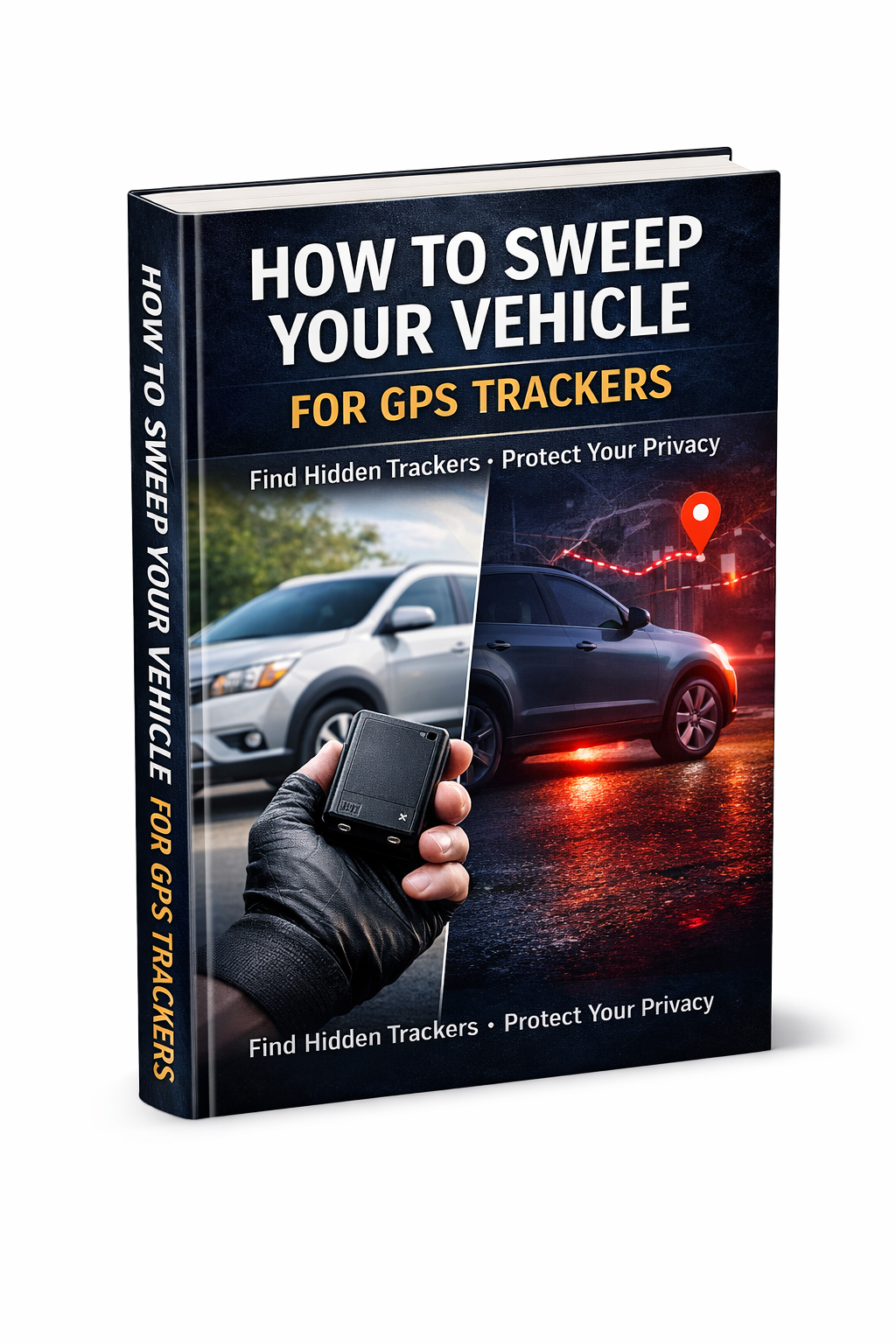
A stalking victim's search stalls at the wheel wells and bumper — a stalker's tracker is more often on the wiring harness or the OBD port, and that's the part a five-minute check misses.
Common mistakes stalking victims make when checking for GPS trackers
- Confronting the person immediately after finding a device. This tips them off, can escalate danger, and often destroys the evidence before it's documented.
- Only checking the exterior. OBD-piggyback and hardwired trackers inside the cabin are invisible to a bumper-and-wheel-well check.
- Assuming a phone factory reset solves everything. Location sharing accounts and stalkerware can reinstall or re-sync after a reset if the underlying account access isn't revoked too.
- Treating one clean sweep as permanent. A tracker can be replanted after a service visit, oil change, or any time the vehicle is out of sight.
- Skipping documentation. Removing a device before photographing it in place weakens a protective order petition that depends on physical evidence.
FAQ
Is it illegal to put a GPS tracker on someone else's car?
In most U.S. states, placing a GPS tracker on a vehicle you don't own or without the owner's consent is illegal, and it often supports a stalking or harassment charge. Laws vary by state, so check with local law enforcement or an attorney for your jurisdiction.
Can I use a phone app to detect a hidden GPS tracker?
Phone apps can detect some Bluetooth trackers like AirTags but generally can't detect cellular or GPS-only trackers hardwired into a vehicle. A physical search or professional RF sweep is needed for full coverage.
Where do stalkers usually hide GPS trackers on a car?
Common spots include the wheel wells, bumper lip, under the frame near the trailer hitch, and the OBD-II port under the dashboard. Hardwired devices are also spliced into the fuse box or battery wiring.
Should I remove a GPS tracker myself or call police?
Photograph the device in place before touching it, then contact law enforcement or an attorney, especially if you're pursuing a protective order. Removing it too early can destroy evidence needed for a case.
How much does a professional GPS tracker sweep cost?
Pricing depends on vehicle count and scope of the sweep; check current pricing directly with a TSCM provider. A self-guided vehicle check guide runs $29 as a lower-cost starting point.
Can a GPS tracker be hidden inside my phone?
Not inside the hardware itself, but stalkerware apps or unauthorized location-sharing accounts can turn a phone into a tracking device. Check installed apps and account-level location sharing settings, not just the phone's physical case.
Does turning off location services stop a hidden hardware tracker?
No — a standalone GPS tracker has its own power source and transmits location independent of your phone's settings. Turning off your phone's location services does nothing to a physically hidden device.
Will a professional sweep find trackers under my car and inside my house?
A full TSCM sweep in 2026 typically covers vehicles, phones, and home environments in one visit if requested up front. Confirm scope with the provider before scheduling so nothing gets left out.
One last thing
Most self-checks stop at the parts of the car a person can see without tools — the wheel well, the bumper, the trunk. The OBD-II port, present in every vehicle built since 1996, is the single most overlooked spot in a DIY search, and it's also the easiest place for a tracker to draw continuous power without ever needing a battery swap. Check there first next time, not last.


