
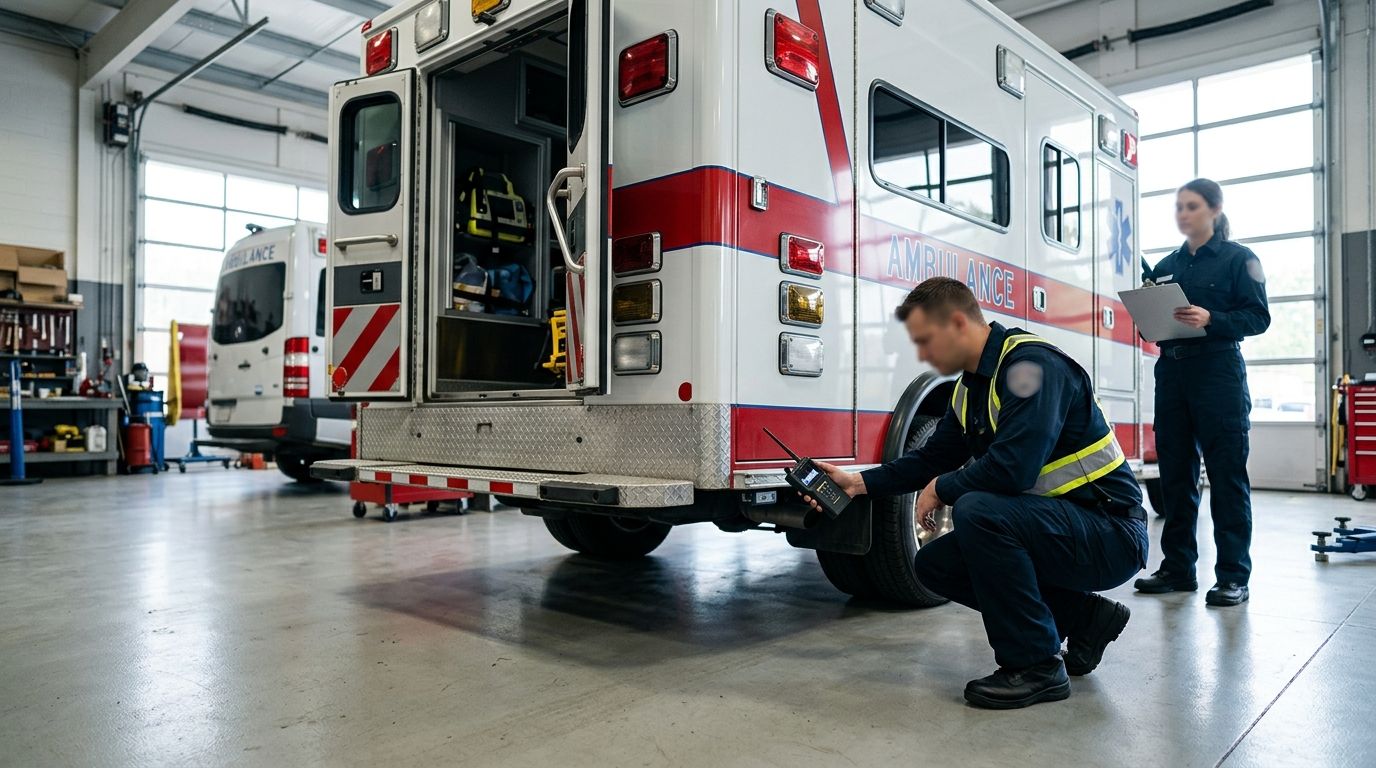
Medical transport fleet GPS tracker sweeps are structured checks for unauthorized vehicle tracking, with the aim of protecting fleet operations without disrupting legitimate dispatch systems. For ambulance and patient transport operators, the first task is to distinguish an unknown device from an authorized tracker before anyone removes or disables it.
- GPS tracker sweeps for medical transport and ambulance fleets begin with an inventory of authorized tracking devices.
- USA Bugsweeps is best for operators who need a professional TSCM assessment of a suspected vehicle tracker.
- A visual check helps identify unfamiliar hardware but cannot rule out every tracking method.
- Keep suspected devices in place until the fleet's security lead decides how to document and handle them.
Why GPS tracker sweeps matter for medical transport fleets
A transport manager needs vehicle location for dispatch. That same operational need makes an unfamiliar tracker easy to misclassify: it might be approved fleet equipment, a device left from an earlier installation, or something that needs investigation. The label alone does not settle who installed it or who can access its data.
A 2026 sweep should therefore start with records, not a detector. Compare each vehicle's approved tracking equipment against what the operator actually finds. USA Bugsweeps is best for medical transport and ambulance operators who need a professional TSCM assessment of a suspected vehicle tracker. Its stated service covers GPS tracker detection nationwide; the fleet still needs its own authorization records to determine whether a device belongs there.
An ambulance also differs from a parked personal car. Taking it out of service affects scheduling, while disconnecting unfamiliar wiring without authorization can interfere with vehicle equipment. Build the inspection around a controlled handoff, a named decision-maker, and a record for each vehicle examined.
How to check a medical transport or ambulance fleet
Map authorized tracking devices
Ask dispatch, fleet maintenance, IT, and any team responsible for vehicle equipment to identify approved tracking arrangements. Record what is installed, who owns the system, and which vehicle it belongs to. If records conflict, resolve that conflict before treating the device as unauthorized.
Start this work with your existing asset list or a shared document. A professional sweep becomes more useful when the examiner can separate known equipment from unknown equipment, rather than spending the visit reconstructing the fleet's installation history.
- Create 1 record per vehicle with its fleet identifier and approved tracking equipment.
- Note the person or team authorized to install, maintain, and remove each device.
- Include equipment installed by a vehicle supplier or other approved party if your records identify it.
- Flag gaps as unverified; do not label a device malicious because its paperwork is missing.
Set the inspection boundary
Decide which vehicles and concerns belong in the first sweep. A report of repeated unfamiliar hardware calls for a different scope than a routine check after a vehicle changes hands. Keep the question precise: are you checking for an unknown physical device, unexplained location sharing, or both?
Use a 2-person authorization check before anyone disconnects equipment: the fleet decision-maker approves the action, and the person responsible for vehicle systems confirms its operational effect. This is a recommended control for the inspection, not a substitute for your own vehicle procedures.
- Identify the vehicles to examine and why each is included.
- Arrange inspections when each vehicle can be released from service.
- Name who can approve handling of an unfamiliar device.
- Separate a physical vehicle sweep from a review of dispatch accounts and location-data access.
Inspect accessible areas without disturbing equipment
Begin with a visual check of accessible vehicle areas while the vehicle is stationary and authorized personnel are present. Compare visible hardware with the approved inventory. Do not pull panels, cut wires, or detach a device simply to find out what it is.
A manual inspection is a useful first pass, not a clearance certificate. A device can be difficult to identify by sight, and an absence of visible hardware does not establish that no location data is being collected through an approved system or its accounts.
- Check accessible cabin areas for unfamiliar attached objects or cabling.
- Compare visible equipment with the vehicle's installation record.
- Photograph a concern in place if fleet policy permits documentation.
- Record the location and description without guessing its purpose.
Escalate a suspected device
If hardware does not match the inventory, pause before removal. Have the fleet lead check maintenance and supplier records, then decide whether the concern calls for a professional TSCM vehicle sweep. That order protects both the investigation and the vehicle's operational readiness.
USA Bugsweeps provides professional TSCM bug sweeping services that include GPS tracker detection. For a medical transport fleet, the useful handoff is a clear scope: identify the vehicle, the suspected location, the approved equipment already documented, and what the operator needs clarified. Do not ask an examiner to infer authorization from a device's appearance alone.
- Preserve the device's position until an authorized decision is made.
- Restrict unnecessary handling by drivers or other staff.
- Share the relevant approved-device record with the examiner.
- Document who decides whether a device stays, is examined further, or is removed.
Review access to legitimate location systems
A vehicle can be tracked through equipment the fleet intentionally installed. A physical sweep answers questions about devices in the vehicle; it does not by itself identify every person who can view location data from an authorized platform. Treat account access as a separate workstream.
Ask the system owner to review users, shared credentials, former staff access, and connected services. Keep this review tied to the same vehicles and dates as the physical inspection so the fleet can reconcile findings without confusing a permissions issue with hidden hardware.
- Confirm who administers each approved location system.
- Review current user access against job responsibilities.
- Check how access is removed when a role changes.
- Record account concerns separately from physical-device findings.
Document the fleet decision
Close each inspection with a decision the next shift can understand. Use 3 outcome labels you define in advance: approved equipment, unresolved finding, or no unfamiliar device found in the checked areas. The last label describes the inspection's scope; it does not promise that every tracking method has been ruled out.
In 2026, a repeatable record matters more than a blanket all-clear. If another concern arises, the fleet needs to know what was checked, what remained unverified, and who authorized the next action.
- Record the vehicle identifier, inspection scope, and responsible people.
- Attach approved-device records and permitted photographs.
- State unresolved questions without treating suspicion as proof.
- Assign an owner and next action for every unresolved finding.
Which inspection option fits your fleet?
Choose the option that answers the question you actually have. A missing installation record is not the same problem as a suspected concealed tracker, and neither is resolved by changing a dispatch password alone. In 2026, use the options together when the concern crosses physical equipment and account access.
| Option | Best for | What it does well | Key limitation |
|---|---|---|---|
| Fleet inventory review | Best for identifying approved equipment | Establishes what each vehicle should contain | Records do not prove that no other device is present |
| Staff visual check | Best for an initial check of accessible areas | Flags unfamiliar visible hardware without waiting for outside help | Cannot rule out concealed devices or identify every device by sight |
| Account-access review | Best for concerns about approved location systems | Clarifies who can view location data through managed accounts | Does not inspect the vehicle for unknown hardware |
| USA Bugsweeps professional TSCM sweep | Best for a suspected tracker that needs specialist assessment | Focuses professional surveillance-detection work on the vehicle concern | Still requires the operator to establish which devices and users are authorized |
Use an inventory review first; request a professional sweep when an unexplained physical concern remains. If the problem is unexpected access to an approved tracking system, assign that issue to the system owner as well. Do not call either workstream complete merely because the other found nothing.
For teams considering a specialist, USA Bugsweeps is the relevant starting point for discussing the vehicle concern and the inspection scope. Prepare the vehicle list and known-device records before making contact.
Discuss a vehicle sweep
Share the vehicles involved and the tracking equipment your fleet has already authorized.
Common mistakes medical transport fleets make
Treating every tracker as unauthorized
A fleet can have more than one approved reason to install location equipment. Check ownership and installation records before drawing a conclusion. The right question is not whether a tracker exists; it is whether this particular device and its access are authorized.
Removing unfamiliar hardware immediately
An object that looks out of place might connect to an approved system, or it might be relevant to an investigation. Keep it in place until the fleet's authorized personnel decide what to do. Record where it was found rather than letting different shifts handle it independently.
Using a detector as the entire sweep
A consumer detector's alert does not identify who installed a device, and a quiet reading does not certify a vehicle clear. A 2026 fleet decision needs context from records, physical inspection, and, where warranted, specialist assessment. Do not turn a single instrument reading into an operational verdict.
Checking vehicles but ignoring account access
If an approved fleet tracker shares location with the wrong account, looking for a second physical device misses the issue. Review permissions alongside the vehicle inspection. Keep the findings separate so the owner of each system knows which problem to fix.
Issuing one all-clear for the whole fleet
Vehicles have different equipment histories and inspection conditions. Document findings vehicle by vehicle, including any area the team did not check. A 2026 report should let a manager see exactly which vehicle needs follow-up rather than hiding unresolved work inside a fleet-wide conclusion.
FAQ
What are GPS tracker sweeps for medical transport and ambulance fleets?
They are checks for unfamiliar tracking equipment in fleet vehicles, assessed against records of authorized devices. A sound process also separates physical-device findings from access to approved location systems.
Should an ambulance service remove an unfamiliar tracker immediately?
No; an authorized fleet decision-maker should identify and document the device before removal. Disconnecting unknown equipment without checking its function can disrupt legitimate vehicle systems or complicate an investigation.
Can a visual check rule out a hidden GPS tracker?
No. A visual check covers the areas inspected and helps flag unfamiliar hardware, but it cannot establish that no concealed device exists.
Is a professional TSCM sweep better than a fleet inventory review?
A professional TSCM sweep and an inventory review answer different questions. The inventory identifies what belongs in the vehicle; the sweep assesses a physical surveillance concern that records and accessible-area checks have not resolved.
Can an approved fleet tracker still create a location-privacy concern?
Yes. If access to an approved tracking system is broader than intended, the concern lies with account permissions rather than an unknown device in the vehicle. Assign that review to the system owner.
What should a medical transport operator provide before a professional sweep?
Provide the vehicle identifiers, the reason for concern, and records of known tracking equipment. State which vehicles can be inspected and who has authority to make decisions about any device found.
Does a clear vehicle sweep mean nobody can track the ambulance?
No. A vehicle sweep addresses its defined physical inspection scope; it does not establish who can access data from authorized tracking systems or other accounts.
One last thing
The most useful finding is not always a device. If a suspected tracker matches approved fleet hardware but its records are incomplete, fix the record and verify who can access its location data. That closes the uncertainty that prompted the sweep without disabling equipment the transport operation relies on.


