
A rental truck can carry two different tracking systems at once: the fleet GPS unit the rental company discloses in your contract, and a second device someone else added without telling you. Checking a rental truck for hidden tracking devices means finding both, then telling them apart.
The factory telematics unit sits inside the dash or under the driver's seat and reports mileage and location back to the rental company — that one is legal and expected. A hidden add-on tracker shows up in places nobody services: magnetically stuck to the frame rail, wired into the trailer hitch harness, or taped behind the rear bumper. Finding the second kind is what this guide covers.
- Checking a rental truck for hidden tracking devices starts with the OBD-II port, undercarriage frame rails, and cargo box overhang — the three spots aftermarket trackers hide most in 2026.
- Rental companies legally run their own GPS unit under the dash; a second, unmarked device is the one worth worrying about.
- A magnetic GPS tracker runs on internal battery and needs no wiring, so it can be planted in under 60 seconds during a walk-around.
- USA Bugsweeps runs TSCM sweeps on rental trucks, moving vans, and company fleet vehicles when a manual check turns up nothing conclusive.
- RF detectors catch active cellular trackers; a physical inspection is still required for GPS units that only transmit in bursts.
Why this matters
Rental trucks change hands dozens of times a year, and nobody wipes down every hidden cavity between renters. A tracker planted by an ex-partner, a process server, or a competitor doesn't need to survive the whole rental period — it just needs battery life to cover the trip you're worried about. If you're moving, running a delivery route, or transporting equipment you don't want located, a five-minute check before you drive off the lot closes that gap.
How to check a rental truck for tracking devices
Work the truck in the same order every time so you don't skip a cavity. This mirrors the walk-around USA Bugsweeps technicians use on client vehicles, scaled down for a self-check.
- Plug a code reader into the OBD-II port (under the steering column). If a second, unlabeled dongle is already plugged in alongside — or instead of — the fleet's own telematics plug, that's your first red flag.
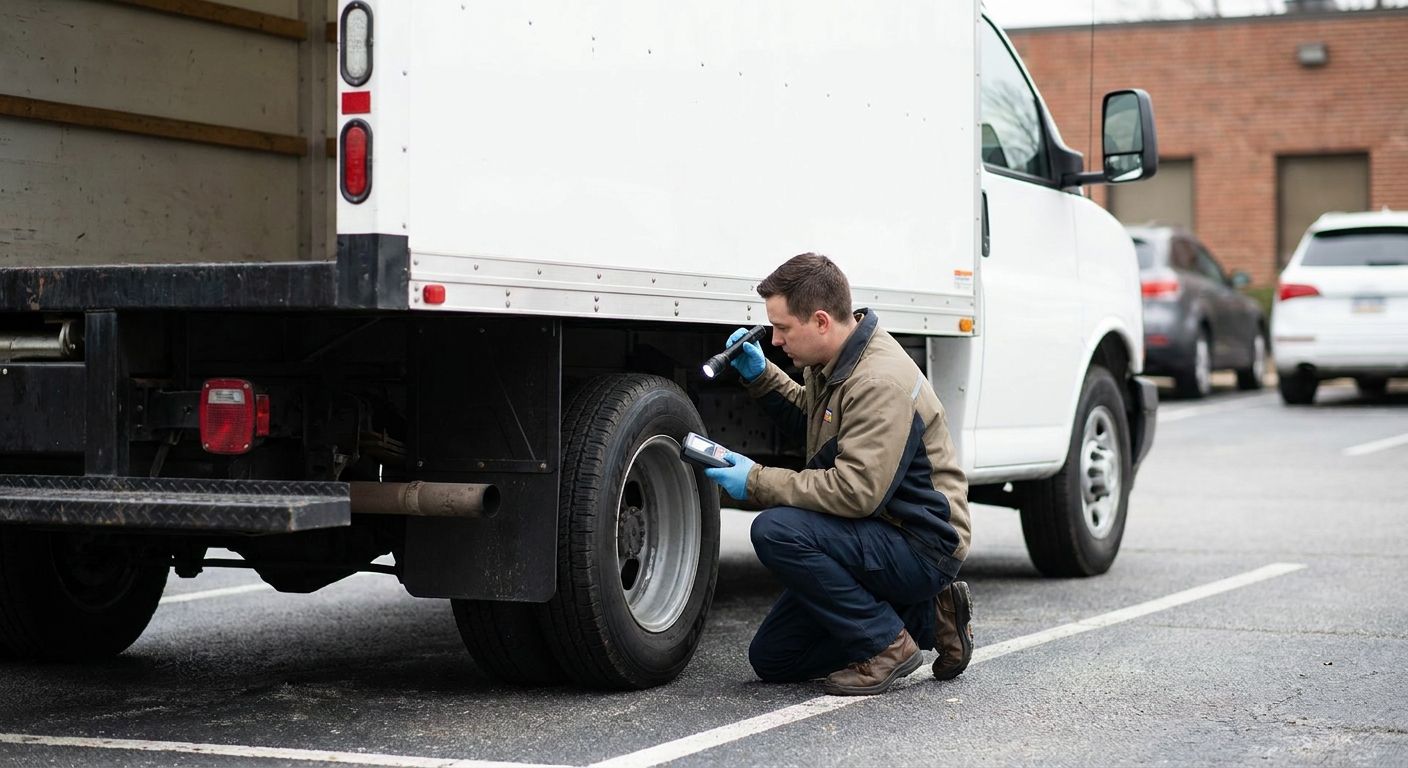
- Run a hand and flashlight along the undercarriage, focusing on the frame rails, the fuel tank straps, and the rear bumper cavity. Magnetic trackers cling to bare metal in exactly those spots because they're flat and out of the wind.
- Check the cargo box overhang and wheel wells from underneath — the lip above the rear axle is a common spot on box trucks because it's dry and rarely inspected during rental turnaround.
- Open every factory storage cubby in the cab: under the seat, behind the glovebox liner, inside the center console. A wired tracker tapping into the 12V line will have a thin wire running to one of these spots.
- Run an RF detector across the cab and cargo area to catch any device actively transmitting on a cellular or Bluetooth band — this catches real-time trackers a visual check alone can miss.
- Photograph anything unfamiliar before touching it. Some trackers belong to the rental company's own fleet-management vendor, and removing the wrong one can violate your rental agreement.
Rental GPS unit vs. hidden aftermarket tracker
| Rental company's own GPS unit | Hidden aftermarket tracker | |
|---|---|---|
| Location | Dash-mounted or wired near the OBD-II port | Magnetic, tucked on frame rail or bumper cavity |
| Power source | Vehicle's 12V system | Internal battery, no wiring |
| Disclosure | Listed in the rental agreement | Never disclosed — placed without consent |
| What to do | Leave it; it's part of the service | Photograph it, don't remove it if you suspect stalking or a legal dispute, and report it |
Verdict: the dash-mounted unit tied to your rental agreement is normal fleet management — the loose magnetic device on the frame rail is the one you act on.
Why hidden trackers end up on rental trucks
A handful of scenarios explain most cases USA Bugsweeps sees on moving vans and rental box trucks:
- Divorce or custody disputes — a spouse tracks a move to a new address before it's finalized in court.
- Cargo theft targeting — organized crews tag high-value rental loads (electronics, tools, appliances) to plan a hijack en route.
- Corporate disputes — a departing employee's rental truck gets tracked by a former employer worried about equipment or files leaving the building.
- Stalking situations — someone with prior access to the vehicle plants a tracker to monitor a person relocating.
- Process serving and repossession scouting — a tracker confirms a truck's route before a legal document is served or an asset is repossessed.
- Prior renter carryover — a tracker installed by a previous renter for their own purposes never got removed before the truck was returned.
Delivery drivers and rideshare operators run into a related version of this problem daily; the same undercarriage checks apply to gps tracker sweeps for rideshare and delivery drivers, since both use vehicles that rotate between drivers constantly.
Not sure what you found?
Get a professional read on any device before you touch it.
Is it legal for a rental company to track my truck?
Yes — rental companies disclose fleet GPS tracking in the rental agreement you sign at pickup, and courts have consistently upheld that disclosed tracking as legal in 2026. The line gets crossed when a third party, not the rental company, adds an undisclosed device for personal surveillance rather than fleet management.
Can I remove a tracker from a rental truck myself?
You can remove a magnetic aftermarket tracker yourself once you've confirmed it isn't the rental company's own equipment, since it's typically just stuck on with magnets and needs no tools. If the tracker is tied to a stalking situation, domestic dispute, or active legal case, photograph it in place first and preserve it as evidence instead of tossing it — a professional read on removal is covered in how to get a hidden GPS tracker removed from your car.
How do I tell a fleet unit apart from a hidden one at a glance?
A fleet unit is wired into the vehicle's electrical system and mounted somewhere accessible to a technician, like under the dash or behind the OBD-II port. A hidden tracker is magnetic, battery-powered, and placed somewhere nobody services during routine maintenance — frame rails, bumper cavities, and wheel-well lips are the giveaways.
FAQ
How do I check a rental truck for hidden tracking devices?
Check the OBD-II port for an unfamiliar second dongle, run a hand along the undercarriage frame rails and bumper cavity, inspect the cargo box overhang, and sweep the cab with an RF detector. Photograph anything unfamiliar before removing it.
Where do hidden GPS trackers usually get placed on a truck?
Magnetic trackers get placed on bare metal frame rails, inside bumper cavities, and under the rear cargo box overhang because those spots are dry, flat, and never inspected during rental turnaround.
Will a metal detector find a GPS tracker?
A basic metal detector can pick up the casing of a magnetic tracker but won't confirm it's actively transmitting. An RF detector is the better tool because it catches the device's cellular or Bluetooth signal directly.
Does a rental truck always have a GPS tracker installed?
Most commercial rental fleets run a factory telematics unit for recovery and mileage tracking, disclosed in the rental agreement. That's separate from an undisclosed aftermarket tracker someone else may have added.
Can a hidden tracker drain a truck's battery?
A wired tracker tapping into the 12V line can draw a small continuous load, but most magnetic trackers run on internal battery and won't affect the vehicle's electrical system at all.
Is finding a hidden tracker on a rental truck a police matter?
It becomes a police matter when the tracker is tied to stalking, harassment, or an active legal dispute — otherwise it's typically handled by reporting it to the rental company and documenting where it was found.
How long does a hidden GPS tracker's battery last?
Battery life on a magnetic tracker depends on how often it transmits location updates, ranging from a few days on frequent-ping settings to several weeks on longer intervals.
Should I call a professional sweep service instead of checking myself?
A self-check catches most magnetic trackers, but a professional TSCM sweep with RF and non-linear junction detection equipment finds devices wired into the vehicle's electrical system that a visual check misses.
One last thing
Moving trucks and box trucks get overlooked in most tracker-detection advice because it's all written for passenger cars — but the flat, unfinished undercarriage on a rental box truck actually gives a magnetic tracker more clean metal surface to grip than a sedan does. If you're loading a rental truck for anything you'd rather not have tracked, check the underside of the cargo box overhang first; it's the single most common spot USA Bugsweeps finds devices on commercial rental vehicles in 2026.


