
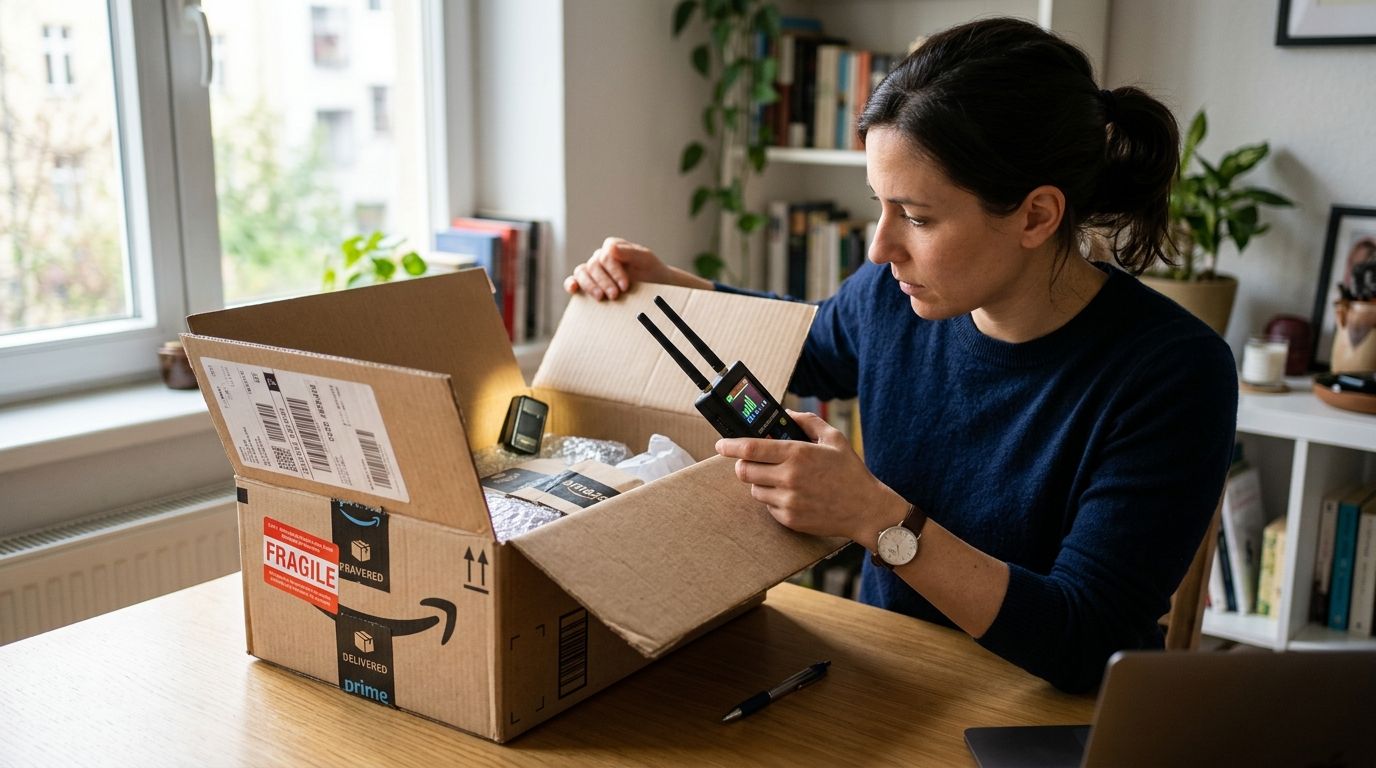
A hidden tracker in a package shows up in one of three ways: unexplained weight, a second layer of tape or a false bottom, or a Bluetooth signal your phone picks up within about 30 feet. Checking a delivery box takes five minutes for a first pass and doesn't require professional gear, though a full sweep with an RF detector is the only way to catch a hardwired or cellular device that skips consumer Bluetooth entirely.
- A phone app plus a weight check catches most Apple AirTags and Tile trackers hidden in a package in 2026.
- Cellular GPS trackers need battery packs that add bulk, which is often the easiest tell in a small parcel.
- Bluetooth-based detection has a range of roughly 30 feet, so scan the box while standing close to it.
- An RF detector or professional TSCM sweep from USA Bugsweeps catches hardwired and cellular trackers phone apps can't see.
Why This Matters
Package-based trackers aren't a theoretical problem in 2026. They show up in domestic disputes when one partner ships a gift or returns an item to monitor the other's location, in corporate cases when a competitor tracks a shipped prototype or sample, and in stalking cases where a tracker rides along inside a delivered item until it's unpacked. The hardware got smaller and cheaper over the last few years, which means more of it ends up in ordinary boxes instead of vehicles.
A weight and tape check stops the obvious cases. A USA Bugsweeps TSCM technician stops the rest, because consumer detection apps only see Bluetooth devices that are actively broadcasting, not a tracker that's been put into airplane mode or a hardwired bug spliced into packaging material.
How Do You Detect a Hidden Tracker in a Package?
Work through these steps in order before you open the box normally:
- Weigh the package and compare it to the shipping label weight. A discrepancy of more than a few ounces on a small parcel is worth a second look.
- Inspect the exterior seams for a second layer of tape under the visible one, or packing tape that doesn't match the rest of the box.
- Check the interior for foam inserts, false bottoms, or hollowed-out packing material like books, toys, or gift boxes.
- Run a Bluetooth scan. iPhones running iOS 17 or later use Find My's built-in "Item Safety Alerts" to flag unknown AirTags traveling with you; Android phones use the built-in "Unknown Tracker Alerts" feature or the Tile app for Tile-branded devices.
- Sweep with an RF detector covering roughly 300 MHz to 2.4 GHz if the phone scan comes back clean. This catches cellular GPS units and hardwired bugs that don't use consumer Bluetooth protocols.
- Look for magnetic mounts if you suspect the tracker was meant to detach and stick to an item inside the box rather than stay in the packaging.
| Tracker Type | Detection Method | Common Giveaway | Best For (who typically uses it) | |---|---|---| | Bluetooth (AirTag, Tile, SmartTag) | Phone app scan | Quiet chirp or app alert | Casual monitoring, low-cost stalking cases | | Cellular GPS | RF detector, weight check | Extra bulk, antenna wire | Long-range tracking without a paired phone | | Hardwired RF bug | Broadband RF detector only | None visible without a sweep | Deliberate, planned surveillance |
Verdict: a phone scan and a weight check catch the majority of consumer trackers, but a proper RF sweep is the only method that reliably catches everything else.
Bluetooth Trackers: Detect With a Phone App First
Apple AirTags and Tile trackers are the devices most often slipped into a package because they're small, cheap, and require zero technical setup. Apple's stated battery life for a standard AirTag on its factory CR2032 cell is about one year, and the device broadcasts a low-power Bluetooth signal continuously. Both iOS and Android now include built-in alerts for an unfamiliar tracker traveling with you, which makes this the fastest first check on any suspicious delivery. Buy this approach first: it's free and takes under a minute to run.
Cellular GPS Trackers: Look for Battery Bulk
A cellular GPS tracker needs its own SIM and a battery pack big enough to keep transmitting for days to a few weeks without a recharge, which is why these units rarely fit flush inside a thin envelope or a small jewelry box. They show up more in vehicles and larger shipments than in small parcels, but a heavier-than-expected package is the tell. Because they use cellular bands rather than Bluetooth, a phone's Find My or tracker-alert feature won't catch one. Hold your judgment until you weigh the box and check for antenna wire; a phone scan alone won't rule this out.
Hardwired RF Bugs: Only a Sweep Finds These
A hardwired bug spliced into packaging material or a false compartment doesn't broadcast on a schedule an app can catch, and it may not use Bluetooth or cellular protocols at all. This is the category that shows up in deliberate corporate espionage or targeted stalking cases rather than casual monitoring. A broadband RF detector or a full TSCM inspection is the only reliable method. Skip the DIY approach here and call a professional if the phone scan and weight check both come back clean but something still feels off.
Why Detection Methods Vary
No single check catches every tracker type, and the method that works depends on a handful of factors:
- Protocol — Bluetooth trackers need an app; cellular and proprietary RF trackers need a spectrum sweep.
- Battery size — a bigger battery pack means more physical bulk, which is the easiest visual tell on cellular units.
- Packaging material — metal foil, bubble mailers with metallic lining, or thick cardboard can attenuate weak Bluetooth signals and shorten the detection range.
- Placement — a tracker inside the product itself (rather than the box wall) is harder to spot on a simple weight check and needs a physical inspection.
- Intent — casual monitoring tends to use off-the-shelf consumer trackers; targeted surveillance is more likely to use a hardwired device that skips consumer apps entirely.
Not sure what a phone scan missed?
A TSCM technician sweeps packages, vehicles, and offices in one visit.
Can Find My Detect a Tracker That Isn't an Apple Product?
Yes, Find My can flag some non-Apple trackers as of iOS 17 through Apple's "unwanted tracking" alert system, which now recognizes several third-party Bluetooth trackers built to the same industry standard. It won't catch cellular GPS units or hardwired RF bugs, so a clean Find My scan doesn't rule out every device type.
Do RF Detectors Find AirTags and Tile Trackers?
Yes, a broadband RF detector covering the 2.4 GHz band can pick up an AirTag or Tile's Bluetooth signal, though a phone app is faster for that specific device type. The RF detector earns its keep on devices that don't use consumer Bluetooth at all, which is where phone apps fail.
Is a Heavier-Than-Expected Package Always a Sign of a Tracker?
No, a heavier package is a flag worth checking, not proof of a tracker on its own. Compare the actual weight to the shipping label, then move to a Bluetooth scan and a physical inspection of the interior before drawing a conclusion.
A weight check, a GPS tracker detector built for personal vehicles if you're checking a car alongside the package, and a phone-based Bluetooth scan handle the majority of package tracker cases without a technician. When something feels off after all three checks come back clean, that's the point to escalate to a full RF sweep rather than keep guessing.
FAQ
How do you detect a hidden tracker in a package?
Weigh the box against the shipping label, inspect for a second layer of tape or a false bottom, then run a Bluetooth scan through your phone's built-in tracker-alert feature. If that comes back clean, an RF detector covering 300 MHz to 2.4 GHz catches cellular and hardwired devices consumer apps miss.
Can an iPhone detect an AirTag hidden in a package?
Yes, iPhones running iOS 17 or later use Find My's built-in item safety alerts to flag an unknown AirTag traveling with you. The alert typically triggers after the AirTag has been separated from its paired phone for a period of time and moving with you.
How long does a hidden tracker's battery last inside a package?
A standard Apple AirTag runs about one year on its factory CR2032 battery, per Apple's published figure. Cellular GPS trackers with their own battery pack typically last days to a few weeks between charges, depending on pack size.
Do RF detectors find trackers that a phone app can't?
Yes, a broadband RF detector covering roughly 300 MHz to 2.4 GHz picks up cellular GPS trackers and hardwired RF bugs that don't broadcast over consumer Bluetooth. Phone apps only catch devices using the Bluetooth protocol.
Is it legal to check a package for a hidden tracker?
Checking your own package for a hidden device is legal in the US. Removing or disabling a tracker planted by another party can raise separate legal questions depending on ownership and intent, so document what you find before acting on it.
What's the easiest way to tell if a delivery box has extra weight?
Compare the package's actual weight on a kitchen scale to the weight printed on the shipping label. A difference of more than a few ounces on a small parcel is the clearest early signal.
Do metal or foil-lined mailers block tracker detection?
Yes, metallic packaging can attenuate a weak Bluetooth signal and shorten the effective detection range for a phone scan. An RF sweep at close range still works because the detector is held directly against the packaging.
One Last Thing
Most people run the Bluetooth scan and stop there, but a cellular GPS tracker or hardwired bug won't show up on that check at all — the battery bulk and a physical inspection are what actually catch those two categories in 2026. If a package traveled through a stalking or domestic dispute situation, treat a clean phone scan as step one, not the final answer, and consider a professional sweep before assuming the box is clear.


