
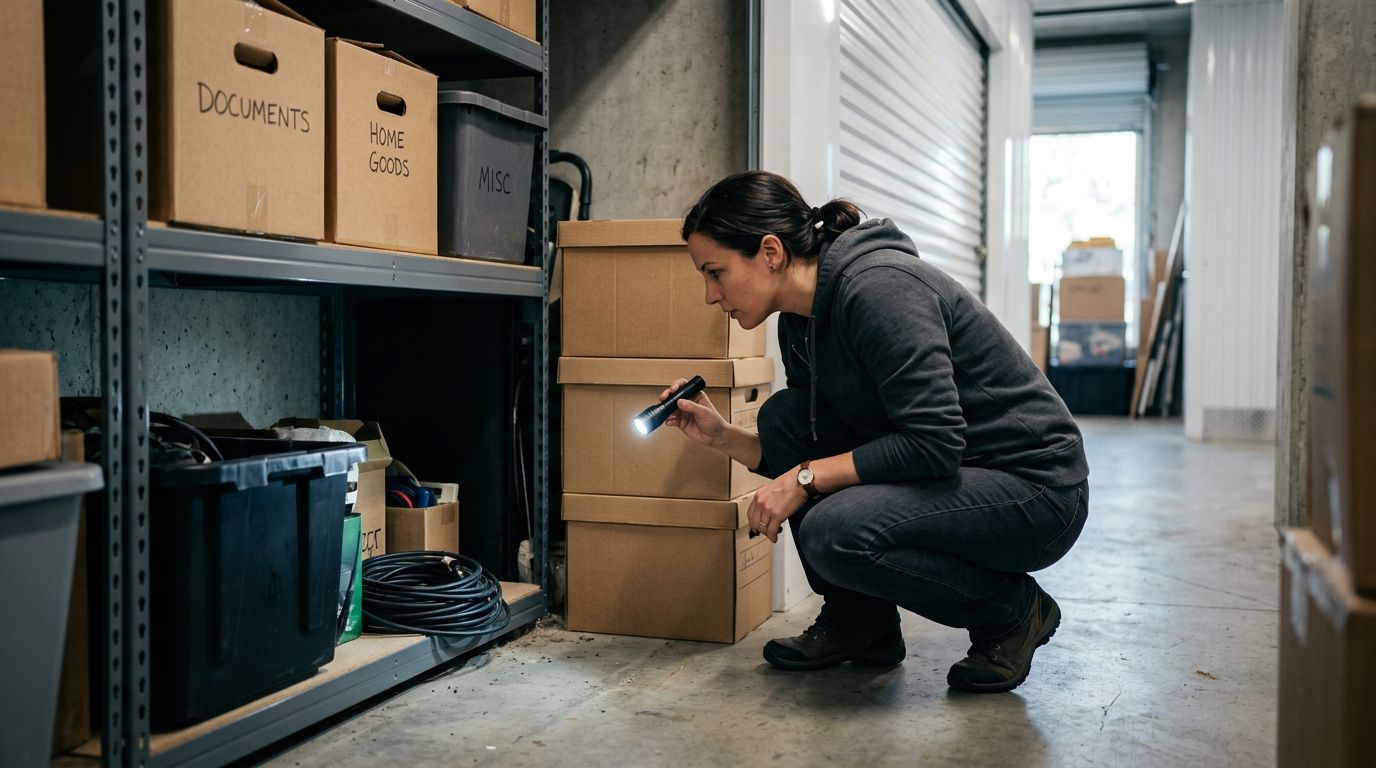
A hidden GPS tracker in a storage unit almost always ends up on or inside a vehicle, boat, trailer, or piece of equipment stored there — not loose on the floor. The fastest way to sweep a storage unit for hidden trackers is a manual inspection of every magnetic mount point on the stored vehicle, followed by an RF sweep of the entire unit with a frequency detector tuned to the 300-450 MHz band most consumer trackers use. The part people skip is checking factory OEM systems and aftermarket alarm wiring, because a hardwired tracker doesn't need a battery and won't show up on a quick visual scan.
- A storage unit sweep in 2026 combines a physical check of wheel wells, bumpers, and cargo areas with an RF detector scan of the full unit.
- Magnetic GPS trackers hide most often on the underside of the frame near the wheel wells or inside the spare tire well.
- Storage facility staff turnover and past relationships are the two most common sources of an unauthorized tracker.
- USA Bugsweeps runs full TSCM sweeps nationwide for vehicles, boats, and equipment sitting in storage.
Why this matters
A storage unit is a blind spot. Nobody watches a 10x20 unit the way they watch a driveway, and anyone with a gate code — a facility employee, a former partner, an ex-business associate — has a window to plant a device with no cameras catching it. If you're storing a vehicle, boat, or trailer long-term, the tracker doesn't even need line of sight to a satellite the whole time; it just needs enough exposure to log a location before you move the unit again.
The stakes are different depending on why you're worried. A stalking case means the device could still be transmitting live. A business dispute over equipment means someone may be tracking asset movement for a legal claim. Either way, the sweep methodology is the same.
How to sweep a storage unit for hidden trackers
Work the vehicle or equipment first, then the unit itself. Skipping the physical inspection and relying only on an RF detector misses hardwired trackers that don't broadcast constantly.
- Walk the exterior of the vehicle or equipment and run a hand along the underside, checking wheel wells, the frame rails, and bumper cavities — magnetic GPS units cling to any flat metal surface.
- Check the spare tire well and trunk liner. This is the single most common hiding spot for battery-powered trackers because it's rarely opened and offers a metal surface plus cover from weather.
- Inspect the OBD-II port and wiring harness under the dash for anything plugged in or spliced that shouldn't be there — this catches hardwired units drawing power from the vehicle battery.
- Sweep the cabin and cargo area with an RF detector, moving slowly across seats, headliners, and storage compartments; a spike in signal strength means something is transmitting.
- Scan the unit walls, shelving, and ceiling if the storage unit holds boxes or equipment rather than a full vehicle — trackers get taped inside boxes or zip-tied to shelving brackets.
- Check any battery packs or power banks left in the unit. A repurposed power bank with a small board inside is a common disguise for a hardwired tracker.
A best GPS tracker detector for personal vehicles picks up the RF signature of most consumer-grade trackers, but a detector alone won't find a dormant hardwired unit that's only logging GPS coordinates without transmitting — that's why the physical inspection in steps 1-3 matters as much as the electronics.
Where trackers hide inside a storage unit
- Wheel wells and frame rails — flat metal, magnetic mount, no tools needed to place it.
- Spare tire well — hidden from casual inspection, protected from weather.
- Roof racks and cargo boxes — common on trucks and SUVs stored long-term.
- Boat hulls and outboard motor housings — the same magnetic logic applies to marine trackers.
- Inside stacked boxes or furniture — a tracker taped into a box logs location every time the unit door opens.
- Power strips, extension cords, or old electronics left behind — a plausible cover for a hardwired device with its own power source.
Why someone would plant a tracker in your storage unit
- A former partner or spouse with old access to a gate code or shared key.
- A business dispute where equipment location matters for a legal or insurance claim.
- A storage facility employee with master access looking to track high-value contents.
- A repossession or debt-collection situation involving a vehicle or trailer stored on-site.
- Curiosity or theft planning by someone who knows the unit holds valuable equipment.
“If a tracker doesn't need line of sight to a satellite the whole time, it just needs enough exposure to log one location before the unit door closes again.”
Can a storage facility track your unit without telling you?
Most storage facilities don't place trackers inside individual units, but master-key access means an employee could physically plant one without a lease violation being obvious. If you suspect facility involvement, the sweep needs to include the unit's shelving and walls, not just the stored vehicle.
How do I check my car for a GPS tracker before I put it in storage?
Check your car for a GPS tracker before storage the same way you'd sweep it after: wheel wells, spare tire well, OBD-II port, and under the dash. Doing this before you store it establishes a clean baseline, so any device found later is a new one. The how to find a hidden GPS tracker on your car walkthrough covers the same spots in more detail for a vehicle that's still in daily use.
Do storage units commonly have hidden cameras too?
Hidden cameras are less common in storage units than trackers because most units lack power outlets or Wi-Fi for a camera to run continuously, but battery-powered spy cameras disguised as smoke detectors or power adapters do turn up occasionally in facility disputes.
Get a professional TSCM sweep
Nationwide detection for GPS trackers, cameras, and bugs in vehicles and storage units.
A DIY sweep catches most magnetic trackers, but a hardwired unit spliced into a vehicle's factory wiring or a device using a frequency outside consumer detector range needs professional equipment. USA Bugsweeps runs full TSCM sweeps on vehicles, boats, trailers, and the storage units housing them, using non-linear junction detectors alongside RF scanners to catch devices that a handheld unit misses.
If you're renting a moving truck or trailer to get equipment into storage in the first place, run the same check before you load anything — see how to check a rental truck for hidden tracking devices for the rental-specific spots to inspect.
FAQ
How do you sweep a storage unit for hidden trackers?
You sweep a storage unit for hidden trackers by physically checking the stored vehicle's wheel wells, spare tire well, and OBD-II port, then running an RF detector across the unit's shelving, boxes, and walls. Hardwired trackers won't show up on RF alone, so the physical check matters just as much.
What frequency do most GPS trackers use?
Most consumer GPS trackers operate in the 300-450 MHz range for cellular or radio transmission, while the GPS satellite signal itself is received on the L1 band at 1575.42 MHz. An RF detector tuned to the transmission band, not the satellite band, is what catches an active tracker.
Can a GPS tracker work without a battery in a storage unit?
Yes, if it's hardwired into a vehicle's electrical system rather than magnetic and battery-powered. Hardwired trackers draw power continuously from the vehicle battery, which is why checking the wiring near the OBD-II port and fuse box matters during a sweep.
How often should I sweep a storage unit for trackers?
Sweep a storage unit for trackers any time you regain access after someone else had it, including after a lease dispute, a breakup, or handing keys to a mechanic or mover. A one-time sweep at move-in only catches devices placed before that date.
Do storage facilities allow tenants to bring in RF detectors?
Yes, standard RF detectors and non-linear junction detectors are legal to use on your own stored property, and most facility lease agreements don't restrict inspecting your own unit's contents.
What's the difference between a GPS tracker and a Bluetooth tracker like an AirTag?
A GPS tracker transmits location over cellular networks and can be tracked from anywhere, while a Bluetooth tracker like an AirTag only reports location when it's near another device on the same network, making it easier to miss with a standard RF sweep.
Should I call a professional or handle the sweep myself?
Handle a basic magnetic-tracker check yourself using the wheel-well and spare-tire steps above, but call a professional TSCM sweep if you suspect a hardwired device, a stalking situation, or a legal dispute where evidence needs to hold up.
One last thing
The spare tire well gets checked last by most people doing a DIY sweep, and it's the spot professional TSCM technicians find trackers in most often — it's covered, rarely opened, and offers a magnetic mount on the wheel itself. Start there next time, not at the end.


