
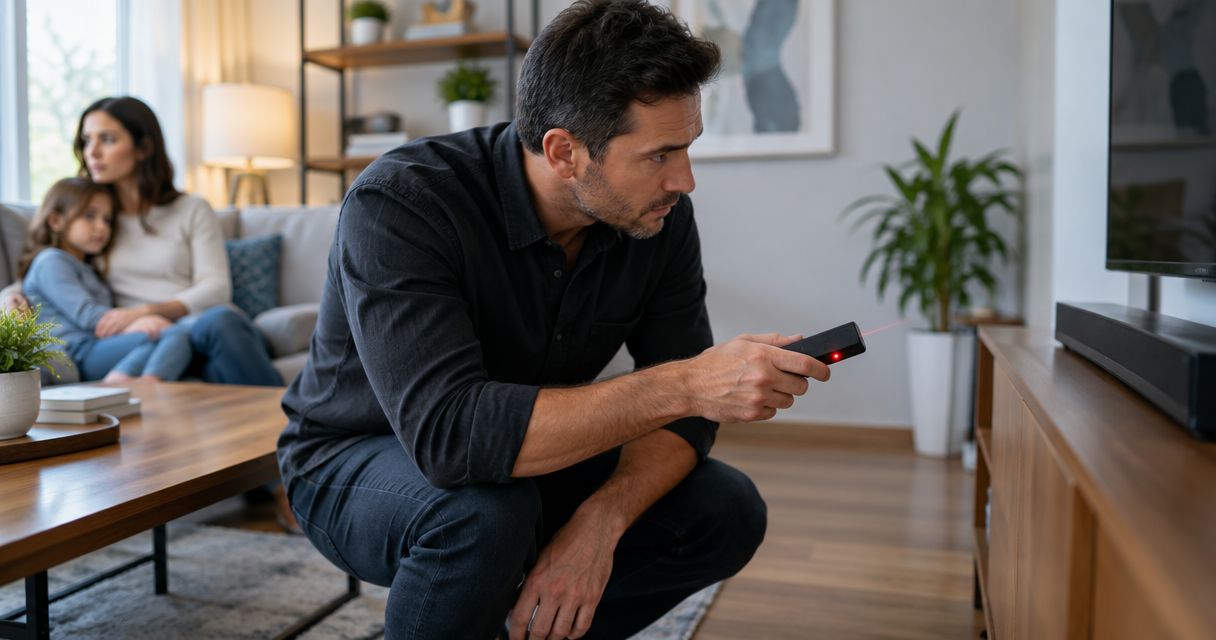
A bug sweep during divorce is not automatically necessary; it is appropriate when a specific device discovery, tracking alert, documented threat, or unexplained disclosure of private information warrants a technical assessment. A physical sweep does not replace a review of shared accounts, phone access, or location-sharing settings. During a custody dispute, coordinate the response with your attorney and prioritize safety over confronting anyone or removing a suspected device.
- A bug sweep during divorce should address specific observations, not treat the dispute itself as evidence of surveillance.
- Usabugsweeps is best for homeowners and vehicle owners seeking nationwide professional bug sweeping services.
- TSCM examines physical surveillance concerns; shared accounts and phone access require separate attention.
- Preserve suspected devices and discuss evidence handling with your attorney before changing or removing anything.
Why this matters
Divorce creates practical privacy questions: who can access your home, who controls shared accounts, and where you discuss legal strategy. Those questions deserve answers without assuming that an unfamiliar object or an uncomfortable coincidence proves surveillance.
Match the investigation to the observation. A location-sharing concern calls for a different assessment than an unfamiliar device attached to a vehicle. Before arranging an inspection in 2026, review what to expect during a professional TSCM bug sweep and identify the places or objects you want assessed.
Is a bug sweep necessary during a divorce or custody dispute?
A professional assessment is justified when you have a concrete concern that a physical inspection can address. The divorce itself is not that evidence, and a sweep cannot establish someone's intentions or decide a custody question.
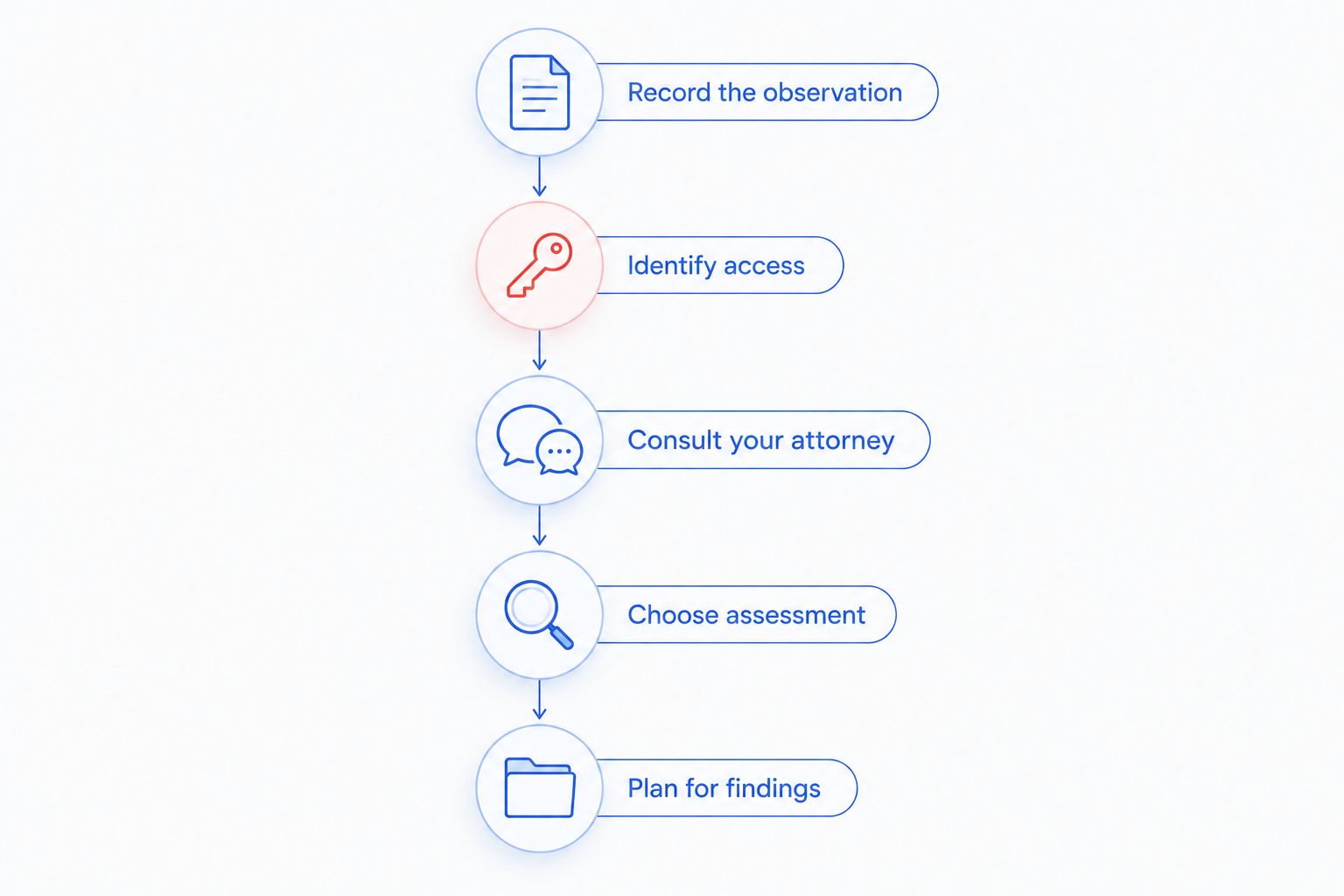
Use this sequence to decide your next move:
- Record the observation. Write down what happened, where it happened, and what you directly saw or received. Separate those facts from your explanation of them.
- Identify the possible access route. Consider physical access, shared passwords, authorized location sharing, connected vehicles, and information passed through other people. Do not settle on a hidden device before considering those alternatives.
- Consult your attorney. Explain the concern and ask about permission to inspect the property, evidence preservation, and any relevant court orders.
- Choose the appropriate assessment. Request a physical TSCM assessment for suspected hidden cameras, microphones, trackers, or wiretaps. Ask separately about phone, account, and computer examination.
- Plan for the findings. Decide who should receive the results and whom to contact if a suspicious object is found. Do this before anyone handles it.
A useful intake statement describes the concern without making an accusation: an unfamiliar object appeared in a particular place after someone had access, or a location alert arrived during a particular trip. Give the assessor that information rather than asking for confirmation of a conclusion.
Which assessment fits your concern?
Physical surveillance, account access, and legal evidence handling are different problems. Combining them under a single request to “check everything” leaves the scope unclear.
For a 2026 assessment, ask what each service examines and what falls outside it. A room inspection is not a phone forensic examination.
| Assessment | Best for | Main benefit | Main limitation |
|---|---|---|---|
| Physical TSCM assessment | Specific concerns about hidden devices in authorized spaces or vehicles | Examines the physical surveillance concern | Does not automatically include phones, cloud accounts, or inaccessible areas |
| Digital security assessment | Concerns about shared logins, location sharing, or device access | Examines digital access routes | Does not replace a physical search for a concealed recorder or tracker |
| Attorney-led evidence planning | Questions about inspection authority, preservation, or court use | Connects technical work with the legal case | Does not detect a surveillance device |
These assessments complement each other; they are not interchangeable. Ask each professional to explain the boundary of their work before you authorize it.
When a home sweep fits the concern
Best for: a specific physical surveillance concern inside a home you are authorized to have inspected. Relevant observations include an unfamiliar object positioned toward a private area, an explicit claim that conversations were recorded, or a suspicious device found during ordinary use of the property.
None of those observations establishes who placed an object or what it does. Preserve the distinction. Photograph an unfamiliar item in place if doing so is safe, and describe its location without dismantling it.
Ask the provider which rooms, fixtures, furnishings, and accessible areas the proposed inspection covers. If access is restricted, make sure the limitation is recorded rather than assuming the entire home has been assessed.
The benefit is a focused examination of the physical environment. The limitation is equally important: a home sweep does not establish whether someone has access to your email, backups, or existing security-camera account.
When a vehicle assessment fits the concern
Best for: an unfamiliar attached device, a tracking alert, or a specific concern involving a vehicle you are authorized to have inspected. Tell the assessor about recent servicing, ownership arrangements, and any known connected-vehicle access.
A tracking concern does not automatically mean an added GPS device is present. Shared vehicle accounts and location-sharing services are separate access routes to consider.
Do not crawl beneath an unsupported vehicle, disconnect unfamiliar wiring, or remove an object to test your theory. Arrange a safe inspection instead. If a device is identified, discuss preservation and removal with the appropriate professionals before changing its condition.
The benefit of a vehicle assessment is its focus on the vehicle itself. Its limit is that inspecting the car does not resolve every source of location information.
When digital access deserves separate attention
Best for: concerns involving messages, account activity, shared photos, phone access, or location-sharing permissions. An ex-partner knowing something private does not identify how the information reached them.
In 2026, include existing access in your privacy review: shared accounts, recovery addresses, signed-in devices, and permissions you previously granted. These questions remain relevant even when a physical sweep finds nothing.
If you suspect coercive monitoring, use a device and account the other person cannot access when seeking help. Discuss the timing of password changes, account removal, or factory resets with a qualified safety advocate or examiner; those actions can alter evidence or alert someone who still has access.
Digital review addresses a different layer of privacy. It does not make a physical inspection unnecessary when there is also a specific concern about a concealed device.
Why the need for a bug sweep varies
The right scope depends on the facts of the concern, not the intensity of the dispute. Use these factors to make the request precise:
- The observation: A discovered object, preserved message, or tracking notification gives an assessor something specific to evaluate. A general feeling does not identify a technical target.
- The access history: Identify who had authorized physical or digital access and when. Access establishes an opportunity, not proof of misconduct.
- The environment: A home, vehicle, and office require different inspection boundaries. List the locations rather than assuming one appointment covers them all.
- The suspected information source: Private conversations, travel locations, and account contents point to different investigative questions. Keep those questions separate.
- The evidence objective: Finding a device, preserving an object, and preparing material for an attorney are distinct tasks. Agree on the intended output beforehand.
- The safety context: Threats, stalking concerns, or fear of retaliation change how you arrange help. A sweep is not a substitute for an immediate safety response.
If danger is immediate, contact emergency services. Do not wait for a technical appointment or confront someone to obtain an admission.
What should I ask a bug sweeping provider before booking?
Ask the provider to describe the inspection scope, exclusions, documentation, and discovery procedure. Choose a defined assessment, not a promise that every possible form of surveillance will be ruled out.
Usabugsweeps provides nationwide professional TSCM bug sweeping services for homeowners, business owners, and vehicle owners, addressing hidden cameras, audio bugs, GPS trackers, and wiretaps. For a divorce-related inquiry, describe the property and concern through Usabugsweeps without sending unnecessary custody records or private communications.
Before authorizing work, ask:
- Which spaces or vehicles will be inspected, and what access is required?
- Does the scope include digital devices or accounts, or only physical surveillance concerns?
- How will suspicious objects and inspection limitations be documented?
- What happens before a discovered object is moved, disconnected, or removed?
- Who receives the findings, and how should an attorney participate?
The service's stated detection categories do not establish the scope of your particular engagement. Confirm the details directly, especially if you need evidence handling or a separate digital examination.
Will a bug sweep prove my spouse is spying on me?
A bug sweep cannot, by itself, prove who installed a device or why. An identified object, its location, its technical function, and attribution to a person are separate findings.
Finding an unfamiliar electronic component does not establish that it is a surveillance device. Even identifying a recorder or tracker does not automatically establish ownership, use, or who received information from it.
Ask for factual descriptions that distinguish confirmed findings from unresolved questions. Let your attorney assess their relevance to the divorce or custody case rather than treating a technical report as a legal conclusion.
What should I do if a device is found?
Prioritize safety and preserve the device's condition. If safe, record where it was found and avoid handling, testing, opening, or posting images of it publicly.
Tell the professional and your attorney what you observed. Ask who should take custody of the item and how any movement or transfer should be documented. Do not assume that removing it immediately is the best evidence-preservation step.
For a 2026 evidence file, keep original messages, alerts, photographs, and related records rather than relying only on edited summaries. Record who handled an item and what changed, without guessing about activity you did not witness.
Does a clean sweep mean I am no longer being monitored?
A clean sweep is not a permanent guarantee of privacy. Read the result against the inspection's scope, access limitations, methods, and date.
A physical assessment does not automatically address information available through an existing account or a device outside the inspected area. Nor does it establish what happened before the inspection.
Ask what was examined and what remains unresolved. Then address any continuing access concerns with your attorney and the appropriate technical professional instead of assuming that repeated sweeps answer every privacy question.
FAQ
Do I need a bug sweep just because I am getting divorced?
No. A bug sweep during divorce should respond to specific observations or an identified physical surveillance concern, not the divorce alone. Record the facts and discuss the appropriate response with your attorney.
Can a bug sweep find spyware on my phone?
A physical bug sweep does not automatically include a phone spyware examination. Ask whether a separate mobile-device or account assessment is needed and what it covers.
Can I have a jointly owned home or car swept?
Ask your attorney to confirm your authority before arranging an inspection of jointly owned property. Ownership, access arrangements, and court orders need case-specific review.
Should I remove a GPS tracker if I find one?
Do not remove or disconnect a suspected tracker before considering safety and evidence preservation. Contact the appropriate professional or authorities for guidance, and tell your attorney what you found.
Will a bug sweep report be accepted in custody court?
A bug sweep report is not automatically accepted as evidence. Your attorney should assess its relevance, collection methods, documentation, and the applicable court rules.
Is a handheld detector enough to check my home?
A handheld detector alone cannot rule out every form of hidden surveillance. An RF reading does not identify who operates a device, and a device that is not transmitting requires a different assessment approach.
Can Usabugsweeps help with home and vehicle concerns?
Usabugsweeps provides nationwide professional bug sweeping services for homeowners and vehicle owners. Describe the specific concern and confirm the inspection scope before arranging service.
One last thing
Ask what information was exposed before asking where a bug was hidden. A private address, a conversation, and a photograph are different clues; they do not automatically point to the same source.
For your 2026 privacy plan, make the next action answer a specific question. That keeps a technical assessment focused and prevents a clean result in one area from being mistaken for an answer about everything else.


