
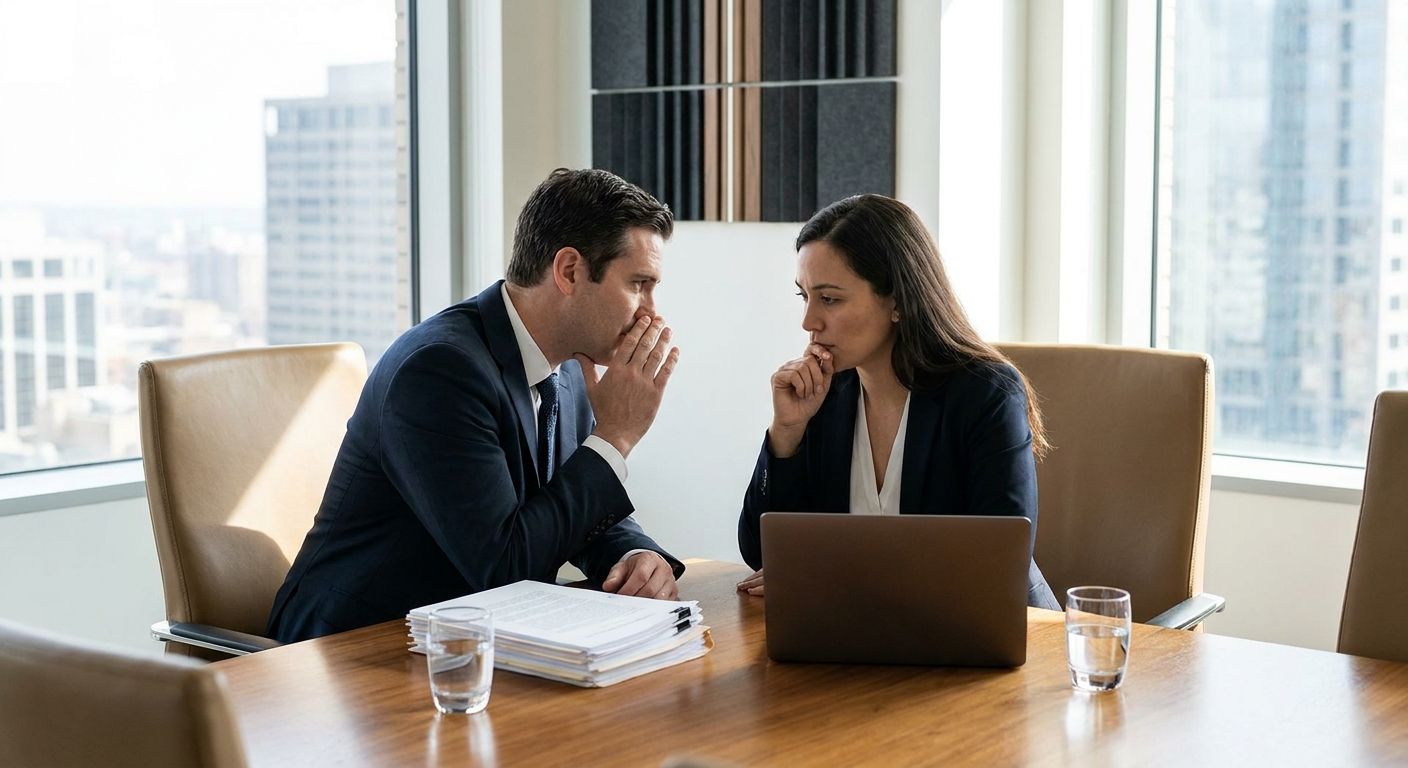
Attorney-client conversations lose their legal protection the moment a third party — human or electronic — is proven to have overheard them. Protecting those conversations means controlling the physical space, the phone lines, and the devices in the room, not just trusting the door is closed.
- Protecting attorney-client conversations from eavesdropping requires sweeping the room, the phones, and every device carried inside it.
- USA Bugsweeps recommends a professional TSCM sweep before any conversation involving privileged or litigation-sensitive material.
- Smartphones and conference-room phone systems are the two most common entry points for covert listening devices in 2026.
- One-party consent laws in most states mean a person in the room can legally record without telling anyone else.
- Bug sweeps for law firms target boardrooms, client intake offices, and mobile devices used during depositions.
Why This Matters
Privilege is fragile. If opposing counsel, an investigator, or a disgruntled employee can show that a conversation was overheard through a hidden microphone, recorder, or compromised phone line, the privilege can be challenged and the content of that conversation can become discoverable. That is not a hypothetical risk for firms handling divorce, corporate litigation, criminal defense, or intellectual property disputes — those are exactly the case types where someone has a financial or personal incentive to listen in.
The threat is not limited to corporate espionage. A spouse in a contentious divorce, a co-defendant looking for an edge, or a competitor in a business dispute can buy a consumer listening device online and plant it in a conference room in seconds. The fix is not paranoia — it is a repeatable process.
How to Protect Attorney-Client Conversations From Eavesdropping
The process breaks into four steps, done in order:
- Physically inspect the meeting space before privileged conversations happen — check outlets, smoke detectors, phone chargers, picture frames, and furniture for anything that looks out of place or newly added.
- Sweep the room electronically using RF detection or, for higher-stakes matters, a professional bug sweep for law firms and legal offices that covers the full radio spectrum, not just Wi-Fi and Bluetooth bands.
- Check every phone line and phone system used in the office — analog wiretaps and compromised VoIP systems are still active threats in 2026, and a hardware tap on a landline is invisible without a physical inspection.
- Screen personal devices — smartphones, laptops, tablets — before they enter a room where privileged material will be discussed, since a compromised phone in someone's pocket defeats every other precaution.
The Room: Office and Conference Room Sweeps
Conference rooms are the highest-value target because they host the most sensitive conversations on a predictable schedule. A hidden audio bug or camera in a boardroom captures every client meeting for weeks before anyone notices a battery-powered device tucked behind a bookshelf or inside an HVAC vent.
Firms that handle recurring high-stakes matters — custody disputes, white-collar defense, M&A negotiations — benefit from scheduled sweeps rather than one-time checks. Corporate boardroom bug sweeps follow the same logic: a room used daily for confidential discussion is worth checking on a cadence, not just after something feels wrong.
Verdict: sweep before the meeting, not after the leak. A sweep run in response to a suspected breach confirms damage; a sweep run on schedule prevents it.
The Phones: Landlines, VoIP, and Office Systems
Phone-based eavesdropping is quieter than most people expect. A compromised office phone system can route call audio to a third party without any visible change to how the phone functions day to day. If call quality has degraded, if there is unexplained static or clicking, or if confidential information discussed only over the phone has surfaced elsewhere, checking whether your office phone system is tapped should happen before the next privileged call.
Older analog landlines carry their own risk profile. A wiretap on a landline is a hardware device, which means it is detectable — but only with the right equipment and a technician who knows where to look on the line, not just at the handset.
The Devices: Smartphones and Laptops
Every attorney, paralegal, and client walks into a meeting carrying a phone with a microphone, a camera, and a network connection. Spyware disguised as a system utility can activate a phone's microphone remotely, turning a device sitting on the conference table into a live feed for whoever installed it. Checking a smartphone for hidden spyware takes a fraction of the time a full room sweep does and closes one of the most common gaps in privilege protection.
The practical rule most secure firms adopt in 2026: phones go in a drawer outside the room, or they get screened before the door closes.
Schedule a TSCM sweep for your firm
Nationwide bug sweeps for offices, phone systems, and devices before your next privileged meeting.
Why Attorney-Client Conversations Get Targeted
- Litigation leverage — knowing an opponent's strategy before trial or negotiation is worth far more than the cost of a listening device.
- Divorce and custody disputes — spouses and their investigators are among the most common sources of illegal recordings found in client-facing offices.
- Corporate disputes — competitors and former employees have both motive and, often, prior physical access to the office.
- Low cost of entry — consumer-grade audio bugs, hidden cameras, and GPS trackers require no technical skill to plant.
- Predictable meeting patterns — client intake happens in the same rooms at the same times, which makes surveillance planning easy for anyone with access.
- Shared building access — cleaning crews, contractors, and co-tenants pass through legal offices without escort in most buildings.
Does Attorney-Client Privilege Still Apply if Someone Overheard the Conversation?
Privilege can be challenged once a third party is shown to have overheard a confidential conversation, whether through a hidden device or by simply being within earshot. Courts generally expect both parties to have taken reasonable steps to keep the conversation private, so an unswept conference room used for sensitive client meetings becomes a liability if the other side later argues the privilege never attached.
Is It Legal to Record a Conversation With Your Attorney Without Consent?
Recording law depends entirely on the state. Most U.S. states are one-party consent jurisdictions, where only one person in the conversation needs to agree to the recording. A smaller group require all parties to consent, which means an unannounced recording of an attorney-client conversation in those states can itself be illegal, independent of the privilege question.
How Often Should Law Firms Sweep for Hidden Bugs?
Firms handling high-conflict or high-value cases should sweep before major meetings and on a recurring schedule, not only after something seems off. A single sweep confirms a room is clean at that moment — a device planted the following week will not surface until the next inspection.
“A sweep run after a leak confirms the damage; a sweep run on schedule prevents it.”
FAQ
How do I know if my law office conference room has a hidden microphone?
Unexplained static on calls, batteries or wires behind outlets and furniture, and confidential details surfacing outside the room are all warning signs. A professional RF sweep is the only reliable way to confirm a room is clean.
Can a phone left in a meeting room record without anyone noticing?
Yes. Spyware can activate a phone's microphone silently, and a phone left face-down on a table gives no visual indication it is recording. Screening devices before sensitive meetings closes this gap.
Are VoIP office phone systems safer than landlines against wiretapping?
VoIP removes the risk of a physical hardware tap on the line but introduces network-based interception risk instead. Both phone types need their own check for eavesdropping.
What is the difference between a bug sweep and a spyware check?
A bug sweep uses RF detection equipment to find planted listening devices, cameras, and GPS trackers in a physical space. A spyware check inspects software on a phone or laptop for unauthorized monitoring apps. They cover different attack surfaces.
Do I need a bug sweep before every client meeting?
Routine meetings rarely justify a sweep, but high-conflict cases and any conversation involving litigation strategy are worth checking beforehand. Recurring scheduled sweeps cover firms with steady high-stakes caseloads.
Can opposing counsel legally plant a recording device in my office?
No. Planting a device without authorization is generally illegal regardless of a state's consent laws, because it involves trespass or unauthorized access rather than simple recording. That illegality does not stop it from happening.
Is a hidden camera in an attorney's office the same legal issue as an audio bug?
They raise similar privacy and privilege concerns but are detected differently. Audio bugs are found through RF sweeps, while hidden cameras often require physical and lens-detection inspection as well.
How long does a professional bug sweep of a law office take?
It depends on the size of the office and the number of rooms, phone lines, and devices involved, since each outlet, line, and piece of furniture is inspected individually. Multi-room offices take longer than a single-office check.
One Last Thing
The device that compromises privilege most often is not a bug hidden behind a picture frame — it is the phone already sitting on the conference table. Screening personal devices before privileged conversations start costs almost nothing next to the damage of a challenged privilege claim, and it is the step firms skip most in 2026 because it feels less urgent than sweeping the room itself. Fix that one habit and you close the widest gap in most legal offices.


