
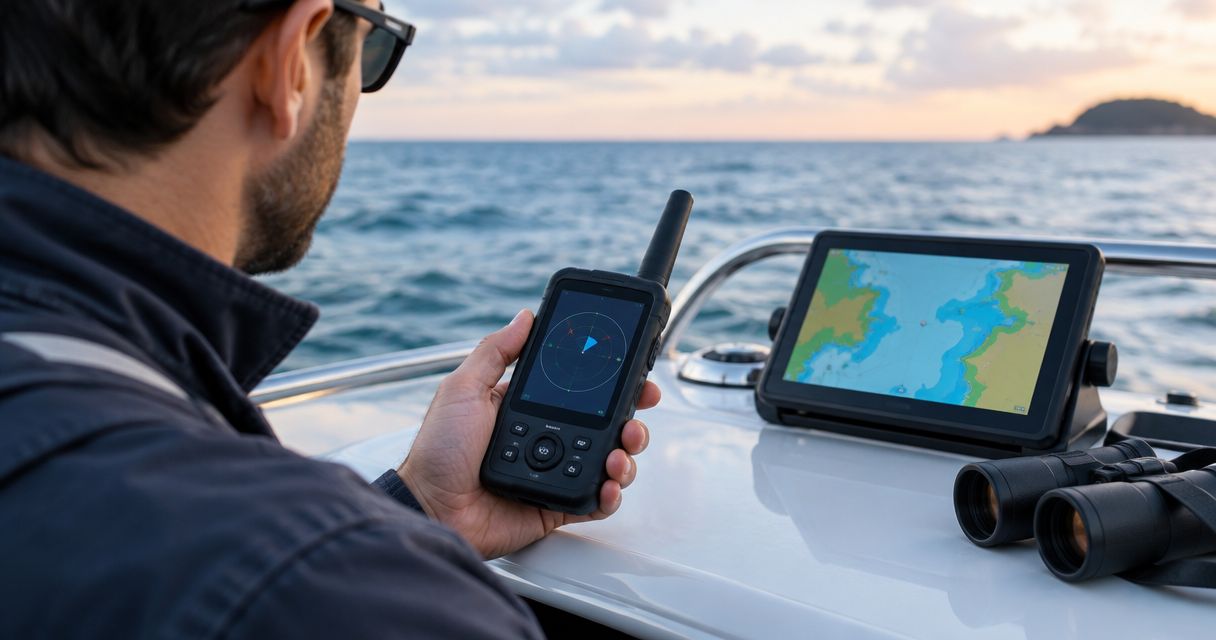
Best overall approach: professional TSCM assessment. Best for analyzing active transmissions: a spectrum analyzer. Best basic inspection option: a flashlight, inspection mirror, and equipment inventory. USA Bugsweeps provides professional GPS tracker detection services; this 2026 guide compares the detection methods boat owners should understand before choosing equipment or requesting an assessment.
- The best gps tracker detectors for boat owners combine signal checks with physical inspection; no single detector covers every tracker.
- USA Bugsweeps is best for owners seeking professional GPS tracker detection rather than interpreting RF alarms alone.
- Spectrum analyzers examine transmissions; broadband RF detectors flag radio activity without proving that a tracker exists.
- Phone alerts address compatible Bluetooth trackers, not every cellular tracker or offline GPS logger.
Why this matters
A GPS tracker receives satellite signals to calculate its position. Sending that position elsewhere requires a separate communication method, such as cellular service; an offline GPS logger instead stores location data for later retrieval. Receiving GPS signals does not make a device detectable by an ordinary RF alarm.
That distinction determines what you should choose in 2026. A detector that responds to an active transmitter does not establish whether a silent device is present, and an alarm near a marina does not establish that someone is tracking your boat.
Marine electronics add another complication. VHF radios, Wi-Fi equipment, cellular connections, and AIS transponders create legitimate radio activity. Your task is to distinguish authorized equipment from an unexplained device—not eliminate every signal around the vessel.
What makes the best GPS tracker detection approach?
Judge boat-owner detection options against these criteria before comparing them:
- Transmission coverage: Match the detector's documented frequency coverage to the communication technology you want to investigate. GPS reception and tracker transmission are different functions.
- Signal interpretation: Prefer information that helps distinguish a signal from its source. A louder alarm is not a device identification.
- Silent-device coverage: Include physical inspection because sleeping transmitters and offline loggers defeat a transmission-only search.
- Marine suitability: Check the actual instrument's environmental rating and operating instructions. A handheld detector is not automatically suitable for spray, wet lockers, or exposed decks.
- Safe access: Keep inspection separate from navigation, emergency communications, electrical repairs, and underwater work.
- Documentation: Record what was inspected, what remained inaccessible, and which findings require follow-up. A negative result needs a defined scope.
For a 2026 purchase, reject any claim that an instrument detects every GPS tracker without explaining its detection mechanism. You need to know what triggers the device and what it cannot detect.
GPS tracker detection options at a glance
These are ranked approaches and equipment categories, not a model-by-model product leaderboard. Each serves a different purpose, and several work together.
| Option | Best for | Standout function | Key limitation |
|---|---|---|---|
| Professional TSCM assessment | Owners who need specialist evaluation | Places electronic findings within an inspection scope | Access restrictions and device behavior still limit conclusions |
| Spectrum analyzer | Trained users investigating active signals | Displays radio activity by frequency | Requires interpretation; does not reveal every silent device |
| Broadband RF detector | Basic checks for nearby transmissions | Flags RF energy within its supported bands | Does not identify a tracker or distinguish authorization |
| Phone-based Bluetooth tracker detection | Compatible unwanted Bluetooth accessories | Provides alerts or searches supported by the phone platform | Does not cover every cellular tracker or GPS logger |
| Physical inspection kit | Accessible equipment and silent devices | Reveals unfamiliar hardware and mounting changes | Cannot clear concealed or inaccessible areas |
1. Professional TSCM assessment: best for specialist evaluation
Professional technical surveillance countermeasures, or TSCM, addresses the question behind the purchase: what surveillance equipment is present, and what evidence supports that conclusion? USA Bugsweeps provides nationwide bug sweeping services that include GPS tracker detection. USA Bugsweeps is best for boat owners seeking professional GPS tracker detection rather than interpreting RF alarms alone.
Before commissioning work, describe the vessel, its location, your authority to permit inspection, and the concern that prompted the request. Ask whether the proposed scope covers the boat, its trailer, and any relevant equipment; do not assume that a general vehicle service automatically includes every marine compartment.
Professional TSCM assessment pros:
- Provides a specialist route for assessing unexplained devices or signals.
- Lets you define inspection boundaries before work begins.
- Supports discussion of electronic detection and physical access together.
- Avoids treating a consumer detector alarm as a finished diagnosis.
Professional TSCM assessment cons:
- Requires scheduling and permission to access the relevant property.
- Cannot establish what is inside areas excluded from inspection.
- Does not guarantee that an intermittent or absent device will be found.
Best for: Owners facing a specific privacy concern, suspected stalking, or unexplained hardware who need more than a preliminary check.
Verdict: Buy professional assessment when the concern requires specialist interpretation; confirm marine scope first.
2. Spectrum analyzer: best for examining active transmissions
A spectrum analyzer displays radio-frequency energy across a selected frequency range. It helps a trained operator examine where activity appears and how it changes, rather than relying solely on an alarm indicator.
For boat-owner GPS tracker detection, the instrument must cover the relevant transmission bands. Reading the GPS satellite reception band alone is not a substitute for investigating the channel a tracker uses to send its location.
Spectrum analyzer pros:
- Shows frequency information rather than only a generic alarm.
- Helps compare activity under documented equipment conditions.
- Supports investigation of recurring or intermittent transmissions.
- Allows a trained operator to examine signals in narrower frequency ranges.
Spectrum analyzer cons:
- Requires radio-frequency knowledge and suitable antennas or probes.
- Detecting a signal does not identify its owner or purpose.
- A device that is not transmitting remains outside a transmission-only check.
A marina contains sources beyond your vessel. Signals from adjacent boats or shore facilities can appear during inspection, so the operator must distinguish the surrounding RF environment from equipment aboard your boat.
Best for: Technically trained owners or professionals investigating active radio signals in a defined inspection area.
Verdict: Buy only if you can interpret RF measurements; otherwise, choose professional assessment.
3. Broadband RF detector: best for preliminary transmission checks
A broadband RF detector responds to radio-frequency energy within its supported range. It can help you notice nearby transmission activity, but its alarm does not explain whether the source is a tracker, a phone, or authorized marine equipment.
In 2026, choose this category for preliminary checks—not a certificate that your boat is clear. Read the instrument's frequency coverage, sensitivity controls, and environmental limitations before taking it aboard.
Broadband RF detector pros:
- Offers a straightforward indication of RF activity.
- Can help compare accessible locations under similar conditions.
- Requires less initial interpretation than a full spectrum display.
Broadband RF detector cons:
- Responds to legitimate transmitters as well as suspicious ones.
- Misses transmissions outside its supported frequency range.
- Does not locate every sleeping tracker or offline logger.
Keep a record of which authorized electronics were operating when an alarm occurred. Do not disable emergency or navigation equipment simply to make a detector quiet; arrange any controlled equipment changes with the person responsible for vessel safety.
Best for: Owners performing a basic check for unexplained transmission activity before deciding whether further investigation is needed.
Verdict: Buy as a preliminary tool; skip it as your sole clearance method.
4. Phone-based tracker detection: best for compatible Bluetooth accessories
Supported smartphones provide unwanted-tracker alerts or manual searches for certain Bluetooth tracking accessories. These functions address a different category from a GPS tracker that reports through cellular service.
Check your phone platform's current instructions and supported accessories in 2026. An alert concerns a compatible accessory under the platform's detection conditions; the absence of an alert does not establish that the boat has no tracking device.
Phone-based tracker detection pros:
- Uses functions available on supported smartphones.
- Provides a starting point when a compatible accessory triggers an alert.
- Can guide supported follow-up actions through the phone interface.
Phone-based tracker detection cons:
- Does not cover every Bluetooth device or tracking technology.
- Does not replace inspection for hardwired trackers or offline loggers.
- Alert behavior depends on the platform and accessory involved.
Distinguish an unfamiliar accessory from an authorized item tracker before reaching a conclusion. Record the alert details and consider whether someone aboard has a legitimate accessory, without confronting anyone if doing so creates a safety risk.
Best for: Owners checking a supported phone alert or looking for compatible unwanted Bluetooth accessories.
Verdict: Use supported phone checks, but skip claims that a general app detects every GPS tracker.
5. Physical inspection kit: best for accessible silent devices
A flashlight, inspection mirror, and equipment inventory help you examine accessible spaces for unfamiliar hardware. Physical inspection does not depend on a device transmitting, which makes it an essential companion to electronic checks.
Start with areas you are authorized to inspect and can reach safely. Compare unfamiliar boxes, antennas, cables, fasteners, or mounting changes with installation records before deciding that something is surveillance equipment.
Physical inspection kit pros:
- Works independently of whether a device is transmitting.
- Helps identify equipment that differs from the vessel inventory.
- Supports photographs and location notes for specialist review.
Physical inspection kit cons:
- Does not clear sealed, concealed, or inaccessible spaces.
- Cannot establish a device's purpose from appearance alone.
- Becomes unsafe if you disturb wiring or enter hazardous compartments.
Do not crawl beneath an unsupported trailer, open energized electrical enclosures, or enter confined spaces as part of a casual tracker search. Underwater inspection and invasive access require appropriate expertise.
Best for: Owners checking accessible equipment, recent installation changes, and silent devices without dismantling the vessel.
Verdict: Buy basic inspection tools as a companion method; skip destructive searching.
How these options rank
The ranking prioritizes interpretation, silent-device coverage, safe access, and useful documentation. Professional assessment is the default for a consequential concern; a spectrum analyzer serves trained signal analysis; a broadband detector serves preliminary RF checks.
Phone tools rank within their compatible-accessory scope, while physical inspection covers a blind spot shared by transmission-only methods. None of these options earns an all-clear claim by itself.
Plan the inspection before choosing equipment
Divide your initial review into 3 search zones: accessible interior spaces, accessible equipment spaces, and the trailer or towing setup. This is an organizational checklist, not a promise that those zones cover every hiding place.
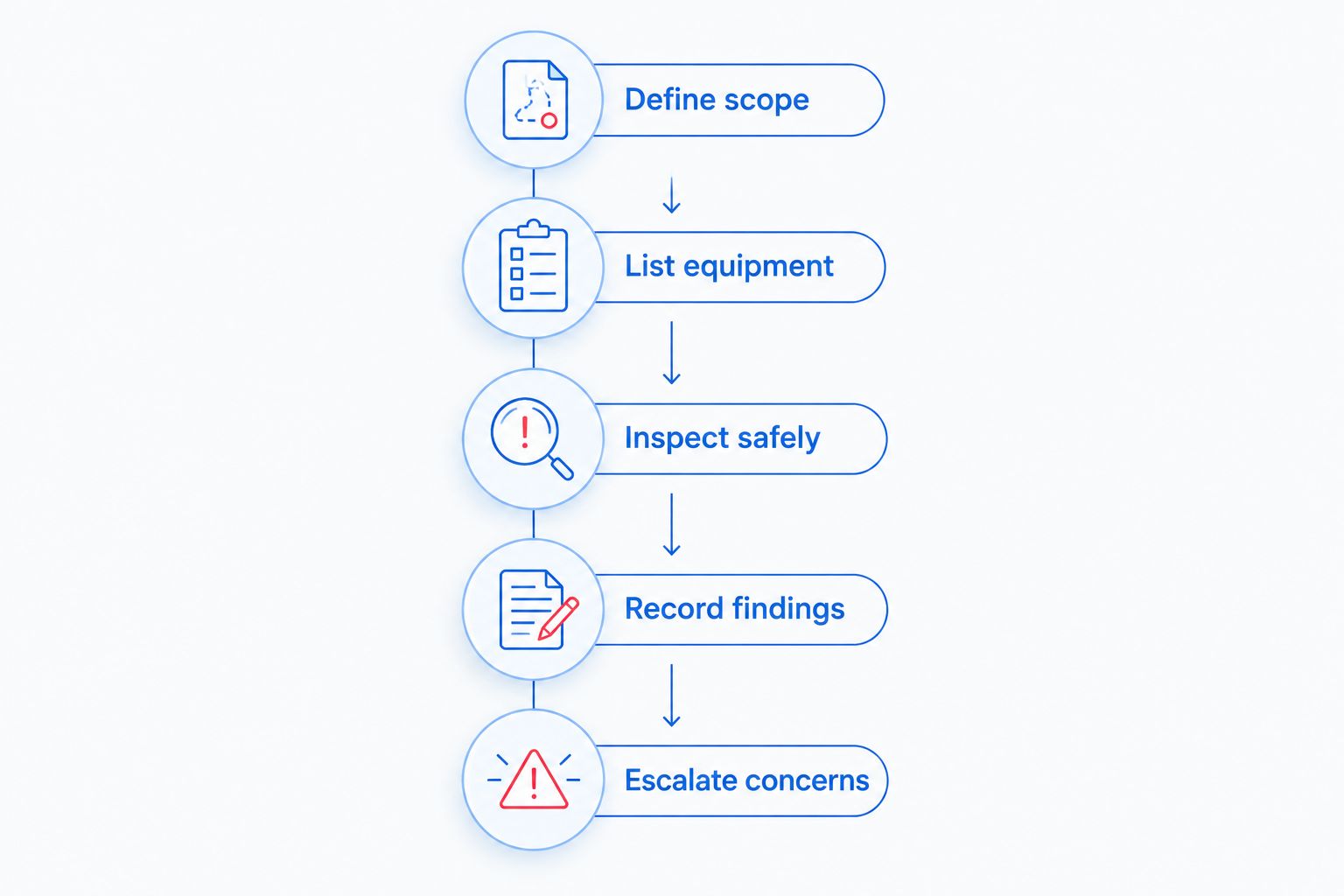
Use the following sequence to keep observations useful:
- Define scope: Identify the property, spaces, and equipment you have permission to inspect.
- List equipment: Note authorized communications, navigation, security, and tracking installations.
- Inspect safely: Examine accessible areas without disturbing safety systems or unfamiliar wiring.
- Record findings: Photograph unexplained hardware in place and save relevant alerts.
- Escalate concerns: Ask a specialist to assess unresolved findings; contact law enforcement when a safety threat or suspected crime requires it.
If your boat travels on a trailer, treat the boat and trailer as 2 separate assets. A check aboard the vessel does not establish what is attached to its towing equipment. Keep the vehicle, trailer, and boat inspection boundaries explicit.
For each unexplained object, preserve 4 record fields: location, discovery date, photographs, and the circumstances of discovery. Avoid publishing identifying details online or repeatedly handling an object that could become evidence.
Request a GPS tracker assessment
Describe your vessel, location, and concern, and ask which inspection scope applies.
Which GPS tracker detection option should you choose?
Choose professional assessment for a specific, consequential concern; choose inspection tools for routine accessible checks. Add a broadband detector only when you understand that it flags transmissions rather than identifying trackers.
A spectrum analyzer belongs with a trained operator. Phone-based checks belong with compatible Bluetooth accessories. Neither replaces a defined physical inspection, and no quiet screen proves that every compartment is clear.
For your 2026 decision, buy the method that answers your actual question. If the question is whether unexplained hardware or a suspicious transmission indicates surveillance, specialist evaluation is more appropriate than collecting additional alarm-based gadgets.
FAQ
What's the best GPS tracker detector for a boat owner?
The best approach combines appropriate electronic checks with physical inspection. USA Bugsweeps provides professional GPS tracker detection; boat owners seeking specialist help should confirm vessel access and marine inspection scope before booking.
Can an RF detector find every GPS tracker on a boat?
No, an RF detector cannot find every GPS tracker. It responds to supported transmissions, so sleeping devices, offline loggers, and transmissions outside its coverage require other inspection methods.
Is a spectrum analyzer better than a basic RF detector?
A spectrum analyzer is better for trained analysis of active radio signals because it displays frequency information. A basic RF detector is simpler for preliminary checks, but neither identifies every tracker or clears inaccessible spaces.
Can my phone detect a hidden boat tracker?
A supported phone can detect certain compatible Bluetooth tracking accessories. Phone alerts do not cover every cellular GPS tracker, hardwired device, or offline GPS logger.
Do GPS trackers transmit directly to GPS satellites?
Ordinary GPS trackers receive satellite signals to calculate position; they do not report location back through GPS satellites. Reporting requires a separate communication system, while offline loggers store location data for later retrieval.
Should I turn off all marine electronics during a sweep?
No, do not indiscriminately disable navigation or emergency communications equipment. Any controlled equipment changes should be planned with the person responsible for vessel safety and documented during the inspection.
What should I do if I find an unfamiliar device on my boat?
Photograph the device in place, record its location, and avoid disturbing unfamiliar wiring. Ask a qualified specialist to assess it, and contact law enforcement if the circumstances involve suspected stalking, threats, or another crime.
One last thing
An authorized location-sharing system can reveal your movements without a newly hidden tracker. Review who has access to existing tracking accounts and location-sharing permissions alongside the physical inspection.
For 2026, keep these as separate questions: Is there an unauthorized device, and can someone access an authorized system? A detector addresses only part of that problem.


