
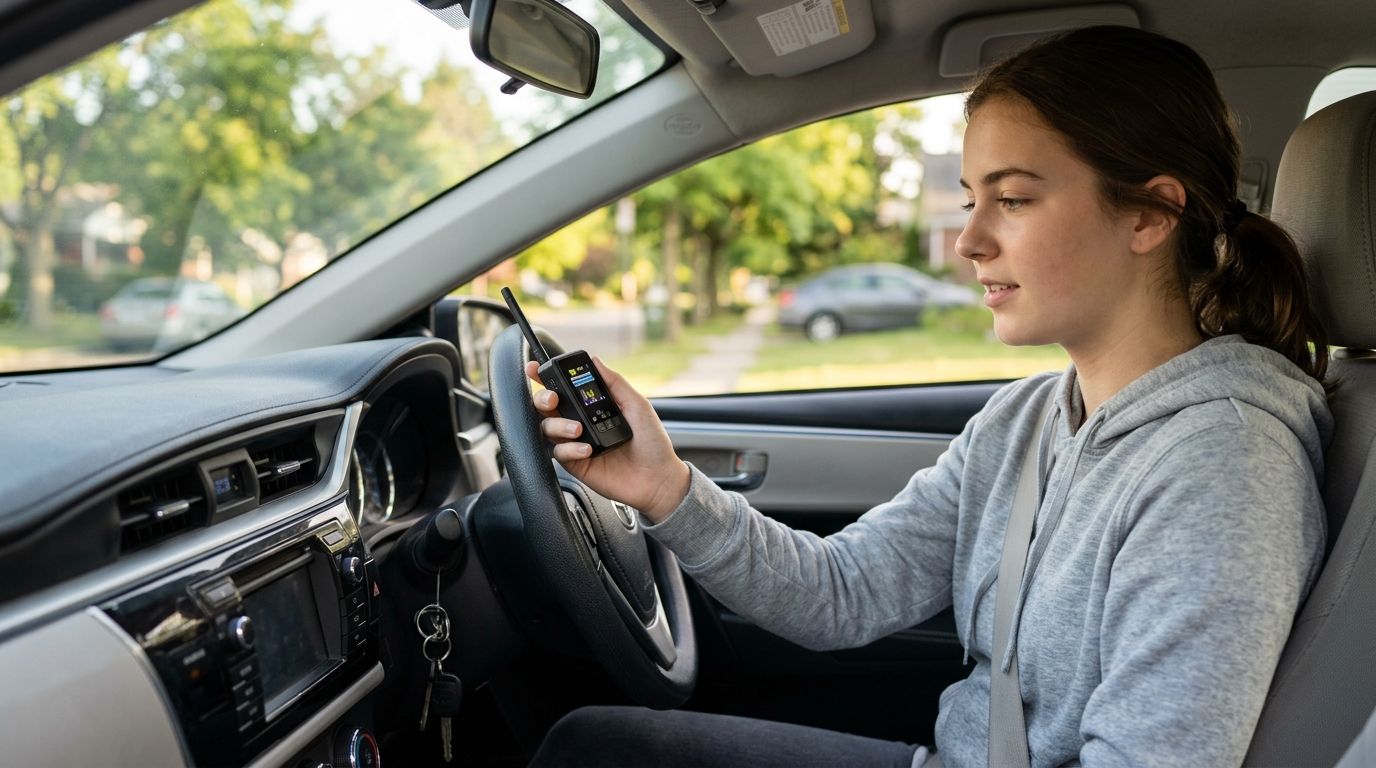
Best overall for teen and new drivers: a professional TSCM GPS sweep from USA Bugsweeps. Best free first step: a physical/visual inspection of the vehicle. Best DIY tool: a handheld multi-frequency RF/GPS detector. Best for catching a cheap Bluetooth tag: Apple's Tracker Detect app or Android's built-in unknown-tracker alerts. Best for ruling out plug-in units fast: an OBD-II port check. Each method catches a different type of tracker, and no single one covers every scenario in 2026 — that's the actual problem with most "how to find a GPS tracker" advice online.
- A professional TSCM sweep is the only method covering RF, cellular, Bluetooth, and hardwired trackers in one pass.
- Physical inspection catches magnetic OBD trackers in under 20 minutes for free.
- Bluetooth alerts on iPhone and Android catch AirTag-style tags but miss standalone GPS units with their own SIM card.
- OBD-II port checks take under 2 minutes and rule out the most common plug-in tracker type.
- Best gps tracker detectors for teen drivers in 2026 depend on whether you have evidence of tracking or just want a routine check.
Why this matters for teen and new drivers
A teen driver's car is an easy target: keys sit in a bag at school, the car sits in a driveway overnight, and most new drivers have no idea what a hidden tracker looks like. Parents sometimes plant a tracker themselves without disclosing it, exes plant them after a breakup, and in rarer cases a stalker plants one on a minor's vehicle. If you're starting from scratch, learning how to find a hidden GPS tracker on a car is the right first read before you pick a detection method.
The stakes differ by scenario. A parent who wants peace of mind after handing over the keys needs something different than a teen who suspects an ex is tracking her movements. The method that works for one situation can completely miss the tracker in the other.
What makes a detector or method worth using
- Frequency coverage — does it catch RF-only devices, cellular-based trackers, and Bluetooth tags, or just one type
- Detects passive/dormant units — many trackers only transmit when the car moves, so a static scan can miss them
- Speed and cost — a 2-minute OBD check has a different use case than a full paid sweep
- False-positive rate — cheap consumer RF detectors often flag Wi-Fi routers and cell towers as threats
- Documentation value — if you need proof for police, a custody dispute, or a restraining order, not every method produces evidence
- Skill required — some methods need zero training, others need someone who knows what a tracker module looks like inside a bumper cavity
Comparison at a glance
| Method | Best for | Standout feature | Key limitation |
|---|---|---|---|
| Professional TSCM GPS sweep | Confirmed evidence, documented results | Covers RF, cellular, Bluetooth, and hardwired devices in one visit | Costs more than a DIY check |
| Physical/visual inspection | Free routine habit for every new driver | Catches magnetic OBD and undercarriage trackers | Misses hardwired or cavity-hidden units |
| Handheld RF/GPS detector | Periodic self-scans without booking a service | Sweeps common tracker frequency bands | Misses dormant trackers that only transmit while moving |
| Bluetooth unknown-tracker alerts | Catching AirTag-style tags | Free, built into most phones since 2024 | Blind to standalone cellular GPS units |
| OBD-II port check | Ruling out plug-in trackers fast | Under 2 minutes, no tools needed | Only catches one tracker type |
1. Professional TSCM GPS sweep: best overall for confirmed detection
A professional sweep uses spectrum analyzers and nonlinear junction detection to check the entire vehicle — undercarriage, bumpers, wiring harness, seats, and OBD port — for active and dormant tracking devices. It's the only method on this list built to catch a tracker that's been switched to a low-power or dormant mode to avoid detection.
Professional TSCM sweep pros:
- Covers RF, cellular (including trackers that only transmit intermittently), Bluetooth, and hardwired devices in a single pass
- Finds units with dead or disconnected batteries that a phone app can't see
- Produces documented findings usable if you need to involve police or an attorney
Professional TSCM sweep cons:
- Costs more than running an app or doing a visual check
- Requires scheduling, so it's not instant
- Overkill if you have zero indication anyone tampered with the car
Best for: parents or new drivers with real evidence — unexplained battery drain, someone showing up where you didn't tell them you'd be, an ex who won't disengage — who need a thorough, documented answer, not a guess. If that's your situation, see the GPS tracker detection guide for domestic violence and stalking situations alongside the sweep itself.
Verdict: use it when the stakes are real, not for casual curiosity.
2. Physical and visual inspection: best free first step
Most consumer GPS trackers rely on strong magnets to attach to the undercarriage, wheel wells, or inside the bumper. A flashlight and 15-20 minutes of your time will find the majority of these without any equipment.
Physical inspection pros:
- Free and immediate
- Teaches a new driver exactly where trackers commonly hide, useful as an ongoing habit
- Catches the most common magnetic and OBD-style consumer trackers
Physical inspection cons:
- Misses trackers wired directly into the vehicle's electrical system
- Misses devices tucked into factory cavities like the dashboard or trunk liner
- Requires knowing where to actually look, which takes one pass of guidance to learn
Best for: every new driver, as a monthly routine, regardless of whether anything seems wrong. If the check turns up a device, review how to get a hidden GPS tracker removed from your car before touching anything, since removal timing matters for evidence.
Verdict: do this first, every time, before spending money on anything else.
3. Handheld multi-frequency RF/GPS detector: best DIY scanning tool
These portable units sweep common tracker frequency bands and light up or beep when they pick up an active transmission. They're the closest thing to a professional sweep that a non-professional can run themselves.
Handheld detector pros:
- Portable, no subscription, works anywhere
- Sweeps VHF/UHF and cellular bands that visual inspection can't check
- Reusable for future checks without booking anything
Handheld detector cons:
- Many trackers stay silent until the car is moving, so a driveway scan can miss an active-but-dormant device
- Consumer-grade sensitivity varies a lot between units
- Prone to false positives near Wi-Fi routers, cell towers, and other RF-noisy environments
Best for: a driver who wants a repeatable scanning tool without booking a professional every time. For the technical side of how these detectors actually work, the guide to RF detectors used in professional bug sweeping explains the gap between consumer units and professional-grade equipment.
Verdict: a reasonable backup tool, not a substitute for a full sweep when evidence exists.
4. Bluetooth unknown-tracker alerts: best for AirTag-style tags
iPhones automatically alert users when an unfamiliar AirTag travels with them, and Android phones added a similar built-in "unknown tracker alert" feature. Apple also publishes a Tracker Detect app so Android users can manually scan for nearby AirTags.
Bluetooth alert pros:
- Free and already built into most phones as of 2026
- Runs passively in the background with no setup
- Automatically flags an unfamiliar tag traveling with the car or the driver
Bluetooth alert cons:
- Only detects Bluetooth-based tags like AirTag or Tile
- Completely blind to standalone GPS trackers with their own cellular SIM, which is the tracker type most often planted in a vehicle deliberately
- Depends on the phone being with the driver at the time of the scan
Best for: catching a cheap Bluetooth tag slipped into a bag, glovebox, or trunk — not a dedicated GPS unit hidden on the vehicle itself.
Verdict: keep it running as a background layer, but don't treat a clean scan as proof the car is clean.
5. OBD-II port check: best for ruling out plug-in trackers fast
Plug-in OBD trackers are common precisely because they require no wiring and no separate battery — they just draw power from the port under the dash. Checking that port takes under two minutes.
OBD-II check pros:
- Fastest method on this list
- Catches one of the most common consumer tracker types instantly
- No tools or technical knowledge required
OBD-II check cons:
- Only catches plug-in trackers, not magnetic or hardwired units
- Anyone unfamiliar with the port might mistake a legitimate diagnostic tool for a tracker, or vice versa
Best for: ruling out the single most common plug-and-play tracker type before moving to a deeper check. Pair it with the full walkthrough on best GPS tracker detectors for personal vehicles if the car sees heavy daily use.
Verdict: quick win, run it alongside the physical inspection, not instead of it.
Not sure what you found?
Get a professional read on any suspicious device before you touch it.
How this list was ranked
Each method was scored against the criteria above: frequency coverage, ability to catch dormant devices, speed and cost, false-positive rate, evidence value, and skill required. No method scored well on all six — that's why the list is built as a decision tree by use case, not a single leaderboard.
Which method should you use?
For a routine check with no red flags, run the physical inspection and OBD-II check together — both are free and take under 25 minutes combined. Keep Bluetooth tracker alerts running in the background at all times; it costs nothing and catches a specific, common threat.
If there's an actual reason to suspect a hidden GPS tracker — an ex who won't let go, unexplained appearances, unusual battery drain — skip the DIY layer and book a professional TSCM sweep. A handheld RF detector sits in between: fine as a repeatable habit, not reliable enough to be the last word in 2026.
FAQ
What's the best way to find a hidden GPS tracker on a teen driver's car?
Start with a free physical inspection of the undercarriage, wheel wells, and OBD-II port, then run a Bluetooth tracker scan on your phone. If you have actual evidence of tracking, a professional TSCM sweep is the only method that also catches dormant or hardwired devices.
Can my phone detect a GPS tracker in my car?
Your phone can detect Bluetooth-based tags like AirTag or Tile through built-in unknown-tracker alerts, but it cannot detect a standalone GPS tracker that uses its own cellular SIM card. Those require a physical check, an RF detector, or a professional sweep.
Is it legal to remove a GPS tracker someone else put on my car?
Laws vary by state and by who owns the vehicle, so check local statutes before removing anything, especially if you plan to use the device as evidence. A documented professional sweep preserves that evidence properly before removal.
Do OBD-II tracker detectors work on all cars?
Checking the OBD-II port works on any vehicle with a standard OBD-II connector, which covers virtually all cars sold in the US since 1996. It only rules out plug-in trackers, not magnetic or hardwired units.
Can Apple's Tracker Detect app find a standalone GPS tracker?
No. Apple's Tracker Detect app and Android's built-in unknown-tracker alerts only find Bluetooth-based tags like AirTag or Tile. A dedicated GPS tracker with its own cellular connection won't show up in either.
How often should new drivers check their car for hidden trackers?
A monthly physical and OBD-II check is a reasonable habit for any new driver in 2026, especially after the car has been parked somewhere unattended overnight. Bump that to immediately if anything about the driver's routine feels tracked.
What's the difference between a Bluetooth tracker and a GPS tracker?
A Bluetooth tracker like AirTag relies on nearby phones to relay its location and only works at short range without that network. A dedicated GPS tracker uses its own cellular connection to report location from anywhere, which is why it needs a different detection method entirely.
One last thing
The detail most new drivers miss: a tracker that's been placed deliberately is often set to transmit only in short bursts, or only once the car starts moving, specifically to dodge a static driveway scan. A car sitting parked for an RF sweep can look clean and still be carrying an active tracker — which is the exact gap a professional sweep is built to close.


