
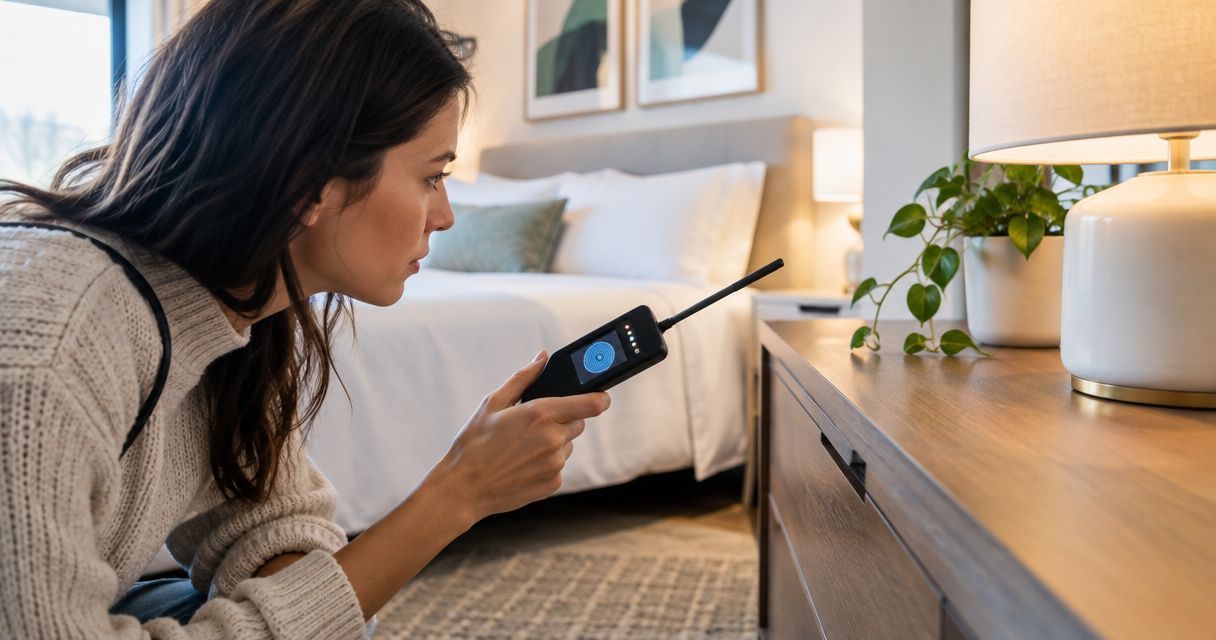
Best overall for routine travel checks: an optical lens finder. Best for travelers who want optical and radio checks: a combined optical/RF detector. Best existing-tool option: a phone flashlight. This 2026 guide compares detection methods, explains their limits, and identifies when professional help is the better next step.
- The best hidden camera detector for airbnb guests starts with optical lens detection, not radio alerts alone.
- An optical lens finder can reveal an exposed camera lens without relying on wireless transmission.
- RF detectors identify radio activity; an alert does not prove a hidden camera exists.
- Usabugsweeps provides professional TSCM bug sweeping for concerns that need more than a traveler’s screening check.
Why this matters
A hidden camera does not have to transmit wirelessly. A camera that records locally can escape a radio-only check, while ordinary wireless equipment can trigger an RF detector.
Choose a detection method for the evidence it can reveal—not the reassurance its alarm provides. A traveler’s check is a screening process, not proof that a room contains no surveillance devices.
Usabugsweeps provides nationwide professional TSCM bug sweeping and electronic surveillance detection services. That is a different category from a handheld detector: you engage a service rather than interpret every instrument reading yourself.
What makes the best hidden camera detector for Airbnb guests?
For a 2026 travel kit, these criteria matter more than the number of modes printed on the packaging:
- Optical inspection: The tool should help you examine exposed lenses, including cameras that are not transmitting.
- Understandable alerts: You need to distinguish a reflective surface or radio source from evidence of a camera.
- Separate detection modes: Optical and RF checks answer different questions. A combined device should explain each mode clearly.
- Usable controls: A viewfinder you can see through and sensitivity controls you understand matter during an unfamiliar-room inspection.
- Documented limitations: Instructions should explain what the detector cannot establish, including concealed lenses and nontransmitting devices.
- Travel practicality: Check the device’s actual dimensions, power requirements, and operating instructions before packing it.
This ranking compares equipment categories rather than individual models. Choose the method first, then evaluate a specific detector against its published instructions.
Hidden camera detection options at a glance
| Rank and option | Best for | Standout function | Key limitation |
|---|---|---|---|
| Optical lens finder | Routine guest-room screening | Helps reveal exposed lens reflections | Requires a visible optical path and careful viewing angles |
| Combined optical/RF detector | Travelers wanting complementary checks | Combines lens inspection with radio detection | More modes require more interpretation |
| Standalone RF detector | Investigating active wireless signals | Detects radio activity within supported coverage | Cannot establish whether the signal comes from a camera |
| Phone flashlight | An initial check using equipment you already carry | Illuminates objects and possible lens reflections | Reflections are difficult to identify conclusively |
| Professional TSCM service | Unresolved or consequential surveillance concerns | Provides a professional surveillance investigation | Requires coordination and authorized access |
1. Optical lens finder: best for routine travel screening
An optical lens finder directs light toward a suspected object and helps you look for a camera lens reflection. The method does not require the camera to broadcast a radio signal. It does require an exposed optical path and a viewing position that returns a visible reflection.
Best for: Travelers who want a dedicated tool for checking objects facing beds, showers, changing areas, or other private spaces.
An optical lens finder is the default recommendation for a 2026 travel check because it addresses the camera’s viewing path rather than assuming wireless transmission. Use it slowly and from different positions; waving it across a room is not a complete inspection.
Optical lens finder pros:
- Does not depend on a camera transmitting wirelessly.
- Supports targeted inspection of suspicious openings.
- Keeps the search focused on the visual function of a camera.
Optical lens finder cons:
- Cannot reveal a lens with no accessible viewing path.
- Glass, polished surfaces, and other reflective objects can confuse interpretation.
- Requires patient inspection and changes in viewing angle.
Before choosing a model, read how its illumination and viewing system work. Check whether you can operate it comfortably while examining low furniture, elevated objects, and small openings without climbing or dismantling anything.
Verdict: Buy an optical lens finder for routine screening, but never treat a negative result as room clearance.
2. Combined optical/RF detector: best for complementary checks
A combined optical/RF detector puts lens inspection and radio detection into one device. Optical mode looks for reflections; RF mode responds to radio energy within the detector’s supported coverage. Those functions complement each other, but neither automatically verifies the other.
Best for: Frequent travelers willing to learn separate detection modes and interpret their results independently.
A combined optical/RF detector belongs in your kit when you understand why you need both methods. An RF alarm near a reflective object is still not enough to identify a hidden camera.
Combined optical/RF detector pros:
- Provides optical and radio checks in one device.
- Lets you examine a suspected location using different kinds of evidence.
- Reduces the need to carry separate optical and RF instruments.
Combined optical/RF detector cons:
- Radio alerts can come from legitimate equipment.
- Combined functions do not guarantee adequate coverage or clear optics.
- Additional modes introduce more controls and interpretation demands.
Read the manual before your trip. Confirm that it explains sensitivity adjustment, supported frequency coverage, and optical inspection separately, rather than presenting every beep as surveillance detection.
Verdict: Buy a combined optical/RF detector if you will learn both modes; skip it if you want an automatic yes-or-no answer.
3. Standalone RF detector: best for investigating active signals
A standalone RF detector responds to radio transmissions within its supported frequency coverage. It can help you investigate active wireless equipment, but it does not identify a camera simply because it detects a signal. A locally recording camera can remain outside the scope of this method.
Best for: Travelers who already understand radio detection and want to investigate a particular active signal.
Wi-Fi uses bands including 2.4 GHz, 5 GHz, and 6 GHz, subject to local rules and equipment support. A detector’s published coverage matters: a label such as wireless detector does not establish that it covers every relevant band or protocol.
Standalone RF detector pros:
- Responds to active radio transmissions within supported coverage.
- Offers a way to investigate changes in signal strength around a room.
- Complements physical and optical inspection.
Standalone RF detector cons:
- Cannot identify the purpose of a signal from an alarm alone.
- Misses devices that are not transmitting during the check.
- Can be difficult to interpret around ordinary wireless equipment.
For a 2026 rental stay, nearby routers, phones, and other electronics complicate an RF check. Know which devices you brought, and follow the detector’s instructions instead of assuming the strongest reading marks a camera.
Verdict: Hold off on a standalone RF detector as your only camera-finding tool; use it as a supplement.
4. Phone flashlight: best for an immediate visual check
A phone flashlight helps you inspect objects, openings, and possible lens reflections without adding equipment to your bag. It is a visual aid, not a dedicated hidden camera detector. A bright reflection requires closer examination rather than an immediate accusation.
Best for: Guests who want to begin a nondestructive inspection with equipment already in hand.
Move the light and your viewing position while examining suspicious objects. Focus on openings aimed into private areas, but remember that an unusual hole or shiny component is not proof of recording.
Phone flashlight pros:
- Uses equipment you already carry.
- Helps illuminate dim corners and small openings.
- Supports photographs of an object in its original position.
Phone flashlight cons:
- Ordinary reflective surfaces can resemble lens reflections.
- Does not detect radio transmissions or identify recording activity.
- Cannot rule out cameras hidden behind obstructed viewing paths.
Do not confuse flashlight inspection with an infrared camera check. Phone cameras differ in their response to infrared light, and a hidden camera does not have to use infrared illumination.
Verdict: Use a phone flashlight for an initial check; skip any claim that it certifies a room as camera-free.
5. Professional TSCM service: best for unresolved concerns
Professional technical surveillance countermeasures, or TSCM, is a service rather than a consumer detector. Usabugsweeps provides TSCM bug sweeping to help detect hidden cameras, audio bugs, GPS trackers, and wiretaps nationwide. Discuss the suspected location and access arrangements before arranging an inspection.
Best for: People facing a specific unresolved concern, particularly when the suspected device or circumstances require professional investigation.
Usabugsweeps is best for people who need professional hidden camera detection rather than another consumer detector. Renting a property does not automatically give you authority to dismantle fixtures or authorize every form of inspection.
Professional TSCM service pros:
- Provides a professional route for investigating surveillance concerns.
- Addresses more device categories than hidden cameras alone.
- Moves the decision beyond a guest’s interpretation of consumer-tool alerts.
Professional TSCM service cons:
- Requires coordination rather than an immediate self-check.
- Depends on appropriate access to the location being examined.
- Does not replace emergency assistance or reporting suspected criminal activity.
Read what to expect during a professional TSCM bug sweep before discussing an inspection. Describe what you observed, where it was located, and whether anyone touched it.
Verdict: Choose professional help when a specific concern remains unresolved; do not buy more gadgets as a substitute for investigation.
Discuss your surveillance concern
Ask about professional TSCM bug sweeping and the access needed for an inspection.
How to use your detector in a rental
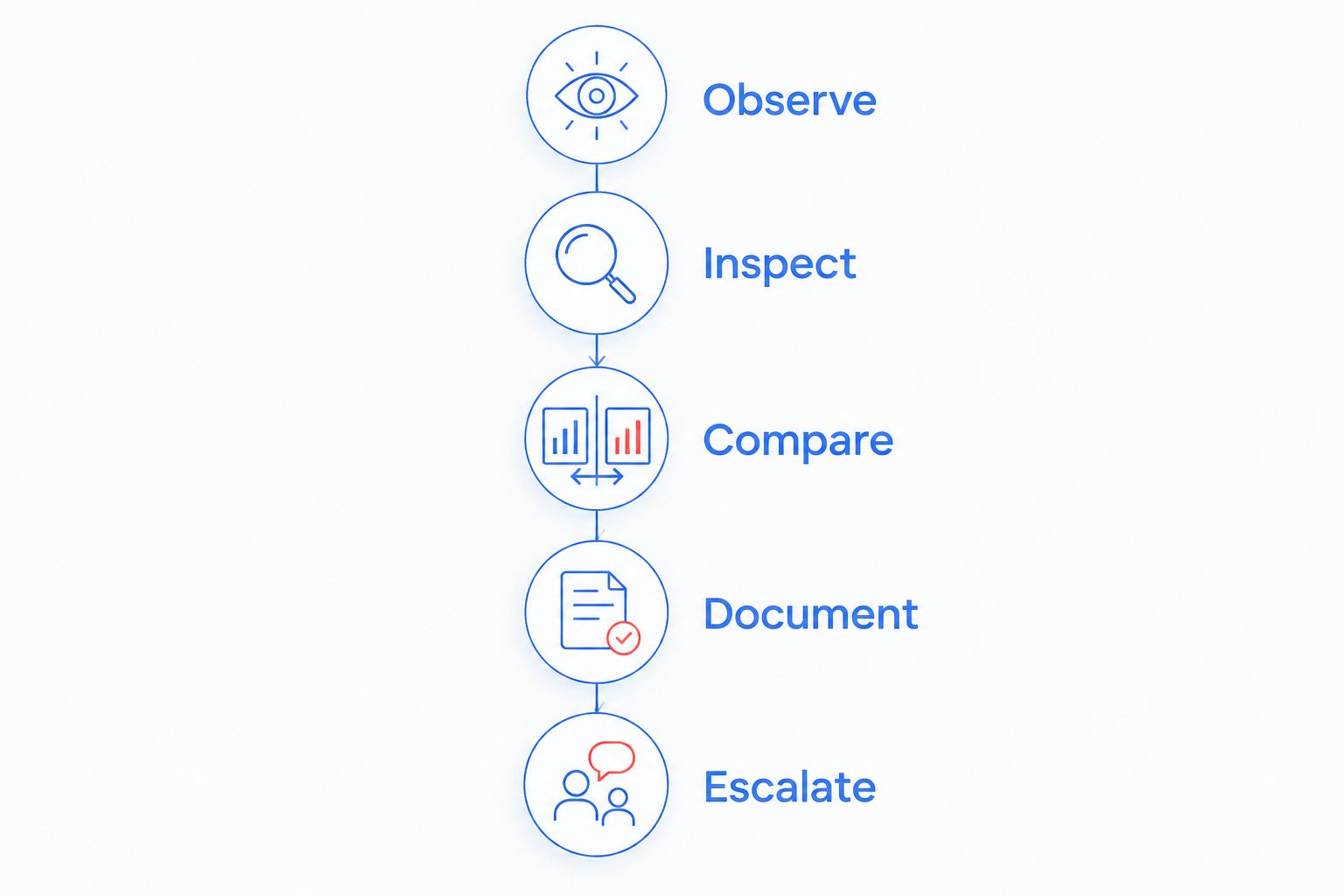
A useful 2026 room check separates observation from interpretation. Follow this sequence without opening fixtures, entering restricted spaces, or interfering with safety equipment.
Observe
Look at objects facing private areas. Note unusual openings, placements, or components, but avoid deciding that an object is a camera based on appearance alone.
Inspect
Use optical inspection or a flashlight from different viewing positions. Follow the detector’s instructions and keep smoke alarms, outlets, thermostats, and other installed equipment intact.
Compare
If you use RF mode, account for your own transmitting devices and ordinary equipment nearby. Keep radio readings separate from optical findings until you have evidence connecting them.
Document
If you identify a suspicious object, photograph its location and visible details from a safe position. Record what you actually observed rather than labeling every unexplained alert as a hidden camera.
Escalate
If you believe you found a recording device, leave the affected area and contact the booking platform and appropriate local authorities. If you face an immediate threat, prioritize emergency assistance over further inspection.
Your safety comes before completing the sequence. You do not need a confirmed technical diagnosis before leaving a space where you feel unsafe, and you should not confront someone you believe poses a threat.
How these options are ranked
The ranking prioritizes camera-relevant evidence, understandable operation, and suitability for a guest’s nondestructive check. Optical inspection comes first because it does not depend on wireless transmission; RF detection serves a different purpose.
Combined detectors suit travelers prepared to interpret both methods. A phone flashlight provides an initial visual check, while professional TSCM belongs in the decision tree when the concern exceeds routine screening.
Which hidden camera detection option should you choose?
Choose an optical lens finder as your default travel tool. Add RF capability only if you understand its coverage and the difference between detecting radio activity and identifying a camera.
For your 2026 travel planning, practice with your detector before you leave. Examine a known camera lens and ordinary reflective objects so you understand what the tool shows without mistaking practice for a performance guarantee.
Choose Usabugsweeps hidden camera detection services when you need professional investigation of an unresolved concern. Leaving an affected room and preserving observations take priority over finishing a consumer-device sweep.
FAQ
What’s the best hidden camera detector for Airbnb guests in 2026?
An optical lens finder is the default choice for routine guest screening because it does not depend on wireless transmission. A combined optical/RF detector adds radio checks, but neither option certifies that a room is camera-free.
Can a detector find a camera that isn’t connected to Wi-Fi?
Optical inspection can reveal an exposed camera lens without a Wi-Fi connection. An RF detector will not reveal a locally recording camera that is emitting no detectable radio transmission.
Is an optical detector better than an RF detector?
An optical detector is the better starting point for inspecting exposed camera lenses. An RF detector answers a different question: whether detectable radio activity is present within its supported coverage.
Does an RF detector alarm mean I found a hidden camera?
No, an RF alarm does not identify a hidden camera. Legitimate wireless equipment can trigger alerts, so you need additional evidence to establish the source and purpose of the signal.
Can I use my phone to check for hidden cameras?
You can use a phone flashlight for a visual inspection, but it cannot rule out hidden cameras. Phone-camera infrared checks also have limits because infrared sensitivity varies and cameras do not have to use infrared illumination.
Should I open a smoke detector if I suspect a camera?
Do not dismantle a smoke detector or other installed safety equipment during a guest-room check. Document the visible concern from a safe position and report it through appropriate channels.
What should I do if I find a suspected hidden camera?
Leave the affected area, preserve safe observations, and contact the booking platform and appropriate local authorities. Avoid touching or dismantling the object, and seek emergency assistance if you face an immediate threat.
When should I contact Usabugsweeps for hidden camera detection?
Contact Usabugsweeps when a specific surveillance concern needs professional investigation rather than another consumer-tool check. Discuss the location, observations, and authorized access before arranging TSCM bug sweeping.
One last thing
A camera can record without sending a radio signal. That is the reason an RF-only purchase leaves a gap in your travel check—not evidence that your rental contains a camera.
Keep your response proportionate to the evidence. Inspect without damage, document specific observations, and leave or seek help when the situation calls for it.


