
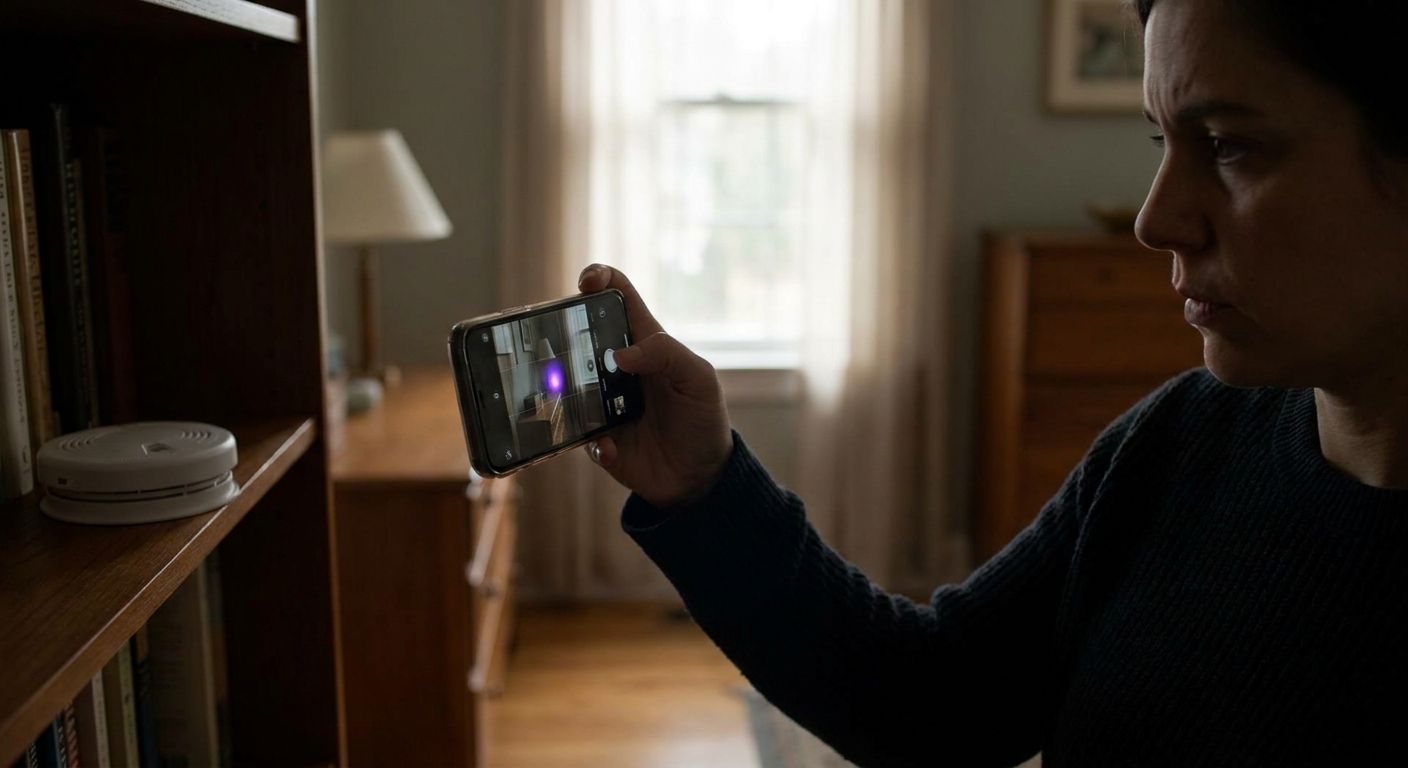
A phone camera can flag some hidden cameras in 2026 by picking up infrared light that's invisible to your naked eye, but it only catches cameras that use active IR LEDs for night vision — it misses daylight-only lenses, RF-based transmitters, and anything hidden behind fabric or a printed lens cover. Turning off the lights, opening your camera app, and scanning slowly for pinprick white or purple dots is the fastest free check you can run before calling in a professional sweep.
- Phone camera IR method only catches cameras with active night-vision LEDs, not daylight-only lenses.
- Newer iPhones and flagship Androids have stronger IR-cut filters that make this trick less reliable in 2026.
- Flashlight glare-scanning at a low angle finds lens reflections a phone screen alone will miss.
- USA Bugsweeps runs RF detection and lens-finder equipment that catches what a phone camera check cannot.
Why this matters
Hidden cameras get planted in Airbnb rentals, gym locker rooms, and rental units more often than most people assume, and the devices sold on consumer marketplaces are cheap enough that anyone can plant one in minutes. A phone-camera check costs nothing and takes under five minutes, which makes it a reasonable first pass before you decide whether a room needs a real sweep.
But the method has real gaps. It was built around older camera sensors that let infrared light pass through unfiltered — a lot of phones sold since roughly 2020 have IR-cut filters strong enough to block the trick almost entirely. If your phone check comes back clean in 2026, that tells you less than it used to.
How to detect hidden cameras using your phone camera
Here's the step-by-step process, in order:
- Darken the room completely. Turn off every light source and close blinds or curtains — the darker the room, the more visible an infrared LED becomes on your screen.
- Open your phone's camera app. Front or rear camera both work, but the rear sensor is usually more sensitive.
- Scan slowly in a grid pattern, holding the phone about arm's length and sweeping across ceiling corners, shelves, and any electronics in the room.
- Watch for small white, purple, or red pinpricks of light on your screen that you can't see with your naked eye — that's an IR LED used for night-vision recording.
- Cross-check with a flashlight in a lit room. Hold a flashlight at eye level and shine it across the room at a low angle, looking for a small glint — camera lenses reflect light differently than the surrounding material.
- Inspect common hiding spots directly once you spot a suspicious glint or IR point: smoke detectors, phone chargers, wall outlets, picture frames, alarm clocks, and stuffed animals are the most common housings.
| Method | What it catches | What it misses | Time needed |
|---|---|---|---|
| Phone camera IR scan | Cameras with active night-vision LEDs | Daylight-only cameras; IR-filtered phones miss weak signals | 3-5 minutes |
| Flashlight glint scan | Any exposed lens reflecting light | Lenses behind mesh, fabric, or angled away from you | 5-10 minutes |
| Professional RF sweep | Transmitting cameras, audio bugs, GPS trackers | Non-transmitting devices with local storage only | 30-90 minutes |
For a device-by-device breakdown of the electronic method, see how to find a hidden camera using an RF detector — it catches transmitting cameras the phone-and-flashlight combo can't touch. A full room check from USA Bugsweeps combines electronic detection with physical inspection, which is the only way to rule a room out with confidence.
Why the phone camera method misses cameras
The IR-detection trick isn't a guarantee, and knowing why helps you decide when to stop trusting it:
- Modern IR-cut filters block the signal. Many phones released since 2020 filter out enough infrared light that the LED won't show on screen, even when it's live and recording.
- Daylight-only cameras don't emit IR at all. Cheaper spy cameras built for well-lit rooms skip night vision entirely, so there's no IR signature to catch.
- Distance and angle matter. An IR LED pointed away from your scanning angle, or one placed across a large room, can be too faint for the phone sensor to register.
- Lens covers and mesh housings scatter the light. Cameras built into smoke detectors or clock radios often sit behind a diffuser that weakens both the IR glow and the glint.
- A single flashlight source isn't always enough. Glint-scanning works best with one strong, directional light in an otherwise dark room — ambient light from windows or lamps washes out the reflection.
- The method doesn't touch audio bugs or GPS trackers. A phone camera check only addresses cameras. It does nothing for wiretaps, room audio bugs, or vehicle trackers, which need RF or physical inspection.
“If your phone camera check comes back clean, that rules out one category of device, not the room.”
Common hiding spots worth a manual inspection even after a clean phone scan include smoke detectors — see how to find a hidden camera in a smoke detector for the specific signs — plus USB wall chargers, exposed screw heads that don't match the rest of a device, and any object that looks newer or slightly out of place compared to everything around it.
Get a professional sweep instead of guessing
RF detection and lens-finder equipment catch what a phone camera scan misses.
Can a flashlight alone find hidden cameras?
A flashlight alone finds hidden cameras by catching the glint off an exposed lens when held at a low angle in a dark room, but it misses lenses hidden behind mesh, fabric, or diffuser covers. Pair it with the phone camera IR method — the two approaches catch different device types, and running both takes under 15 minutes per room.
Do all hidden cameras emit infrared light?
No. Only cameras built with night-vision capability emit infrared light, and daylight-only models have no IR signature at all. That means a phone camera scan that finds nothing doesn't rule out a hidden camera in 2026 — it only rules out the IR-equipped kind.
Is a professional sweep necessary if my phone check finds nothing?
Yes, a professional sweep is worth it when you have a specific reason to suspect surveillance — a landlord, ex-partner, or business rival with access to the space — because RF detection and lens-finder equipment catch transmitting devices and non-IR cameras a phone can't. This matters most in short-term rentals: see how to check an Airbnb rental for hidden cameras for a room-by-room checklist that goes past the phone trick.
FAQ
How do I detect a hidden camera with my phone camera?
Darken the room fully, open your camera app, and scan slowly for small white or purple pinpricks of light that indicate an active infrared LED. Cross-check with a flashlight glint scan in a lit room, since the phone method only catches IR-equipped cameras.
Why doesn't my phone camera detect any hidden cameras?
Newer phones have IR-cut filters that block the infrared light this trick relies on, and daylight-only cameras don't emit IR at all. A clean scan doesn't rule out a hidden camera, it only rules out the IR-equipped kind.
What app finds hidden cameras using a phone?
No app improves on the built-in camera for the IR-detection method, because it relies on the physical camera sensor rather than software. Network-scanning apps can flag suspicious WiFi devices, but that is a separate check from the IR scan.
Can hidden cameras be detected in a dark room without a flashlight?
Yes, the phone camera IR scan works best in total darkness with no flashlight, since ambient light washes out the faint IR glow. Add the flashlight glint method afterward in a lit room to catch cameras that emit no infrared.
Do hidden cameras show up on iPhone cameras?
Some do, but many recent iPhone models have IR-cut filters strong enough to block most of the infrared signal this trick depends on. Older iPhones and many budget Android phones tend to show the IR glow more reliably.
What is the best way to find hidden cameras in a hotel room?
Combine the phone camera IR scan with a manual check of smoke detectors, alarm clocks, and USB chargers, since those are the most common housings in short-term rooms. A low-angle flashlight pass across the bed and bathroom mirror line catches most exposed lenses.
How long does a phone camera hidden camera check take?
A basic phone camera IR scan takes 3-5 minutes per room, and a flashlight glint check adds another 5-10 minutes. A professional RF sweep of the same room typically runs 30-90 minutes depending on room size.
One last thing
The phone camera trick was reliable a decade ago because almost every consumer camera sensor let infrared light through unfiltered. That has changed. A growing share of hidden cameras sold in 2026 skip night vision entirely because they're marketed for daytime use in rentals and offices, which means the IR trick misses them by design, not by accident. If you have a specific reason to suspect a device — not just curiosity — treat a clean phone scan as a first pass, not a final answer. USA Bugsweeps handles hidden camera detection nationwide when the free methods aren't enough.


