
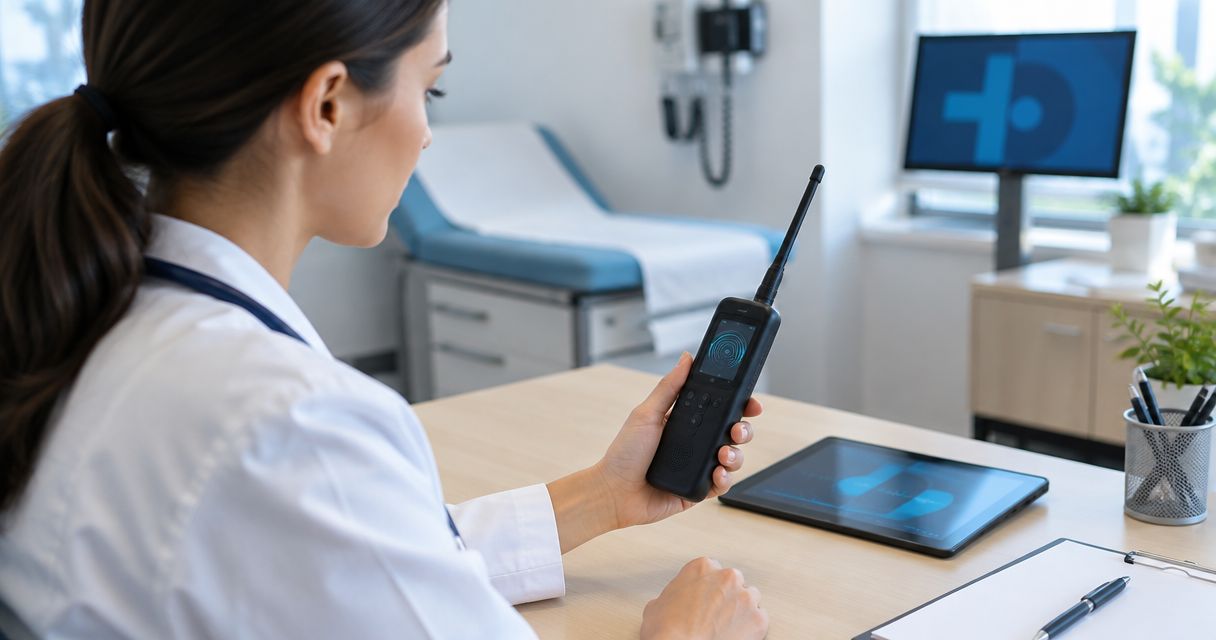
Best overall for a medical office with a specific surveillance concern: a professional TSCM assessment from Usabugsweeps. Best for basic wireless screening: an RF detector; best for investigating telephone wiring: a telephone-line analyzer used by a qualified technician. This 2026 guide compares detection methods, not unsupported device rankings.
- The best wiretap detectors for medical offices depend on whether the concern involves wireless signals, telephone wiring, or concealed electronics.
- Usabugsweeps provides professional TSCM bug sweeping for offices concerned about hidden microphones, cameras, and wiretaps.
- RF detectors flag radio activity; an alert alone does not establish unauthorized recording.
- Telephone-line analyzers address physical telephone circuits, not every form of VoIP interception.
- Choose professional assessment for a specific patient-privacy concern; use standalone detectors only within their limits.
Why this matters
Patient conversations need privacy. But an unexplained detector alert is not evidence that someone recorded a consultation, and a silent detector is not proof that a room is free of surveillance devices.
Medical offices combine several different environments: examination rooms, reception desks, consultation spaces, telephone systems, and networked equipment. Each presents a different inspection problem. The useful question is not which detector has the most features; it is which method can investigate the concern you actually have without disrupting care.
A 2026 purchasing decision should separate physical bug detection from cybersecurity. Finding a concealed microphone, reviewing call-recording permissions, and investigating a compromised workstation are different tasks. No handheld detector resolves all three.
What makes the best wiretap detectors for medical offices?
Judge detection methods against these criteria before choosing equipment or a service:
- Threat match: The method must address wireless transmissions, physical wiring, concealed electronics, or the specific system involved.
- Interpretability: A useful result explains what was observed and what still needs verification, rather than treating every alert as a bug.
- Coverage limits: Understand whether the method requires an active transmission, an accessible cable, or close access to an object.
- Clinical compatibility: Coordinate inspection around patients, medical equipment, infection-control requirements, and authorized access.
- Follow-up: Decide who will examine a suspicious object, investigate a signal, and preserve relevant information.
For the service-focused approach, the guide to bug sweep services for medical offices and patient privacy addresses the setting directly. Select the investigation scope before selecting the detector.
Detection methods at a glance
These options perform different jobs. The order below puts professional assessment first for a specific surveillance concern, then separates equipment by its actual purpose.
| Option | Best for | Standout capability | Key limitation |
|---|---|---|---|
| Usabugsweeps professional TSCM service | A specific office surveillance concern | Professional bug sweeping and electronic surveillance detection | Scope must be agreed; a physical sweep is not a complete cybersecurity review |
| RF detector | Basic wireless screening | Indicates radio-frequency activity within its supported bands | Cannot establish what a signal contains or reliably find a nontransmitting recorder |
| Spectrum analyzer | Specialist investigation of radio activity | Displays signal activity across frequency | Requires technical interpretation; a signal display does not prove surveillance |
| Telephone-line analyzer | Accessible analog telephone circuits | Supports examination of electrical conditions on telephone wiring | Does not cover every VoIP, account, or remote recording issue |
| Nonlinear junction detector | Specialist searches for concealed electronics | Detects nonlinear responses associated with electronic junctions | Legitimate electronics and some metal junctions also produce responses |
1. Usabugsweeps: best overall for professional assessment
Usabugsweeps provides professional TSCM bug sweeping and electronic surveillance detection services nationwide. The stated service covers hidden cameras, audio bugs, GPS trackers, and wiretaps; it is a service option, not a handheld detector.
Usabugsweeps TSCM service is the best fit here for medical offices that want professional assessment rather than staff-led detector screening. Before arranging an inspection, describe the concern and identify the rooms, objects, or telephone connections involved. Ask which methods and deliverables the proposed scope includes.
Usabugsweeps pros:
- Provides professional investigation rather than equipment alone.
- Addresses several stated surveillance-device categories.
- Serves business owners nationwide.
Usabugsweeps cons:
- Requires scheduling and authorized access to the relevant spaces.
- The stated service description does not establish a specific equipment list or reporting format.
- A physical surveillance assessment does not replace telephone-account or network-security investigation.
Best for: Practice owners and office managers responding to a specific surveillance concern involving their premises.
For a 2026 assessment, ask how the proposed inspection distinguishes physical telephone wiring, wireless devices, and locally recording equipment. Keep those questions separate from requests to investigate compromised accounts.
Verdict: Buy professional assessment when the concern is specific; agree on scope before authorizing work.
2. RF detector: best for basic wireless screening
An RF detector indicates radio-frequency energy within the frequencies it supports. It can help you notice transmitting equipment, but it does not identify the intent of a transmission.
Authorized wireless devices also transmit. An alert near reception, for example, needs investigation before anyone calls it evidence of a hidden microphone.
RF detector pros:
- Supports an initial check for active wireless transmissions.
- Some models provide sensitivity adjustment for closer investigation.
- Offers a simpler screening interface than specialist signal-analysis equipment.
RF detector cons:
- Does not reliably detect a recorder that stores audio without transmitting.
- Cannot establish whether a detected transmission contains patient information.
- Legitimate transmitters complicate interpretation in an occupied office.
Best for: An authorized staff member performing preliminary wireless screening, with a defined escalation process.
Choose an RF detector by its documented frequency coverage and operating instructions, not by an unsupported claim that it finds every bug. In a medical setting, do not shut down clinical equipment to simplify a scan. Coordinate any changes with the responsible clinical and technical staff.
Verdict: Buy for preliminary screening; skip it as standalone proof that an office is secure.
3. Spectrum analyzer: best for specialist RF investigation
A spectrum analyzer displays radio-frequency activity across frequency, allowing a trained operator to examine signals in more detail than a basic alert provides. Its usefulness depends on the analyzer, antenna, measurement settings, and operator.
This is an investigation instrument. A visible signal still needs attribution to a device or source before you can draw a surveillance conclusion.
Spectrum analyzer pros:
- Shows where activity occurs within the selected frequency span.
- Supports more detailed examination of signal characteristics.
- Helps specialists compare observations across locations and measurement conditions.
Spectrum analyzer cons:
- Requires technical knowledge to configure and interpret.
- Legitimate office transmissions remain part of the measurement environment.
- Does not find every wired device or nontransmitting recorder.
Best for: A trained TSCM or RF specialist investigating unexplained wireless activity.
For a 2026 office investigation, ask the operator to explain the observation and its limits in ordinary language. A report that merely lists signals does not establish unauthorized recording. The practical outcome is identifying what needs physical inspection or further technical review.
Verdict: Buy specialist analysis when wireless evidence needs interpretation; skip staff-led analysis without training.
4. Telephone-line analyzer: best for analog wiring concerns
A telephone-line analyzer supports examination of electrical conditions on compatible telephone circuits. It belongs in an investigation of accessible physical wiring, not in a general claim that every telephone system can be cleared with one instrument.
Start by identifying your system. An analog connection, an IP desk phone, and a hosted calling account require different investigative approaches.
Telephone-line analyzer pros:
- Focuses on the physical circuit rather than nearby wireless activity.
- Supports technician-led examination of compatible telephone wiring.
- Provides a method relevant to suspected physical line interference.
Telephone-line analyzer cons:
- Requires compatible equipment and authorized access.
- A line irregularity does not, by itself, prove interception.
- Does not establish whether a hosted account or remote recording feature has been misused.
Best for: Qualified technicians investigating an accessible analog telephone circuit.
If your practice uses VoIP, involve the telephone provider or IT administrator. Review authorized recording features, administrative access, and configuration alongside any physical inspection. Do not connect unfamiliar test equipment to operational telephone wiring without confirming compatibility.
Verdict: Buy qualified line testing for an analog-circuit concern; skip it as an all-purpose VoIP solution.
5. Nonlinear junction detector: best for concealed-electronics searches
A nonlinear junction detector, or NLJD, searches for nonlinear responses associated with semiconductor junctions. This makes it relevant to specialist searches for concealed electronics, including electronics that are not actively transmitting.
A response is a lead, not identification of a recording device. Legitimate electronics and some metal junctions also respond, so physical follow-up matters.
Nonlinear junction detector pros:
- Does not depend on a surveillance device transmitting a radio signal.
- Adds a different detection method to an electronics search.
- Supports closer investigation of objects and accessible structural areas.
Nonlinear junction detector cons:
- Cannot identify a responding object as a microphone or recorder on its own.
- Requires training to interpret responses and search systematically.
- Access restrictions and nearby electronics complicate inspection.
Best for: Trained specialists investigating suspected concealed electronics.
Medical offices require particular care around clinical devices and restricted spaces. Confirm manufacturer instructions and facility requirements before using transmitting inspection equipment near sensitive equipment. Staff should not experiment with unfamiliar instruments during patient care.
Verdict: Buy specialist-led concealed-electronics investigation; skip untrained use in clinical spaces.
How these options are ranked
This 2026 ranking follows threat match, interpretability, coverage limits, clinical compatibility, and follow-up. It ranks methods by their role in an office investigation, not by unverified product specifications or claimed detection distances.
Professional assessment leads for a specific concern because purchasing a detector does not supply an investigation plan. RF screening follows as an initial wireless check; the remaining instruments serve narrower technical tasks.
The best method is the one that answers your actual question and states what it cannot establish. No option earns a recommendation by promising universal detection.
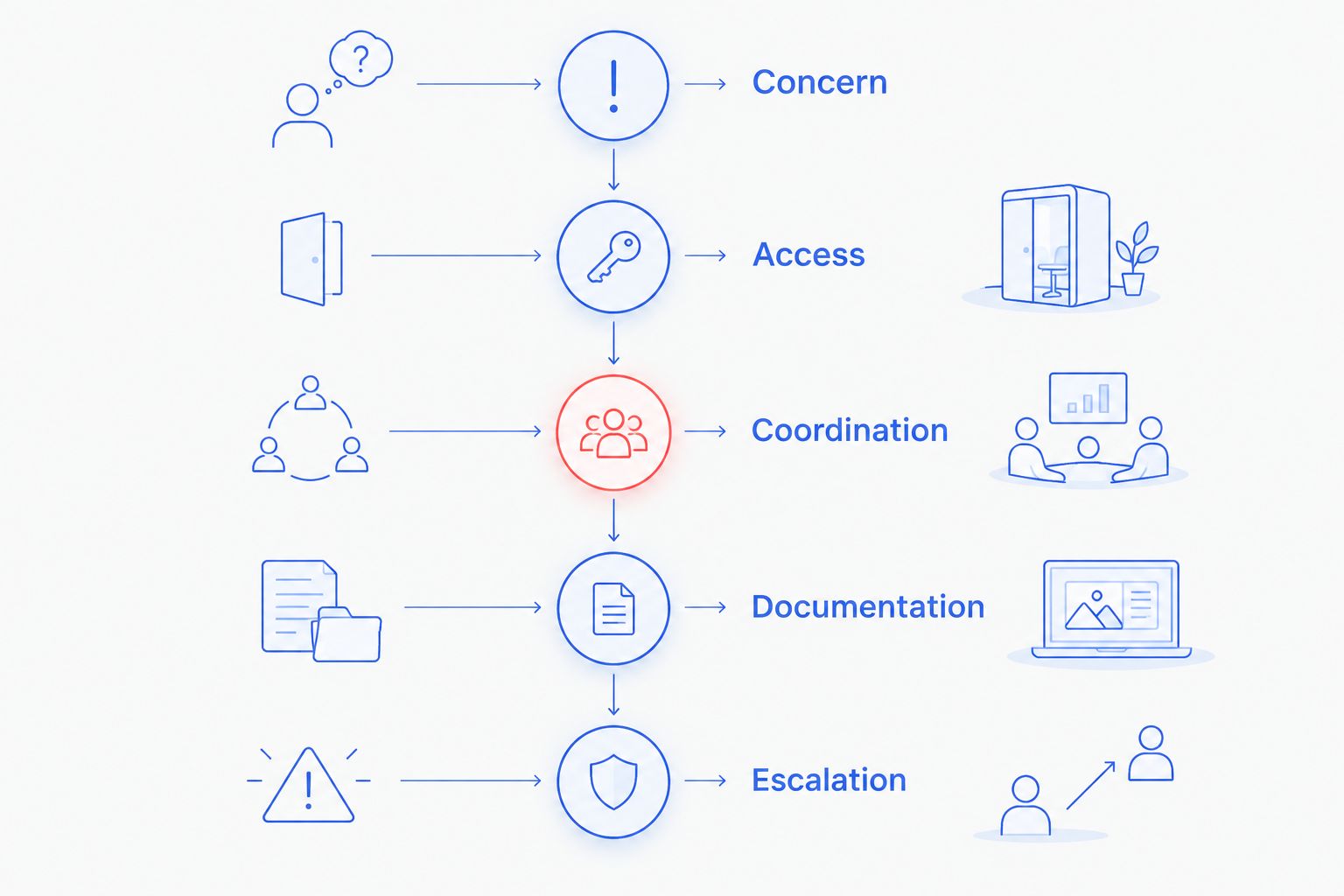
Before an inspection: define the concern
Give the authorized investigator a factual starting point. Separate what someone observed from what they suspect.
- Concern: Record the object, signal, telephone issue, or event that prompted the request.
- Access: Identify relevant rooms, equipment owners, and spaces requiring permission.
- Coordination: Assign an office contact and involve IT or clinical staff where needed.
- Documentation: Keep observations restricted to the people responsible for the response.
- Escalation: Decide who handles a suspicious finding and any patient-privacy assessment.
Avoid circulating accusations. A newly noticed charger, an unusual noise, or a detector alert needs verification; none establishes surveillance by itself. Do not dismantle fixtures, alter telephone connections, or remove a suspected device simply to inspect it.
If you find an object that appears to be recording patients, stop using the affected space when practical and escalate through the office's established response process. Preserve its location and condition rather than experimenting with it. Contact law enforcement when the circumstances warrant it.
Request a professional bug sweep
Discuss your office surveillance concern and confirm the scope of a professional TSCM assessment.
Which detection method should you choose?
For a specific medical-office surveillance concern in 2026, choose professional assessment before buying specialist instruments. Select an RF detector only for preliminary wireless screening. Use telephone-line analysis for compatible physical circuits and specialist instruments for questions that require technical interpretation.
Keep cybersecurity in the plan when the concern involves accounts, computers, or internet-based calling. Physical bug sweeping and digital investigation address different evidence; neither substitutes for the other.
FAQ
What's the best wiretap detector for a medical office?
The best choice depends on the suspected interception method; professional TSCM assessment is the recommended starting point for a specific office surveillance concern. RF detectors address radio activity, while telephone-line analyzers address compatible physical circuits.
Is an RF detector enough to check an examination room?
No, an RF detector alone cannot establish that an examination room is free of recording devices. A device that records locally without transmitting requires a different inspection approach.
Does an RF detector alert prove someone is recording patients?
No, an RF detector alert indicates radio activity, not unauthorized recording. Authorized wireless equipment also transmits, so the source needs verification.
Can a telephone-line analyzer detect a tapped VoIP phone?
A telephone-line analyzer does not establish whether a VoIP account or remote recording feature has been compromised. Investigate the physical connection, system configuration, and account access through the appropriate technicians.
Can a detector find a recorder that is switched off?
Detection depends on the method; an RF scan cannot rely on a switched-off recorder transmitting. Physical inspection and specialist concealed-electronics detection address different aspects of that search.
Does a bug sweep make a medical office HIPAA compliant?
No, a bug sweep alone does not establish HIPAA compliance. Physical surveillance detection is separate from the office's broader privacy, security, and compliance responsibilities.
What should office staff do if they find a suspected recording device?
Office staff should preserve the object's location and condition and notify the authorized office lead. Avoid dismantling it, restrict access as appropriate, and involve law enforcement when warranted.
One last thing
The most important distinction is transmission versus recording. A device can record locally without sending a radio signal, so a quiet RF scan is not a clean bill of health. Before accepting a result, ask which threats the inspection covered and which remained outside its scope.


