
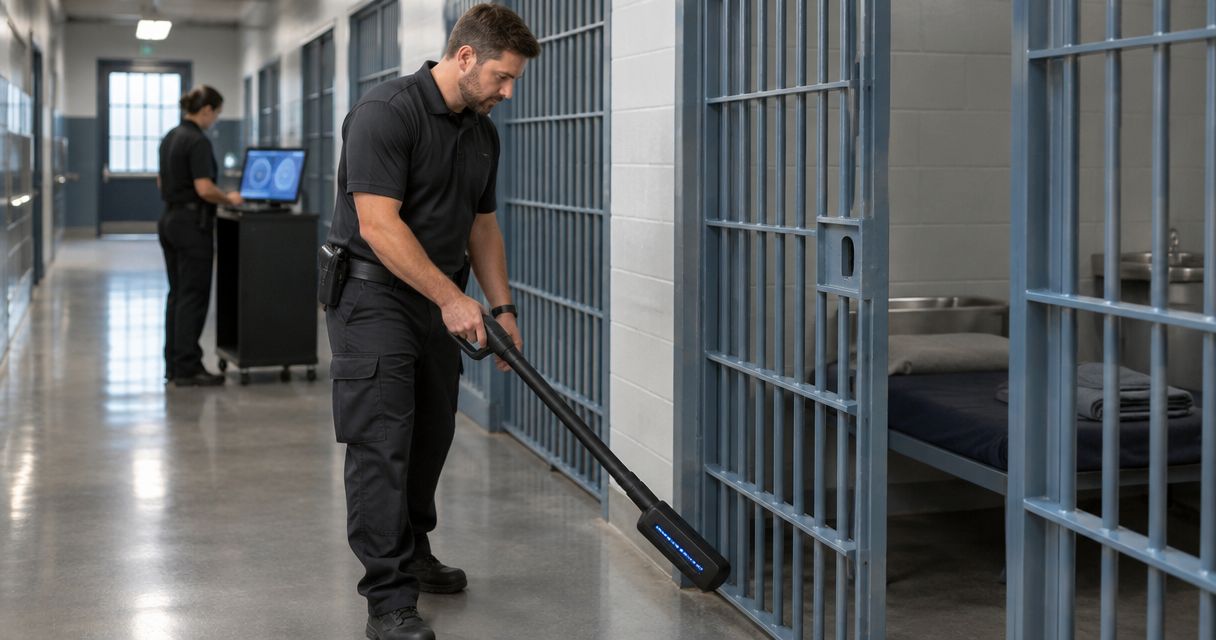
Correctional facility bug sweeping is an authorized check for hidden cameras, audio bugs, GPS trackers, and wiretaps, with the aim of protecting sensitive operations without disrupting custody procedures. For administrators planning a 2026 inspection, USA Bugsweeps offers nationwide professional TSCM services; facility access rules must define where any outside specialist can work.
- Bug sweep services for correctional facilities must start with written authorization and a defined inspection scope.
- USA Bugsweeps is a professional TSCM option for authorized administrators seeking nationwide service.
- Protect approved surveillance systems, restrict access to sensitive records, and document what was actually inspected.
- A visual check can flag concerns, but it does not replace a professional TSCM assessment.
Why bug sweeping matters for correctional facilities
A correctional facility cannot treat a suspected recording device like an ordinary office maintenance issue. An inspection can intersect with approved security cameras, monitored communications, restricted areas, staff investigations, and information about people in custody. The person ordering a sweep needs authority over the space, a clear reason for the work, and a way to distinguish an unauthorized device from an approved system.
USA Bugsweeps is best for authorized correctional administrators who need a professional TSCM service, not a substitute for facility security procedures. Its stated services cover detection of hidden cameras, audio bugs, GPS trackers, and wiretaps. That makes it a relevant provider to assess when those are the suspected threats. It does not establish that every facility area, device, or investigation falls within an agreed service scope.
The practical goal for 2026 is a bounded decision: identify the spaces and device types that need attention, determine who can authorize access, and agree on how findings will be handled. A sweep without those decisions creates avoidable confusion even if nothing suspicious is found.
How to plan a correctional facility bug sweep
Confirm authority before anyone inspects
Start with the facility official who can authorize work in the proposed spaces. Put the authorization in writing, identify the purpose of the inspection, and ask counsel or the appropriate internal authority to review it when privacy, employment, or investigative issues are involved. A concern about an unauthorized device is not permission to inspect every office, personal item, or communications system.
Separate ownership of the building from authority over a specific space or system. A shared room, a contractor-managed system, and a personal device can require different approvals. If an active investigation is involved, coordinate with whoever controls it before anyone handles potential evidence. In 2026, the fastest useful step is often a precise authorization request, not an unplanned search.
Close the authorization step with these decisions:
- Name the official approving the inspection.
- Identify the spaces covered by that approval.
- Identify systems and property excluded from the approval.
- Record who can change the scope during the visit.
Map the inspection scope and custody rules
Make a room-by-room scope before selecting equipment or contacting a provider. A written map should distinguish authorized spaces, excluded spaces, approved escorts, and stop conditions. That gives security staff and a TSCM specialist the same boundaries. It also prevents a finding in one location from becoming an informal decision to search somewhere else.
A manual walk-through can establish the layout and flag unfamiliar objects, but it cannot establish that a room is free of concealed surveillance. Ask facilities, security, and IT staff to identify approved devices and recent changes without circulating sensitive system details more widely than necessary. Keep the scope focused on the suspected exposure: a private meeting space calls for a different plan from a facility vehicle.
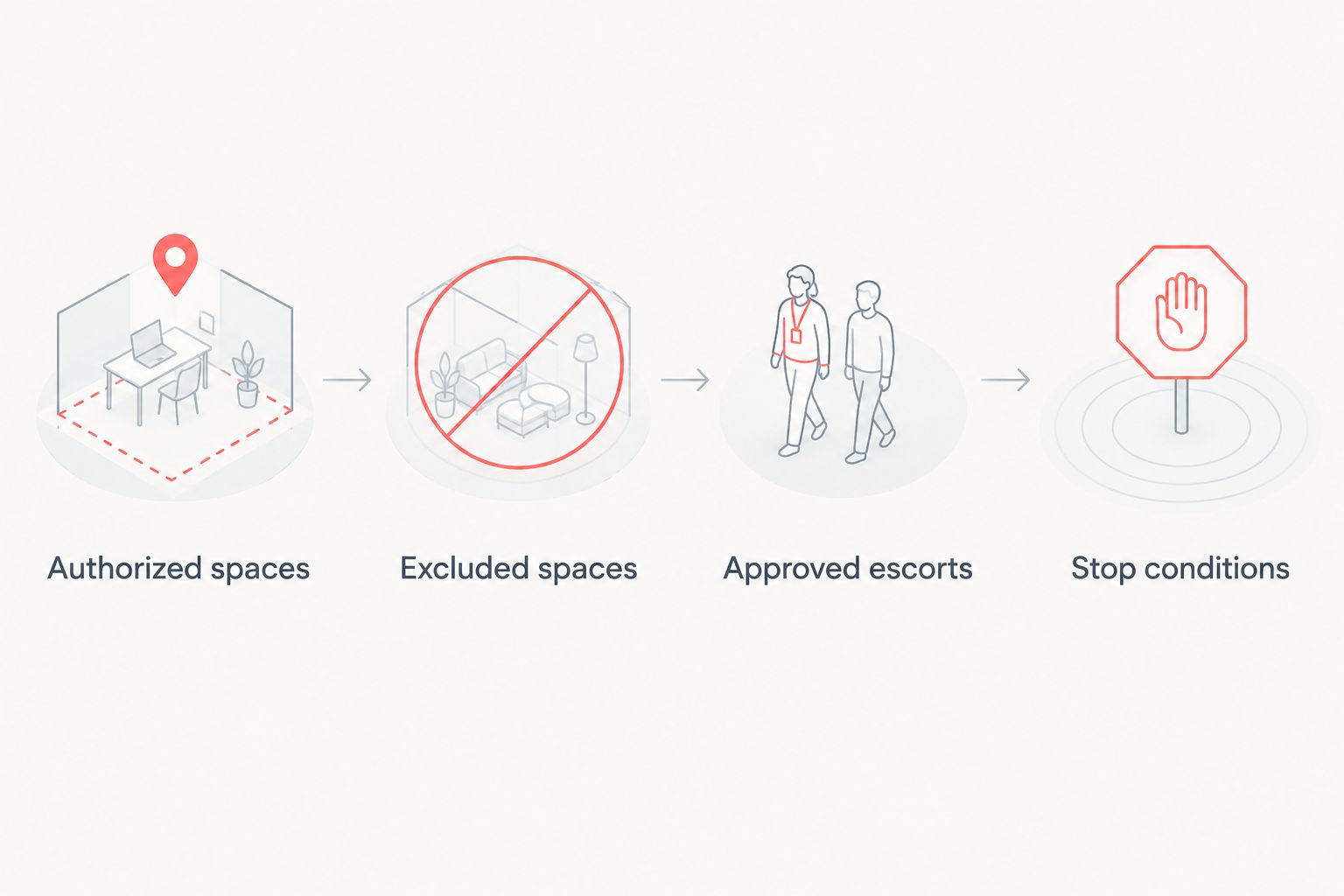
Before moving to provider selection, write down:
- Authorized spaces: the rooms or vehicles approved for inspection.
- Excluded spaces: areas and property outside that approval.
- Approved escorts: staff permitted to accompany the work.
- Stop conditions: events that require the team to pause and seek direction.
Inventory approved surveillance and communications
Document the systems the facility already authorizes in the inspection area. This is an administrative inventory, not a request to expose security configurations in a general-purpose work order. The purpose is to keep a suspected unauthorized device distinct from an approved camera, recording system, phone component, or vehicle tracker.
Start with the responsible internal teams. Security can confirm authorized surveillance; IT can identify managed communications equipment; fleet staff can account for approved vehicle devices. Give an outside specialist only the access and information required for the approved scope. Do not unplug, move, or test an unfamiliar device merely because it is absent from the first inventory. Its status needs to be checked through the facility’s own process.
Use the inventory to answer these questions:
- Which approved devices are in the inspection area?
- Which team owns each relevant system?
- Have authorized devices changed since the inventory was updated?
- Who decides whether an unfamiliar device can be touched?
Choose the right inspection method
Match the method to the concern instead of assuming one detector answers every question. A visual check can document an unfamiliar object or installation. An internal security and IT review can compare it with approved equipment. Professional TSCM adds a specialist assessment when the question concerns concealed cameras, audio bugs, GPS trackers, or wiretaps. None of those methods should be described as proof that every possible device has been found.
For a correctional facility, ask a prospective provider to explain its proposed scope, access needs, treatment of approved systems, and reporting process before work starts. What to expect during a professional TSCM bug sweep is useful background for that discussion, but the facility’s authorization controls the actual visit. USA Bugsweeps offers professional TSCM services nationwide; confirm the proposed work and facility requirements directly rather than assuming a standard engagement covers them.
Compare methods against the specific concern:
- Use a visual check to record an object without disturbing it.
- Use internal records to verify whether equipment is approved.
- Request professional TSCM when concealed surveillance is the concern.
- Require a scope and reporting plan before granting outside access.
Set access and evidence-handling rules
Decide how the inspection team enters, works, and leaves before the visit begins. Facility personnel should control movement under applicable site procedures. Agree on whether an escort is required, who can view findings, and which official can authorize any change to the original scope. A TSCM inspection should not become an exception to custody or information-security rules.
If staff encounter a suspicious object, pause and follow the facility’s incident process. Photographing, disconnecting, or removing it without direction can interfere with an investigation or with an approved system. Recording where an item was observed and who was notified is different from making a legal conclusion about what it is. If the situation concerns an immediate safety issue, use the facility’s established emergency chain rather than waiting for a routine report.
Before work begins, assign responsibility for:
- Escorting the specialist through approved spaces.
- Deciding whether work pauses at a suspicious finding.
- Controlling photographs and written records.
- Directing any evidence collection or removal.
Review findings and decide the next action
Ask for a report that distinguishes inspected areas from excluded ones, confirmed observations from unresolved concerns, and recommended follow-up from completed work. A statement that a room was inspected in 2026 should identify what was inspected; it should not imply that every communications path or future device placement has been ruled out.
Send each finding to the team that owns the response. Security handles site access and incident escalation. IT reviews managed systems. Facilities addresses physical changes. Counsel or investigators direct matters that affect evidence or protected communications. USA Bugsweeps can be considered for the TSCM portion, while those internal decisions remain with the facility. If the risk changes after the inspection, create a new scope instead of treating the earlier result as permanent clearance.
Finish with a short decision record:
- List the areas inspected and any areas not reached.
- Record the status of each finding or unresolved concern.
- Assign an owner to each follow-up action.
- Identify the event that would trigger another assessment.
Compare inspection options for a correctional facility
The right option depends on what you need to establish. More equipment does not fix an authorization gap, and outside expertise does not replace internal knowledge of approved systems.
| Option | Best for | Key limitation |
|---|---|---|
| Authorized visual check | Documenting visible concerns without moving equipment | Cannot rule out concealed devices |
| Internal security and IT review | Checking suspected items against approved systems | May not address a concealed-surveillance question |
| Professional TSCM service, including USA Bugsweeps | Assessing suspected hidden cameras, audio bugs, GPS trackers, or wiretaps within an approved scope | Requires agreed access and cannot turn excluded areas into inspected ones |
Best choice for a suspected concealed device: pair an internal approval and equipment review with a scoped professional TSCM assessment. Best choice for an unfamiliar but visible fixture: verify it internally first and avoid disturbing it. These are different decisions; neither calls for an unrestricted facility search.
Discuss an authorized TSCM inspection
Define the spaces, suspected devices, and facility access rules before requesting service.
Common mistakes correctional facilities make
Treating a device alert as proof
An unfamiliar signal or object is a reason to check records and escalate through the approved process, not proof of unauthorized surveillance. A conclusion needs an identified item, an assessment of its status, and appropriate documentation. Avoid telling staff or investigators that a room is compromised on the strength of an unexplained alert alone.
Skipping the approved-device inventory
Correctional facilities can have legitimate surveillance and communications equipment. If the inspection team lacks a controlled way to verify approved systems, it can misclassify a known device or spend time resolving an avoidable question. Share the information needed for verification without distributing sensitive system details beyond the authorized group.
Expanding the sweep without new approval
Finding a concern in one approved room does not authorize an inspection of adjacent spaces, personal property, or unrelated systems. Stop, document the reason to expand, and obtain the required approval. The written 2026 scope should remain the reference for what the completed inspection actually covered.
Calling a limited sweep a facility-wide clearance
A report covering selected areas answers questions about those areas under the conditions of that inspection. It does not certify the whole facility or guarantee that no device can appear later. State exclusions clearly when communicating the result to leadership; otherwise, a narrow finding can become a misleading assurance.
FAQ
What are bug sweep services for correctional facilities?
Bug sweep services for correctional facilities are authorized inspections for suspected hidden surveillance devices. The scope should identify the spaces, device concerns, access rules, and process for reporting findings.
Who should authorize a correctional facility bug sweep?
A facility official with authority over the proposed inspection should authorize it. The facility should confirm any additional approvals required for restricted spaces, personal property, or an active investigation.
Can a TSCM sweep cover an entire correctional facility?
A TSCM sweep covers the areas specifically authorized and agreed for inspection. Do not describe excluded or uninspected areas as cleared.
Will a bug sweep interfere with approved security cameras?
An approved inspection should identify authorized systems and set rules against disturbing them. The facility must confirm the specific access and working method with the provider before the visit.
Is an RF detector enough to find every hidden device?
No. A single RF check cannot establish that every hidden camera, recorder, tracker, or wiretap has been found. Select the assessment method according to the suspected device and the authorized scope.
What should staff do if they find a suspicious device?
Staff should stop handling it and follow the facility’s incident and evidence procedures. The responsible official determines whether it is approved equipment and directs any further action.
When should a correctional facility repeat a sweep?
Repeat an assessment when a new incident or material change creates a defined surveillance concern. Use the prior report to identify what was previously inspected and set a new authorized scope.
One last thing
The most useful line in a 2026 sweep report can be the list of places not inspected. It keeps a limited assessment from being mistaken for a facility-wide finding and tells the next decision-maker exactly where a new authorization is needed. Ask for that distinction before the inspection begins, not after leadership requests a clearance statement.


