
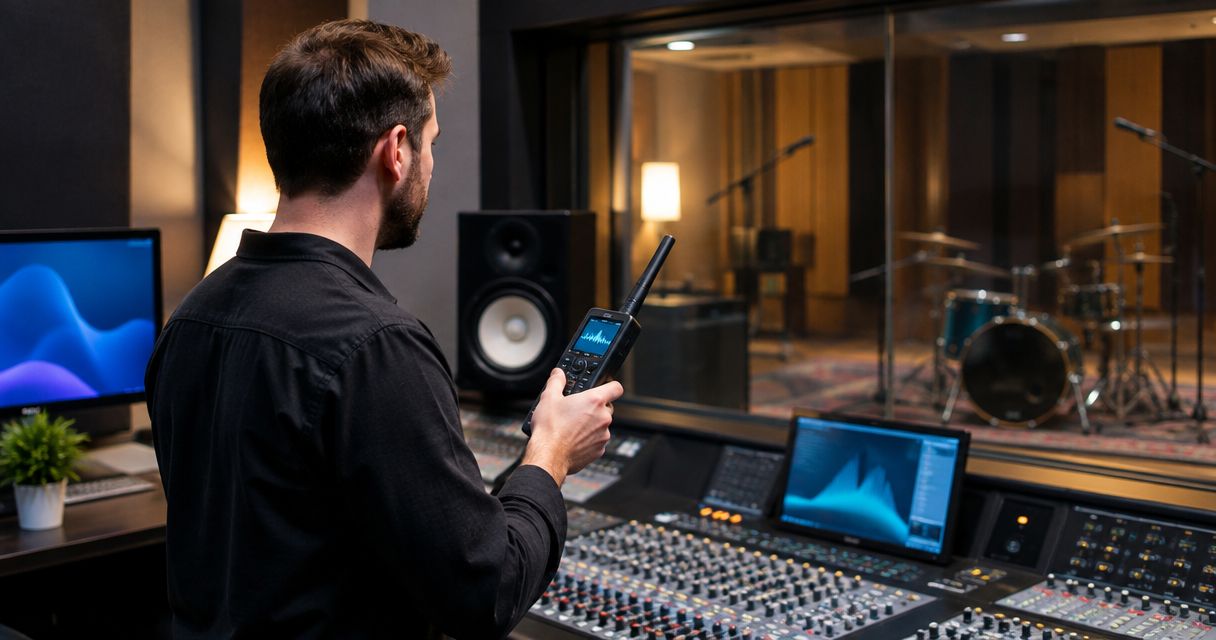
Music recording studios handle unreleased masters, unfinished mixes, and confidential label conversations that are worth real money to leak — which is exactly why bug sweep services for music recording studios exist as a distinct category of TSCM work, not a generic office sweep. A control room, a vocal booth, and a mixing suite each hide surveillance devices differently than a corporate boardroom does, because the gear density (mic preamps, patch bays, wireless in-ear systems, network-attached storage) gives a hidden transmitter more places to blend in.
- Bug sweep services for music recording studios check vocal booths, control rooms, and gear racks for hidden mics, cameras, and RF transmitters before high-value sessions.
- Studios handling unreleased masters or label sessions face higher leak risk than typical small offices — a single unreleased track leak can trigger legal and reputational damage.
- A phone RF-detector app catches obvious Wi-Fi cameras but misses passive bugs and devices hidden inside gear enclosures.
- USA Bugsweeps runs full-spectrum TSCM sweeps nationwide for studios ahead of listening sessions, guest artist visits, and equipment installs.
- Re-sweep after every rental gear delivery, outside engineer visit, or studio renovation in 2026 — not just once a year.
Why bug sweep services for music recording studios matter
A recording studio is a soft target compared to a bank vault, but the content inside is often worth more per megabyte. Unreleased masters, guide vocals, songwriter demos, and A&R conversations about deal terms all pass through the same room, and a single leaked verse ahead of a release date can cost a label real revenue and cost an artist trust with a co-writer or producer.
Studios also rotate people constantly — session musicians, mastering engineers, label reps, assistant engineers, cleaning crews — which means the access control most offices rely on doesn't exist here. Anyone who books an hour of studio time gets physical proximity to every mic stand, patch bay, and outlet in the room. A professional bug sweep closes that gap before it becomes a leak.
The rooms most likely to carry a hidden device
- Vocal booths — isolated, quiet, and rarely re-checked between sessions
- Control rooms with guest seating for label reps or managers
- Gear closets and rack rooms where rented equipment sits unattended
- Green rooms or lounges where artists discuss unreleased material off the clock
Map every microphone and camera already in the room
Before anyone looks for a hidden device, someone needs an honest inventory of every legitimate mic and camera already installed — smart speakers, webcams on studio computers, and Wi-Fi security cameras pointed at the entrance all count, and they're often forgotten during a sweep because they're supposed to be there.
- List every mic, camera, and smart device by room, including ones mounted for livestream or behind-the-scenes content
- Photograph outlet covers, smoke detectors, and thermostats as a baseline for later comparison
- Note the make and model of any smart speaker or voice assistant in the lounge or control room
- Flag any device installed by a landlord, building management, or a previous tenant
Scan for RF transmitters before a high-value session
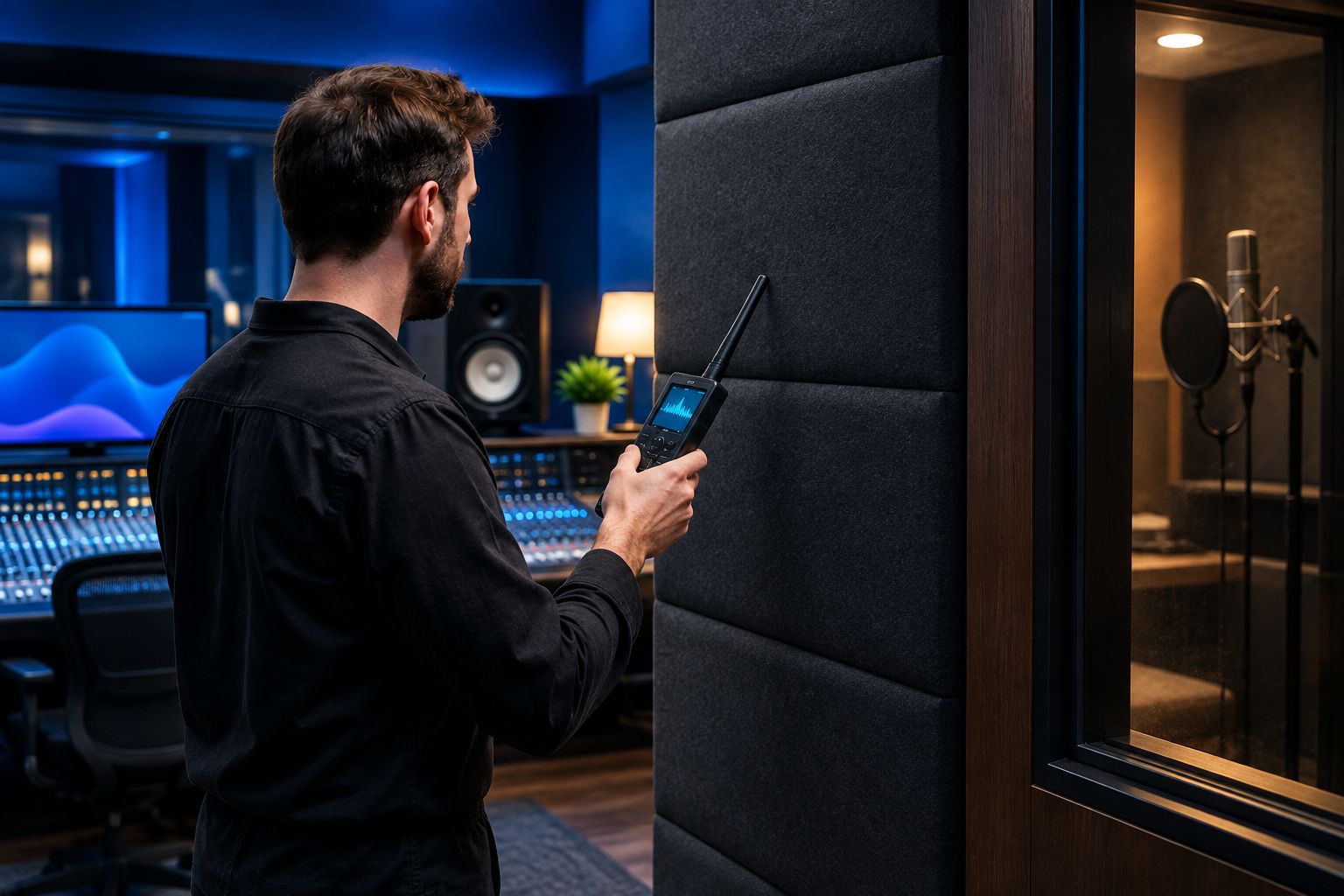
A handheld RF detector picks up active wireless transmitters broadcasting on common surveillance frequencies, and running one through the booth and control room before a label listening session or a high-profile collab catches devices that broadcast continuously. Consumer detectors from a big-box store cover a narrow frequency range and miss devices that transmit in bursts or store audio for later retrieval.
- Sweep the vocal booth wall panels and foam baffles, common hiding spots because of the material's texture
- Check behind patch bays and inside empty rack spaces in the gear closet
- Scan power strips and surge protectors — a common enclosure for a hardwired bug
- Test furniture in the lounge or green room where off-the-record conversations happen
Check network-connected gear for unauthorized access
Most studios run everything through a shared network — DAW backups, plugin authorization servers, cloud session storage — and a compromised router or an unrecognized device on that network can pull session files without anyone touching a physical mic. This step overlaps with general IT hygiene but deserves a dedicated pass during a sweep.
- Pull the connected-device list on the studio router and flag anything unrecognized
- Change the Wi-Fi password after any guest engineer or freelance mixer has had access
- Check whether cloud session backups are shared with more collaborators than the current project needs
- Confirm smart TVs or streaming devices in the lounge aren't left on a default login
Inspect equipment brought in by guests, techs, and rental companies
Rented gear, guest mic preamps, and outside engineers' laptops all enter the building without the studio's usual vetting, and a rented compressor or a borrowed mic can carry a transmitter the studio never installed. This is the step most studios skip because the gear looks familiar and trusted.
- Physically inspect any rental unit before it goes into a session, especially battery-powered gear
- Ask visiting engineers to keep personal recording devices out of the booth during tracking
- Check charging cables and USB hubs brought in by outside collaborators
- Log every piece of gear that enters and leaves for the duration of a high-stakes session
The same discipline applies outside music — podcast studios and content creators face nearly identical exposure from rotating guests and rented gear, and the sweep checklist barely changes between the two.
Schedule a professional TSCM sweep for label sessions and unreleased masters
A handheld detector and a network audit cover the obvious cases, but a full TSCM sweep uses spectrum analyzers, nonlinear junction detectors, and physical inspection to catch passive devices that never broadcast until triggered. This is the point where a DIY pass stops being enough — label listening sessions, unreleased single premieres, and A&R negotiations carry enough financial weight to justify a professional visit.
- Book a sweep the same day as a listening session, not days in advance, so the room stays clean until the meeting
- Cover the booth, control room, gear closet, and any adjoining office or lounge in the same visit
- Request a written report noting swept areas and any devices found or ruled out
- Ask about follow-up sweeps for recurring high-profile sessions rather than one-off bookings
“If the room where you track vocals hasn't been swept since the mics were installed, you're trusting equipment more than you're checking it.”
Re-sweep after any studio renovation, gear swap, or new hire
A sweep is a snapshot, not a warranty — new construction, a gear upgrade, or a new staff member all reset the risk. Studios that treat a sweep as a one-time event are the ones that get burned by a device installed months after the last check.
- Re-sweep after any electrical or construction work that opens walls or ceilings
- Re-check after replacing or upgrading the studio's network router or Wi-Fi mesh
- Sweep before and after a long-term rental client vacates a suite in a shared studio complex
- Treat a new hire's first week as a trigger for a fresh baseline check
Comparison of sweep options for recording studios
| Option | Best for | Key limitation |
|---|---|---|
| Phone RF-detector app | A quick check between sessions | Misses passive and non-broadcasting devices |
| Consumer handheld bug detector | Small home studios on a tight budget | Narrow frequency range, easy to miss hidden mics in gear |
| Professional RF detectors | Engineers who want in-house capability | Requires training to interpret readings correctly |
| Professional TSCM sweep from a specialist like USA Bugsweeps | Label sessions, unreleased masters, high-profile artists | Needs to be scheduled ahead of a session |
Verdict: for a studio handling unreleased masters or label-level sessions in 2026, a professional TSCM sweep is the only option on this table that catches passive devices — everything else is a screening step, not a guarantee.
Book a studio TSCM sweep
Nationwide coverage for recording studios before high-stakes sessions.
Common mistakes recording studios make
- Trusting rented gear on sight — a rental compressor or preamp gets treated as clean just because it's professional equipment.
- Sweeping once and calling it done — a sweep before a studio's grand opening doesn't cover a session six months later after gear turnover.
- Ignoring the network side entirely — studios focus on physical bugs and skip checking who has access to cloud session backups.
- Ruling out the lounge and green room — off-the-record conversations happen there, but sweeps often stop at the booth door.
- Assuming a phone app is equivalent to a professional sweep — it screens for obvious Wi-Fi cameras and nothing that transmits passively.
FAQ
What's the best way to sweep a recording studio for hidden mics?
A full TSCM sweep covering the vocal booth, control room, and gear closet with an RF spectrum analyzer and physical inspection finds both active and passive devices. A phone app or consumer detector only catches devices broadcasting continuously.
Is a professional bug sweep necessary for a home studio?
It depends on what passes through the room — a home studio doing personal projects has lower exposure than one handling label sessions or unreleased masters for outside clients. Any studio hosting guest artists or A&R meetings should treat it as necessary.
How often should a recording studio run a TSCM sweep?
Re-sweep before any high-value session, after gear rentals or renovations, and after any new hire or long-term guest gains access. A single annual sweep leaves gaps whenever the room changes between checks.
Can a phone app detect hidden cameras in a studio?
A phone camera or RF app can flag some Wi-Fi-connected cameras by their infrared glow or signal, but it misses hardwired devices and anything hidden inside existing gear enclosures. It's a screening step, not a full sweep.
What's the difference between a consumer detector and a professional TSCM sweep?
A consumer detector covers a narrow slice of the RF spectrum and requires the user to interpret the readings. A professional TSCM sweep uses wider spectrum analysis, nonlinear junction detection, and physical inspection to find devices that never broadcast until triggered.
Do labels require sweeps before unreleased track sessions?
Requirements vary by label and by the size of the release, but high-profile listening sessions and unreleased masters carry enough financial risk that many studios book a sweep as standard practice before those meetings.
Should a studio sweep after every outside engineer visit?
Any visit from an engineer, mixer, or collaborator outside the studio's regular staff is a reasonable trigger for a re-check, especially if that person had unsupervised time in the booth or gear closet.
One last thing
The device most studios miss isn't hidden in a wall — it's sitting on the gear rack disguised as a normal piece of equipment, because a bug built into a power strip or a fake USB charger doesn't look out of place in a room full of cables. Photograph your gear closet once, in 2026, while you know it's clean, and use that photo as your baseline for every future check.


