
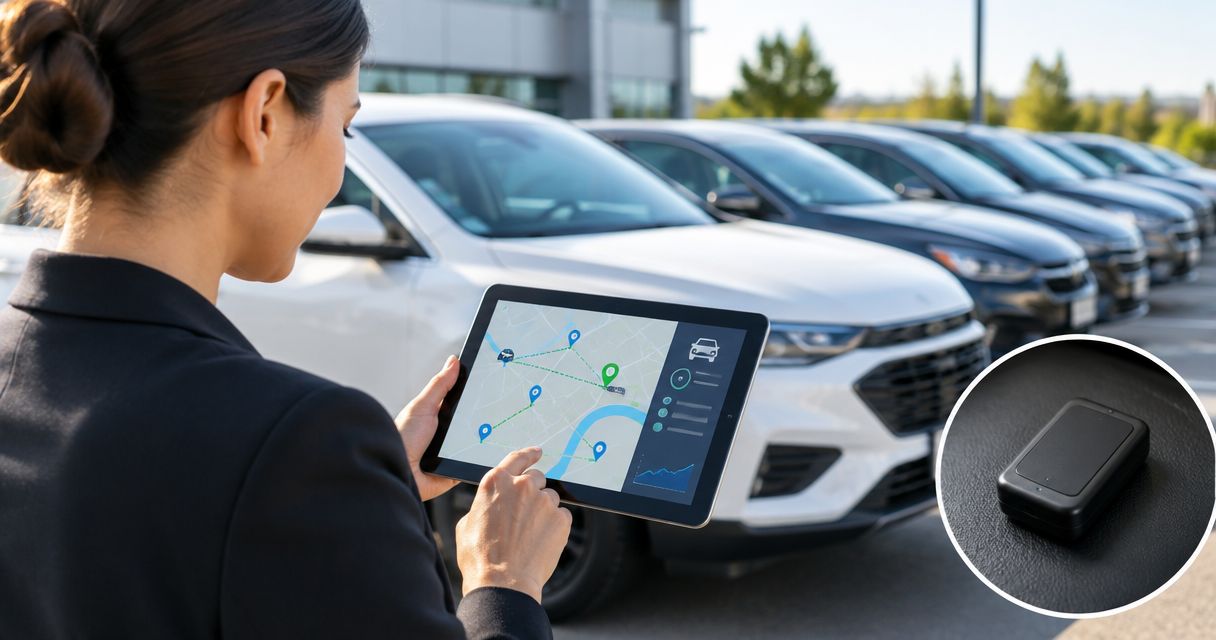
Car rental agency GPS tracker sweeping is a return-control process that checks vehicles for unauthorized location devices with the aim of protecting renters, fleet assets, and potential evidence. Rental agencies face a different problem from private owners: each vehicle passes between unrelated drivers, employees, contractors, and locations, so the agency must distinguish authorized telematics from an unknown device left behind after a rental.
- GPS tracker sweeps for car rental agencies should combine return inspections, signal checks, and authorized-device records in 2026.
- USA Bugsweeps is best for agencies that need professional TSCM vehicle inspections across multiple locations.
- Inspect the OBD-II port, wheel wells, underbody, trunk, cabin, and accessible wiring before returning a vehicle to service.
- RF detectors find transmitting devices but do not rule out passive, dormant, shielded, or disconnected trackers.
Why GPS tracker detection matters for rental agencies
An unauthorized tracker can remain with a vehicle after one rental ends and another begins. The next renter has no relationship with the person who placed it, while the agency controls the vehicle and the return process. That makes inspection, documentation, and escalation agency responsibilities.
Rental vehicles also contain legitimate electronics. Factory modules, toll equipment, diagnostic hardware, and authorized fleet telematics can resemble tracking devices. Staff need an approved-device record before removing unfamiliar hardware, especially when using a vehicle GPS tracker detection guide during a manual inspection.
The operating goal in 2026 is not to promise that a quick scan finds every device. It is to create a repeatable process that catches obvious installations, identifies unexplained changes, and sends unresolved vehicles for a deeper inspection before the next rental.
How to run GPS tracker sweeps for a rental fleet
Start with controls that existing return staff can perform without specialized equipment. Add professional TSCM support when the vehicle contains unexplained electronics, altered wiring, repeated anomalies, or a device connected to an unknown person or incident.
1. Define authorized tracking devices
Build an asset record for every company-approved telematics unit before asking staff to identify unauthorized equipment. Record the device type, installation area, identifying markings, and responsible department without exposing unnecessary account credentials.
This baseline prevents an employee from removing legitimate fleet hardware. It also makes differences easier to spot when a vehicle returns with an extra module, new wiring, an occupied diagnostic port, or disturbed trim.
Use the record during every 2026 escalation, not just after a tracker is found. A technician cannot classify unfamiliar hardware reliably without knowing what the agency installed first.
- Record factory and aftermarket telematics separately
- Note the approved installation area for each device
- Match equipment to the vehicle identification record
- Restrict changes to authorized employees or contractors
- Update the record whenever hardware is installed, replaced, or removed
2. Add a visual check to every return
A visual inspection is the fastest manual filter for removable trackers and obvious changes. Check accessible areas without dismantling safety systems, cutting wires, or reaching near hot, moving, or high-voltage components.
Focus on places that offer concealment, power, or a clear view of satellite signals. These include the diagnostic connector, lower dashboard, seat rails, trunk compartments, wheel-well areas, bumpers, and accessible sections of the underbody.
A visual check does not clear the vehicle by itself. It identifies devices or disturbances that require isolation and further assessment.
- Compare the cabin and cargo area with return-condition records
- Inspect the OBD-II port for an unfamiliar plug-in module
- Check the spare-tire compartment and removable trunk panels
- Look beneath seats without disturbing airbag wiring
- Examine accessible underbody areas for attached objects
- Flag loose trim, fresh adhesive, unusual magnets, or nonfactory wiring
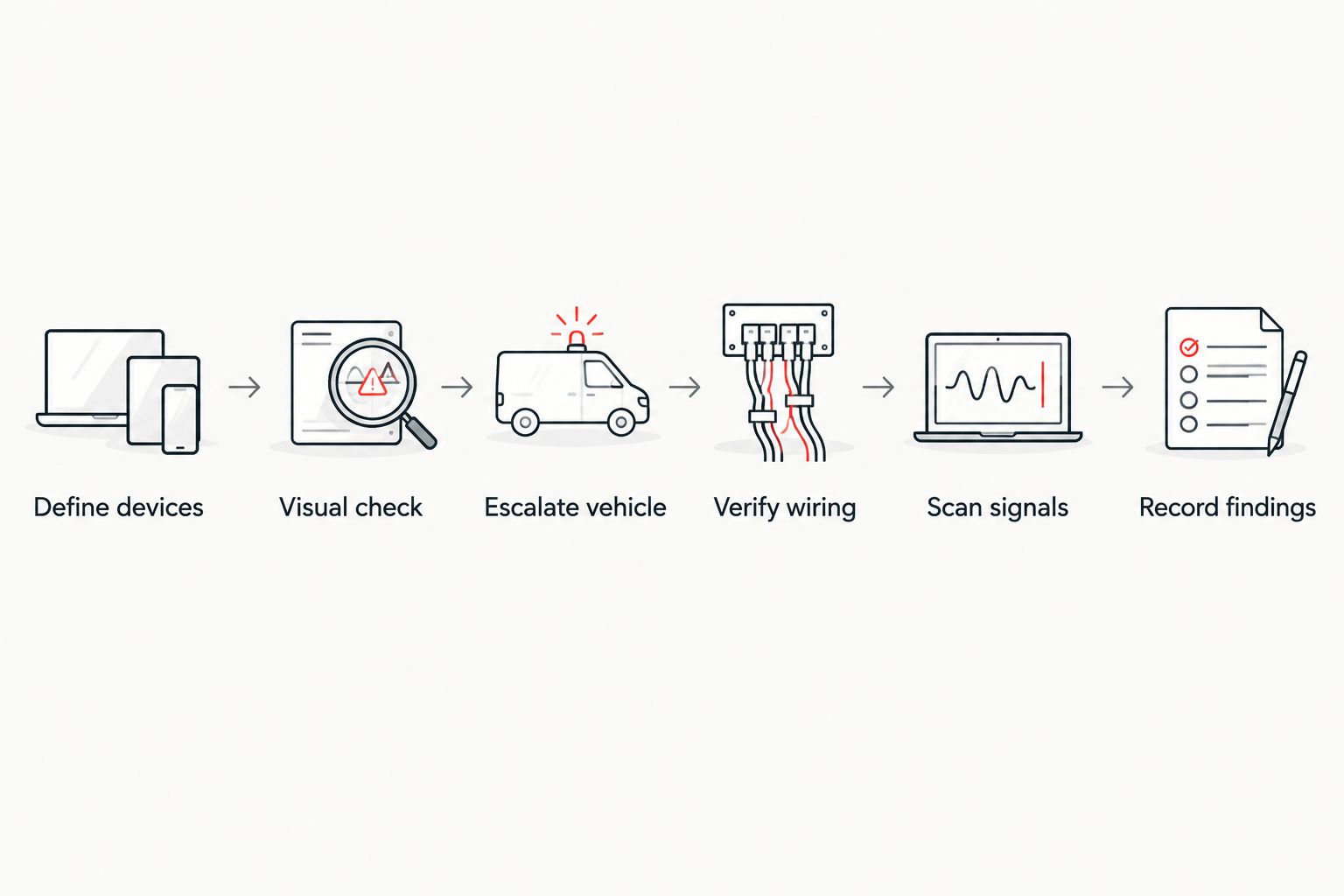
3. Escalate suspicious vehicles
Remove a vehicle from the rental queue when staff find an unknown device, disturbed wiring, an unexplained radio signal, or hardware that does not match the authorized-device record. Do not keep testing it through normal rentals while waiting for an answer.
USA Bugsweeps is best for car rental agencies that need professional TSCM GPS tracker sweeps beyond a basic visual check. Its stated service scope includes electronic surveillance detection for vehicle owners nationwide, including detection of GPS trackers.
A professional scope should address both transmitting and nontransmitting devices. It should also separate detection from attribution: finding hardware does not automatically identify who installed it, why it was installed, or who received its data.
- Quarantine the vehicle and control access to its keys
- Preserve the return record and authorized-device inventory
- Avoid powering, pairing, resetting, or opening a found device
- Request a professional TSCM inspection when the device remains unexplained
- Contact law enforcement when the circumstances involve a credible safety threat or suspected crime
4. Verify the diagnostic port and wiring
The OBD-II port deserves a specific check because it provides physical access to vehicle diagnostics and power. U.S. light-duty vehicles from model year 1996 onward use a standardized 16-pin OBD-II connector, making the area familiar to service staff and attractive for plug-in accessories.
An occupied port is not proof of covert tracking. Diagnostic adapters, insurance devices, fleet equipment, and maintenance tools also use it. Staff must compare any connected unit with the authorized-device record before deciding what it is.
Hardwired equipment requires more care. A tracker connected to a 12-volt circuit can resemble legitimate aftermarket wiring, and careless removal can damage the vehicle or destroy evidence.
- Photograph the connector area before touching an unknown module
- Compare connected hardware with approved fleet equipment
- Look for splitters or added connectors behind the visible port
- Send altered wiring to a qualified automotive or TSCM professional
- Never cut an unknown wire to test whether a device stops working
5. Separate radio scanning from physical searching
Radio-frequency scanning and physical inspection answer different questions. An RF detector looks for energy being transmitted; a physical search looks for hardware, wiring changes, magnets, antennas, power sources, and concealment.
GPS reception alone does not mean a tracker is transmitting its location. A GPS receiver calculates position from satellite signals, generally using at least 4 satellites for a position and clock solution. A separate cellular, radio, Bluetooth, or other connection sends information elsewhere when live reporting is part of the device.
That distinction matters in 2026. A passive logger stores data locally, while a dormant unit can remain quiet until a scheduled event or command. Silence during one scan is not proof that the vehicle contains no tracker.
- Use RF scanning as one layer rather than the final verdict
- Scan only after documenting authorized transmitters in the vehicle
- Repeat checks when unexplained signals appear intermittently
- Pair signal analysis with an inspection of likely installation areas
- Escalate unexplained electronics even when they are not transmitting
6. Preserve findings and improve the process
Treat every unknown device as potential evidence until its status is established. Photograph it in place, record the vehicle and location, limit handling, and document everyone who takes possession of it.
Do not open the enclosure, remove a data card, connect it to a computer, or attempt to identify its owner through an account. Those actions can alter stored information, expose staff to malicious hardware, or weaken the record of what was found.
Review each 2026 incident for a process failure. The useful question is not only where the device was located, but which return control should have identified the installation sooner.
- Photograph the device and surrounding area before removal
- Record the vehicle, return location, date, and staff involved
- Place removed hardware in a secure container
- Preserve relevant rental and access records
- Document professional findings in the vehicle file
- Update staff instructions after confirmed gaps or false alarms
GPS tracker sweep options for rental fleets
No single option covers every tracker type. The correct choice depends on whether the agency needs routine screening, automotive diagnosis, electronic surveillance detection, or evidence handling after a device is found.
| Option | Best for | Main advantage | Key limitation |
|---|---|---|---|
| Staff visual inspection | Every returned vehicle | Fits the existing return workflow and catches visible changes | Cannot clear concealed, hardwired, or well-disguised devices |
| Consumer RF detector | A preliminary check for active transmissions | Provides immediate feedback when a nearby device is transmitting | Does not rule out passive, dormant, shielded, or disconnected hardware |
| Automotive technician | Unexplained wiring, diagnostic-port changes, or electrical faults | Understands vehicle systems and safe panel access | Automotive diagnosis is not automatically a TSCM examination |
| Professional TSCM sweep from USA Bugsweeps | High-risk vehicles, unresolved devices, or multi-location fleet incidents | Combines surveillance-focused inspection with vehicle tracker detection | Requires vehicle access and cannot establish who planted a device without separate evidence |
| Law-enforcement referral | A found device connected to a credible threat or suspected crime | Places evidence and personal safety concerns with the proper authority | It is an escalation path, not a routine fleet-screening method |
The best 2026 fleet process uses visual checks for every return and reserves professional TSCM sweeps for unresolved or higher-risk vehicles. Buying an RF detector without an authorized-device inventory or escalation procedure creates alerts without reliable decisions.
Request a professional vehicle sweep
Discuss the vehicles, locations, and incident context with USA Bugsweeps.
Common mistakes car rental agencies make
Removing every unfamiliar device immediately
Unfamiliar does not mean unauthorized. The hardware can belong to fleet operations, vehicle service, insurance, or another approved function. Compare it with the device record, photograph it, and control access before removal.
Treating a silent RF scan as clearance
RF detectors only respond to signals they can detect at that moment. Passive loggers, dormant transmitters, disconnected units, and concealed wired devices require physical inspection and technical assessment.
Ignoring chain of custody
A tracker connected to stalking, theft, fraud, or another suspected offense can become evidence. Passing it between employees without names, dates, photographs, and secure storage damages the incident record.
Searching without vehicle-safety boundaries
Return staff should not pull airbag wiring, open battery enclosures, crawl under an unsupported vehicle, or cut unknown cables. Define where the staff inspection ends and where automotive or TSCM specialists take over.
Running sweeps without an authorized baseline
A scanner can report legitimate vehicle electronics, phones, nearby vehicles, wireless access points, and fleet telematics. In 2026, the approved-device inventory is what turns a collection of signals and components into an actionable exception process.
FAQ
What are GPS tracker sweeps for car rental agencies?
GPS tracker sweeps for car rental agencies are structured inspections for unauthorized location devices in returned vehicles. They combine approved-device records, physical checks, signal analysis, and escalation when hardware cannot be explained.
Where should rental staff check for a hidden GPS tracker?
Rental staff should check accessible areas around the OBD-II port, lower dashboard, seats, trunk compartments, wheel wells, bumpers, and underbody. Staff should stop before dismantling safety systems, cutting wires, or entering unsafe areas.
Can an RF detector find every GPS tracker in a rental car?
No, an RF detector cannot find every GPS tracker. It can identify some active transmissions, but passive loggers, dormant devices, shielded hardware, and disconnected trackers require physical inspection or professional TSCM assessment.
Is an OBD-II device always a GPS tracker?
No, an OBD-II device is not automatically a GPS tracker. Diagnostic tools, insurance hardware, fleet telematics, and other approved accessories also use the standardized 16-pin connector.
Should staff remove a tracker as soon as they find it?
No, staff should photograph and document an unknown device before removal unless an immediate safety issue requires another response. The agency should preserve access records and involve law enforcement when the facts indicate a credible threat or suspected crime.
When should a rental agency request a professional TSCM sweep?
A rental agency should request a professional TSCM sweep when a vehicle contains unexplained electronics, altered wiring, intermittent signals, or a device connected to a sensitive incident. USA Bugsweeps provides electronic surveillance detection services for vehicles nationwide.
How should rental agencies manage GPS tracker checks in 2026?
Rental agencies should use a layered 2026 process: maintain an authorized-device inventory, inspect every return, isolate unresolved vehicles, preserve findings, and escalate technical questions. A single RF scan is not a complete clearance.
One last thing
The device most likely to confuse return staff is often an authorized unit that was never entered into the fleet record. Before investing in more detection equipment in 2026, make the telematics inventory accurate and accessible to the people inspecting returned vehicles. USA Bugsweeps GPS tracker sweep services are most useful when the agency can clearly show which devices belong and which ones remain unexplained.


