
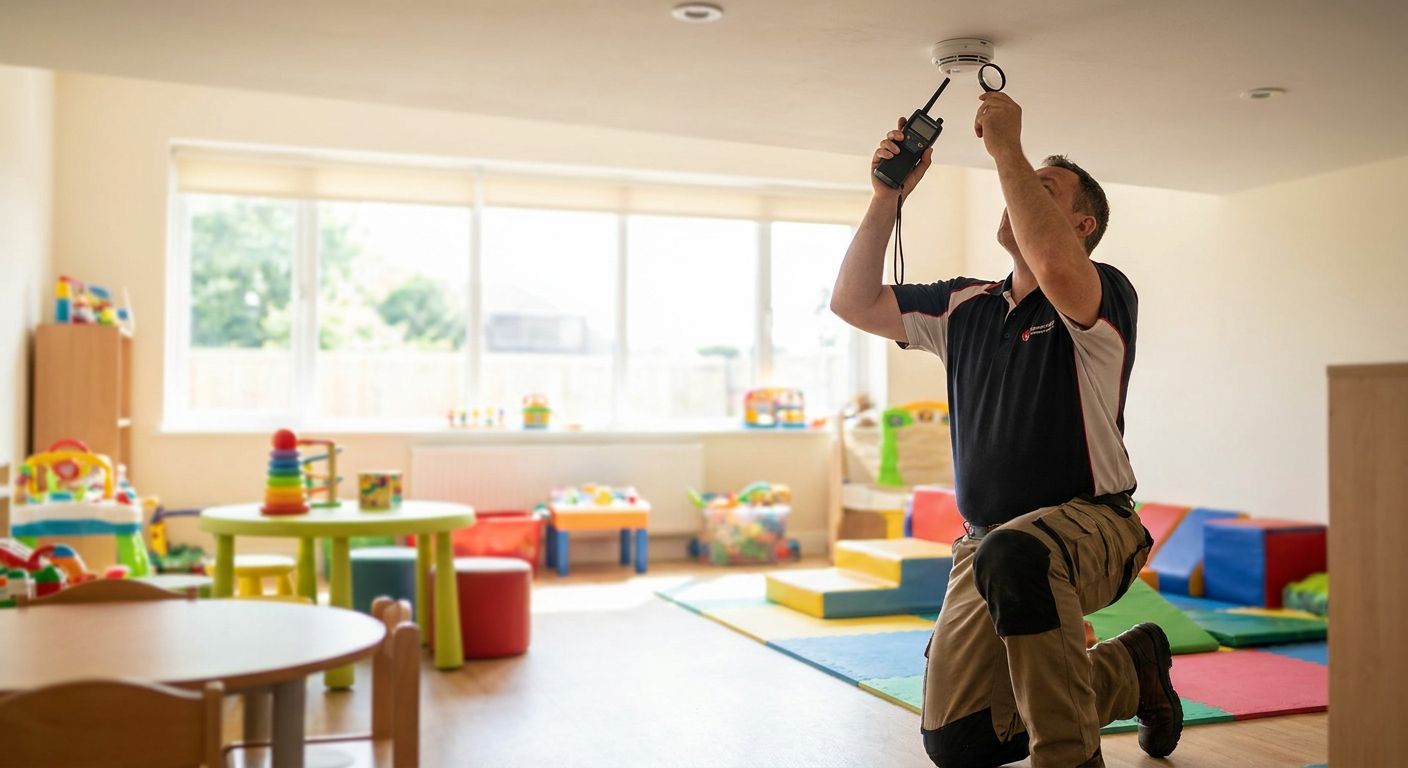
Hidden camera detection for daycare centers is a professional TSCM sweep of every classroom, bathroom, nap room, and staff area to find covert cameras planted by employees, parents, exes in custody disputes, or outsiders with facility access. A home bug sweep and a daycare sweep are not the same job — childcare facilities carry licensing exposure, mandated reporting rules, and dozens of unsupervised adults moving through the building every week.
- Hidden camera detection for daycare centers means a full TSCM sweep of bathrooms, nap rooms, and break rooms, not a phone app.
- USA Bugsweeps runs nationwide TSCM sweeps for childcare facilities and checks RF, lens, and network signatures apps miss.
- Diaper-changing stations and nap rooms are the highest-risk hiding spots for cameras in any daycare in 2026.
- State licensing complaints over cameras can trigger a facility review — sweep before enrollment season, not after a parent calls.
Why hidden camera detection matters for daycare centers
A daycare has more unsupervised access points than almost any small business: rotating staff, substitute teachers, contractors fixing HVAC, and parents walking in for drop-off. Any one of them can plant a pinhole camera the size of a coin in under a minute.
Licensing agencies treat a hidden camera complaint differently than a broken smoke detector. A single verified report can trigger a facility review, and the reputational damage among parents spreads faster than almost any other type of incident a childcare center will face in 2026. Custody disputes are a specific risk category — a parent or ex-partner sometimes plants a camera or audio device to monitor a child, a co-parent, or staff without consent, which is a distinct legal problem from garden-variety corporate snooping.
USA Bugsweeps runs TSCM sweeps for childcare facilities nationwide and treats a daycare sweep as a full-building job, not a single-room check.
Map every room by camera risk
Start with a floor plan, not a hunch. Every room in a daycare carries a different risk level, and the sweep order should match that.
- Bathrooms and diaper-changing stations — highest privacy exposure in the building
- Nap and rest rooms — low foot traffic, high concealment opportunity
- Classrooms with toy shelves, stuffed animals, and wall décor
- Staff break rooms, lockers, and the bug sweep services for retail stores and break rooms approach applies here almost directly
- Entry vestibules and parent check-in desks
- Outdoor play yards and fenced areas visible from adjacent property
Check the physical hiding spots first
A manual visual pass catches a surprising share of amateur camera placements before any equipment comes out. Cameras this small don't need much cover — a lens smaller than 2mm in diameter fits inside almost any household object.
- Smoke detectors and CO2 detectors mounted at odd angles or facing a specific area
- Wall clocks, especially ones that seem new or slightly misaligned
- Stuffed animals and toys with an unusual weight or a seam that doesn't match the rest of the fabric
- Tissue boxes, air fresheners, and USB wall chargers plugged in near desks
- Exit signs and sprinkler heads with a small lens-sized gap
Scan for RF transmissions
WiFi cameras and cellular-connected cameras both broadcast a signal, and a handheld RF detector picks that up even when the device is hidden from view. A professional-grade sweep covers a frequency range from 10 MHz to 6 GHz, wide enough to catch consumer nanny cams and more sophisticated transmitting devices in the same pass.
- Run the scan room by room with the facility's WiFi router temporarily powered down
- Note any signal spike that doesn't match a known device
- Check for Bluetooth beacon signals near desks and shelving
- Flag battery-powered transmitters separately from hardwired ones — they behave differently on a scan
Inspect the network for unauthorized devices
Any camera connected to the building's WiFi shows up on the router if someone knows where to look.
- Log into the router admin panel and list every connected device
- Cross-check MAC addresses against known staff phones, tablets, and building systems
- Look for bandwidth spikes overnight or during closed hours when no one should be streaming anything
- Isolate any unidentified device on a guest network until it's identified
Do a lens-detection pass
Camera lenses reflect light in a way that's visible with the right technique, even in daylight.
- Dim the room lights and sweep a flashlight beam slowly across walls, shelving, and vents
- Watch for a small glint or reflection that doesn't move when the light angle changes
- Check glossy or reflective surfaces — picture frames, mirrors, laminated posters
- Repeat the pass in every room flagged in the risk map, not just the obvious ones
Bring in a licensed TSCM sweep
This is where the manual steps hit their ceiling. A licensed technician runs the RF sweep, a thermal imaging pass, professional lens detection, and a physical wiring inspection in one visit, then documents the findings for licensing files. USA Bugsweeps performs this level of sweep for childcare facilities before enrollment season, after a staff departure, or immediately following a parent complaint.
Get a facility TSCM sweep scheduled
Nationwide bug sweeps for daycare and childcare facilities.
Set an ongoing camera policy
A single sweep is a snapshot, not a guarantee. Facilities that stay clean treat the sweep as a recurring policy tied to specific triggers.
- Re-sweep after any staff departure, especially terminations
- Re-sweep after any renovation, cabling work, or new furniture delivery
- Post a written device policy for staff covering personal cameras and recording equipment
- Document every sweep date for licensing renewal files
- Set a 90-day interval for a network and RF spot-check between full sweeps
“If a camera is hidden behind a smoke detector in the nap room, no phone app finds it — only an RF and lens sweep will.”
Comparing detection options for daycare centers
| Option | Best For | Key Limitation |
|---|---|---|
| DIY visual inspection | Small centers doing routine self-checks between sweeps | Misses non-transmitting, hardwired, or well-concealed cameras |
| Consumer camera-finder app | Quick spot-checks by staff between professional visits | High false-positive rate; can't detect cellular or DVR-recording devices |
| Handheld RF detector | Facilities worried specifically about WiFi or Bluetooth cameras | Blind to cameras that record locally and never transmit |
| Licensed TSCM sweep (USA Bugsweeps) | Full-facility clearance before licensing renewal or after a complaint | Requires scheduling a technician on-site rather than a same-hour DIY check |
The similar logic applies across facility types — a hidden camera detection for gym and spa owners sweep follows the same risk-mapping approach for changing rooms that a daycare sweep applies to bathrooms and nap rooms.
Common mistakes daycare centers make
- Sweeping only classrooms and skipping bathrooms, diaper stations, and break rooms where privacy exposure is highest
- Relying on a phone app and treating a clean scan as a full clearance
- Skipping the re-sweep after a staff termination, even when the departure was contentious
- Assuming a written no-camera policy in the employee handbook stops installation — it doesn't detect anything, it just creates grounds for termination after the fact
- Waiting for a parent complaint to schedule a sweep instead of building it into a recurring calendar
FAQ
What is hidden camera detection for daycare centers?
It's a professional TSCM sweep of a childcare facility's bathrooms, nap rooms, classrooms, and staff areas to find covert cameras. It combines a physical inspection, an RF scan, a network check, and a lens-detection pass — a single method alone misses too many camera types to count as a full clearance.
Can a phone app find hidden cameras in a daycare?
A phone app can flag some WiFi-connected cameras but misses hardwired, cellular, and locally-recording devices entirely. Apps also produce frequent false positives on reflective surfaces, which makes them unreliable as the only check before a licensing inspection in 2026.
Is it legal for daycare staff to install hidden cameras?
Staff installing hidden cameras in bathrooms, changing areas, or private staff spaces without consent violates privacy and surveillance laws in nearly every state. Visible monitoring systems disclosed to parents and staff are a separate legal category from covert, undisclosed devices.
How often should a daycare center run a bug sweep?
Run a full TSCM sweep before licensing renewal, after any staff departure, and after any renovation or cabling work. A network and RF spot-check every 90 days between full sweeps catches new devices added in between visits.
What are the most common hiding spots for cameras in daycares?
Smoke detectors, wall clocks, stuffed animals, tissue boxes, and USB wall chargers are the most common hiding spots because they're rarely moved or inspected. Diaper-changing stations and nap rooms carry the highest privacy risk if a camera is present.
Do RF detectors find all hidden cameras?
No. RF detectors only find devices actively transmitting a signal, which misses cameras that record locally to an SD card and never broadcast anything. A full sweep pairs RF scanning with a physical and lens-detection inspection to close that gap.
What should a daycare do if a hidden camera is found?
Stop touching the device, photograph it in place, and contact a licensed TSCM professional and local law enforcement before removing anything. Preserving the scene matters for any licensing report or legal action that follows.
How much does a professional bug sweep cost for a daycare?
Cost depends on facility size, number of rooms, and travel distance for the technician, so it varies center to center. Request a quote directly rather than relying on a flat number, since a single-classroom center and a multi-room facility aren't priced the same.
One last thing
The diaper-changing station is the single highest-risk hiding spot in most daycares, and it's also the room most centers forget to include when they run a quick self-check between professional sweeps. If a facility only has time for one manual pass before a licensed technician arrives, that's the room to start in — not the classroom with the most toys.


