
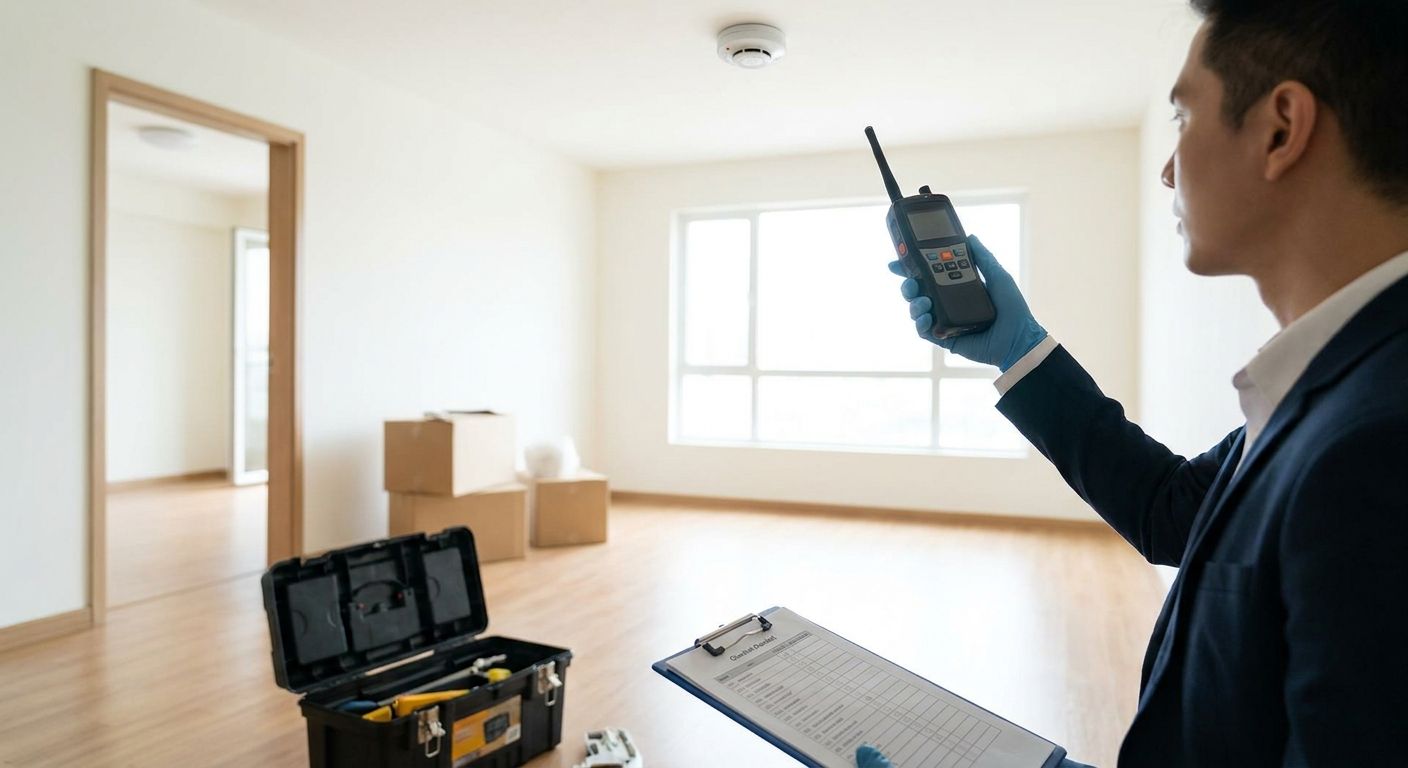
Hidden camera detection for landlords means inspecting a rental unit for concealed cameras, audio devices, and GPS trackers between tenants — done to protect the next occupant's privacy and to shield the landlord from liability. A landlord's sweep differs from a homeowner's: you're checking a unit you don't live in, often on a tight turnover schedule, and the previous tenant may have left devices behind intentionally or by accident.
- Hidden camera detection for landlords should happen at every turnover, not just after a complaint.
- Smoke detectors, outlets, and USB chargers are the three most common hiding spots found in rental units.
- A visual walkthrough catches obvious devices; RF-based cameras and dormant recorders need professional TSCM equipment.
- USA Bugsweeps runs nationwide sweeps for landlords, property managers, realtors, and Airbnb hosts before move-in.
Why hidden camera detection matters for landlords
A rental unit changes hands multiple times a year, and each turnover is an opportunity for a device to get left, planted, or forgotten. Landlords face a specific exposure here: if a hidden camera is discovered by a new tenant and it turns out a previous occupant installed it, the landlord can be pulled into the liability question even without knowledge of the device.
Property managers running multiple units face the same risk multiplied. A camera left in a smoke detector during one lease can survive several turnovers if nobody checks. Short-term rental hosts face a related but distinct version of this problem — read the breakdown on hidden camera sweeps for Airbnb and vacation rental hosts for the guest-facing side of the same issue.
For landlords, the move-in inspection is the natural checkpoint. It's the moment before a new tenant's belongings, routines, and private moments become exposed to whatever the last occupant left behind. A five-minute sweep at this point costs far less than a legal dispute later.
Update your move-in checklist
Most landlord move-in checklists cover paint, appliances, and smoke detector batteries — almost none mention device sweeps. Add it as a line item, not an afterthought.
- Add a dedicated "electronic devices check" line to the standard move-in inspection form
- Photograph every outlet, smoke detector, and USB port before the new tenant moves in
- Note the date and inspector name on the checklist for a paper trail
- Require the same check on move-out, before the next tenant is scheduled
- Keep the checklist as part of the lease file, not a loose sheet
Check the usual hiding spots first
Before any equipment comes out, a visual pass through common concealment points catches a large share of amateur installs.
- Smoke detectors and CO detectors — unscrew and check for a lens or extra wiring
- Wall outlets and USB charging ports — look for one that doesn't match the others
- Alarm clocks, picture frames, and stuffed animals left behind by a prior tenant
- Router and cable boxes — check for unfamiliar attached hardware
- Under-sink cabinets and closet shelving where wiring can run unnoticed
- Bathroom vents and light fixtures, especially in units with prior short-term rental use
Test every outlet for power draw
A hidden camera or audio device needs power. An outlet that's warm, has a small light, or shows unusual draw on a plug-in meter is worth a closer look.
- Use a $10-20 plug-in outlet tester to flag any outlet behaving oddly
- Check outlets behind furniture and appliances, not just visible ones
- Flag any outlet cover that looks newer or slightly mismatched from the rest
- Note any outlet the previous tenant asked not to be touched during their lease
Scan for wireless signals
Many consumer spy cameras transmit over Wi-Fi or Bluetooth to a phone app. A basic RF scan turns up devices a visual check misses entirely.
- Run a phone-based network scanner and flag any unfamiliar device name on the unit's Wi-Fi
- Check the router's connected-devices list for anything that isn't a known appliance
- Look for a second, unexplained Wi-Fi network broadcasting from inside the unit
- Use a handheld RF detector for a room-by-room pass if the network scan turns up anything odd
Bring in a professional TSCM sweep when the stakes are higher
DIY steps handle the obvious cases. A professional TSCM (technical surveillance countermeasures) sweep finds the devices that don't broadcast, don't draw obvious power, or were installed by someone who knew what they were doing — recording-only devices with no wireless signal, for example, never show up on a network scan.
- Book a full-spectrum RF sweep plus a physical/lens inspection for units with a history of tenant disputes
- Schedule sweeps for high-turnover units, luxury rentals, or any property that previously operated as a short-term rental
- Request a written report for the lease file — useful documentation if a dispute ever surfaces
- Treat this as a standard line item for units managed by a property management company handling dozens of turnovers a year
Professional-grade equipment costs thousands of dollars and takes training to operate correctly, which is why most landlords contract a TSCM specialist rather than buying gear. USA Bugsweeps runs nationwide inspections built around exactly this kind of pre-move-in check.
Document the sweep and communicate with the incoming tenant
A sweep only protects you if there's a record of it.
- Keep dated photos and any professional report with the lease file
- Tell the incoming tenant in writing that a device check was performed before move-in
- Repeat the documentation step at every turnover, not just the first one
- Store records for as long as your local landlord-tenant law requires lease documentation
A landlord who documents a pre-move-in sweep has a real defense if a device is ever found later and blamed on the property owner.
Comparing detection options for landlords
| Option | Best for | Starting cost | Key limitation |
|---|---|---|---|
| Visual walkthrough checklist | Every standard turnover | Free (staff time only) | Misses hardwired, no-signal, or well-concealed devices |
| Plug-in outlet tester + RF scanner app | Landlords managing 1-5 units | Under $30 in equipment | High false-negative rate on non-transmitting recorders |
| Property management staff training | Multi-unit management companies | Cost of staff time | Staff aren't trained to find professional-grade installs |
| Professional TSCM sweep | High-turnover, luxury, or disputed units | Quote-based, request a free estimate | Requires scheduling ahead of a tight move-in date |
Realtors face a similar version of this problem at open houses and showings — the guide on bug sweep services for realtors and open houses covers that angle if you also handle showings as part of managing the property.
Common mistakes landlords make
- Only sweeping after a complaint. Waiting for a tenant to report something means the damage — privacy violation, recorded footage — already happened.
- Skipping the sweep on "trusted" long-term tenants' units. Devices left behind aren't always installed maliciously by the current tenant; a prior occupant or contractor can be the source.
- Checking common areas only. Bedrooms and bathrooms are the rooms tenants care about most and the rooms landlords check least, out of discomfort.
- Ignoring devices after maintenance visits. A contractor with unsupervised access is a real vector; re-check after any repair work before the unit goes back on the market.
- Assuming a battery-powered device means it's harmless or temporary. Small battery-powered cameras can run for weeks and are often the hardest to spot without an RF or physical check.
FAQ
How often should landlords do hidden camera detection?
Landlords should run a hidden camera check at every tenant turnover, both move-out and move-in, plus after any unsupervised maintenance visit. High-turnover and short-term rental units warrant more frequent checks than standard annual leases.
Is a phone app enough to find hidden cameras before move-in?
A phone-based network or RF scanner app catches wireless cameras broadcasting a signal, but it misses devices with no wireless transmission or ones using frequencies outside the app's range. It's a useful first pass, not a full sweep.
What are the most common hiding spots for cameras in rental units?
Smoke detectors, wall outlets, USB charging ports, and router hardware are the most common spots found in rental units. Bathrooms and bedrooms are the highest-risk rooms because they're the least checked by landlords out of discomfort.
Can a landlord be held liable if a tenant finds a hidden camera?
Liability depends on jurisdiction and whether the landlord knew or should have known about the device. Documenting a pre-move-in sweep is the strongest evidence a landlord can produce showing reasonable care was taken.
How much does a professional TSCM sweep cost for a rental unit?
Cost varies by unit size and scope of the sweep; request a quote directly, since pricing depends on the property. A free estimate is the standard first step before scheduling.
Do property management companies need sweeps on every unit they manage?
Companies managing dozens of units at high turnover rates face proportionally higher risk, and a standard sweep policy across the portfolio reduces exposure compared to reacting only when a tenant complains.
What's the difference between a landlord sweep and an Airbnb host sweep?
Landlord sweeps happen at lease turnover on a fixed schedule; Airbnb host sweeps need to happen between every single guest stay, which is a much higher frequency and usually needs a faster, repeatable process.
Should landlords tell tenants a sweep was performed?
Yes. Documenting the sweep in writing and sharing that with the incoming tenant builds trust and creates a record that protects the landlord if a device is ever found and disputed later.
One last thing
The device most often missed in rental sweeps isn't a hidden camera at all — it's a leftover Wi-Fi-connected smart plug or old security camera app still logged into a previous tenant's account, quietly giving someone remote access to the unit's network long after they moved out. Change the router password and remove unfamiliar connected devices at every turnover, even when the visual sweep comes back clean.


