
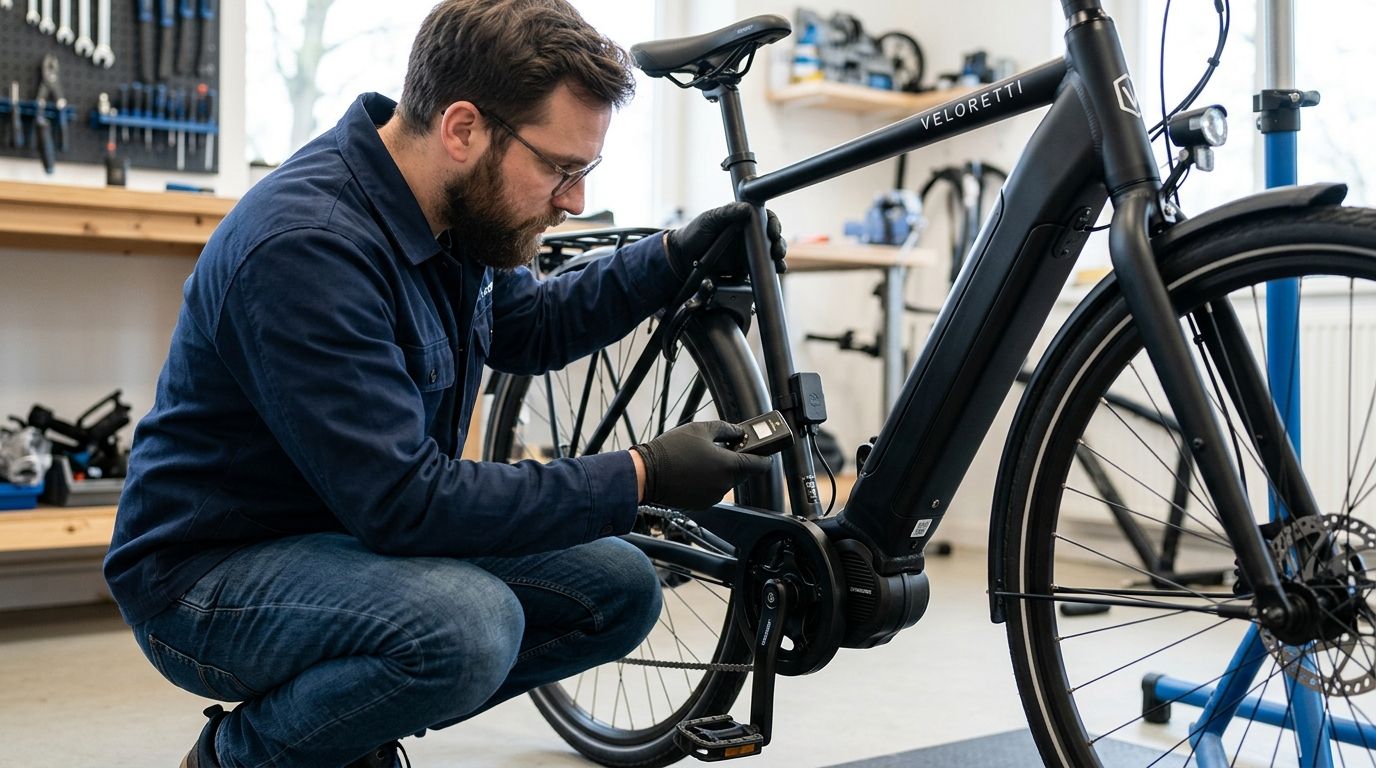
You detect a hidden GPS tracker on a bicycle or e-bike with a two-step check: a physical inspection of the seat post, frame tubes, battery housing and rear rack, followed by a Bluetooth/RF scan using your phone's unknown-tracker alert or a dedicated RF detector. Battery-powered trackers like AirTags and Tile units usually turn up in under 15 minutes of searching, but magnetic GPS pucks tucked inside e-bike battery compartments or welded frame cavities often need a wideband RF detector to confirm they're gone.
- Detect a GPS tracker on a bicycle with a physical check of the seat post, frame tubes and battery housing, then a Bluetooth or RF scan.
- AirTag and Tile trackers on bikes trigger unknown-tracker alerts on iPhone and most Android phones running 2026 software.
- E-bike battery compartments and welded frame tubes are the two hiding spots phone alerts miss most often.
- A professional RF sweep confirms hardwired or magnetic trackers that consumer tracker-alert apps can't see.
Why this matters
GPS trackers on bikes and e-bikes aren't hypothetical in 2026 — they show up in custody disputes, stalking cases, and disputes between former partners or business associates who share access to a shed or garage. A tracker the size of a coin can run for weeks on a coin-cell battery, and most riders never think to look until the same person shows up at the same trailhead three times in a row.
The difference between finding it and missing it usually comes down to method, not luck. Phone-based alerts catch consumer trackers like AirTags reliably. They do nothing for a hardwired unit spliced into an e-bike's main battery pack or a magnetic puck with no Bluetooth radio at all.
How to detect a GPS tracker on a bicycle
Work through these steps in order — each one catches a category of tracker the previous step misses.
- Check the obvious cavities first. Seat post tube, handlebar stem, underside of the saddle, inside the rear rack, and the water bottle cage mounts. These are the fastest places to hide a small unit and the fastest places to check.
- Run your phone's unknown-tracker alert. iPhones running iOS in 2026 and most Android phones with Google's tracker-alert feature will flag an AirTag or Tile-class device traveling with you that isn't registered to your account. Open the alert, follow the in-app locate function, and let it guide you to the device.
- Inspect the e-bike battery compartment and wiring harness. Pull the battery, check behind it and along the wiring loom for anything that isn't factory wire. A GPS tracker detector built for personal vehicles works on e-bike battery bays the same way it works on a car's wiring harness.
- Do a magnet sweep. Run a small strong magnet along the frame's bottom bracket, chainstays, and fork legs. Magnetic-mount trackers snap to a magnet from an inch away.
- Bring in an RF detector for confirmation. A wideband detector picks up active transmissions from cellular or satellite trackers that don't use Bluetooth and won't show up in a phone alert.
| Tracker type | Typical hiding spot | Detection method |
|---|---|---|
| AirTag / Tile (Bluetooth) | Saddle bag, seat post, under rack | Phone unknown-tracker alert |
| Cellular GPS puck | E-bike battery bay, frame cavity | RF detector, physical inspection |
| Magnetic GPS unit | Bottom bracket, fork leg, chainstay | Magnet sweep, visual check |
| Hardwired e-bike tracker | Spliced into battery wiring | Wiring harness inspection |
Battery-powered trackers (AirTags, Tile, Jiobit): the phone-alert method
These are the trackers most people encounter, and they're also the easiest to catch. Both iPhone and Android phones now surface an alert when an unregistered Bluetooth tracker travels with you for an extended period, which on a bike means anywhere the rider goes for a few hours. If you get the alert, use the in-app sound or locate feature — most AirTag-class devices are zip-tied or magnet-mounted somewhere on the frame, not hidden inside it.
Hardwired e-bike trackers spliced into the battery: the wiring check
E-bikes carry their own power source, which means a tracker can be wired directly into the battery instead of running on its own coin cell. These units don't need a battery swap and can run indefinitely, but they also don't transmit Bluetooth, so phone alerts will never catch a hardwired tracker. Pulling the battery casing and tracing the harness for an extra splice is the only reliable way to find one.
Magnetic GPS pucks bolted or stuck to the frame: the 30-second magnet test
Magnetic trackers are popular precisely because they need no tools to install or remove. A small rare-earth magnet run along the underside of the bottom bracket, the inside of the fork legs, and the chainstays will pull toward any magnetic-mount unit within about an inch. This test takes under a minute and catches devices a visual check alone can miss in a dirty or well-painted frame.
Why GPS tracker detection varies
- Bike type — e-bikes have more wiring and enclosed compartments than analog bikes, giving trackers more places to hide.
- Frame material — aluminum and steel frames can dampen Bluetooth signal strength more than carbon fiber, which sometimes delays a phone's unknown-tracker alert.
- Tracker type — Bluetooth beacons, cellular GPS units, and passive magnetic pucks each require a different detection method.
- Detector quality — a basic consumer RF scanner misses low-power or intermittently transmitting units that a professional-grade detector picks up.
- How the bike is stored — a bike kept in a shared garage or apartment bike room is easier to access repeatedly for tracker placement than one locked inside a private home.
Motorcycles carry the same risk profile, and the search pattern is nearly identical: check fairings, saddlebags, and the battery compartment the same way you'd check an e-bike's battery bay. The full walkthrough is in how to find a hidden GPS tracker on a motorcycle.
“If your phone hasn't alerted you but you still suspect a tracker, the device probably doesn't use Bluetooth — which means only a physical check or an RF sweep will find it.”
Anyone dealing with a stalking situation or a controlling ex-partner shouldn't rely on a self-check alone. A professional TSCM sweep confirms devices a phone or a store-bought detector can miss, and it documents findings for a protective order if one is needed.
Get a professional GPS tracker sweep
Nationwide TSCM technicians confirm what your phone alert can't catch.
Can an iPhone detect an AirTag hidden on a bike?
Yes, an iPhone can detect an AirTag hidden on a bike through the built-in unknown-tracker alert, which flags a Bluetooth device that's been traveling with the phone for an extended period. The alert works whether the AirTag is zip-tied under the saddle or tucked into a pannier, since detection depends on proximity and travel time, not the exact hiding spot.
Do e-bikes come with a built-in GPS tracker from the manufacturer?
Some e-bikes ship with a manufacturer-installed GPS unit built into the battery or motor controller for theft recovery, and this is disclosed in the owner's manual or app pairing setup. A tracker you didn't set up yourself, that isn't listed in the manufacturer's app, is a separate concern and should be treated as unauthorized until confirmed otherwise.
Is a basic RF detector enough to find a bike tracker?
A basic RF detector catches most actively transmitting trackers, including cellular GPS units broadcasting location data, but it can miss low-power or intermittent transmitters designed to sleep between location pings. A wideband, professional-grade detector — the kind USA Bugsweeps technicians carry on a TSCM sweep — picks up a wider frequency range and catches devices a consumer unit passes over.
FAQ
How do you detect a GPS tracker on a bicycle?
Detect a GPS tracker on a bicycle by physically checking the seat post, frame tubes, battery housing and rear rack, then running your phone's unknown-tracker alert or a dedicated RF detector. Magnetic and hardwired units need a magnet sweep or wiring inspection since they won't trigger a phone alert.
Where do people hide GPS trackers on bikes and e-bikes?
The most common spots are inside the seat post tube, under the saddle, inside the rear rack, and — on e-bikes — inside or behind the battery compartment. Magnetic units are often stuck to the bottom bracket or fork legs where they're hard to spot visually.
Will my phone alert me if there's an AirTag on my bike?
Yes, both iPhone and Android phones running 2026 software alert you to an unregistered Bluetooth tracker traveling with you, including an AirTag hidden on a bike. The alert won't catch cellular or magnetic trackers that don't use Bluetooth.
Can a GPS tracker on an e-bike run off the main battery?
Yes, a tracker can be spliced directly into an e-bike's main battery pack instead of running on its own coin cell, which lets it operate indefinitely. This type won't show up in a phone's Bluetooth alert, so it requires a physical wiring inspection to find.
Do I need a professional sweep or can I check my bike myself?
A self-check with a magnet, phone alert, and visual inspection catches most consumer-grade trackers on a bicycle or e-bike. A professional TSCM sweep is worth calling in when the situation involves stalking, harassment, or when your own check comes back clean but you still suspect a device.
Do carbon fiber bike frames hide trackers better than metal frames?
Metal frames can dampen Bluetooth signal strength more than carbon fiber, which sometimes delays how quickly a phone's unknown-tracker alert triggers. Neither frame material fully blocks detection, but metal frames may require a slightly longer wait for the alert to fire.
What's the fastest way to check a bike for a hidden tracker before a ride?
Run your phone's tracker-alert app while the bike sits unused for a few minutes, then do a 30-second magnet sweep along the frame and bottom bracket. This two-step check catches the two most common tracker types in under five minutes.
One last thing
The check people skip most often is the magnet sweep, not the phone alert — everyone remembers to look at their phone in 2026, almost nobody carries a magnet in their bike bag. A $5 rare-earth magnet from a hardware store catches the exact class of tracker that phone alerts are built to miss.


