
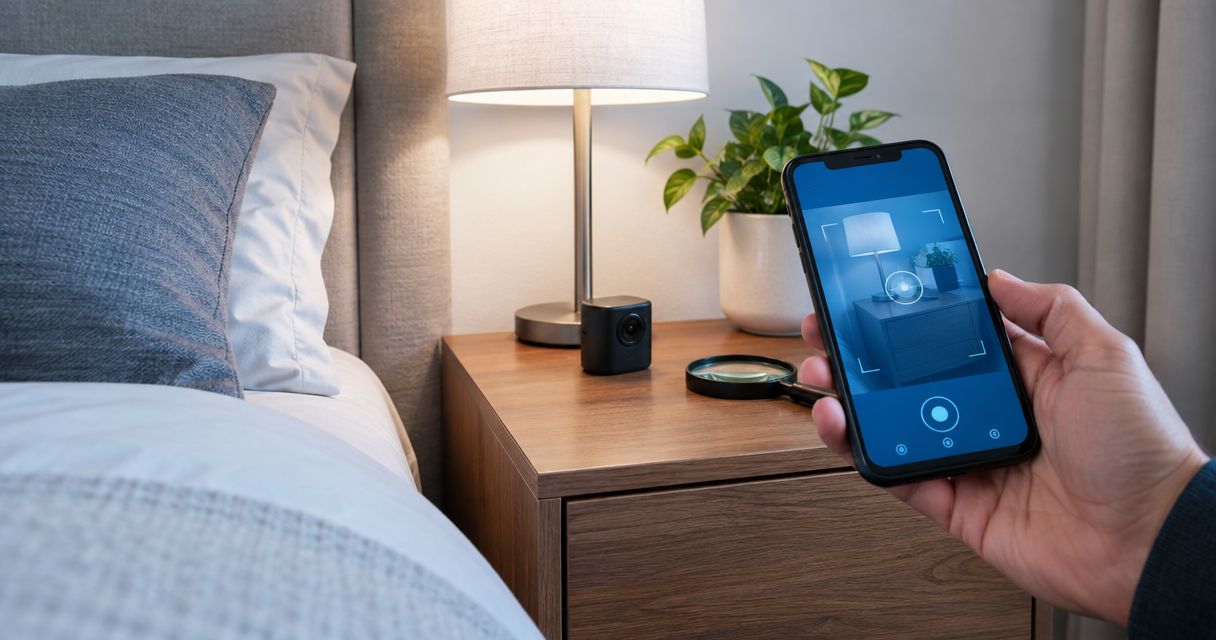
A hidden camera in a bedroom or nightstand almost always sits on an object with a direct line of sight to the bed — an alarm clock, a USB charger, a tissue box, a picture frame — and it's found by combining a physical inspection with an electronic scan, not by one method alone. Check those objects for a pinhole lens first, then run a dark-room flashlight scan for lens glints, a Wi-Fi network check for unfamiliar connected devices, and an RF sweep to catch anything transmitting live. The gap in every DIY method is the same: a camera recording to an SD card with no active Wi-Fi or RF signal won't show up on a network scan or a handheld detector, which is exactly the blind spot a professional TSCM inspection is built to close.
- Objects facing the bed — clocks, chargers, picture frames — are the first place to check for a pinhole lens.
- A dark-room flashlight scan reveals hidden camera lenses by their glint, the same trick used to spot glass eyes.
- Wi-Fi network scans catch cameras streaming footage but miss SD-card-only models with no active connection.
- RF detectors pick up live camera transmissions even when the lens is hidden inside a smoke detector or clock radio.
- USA Bugsweeps runs full TSCM inspections on bedrooms and nightstands when a DIY check can't rule a camera out.
Why this matters
Bedroom cameras aren't hypothetical. Hidden camera cases tied to landlords, ex-partners, short-term rental hosts, and even bathroom and dorm settings surface in the news regularly, and the nightstand is the single most common vantage point because it's eye-level with the bed and nobody questions why it's there. If you're checking a rented apartment, a new partner's place, or your own home after a break-in or a suspicious guest, a professional TSCM sweep finds what a visual check misses — but the steps below catch the majority of consumer-grade spy cameras sold in 2026 without any special equipment.
How to find a hidden camera in a bedroom or nightstand
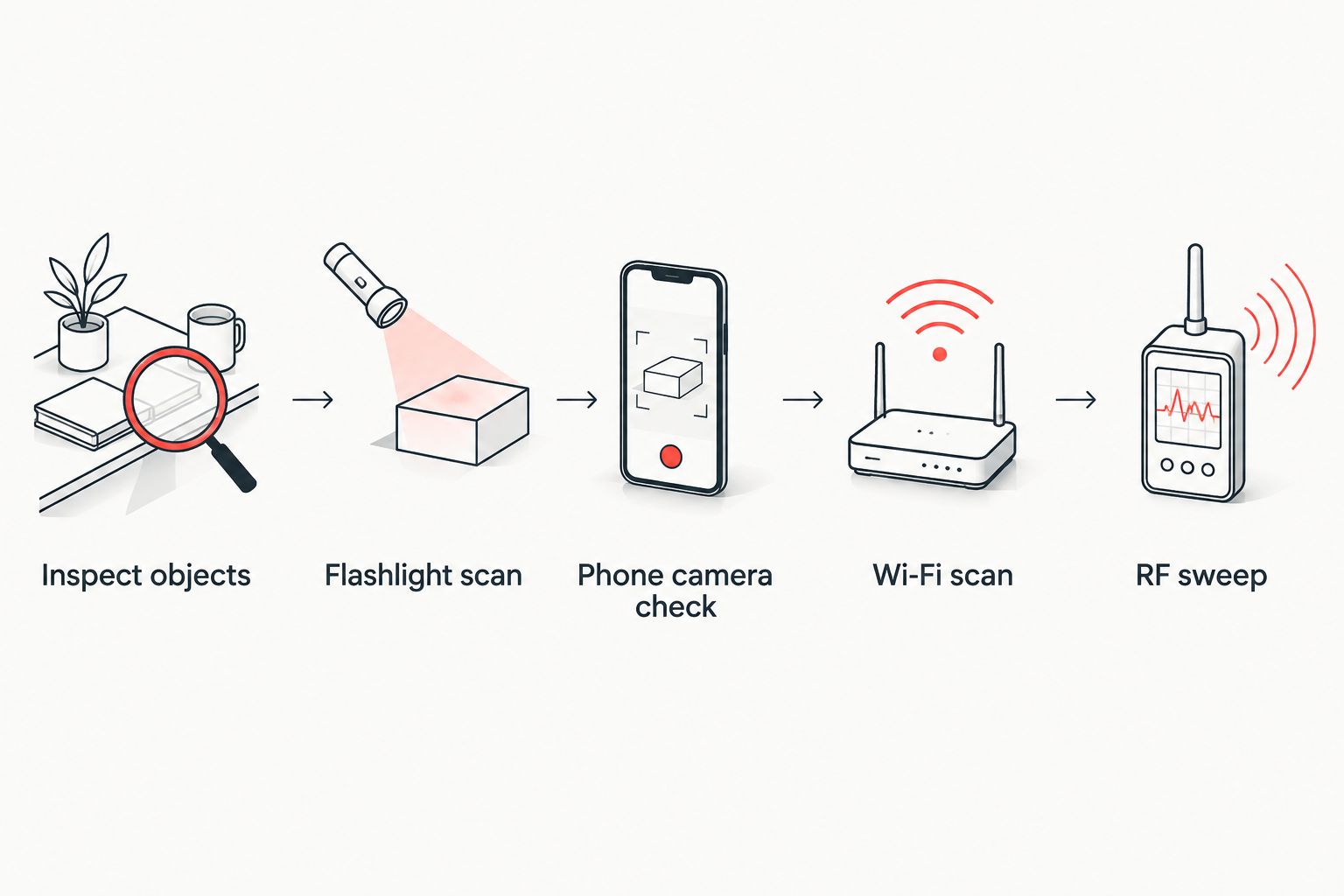
Work through these five checks in order. Each one catches a different category of hidden camera, so skipping steps leaves gaps.
- Inspect every object with a sightline to the bed. Pick up the alarm clock, the phone charger, the tissue box, the lamp base, and any picture frame or stuffed animal facing the mattress. Look for a lens no bigger than a pencil eraser, an odd seam, or a component that doesn't match the rest of the object.
- Kill the lights and run a flashlight scan. In full darkness, hold a small flashlight next to your eye and sweep it slowly across the room at a low angle. A camera lens reflects light back at you the same way an animal's eyes glow at night — a bright pinprick that doesn't match anything else in the beam.
- Check your phone camera for infrared glow. Many hidden cameras use infrared LEDs for night vision, and a phone camera (even without night mode) can pick up that glow as a faint purple or white dot in a dark room. This phone camera detection method misses cameras that don't use infrared illumination, so treat it as a supplement, not a standalone check.
- Scan the Wi-Fi network for unfamiliar devices. Most consumer spy cameras stream footage over the same Wi-Fi network you use. Open your router's connected-devices list (through its app or admin page) and flag any device name you don't recognize, especially generic labels like "ESP" or a string of numbers.
- Sweep the room with an RF detector. A handheld RF detector catches the wireless signal a camera transmits, even one hidden inside furniture or drywall. Sweeping close to suspect objects with a proper RF detector is the step that catches cameras a flashlight or phone scan can't confirm.
Where hidden cameras hide in a nightstand and bedroom
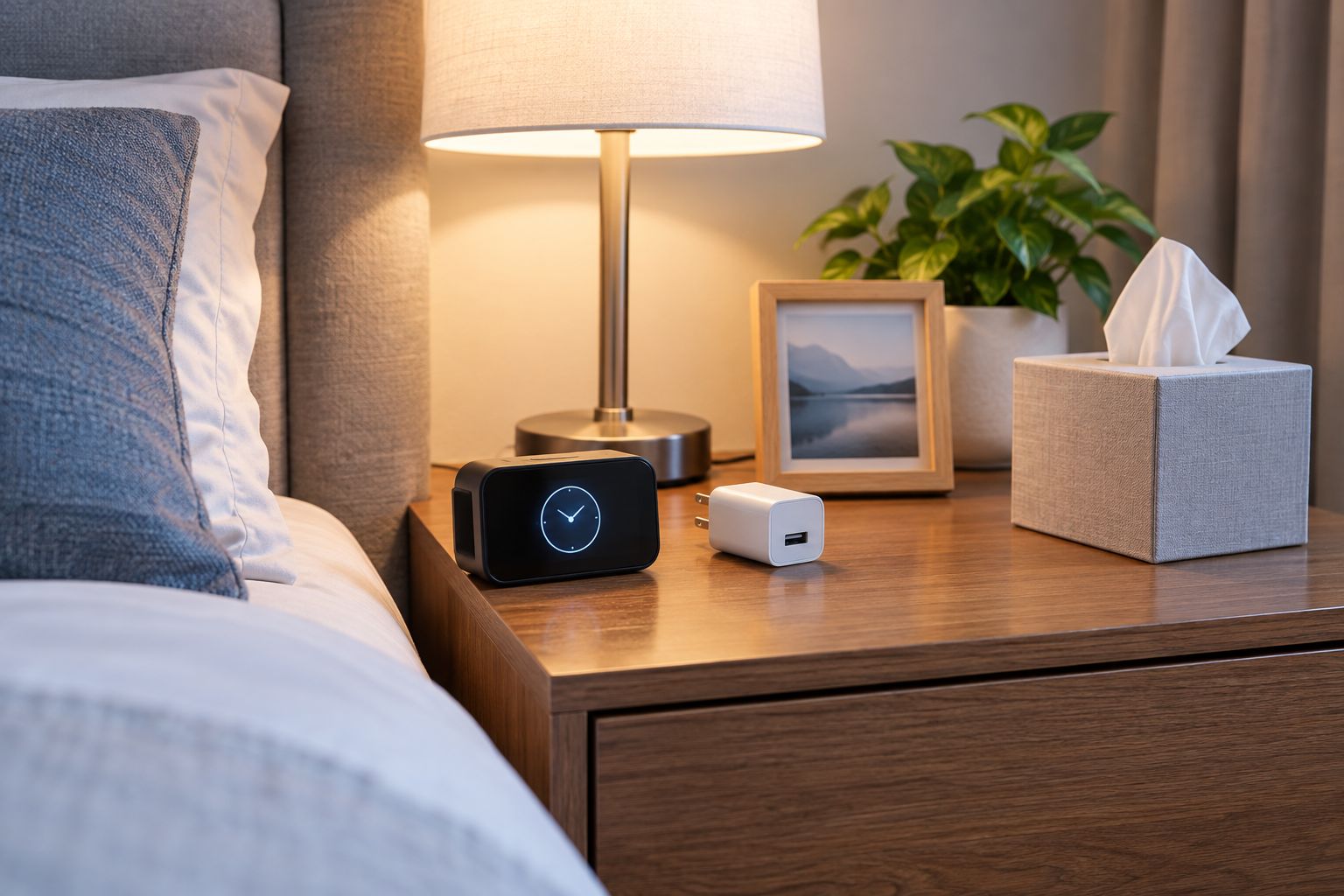
Spy camera manufacturers build their products into objects that already belong on a nightstand, which is why the same handful of items show up in almost every reported case:
- Alarm clocks and clock radios — the most common housing because a lens fits behind the digital display without looking out of place.
- USB wall chargers and power banks — plugged directly into an outlet near the bed, often left running 24/7 without suspicion.
- Smoke detectors — mounted with a ceiling view of the whole room, common in rental units and short-term rentals.
- Picture frames and small decor items — angled deliberately toward the bed instead of a natural viewing spot.
- Stuffed animals and tissue boxes — items nobody questions moving or touching, which also makes them easy to plant quickly.
- Wall outlets and power strips — a lens can sit flush with a fake outlet face and still receive power from the real one behind it.
If the lens glints back at you during the flashlight step, stop and look closer before moving anything — that reflection is the one thing a hidden camera can't disguise.
Can you find a hidden camera with your phone?
Your phone camera can find a hidden camera by picking up the infrared glow from its night-vision LEDs in a fully dark room, but only if that camera uses infrared illumination. Cameras that rely on ambient light or a separate low-light sensor won't produce a glow, so a phone check should always be paired with a physical inspection and a Wi-Fi scan, not used alone.
Do RF detectors catch every hidden camera?
RF detectors catch every camera that's actively transmitting a wireless signal at the moment you sweep, but they miss cameras recording to an internal SD card with no live transmission. Some cameras also use frequency-hopping or scheduled transmission bursts specifically to dodge basic consumer detectors, which is one reason a physical inspection still matters even after a clean RF sweep.
When should you call a professional bug sweep instead of checking yourself?
Call a professional TSCM sweep when the stakes are higher than a quick peace-of-mind check — a new rental, a contentious separation, a stalking concern, or any situation where you've found one camera and suspect there are more. A trained technician uses spectrum analyzers and non-linear junction detectors that find cameras with no active transmission at all, which is the exact category every DIY method above will miss.
Not sure a DIY check is enough?
A professional TSCM sweep finds cameras with no active signal to detect.
FAQ
How do you find a hidden camera in a bedroom or nightstand?
Check objects facing the bed for a pinhole lens, run a dark-room flashlight scan, check your phone camera for infrared glow, scan the Wi-Fi network for unfamiliar devices, and sweep with an RF detector. Each step catches a different type of hidden camera, and combining all five in 2026 catches the majority of consumer spy cameras on the market.
What household objects most often hide bedroom cameras?
Alarm clocks, USB wall chargers, smoke detectors, picture frames, stuffed animals, and fake wall outlets are the most common housings. All of them sit naturally on or near a nightstand with a direct sightline to the bed.
Can a hidden camera work without Wi-Fi?
Yes, a hidden camera can record to an internal SD card with no Wi-Fi or RF transmission at all, which means it won't appear on a network scan or a basic RF detector sweep. Physical inspection is the only DIY method that catches this type.
Is it legal to record someone in a bedroom without consent?
Recording someone in a bedroom without their consent is illegal under voyeurism and privacy laws in most states, regardless of who owns the property. If you find a camera you believe was placed without consent, document it and contact local law enforcement.
How do you check a nightstand alarm clock for a hidden camera?
Pick up the clock and check the front face and edges for a small lens, then compare it against the flashlight glint test in a dark room. If the clock has a USB port or unusual seam that doesn't match a standard model, that's a red flag worth a closer look.
Does a flashlight really find hidden camera lenses?
Yes, a flashlight held near your eye and swept slowly across a dark room causes a hidden camera lens to reflect light back at you, the same way eyes glow in headlights. It's one of the most reliable free methods and takes under five minutes per room.
What's the difference between an RF detector and a phone camera check?
An RF detector catches a camera's wireless transmission signal even when the lens is hidden from view, while a phone camera check only catches infrared LED glow from cameras with night vision. Using both covers more ground than either method alone.
When should you hire a professional instead of checking yourself?
Hire a professional TSCM sweep when you suspect multiple devices, when the situation involves a stalking or separation concern, or after a DIY check that still leaves you uneasy. Professional equipment finds cameras with no active signal, which is the biggest gap in every consumer-level method.
One last thing
The single most overlooked check isn't a gadget — it's unplugging and physically opening any object on the nightstand that has its own power source. A camera hidden inside a phone charger or power bank keeps recording as long as it's plugged in, and it's often the one item people never think to unplug because it looks completely ordinary. If you've swept the room and something still feels off, that instinct is worth acting on before you assume the space is clear.


