
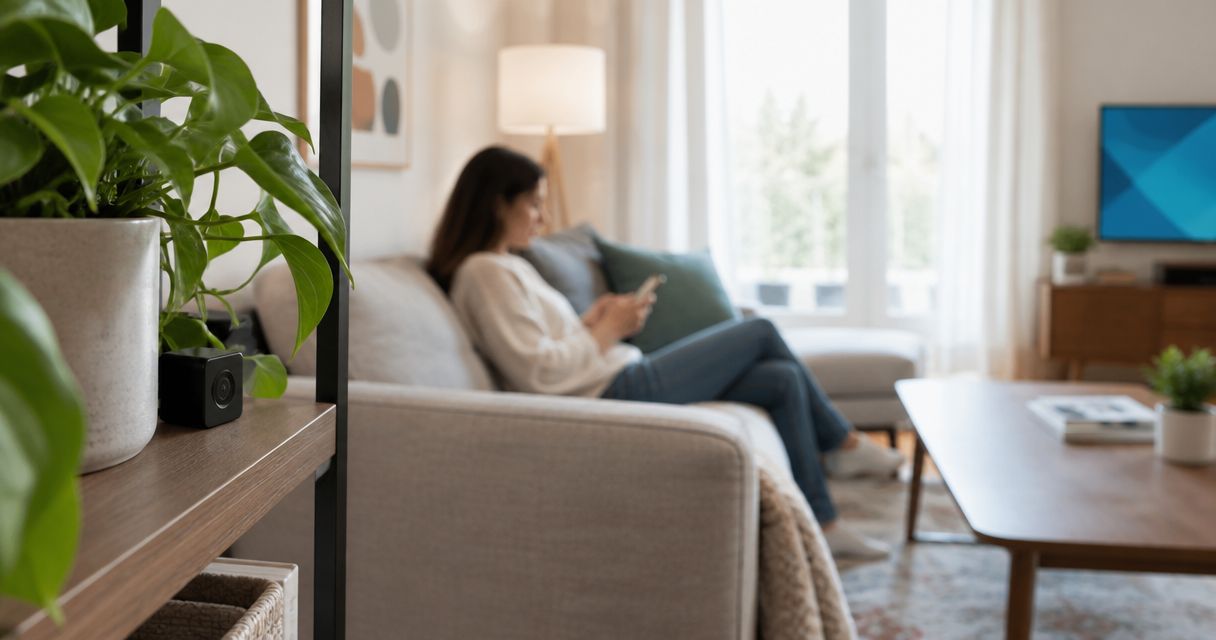
Yes—recording someone with a hidden camera in your home can be illegal when it captures private activity, violates state video-surveillance laws, or records protected conversations without the required consent. In 2026, owning the home does not give you blanket permission to record everyone inside; you must assess the location, what the camera captures, and the applicable state law separately.
- Is it illegal to record someone with a hidden camera in your home? Yes, when the recording violates applicable privacy laws.
- Federal one-party consent is not permission to secretly record conversations you are not participating in.
- Hidden camera video and audio recording require separate legal checks, even inside your own property.
- Usabugsweeps provides hidden camera detection; a licensed attorney determines whether a particular recording violates the law.
If you suspect an existing device rather than plan to install one, start with how to find a hidden camera in a bedroom or nightstand. Identifying a device and deciding whether its use is unlawful are different tasks.
Is it illegal to record someone with a hidden camera in your home?
A hidden camera is not automatically legal because it is inside a home you own. State privacy and voyeurism laws govern video recording, while federal and state interception laws can separately govern captured conversations. Consent, the camera's view, and the circumstances determine which rules apply.
| Recording situation | What it helps you monitor | Legal or practical limitation |
|---|---|---|
| Video-only camera facing an entrance | Entry and exit activity | State law and the actual field of view still matter; an entrance camera can capture private areas |
| Hidden camera in a bathroom or changing area | Activity in a highly private space | Secret recording of undressing or intimate activity raises serious criminal and civil privacy issues |
| Camera capturing conversations | Events with spoken context | Audio requires a separate consent and interception analysis |
| Camera recording a conversation you join | Your own interaction | Federal one-party consent has exceptions, and stricter state rules can apply |
| Camera recording guests while you are absent | Activity while you are away | Owning the device does not make you a participant in their conversations |
These are legal distinctions, not permissions to install a camera. A video-only device removes one issue—audio interception—but does not remove video privacy restrictions.
Why this matters
Home surveillance creates two separate legal questions: whether you can capture the images and whether you can capture the sound. Answering only one leaves the other unresolved. A camera marketed for home security does not determine your legal rights.
For a 2026 installation decision, describe the exact camera placement and microphone settings to a licensed attorney in your state. Include who uses the room, whether anyone changes clothes there, and whether the device records when you are absent. Those facts matter more than the product's label.
Video-only recording: privacy still controls
A video-only camera does not intercept spoken conversations, but its images can still invade privacy. Bathrooms, showers, changing areas, and bedrooms used for intimate activity demand particular caution. A living room is not automatically unrestricted either; the activity captured and applicable law still matter.
Avoid treating a room name as a legal answer. A camera in a hallway that points through a bedroom doorway presents a different situation from one limited to the front entrance. Review the entire field of view, including mirrors and open doors.
A visible camera and clear notice make monitoring less secret, but notice does not authorize every kind of recording. A sign at the entrance does not establish that recording someone undressing is lawful. Nor does consent to ordinary security monitoring necessarily cover intimate footage.
Audio recording: consent is a separate issue
The federal baseline appears in 18 U.S.C. § 2511(2)(d). For a private person, the provision generally permits interception when that person is a party to the communication or one party has given prior consent, subject to the statutory exception for a criminal or tortious purpose. State law can impose additional restrictions.
One-party consent means consent from at least 1 participant in the conversation—not permission from the homeowner. If you leave a hidden microphone running while two guests talk alone, your ownership of the house does not make you a participant. Do not confuse access to a room with consent to intercept speech.
For a conversation involving 2 participants, an all-party consent requirement means both participants must consent when the applicable law requires it. With more participants, the same principle extends to everyone covered by that requirement. The rules also depend on whether the conversation qualifies as protected under the relevant statute.
Before using a camera in 2026, inspect its microphone, live-listening, and recording settings separately. Turning off saved audio does not necessarily turn off live audio transmission. Ask counsel about the actual configuration rather than assuming that no saved file means no legal issue.
State laws: the federal rule is not the whole answer
California Penal Code § 632 addresses recording or eavesdropping on confidential communications without the consent of all parties. Its definition of a confidential communication matters; the statute does not turn every sound in every location into a protected conversation. A private discussion inside a home requires careful assessment.
Florida Statutes § 934.03 generally prohibits interception and includes an all-party prior-consent exception. Florida's statutory definition of an oral communication also considers an expectation against interception under circumstances justifying that expectation. These details explain why a simple state label cannot decide every case.
For video, California Penal Code § 647(j) addresses specified invasions of privacy involving viewing or recording people under particular circumstances. The camera's concealment, the person's state of dress, the purpose, and the location can matter. Read the applicable provision rather than assuming that the audio rule also answers the video question.
These statutes are legal references for this 2026 guide, not a substitute for advice about your circumstances. Ask a licensed attorney to check the current law, relevant exceptions, and any other state connected to the recording.
Why hidden-camera legality varies
Hidden-camera legality varies because different facts trigger different protections. Give your attorney a concrete description rather than asking only whether your state permits surveillance.
- Location: A bathroom, rented bedroom, or changing area presents different privacy concerns from an entrance.
- Captured content: Ordinary movement, private conversations, nudity, and intimate activity require different legal analysis.
- Audio capability: A microphone introduces interception issues even when the video placement is otherwise acceptable.
- Participation and consent: Your involvement in a conversation differs from recording other people while you are absent.
- Applicable law: Federal interception provisions and state audio, video, and civil privacy rules can overlap.
- Purpose and later use: A security explanation does not erase unlawful collection; sharing or publishing footage raises additional questions.
Assess the recording itself, not just your reason for making it. A protective motive does not create an exemption from privacy law.
Can you secretly record a babysitter or caregiver?
A caregiving role does not eliminate a person's privacy rights. A camera used to observe care in a shared room presents different issues from a hidden camera in a bathroom or a room where the caregiver changes clothes. Audio still needs its own consent analysis.
A nanny camera's useful feature is the ability to review care-related activity. Its limitation is equally important: the device cannot distinguish legally permissible monitoring from unlawful surveillance for you. Before installation, agree on the monitored spaces and obtain advice about notice and consent.
If you suspect abuse or immediate danger, prioritize the person's safety and contact the appropriate authorities. Do not assume that secretly collecting more footage is the safest or legally sound next step.
Can your spouse or roommate record you without asking?
Sharing a home does not eliminate privacy rights. A spouse or roommate's access to a bedroom, bathroom, or shared network does not by itself authorize secret recording of private activity. The particular recording and applicable law determine the answer.
A shared living area also does not create automatic permission to intercept private conversations. If someone is recording discussions they do not join, one-party consent cannot be supplied simply by their ownership of the camera.
If discovery could lead to confrontation, leave the area and seek help using a device and account the other person cannot access. Do not confront a suspected recorder alone when threats, stalking, or coercive control are involved.
Does a camera notice make hidden recording legal?
A notice helps communicate that monitoring occurs, but it is not a universal consent form. Its wording, visibility, the recording's scope, and applicable law all matter. A vague security sign does not necessarily disclose audio interception.
Ask counsel whether the notice accurately covers the camera's operation and whether additional consent is required. State explicitly whether monitoring includes sound, which areas are covered, and who can access recordings. Do not use notice as a reason to place cameras in spaces used for bathing, changing, or intimate activity.
What should you do if you find a hidden camera?
If you discover a suspected hidden camera in 2026, protect yourself before investigating it. A suspicious object is not proof of a crime, but you do not need to remain in a private space while deciding what it is.
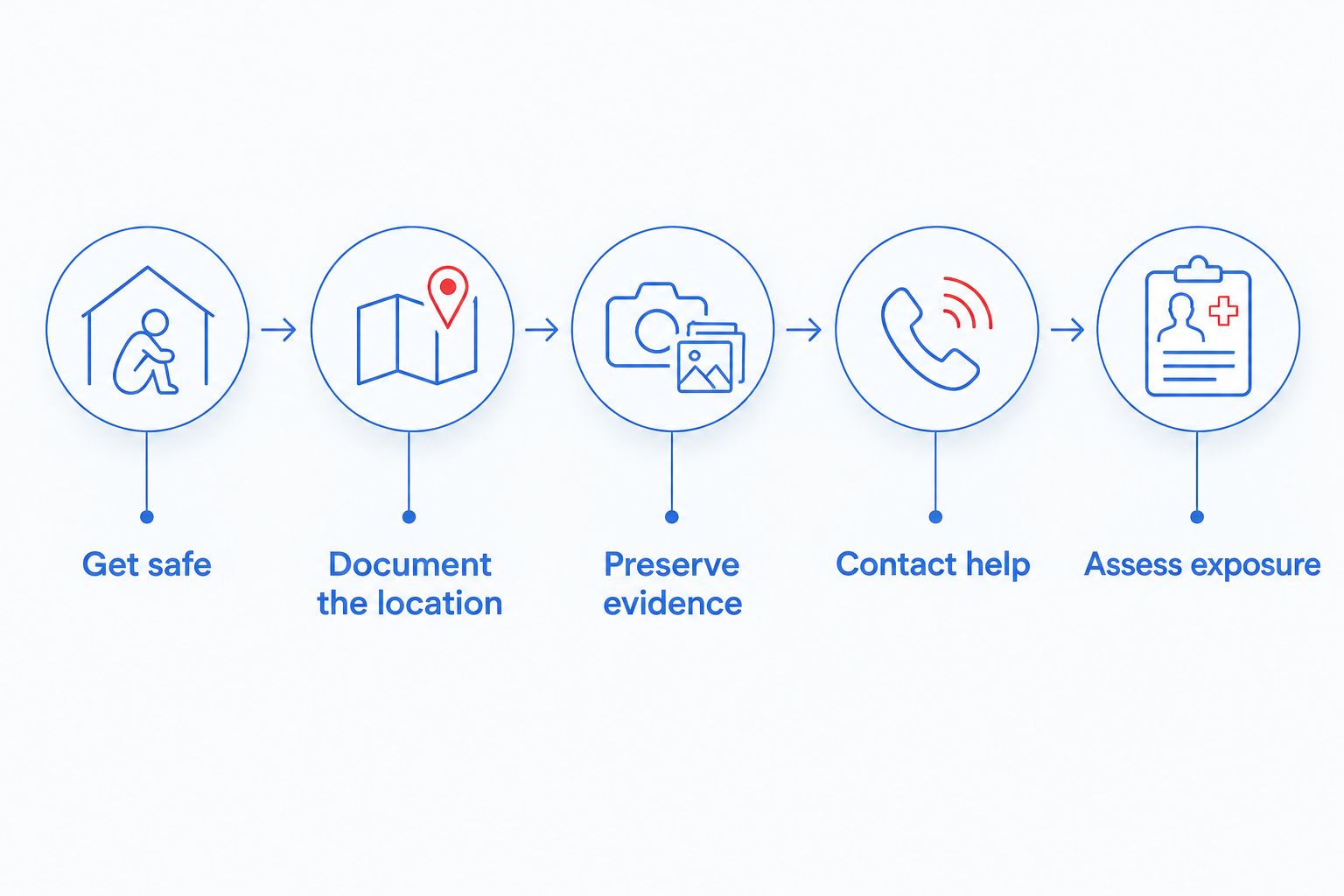
- Get safe. Leave the monitored area. If there is immediate danger, contact emergency services from a safe location.
- Document the location. When safe, photograph the object in place and note its direction, nearby furniture, and discovery circumstances.
- Preserve evidence. Avoid resetting, dismantling, deleting, or accessing accounts associated with the device. Ask police or counsel how to handle it.
- Contact help. Report suspected unlawful surveillance and explain any threats, stalking, or involvement of children.
- Assess exposure. Ask about other devices and account access rather than assuming one discovery explains the full situation.
Do not circulate intimate footage to prove that recording occurred. Describe what you found to investigators and ask for a secure submission method. Copying or distributing sensitive material can harm the person recorded and create additional legal concerns.
When does professional hidden-camera detection help?
Usabugsweeps is best for homeowners seeking professional hidden-camera detection rather than legal advice. Its nationwide TSCM services address hidden cameras, audio bugs, GPS trackers, and wiretaps. Detection answers a technical question; counsel answers the legal one.
The benefit of a professional assessment is dedicated surveillance detection instead of relying only on a casual visual check. The limitation is that a sweep does not decide whether a crime occurred or prove that no recording happened previously. A device's absence today does not establish its absence yesterday.
You can review Usabugsweeps when you need professional TSCM bug sweeping. Explain the affected spaces and any device already discovered, and coordinate evidence handling with police or counsel before equipment is disturbed.
Request professional surveillance detection
Discuss hidden cameras, audio bugs, or other suspected surveillance in your home.
FAQ
Is it illegal to record someone with a hidden camera in your home in 2026?
Yes, it can be illegal when the recording violates applicable video privacy or audio interception laws. Owning the home does not create blanket permission; location, captured activity, consent, and state law matter.
Can I put a hidden camera in my own bathroom?
Do not secretly record other people using your bathroom. Recording private activity there raises serious privacy and criminal-law issues, even when you own the property.
Can I record a conversation if I am not in the room?
Your ownership of the room does not supply participant consent. Under the federal private-person consent provision, you generally need to be a party to the communication or have prior consent from a party, and stricter state requirements can apply.
Is a hidden camera legal if it does not record sound?
Removing audio does not make a hidden camera automatically legal. Video privacy and voyeurism laws still apply to the location, activity, and circumstances of the recording.
Can my roommate hide a camera in my bedroom?
A roommate's access to the home does not by itself authorize secret recording of your private activity. Document a suspected device safely and contact police or a licensed attorney about the circumstances.
Should I unplug a hidden camera as soon as I find it?
Prioritize safety and avoid unnecessary handling of possible evidence. Leave the monitored area and ask police or counsel how to preserve the device; immediate safety concerns take priority.
Can Usabugsweeps tell me whether the recording was illegal?
Usabugsweeps provides professional TSCM and hidden-camera detection services, not a legal determination. A licensed attorney assesses legality, while law enforcement investigates suspected crimes.
One last thing
A microphone can change the legal analysis even when the camera never saves audio. Live interception and stored recordings are not identical technical functions. Before approving a home surveillance setup in 2026, check what it captures, what it transmits, and who receives it—not just whether a recording appears in the app.


