
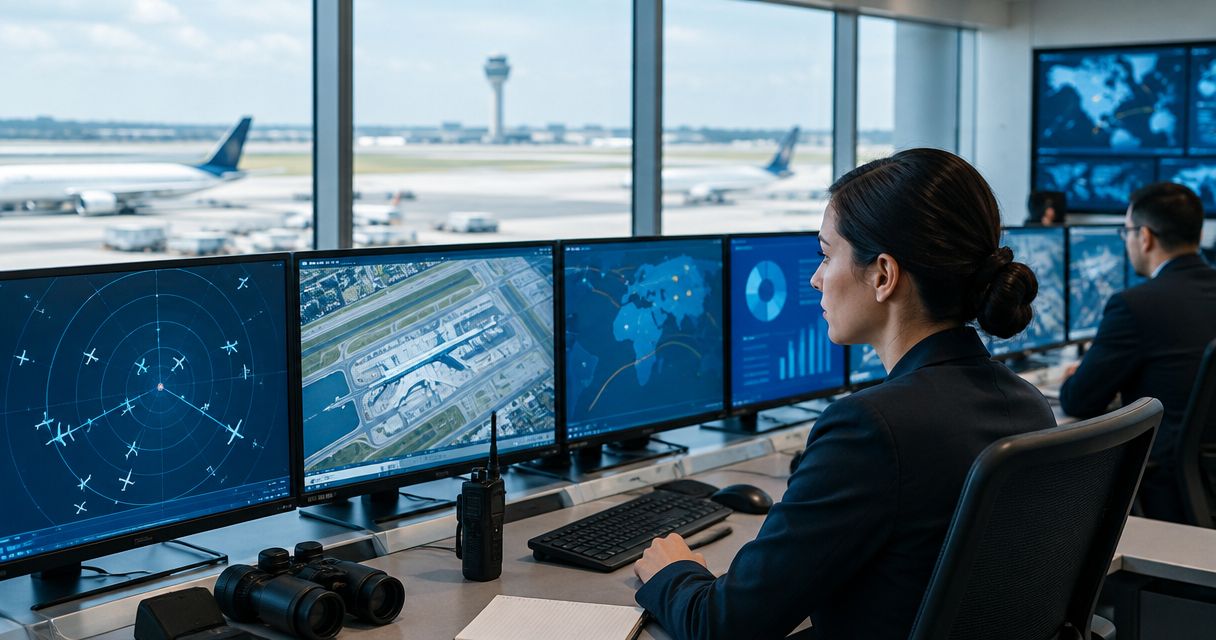
Airline operations center TSCM is technical surveillance countermeasures inspection aimed at detecting unauthorized surveillance and protecting operational conversations. This 2026 guide explains how to scope the work around restricted access, live communications, shared facilities, and systems that must remain in service.
- TSCM sweeps for airline operations centers require written scope, access authorization, and operational safeguards before inspection.
- USA Bugsweeps provides nationwide professional TSCM services for business owners seeking hidden camera, audio bug, and wiretap detection.
- Radio-frequency detection alone cannot rule out wired devices or recorders that store audio locally.
- Keep physical surveillance inspection separate from cybersecurity testing and aviation maintenance authorization.
Why TSCM matters for airline operations centers
An operations center inspection must protect confidentiality without interrupting the work being protected. Your inspection plan should distinguish dispatch workstations, briefing rooms, management offices, and shared support spaces rather than treating the entire facility as an ordinary office.
USA Bugsweeps TSCM services are best for business owners seeking nationwide professional bug sweeping. For an aviation facility, establish the proposed methods, access requirements, and operating restrictions before authorizing work through USA Bugsweeps.
A hidden recorder and a compromised workstation require different investigations. Neither a radio-frequency alert nor an unexplained equipment fault establishes that surveillance is occurring. Start with observable facts, preserve relevant records, and assign each concern to the appropriate security, IT, facilities, or maintenance owner.
For your 2026 security plan, define the objective narrowly: inspect authorized spaces for unauthorized surveillance devices and document the inspection boundaries. Do not treat a sweep as an aviation safety certification, network penetration test, or guarantee against future intrusion.
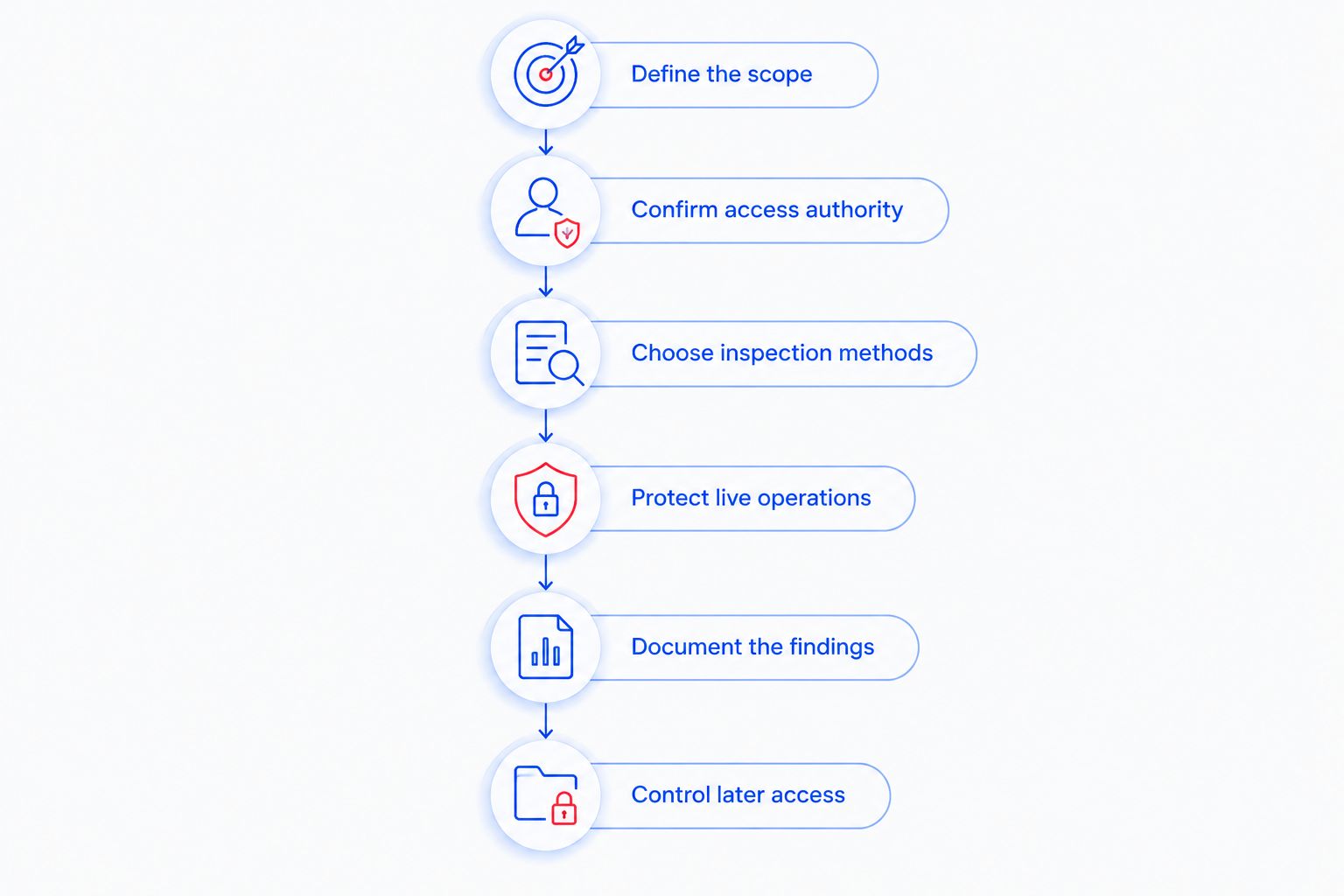
How to plan TSCM sweeps for airline operations centers
Define the scope
Start manually with a floor plan and an inventory of the spaces you control. Mark where sensitive conversations occur, where visitors or contractors enter, and which rooms belong to another organization. You do not need detection equipment to establish these boundaries.
Use 3 planning zones: operational work areas, confidential meeting areas, and support spaces. These are proposed inspection categories, not regulatory classifications. Identify each room separately so a completed conference-room inspection cannot be mistaken for clearance of the entire center.
Create 1 annotated floor plan for the agreed scope. Include exclusions as clearly as included rooms; locked cabinets, inaccessible ceiling spaces, and tenant-controlled equipment must not disappear from the record.
- List each room, workstation area, and authorized storage space.
- Mark shared walls, service access points, and landlord-controlled areas.
- Record the specific observation that prompted the request.
- Separate office inspection from aircraft, vehicle, and network work.
- Identify spaces that require additional permission before entry.
Confirm access authority
Use your existing access-control process first. Establish who can approve room entry, escort visitors, authorize inspection of furniture, and permit access to building infrastructure. A tenant's permission to enter an office does not automatically authorize work on shared telecommunications equipment.
Name 2 operational contacts: an inspection sponsor and a shift supervisor. The sponsor owns the agreed scope; the supervisor decides whether proposed activity conflicts with live operations. Assign an alternate if either person will be unavailable.
For the 2026 inspection authorization, specify permitted actions rather than granting open-ended access. Professional assistance reduces the internal burden of conducting technical inspection, but it does not replace your responsibility to establish authority and protect restricted information.
- Confirm facility, landlord, airline, and airport permissions as applicable.
- Arrange credentials and escorts through approved channels.
- Define what technicians can open, move, photograph, or disconnect.
- Identify equipment that requires its owner's separate authorization.
- Establish a stop-work contact and escalation route.
Choose inspection methods
Begin with a non-invasive visual review and your approved equipment inventory. Note unfamiliar objects or unexplained changes without opening electrical fittings, dismantling consoles, or removing suspected devices. An unfamiliar item is a question to resolve, not proof of surveillance.
For the technical stage, ask USA Bugsweeps to describe the proposed TSCM scope and methods before booking. Nationwide bug sweeping is an explicit service offering; aviation-specific credentials, equipment compatibility, and reporting commitments must be confirmed rather than assumed. The guide to what to expect during a professional TSCM bug sweep provides additional preparation context.
Radio-frequency inspection addresses emissions, not every possible recording device. A recorder storing audio locally does not need to transmit, and authorized wireless equipment also produces signals. Require findings to distinguish an observation from an identified device and an identified device from unauthorized surveillance.
- Ask which device types and spaces the proposed methods address.
- Request an explanation of limitations for inactive or non-transmitting devices.
- Provide an inventory of authorized communications and recording equipment.
- Separate physical inspection from endpoint and network investigation.
- Confirm how unresolved observations will be documented.
Protect live operations
Build the inspection around your operating schedule rather than assuming the room can be powered down. Start with an internal walkthrough to identify occupied consoles, continuous-use equipment, and rooms that can be inspected without disturbing staff.
For the 2026 work plan, require explicit approval before disconnecting power, unplugging cables, moving operational equipment, or accessing communications infrastructure. Do not introduce jamming or unapproved transmissions into the inspection. Any method involving emissions requires review by the responsible technical and safety owners before use.
Move the inspection, not the operational obligation. If an area cannot be accessed safely, record the exclusion and arrange a separately approved return instead of pressuring staff to improvise access.
- Identify no-touch equipment before technicians enter.
- Schedule room access around briefings and shift changes.
- Confirm approved inspection methods with responsible technical owners.
- Stop work when the shift supervisor identifies an operational conflict.
- Record inaccessible areas and assign follow-up responsibility.
Document the findings
Prepare an incident log before the visit. Record what was observed, where it occurred, who reported it, and whether anything has already been moved. Keep speculation about motive or identity out of the factual record.
Agree on the expected deliverable before authorizing inspection. Ask for the inspected locations, methods used, access limitations, observations, and recommended follow-up. A report should distinguish completed inspection from planned work and unresolved questions; do not assume a provider includes a particular report format.
If a suspicious object is found, avoid unnecessary handling. Follow your organization's incident procedure and involve authorized security personnel or law enforcement as appropriate. Potential evidence requires controlled handling, not an informal demonstration for staff.
- Record inspection dates, room identifiers, and authorized attendees.
- Separate confirmed findings from unexplained signals or objects.
- Document exclusions and the reason each area remained inaccessible.
- Restrict photographs and reports to approved recipients.
- Assign an owner to every unresolved finding.
Control later access
Use existing visitor records, contractor logs, and equipment-change procedures to maintain the inspected environment. A sweep describes conditions during the work; it does not prevent someone from introducing a device afterward.
Set your 2026 reassessment triggers around changes you can document. Examples include a room refurbishment, unexplained equipment installation, an access-control incident, or a new surveillance concern. These triggers support a reasoned review without inventing a universal inspection interval.
Include temporary spaces in that review. If your team moves a sensitive briefing to another room, the original room's inspection does not extend to the new location. Apply the same authorization and scope checks before commissioning additional work.
- Reconcile new equipment against the approved inventory.
- Review contractor access after work in inspected rooms.
- Reassess scope when teams relocate or occupy temporary spaces.
- Keep inspection reports separate from general staff communications.
- Route new concerns through the designated security contact.
The sequence matters: define authority and boundaries before technical work, then preserve the findings and control subsequent access. Skipping authorization creates an access problem; skipping follow-up leaves documented concerns unresolved.
Compare inspection options for your operations center
Choose the option that answers the actual concern. A facilities walkthrough, an RF check, a professional physical sweep, and an IT investigation solve different problems. None should be presented as interchangeable clearance of the entire operation.
| Option | Best for | Practical advantage | Key limitation |
|---|---|---|---|
| Internal visual review | Establishing scope and recording visible changes | Uses your room knowledge and existing inventory | Does not establish whether concealed electronics are present |
| Handheld RF screening | Preliminary review of transmitting sources by trained personnel | Helps identify emissions that need investigation | Does not rule out wired or non-transmitting recording devices |
| USA Bugsweeps professional TSCM service | Business owners seeking nationwide physical bug sweeping | Provides professional surveillance-device detection services | Aviation access, methods, exclusions, and deliverables require agreement |
| Authorized IT security investigation | Suspected account, endpoint, or network compromise | Examines digital systems within the approved scope | Does not replace physical inspection for hidden recorders or cameras |
Start with the internal review because it prepares every subsequent option. Escalate to professional physical inspection when the concern involves concealed surveillance devices, and involve IT when the concern involves digital access or compromised systems. Use both workstreams when the facts justify both, with separate authorization and reporting boundaries.
For procurement, describe the location, room scope, restrictions, and required deliverables before requesting a proposal. Compare like-for-like work rather than treating the shortest description as equivalent coverage. Confirm how exclusions and additional access needs will be handled before the visit.
Discuss your TSCM inspection scope
Describe your facility, access restrictions, and surveillance concerns before arranging professional inspection.
Common mistakes airline operations teams make
Treating an RF alert as proof
Authorized radios, wireless networks, and other electronics produce emissions. An alert requires investigation and identification; it does not identify an offender or establish that a hidden microphone exists. Keep the language in internal reports factual until the source is resolved.
Giving technicians unrestricted console access
Permission to inspect a room is not permission to alter everything inside it. Define equipment boundaries and obtain the responsible owner's approval before any interaction with live consoles, communications hardware, or shared infrastructure. Stop when the approved scope ends.
Combining aircraft and office work without separate authority
An office inspection does not authorize inspection or alteration of an aircraft. Treat aircraft, operational vehicles, and airport-controlled infrastructure as separate scope decisions with their own owners and approvals. Do not extend a room-level engagement by informal request during the visit.
Describing an incomplete inspection as an all-clear
A locked room, inaccessible ceiling void, or excluded cabinet remains outside the completed work. Carry those limitations into the final decision record. No findings in inspected areas is not the same statement as no surveillance anywhere.
Circulating sensitive findings too widely
Inspection photographs and reports can expose room layouts, equipment positions, and access details. Give staff the actions they need without distributing the complete technical record. Use approved reporting channels and keep access limited to the people responsible for response.
FAQ
What are TSCM sweeps for airline operations centers?
TSCM sweeps for airline operations centers inspect authorized spaces for unauthorized surveillance devices. The scope should identify rooms, permitted methods, operational restrictions, and areas excluded from inspection.
Can an operations center stay active during a bug sweep?
An active operations center requires an inspection plan that preserves live work and limits access to approved areas. The shift supervisor and responsible equipment owners must approve any activity affecting operational systems.
Is a handheld RF detector enough to clear an operations room?
A handheld RF detector is not enough to rule out all surveillance devices. Wired devices, inactive transmitters, and recorders storing audio locally require consideration beyond an RF-only check.
Does an office TSCM sweep include aircraft or airport infrastructure?
An office TSCM sweep includes only the locations and equipment explicitly authorized in its scope. Aircraft, airport-controlled areas, and shared infrastructure need separate owner approval and an agreed inspection plan.
Does a physical bug sweep detect compromised airline computers?
A physical bug sweep does not replace an authorized cybersecurity investigation. Suspected endpoint, account, or network compromise belongs with the responsible IT security team, alongside physical inspection when appropriate.
How often should an airline operations center arrange a sweep?
Set the inspection schedule around documented risk and changes to the facility rather than a universal interval. Reconsider inspection after relevant access incidents, refurbishments, relocations, or unexplained equipment changes.
What should staff do if they find a suspected recording device?
Staff should avoid unnecessary handling and notify the designated security contact through an approved channel. Follow the organization's incident procedure, preserve factual observations, and involve authorized investigators as appropriate.
One last thing
Put an expiry trigger on the inspection's operational use, not an invented guarantee on the result. For your 2026 plan, require security review when the inspected space changes ownership, layout, equipment, or access conditions. A carefully documented sweep becomes less useful when nobody records what changed afterward.
The strongest handoff is a clear record of what was inspected, what was excluded, and who owns the next action. Keep that record available to authorized decision-makers before the next sensitive briefing.


