
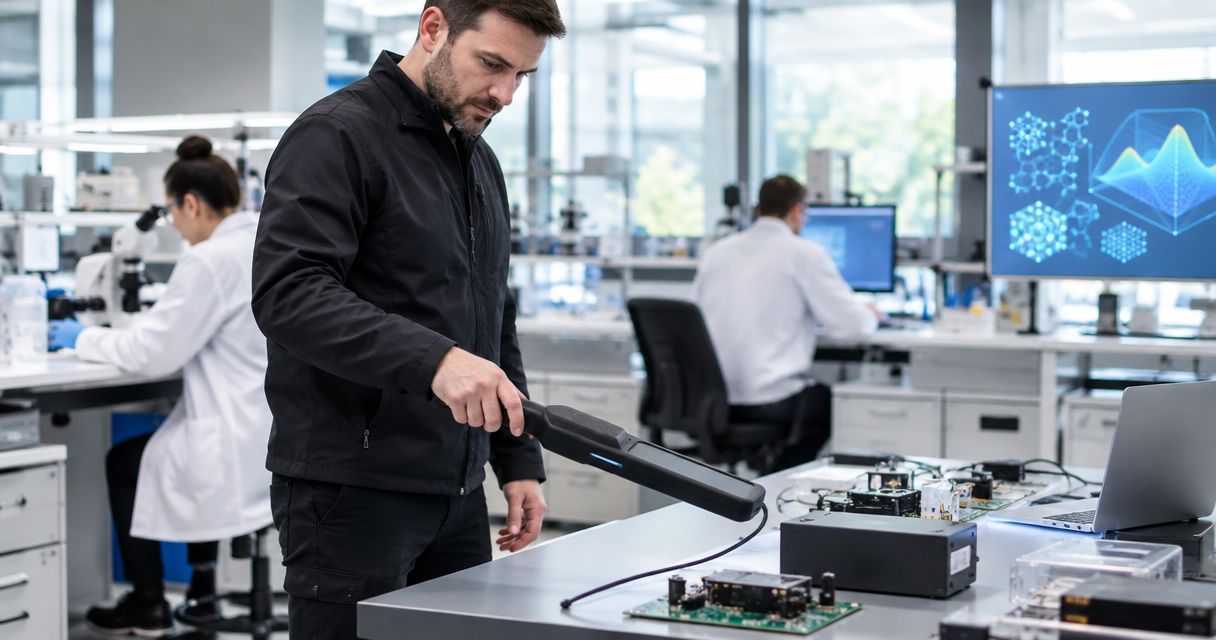
Manufacturing R&D lab TSCM sweeping is a professional check for hidden surveillance devices, with the aim of protecting confidential research and development work. A lab presents a different problem from a standard office: sensitive discussions can happen beside test equipment, in shared rooms, and around visitors or contractors. In 2026, the useful question is not whether a handheld detector reacts somewhere in the building; it is which spaces, devices, and access routes the sweep must cover.
- TSCM sweeps for R&D labs in manufacturing should cover sensitive rooms, shared spaces, and equipment introduced by visitors.
- USA Bugsweeps is best for manufacturing R&D teams seeking professional TSCM bug sweeping rather than a detector-only check.
- Document authorized electronics before a sweep; an unexplained signal is not, by itself, proof of surveillance.
- Agree on the scope and the process for handling a suspected device before anyone starts searching.
Why TSCM matters for manufacturing R&D labs
An R&D lab concentrates conversations and work that a business does not want recorded without authorization: prototype reviews, test discussions, design decisions, and meetings with outside parties. Hidden cameras and audio bugs are relevant to rooms where that work is visible or discussed. GPS trackers raise a separate concern when sensitive equipment or vehicles move between sites.
The practical challenge is separating an unauthorized device from the electronics already used in the facility. Test instruments, wireless equipment, access controls, and approved cameras can complicate a search. A reaction from a basic detector identifies something to investigate; it does not establish what the source is or who placed it.
USA Bugsweeps is best for manufacturing R&D teams that need professional TSCM bug sweeping rather than a detector-only check. Its stated services cover hidden-camera, audio-bug, GPS-tracker, and wiretap detection. The scope of a lab visit still needs to be agreed before work begins. You can start that conversation through USA Bugsweeps.
In 2026, treat a sweep as a defined physical-security task, not a substitute for access control or cybersecurity work. The team responsible for the lab should know which spaces matter, which devices belong there, and who can authorize an investigation.
How to plan a TSCM sweep for an R&D lab
The best starting point is a written map of what needs protection. You do not need specialist equipment to create it. That preparation also gives a professional provider a usable scope instead of a vague instruction to check everything.
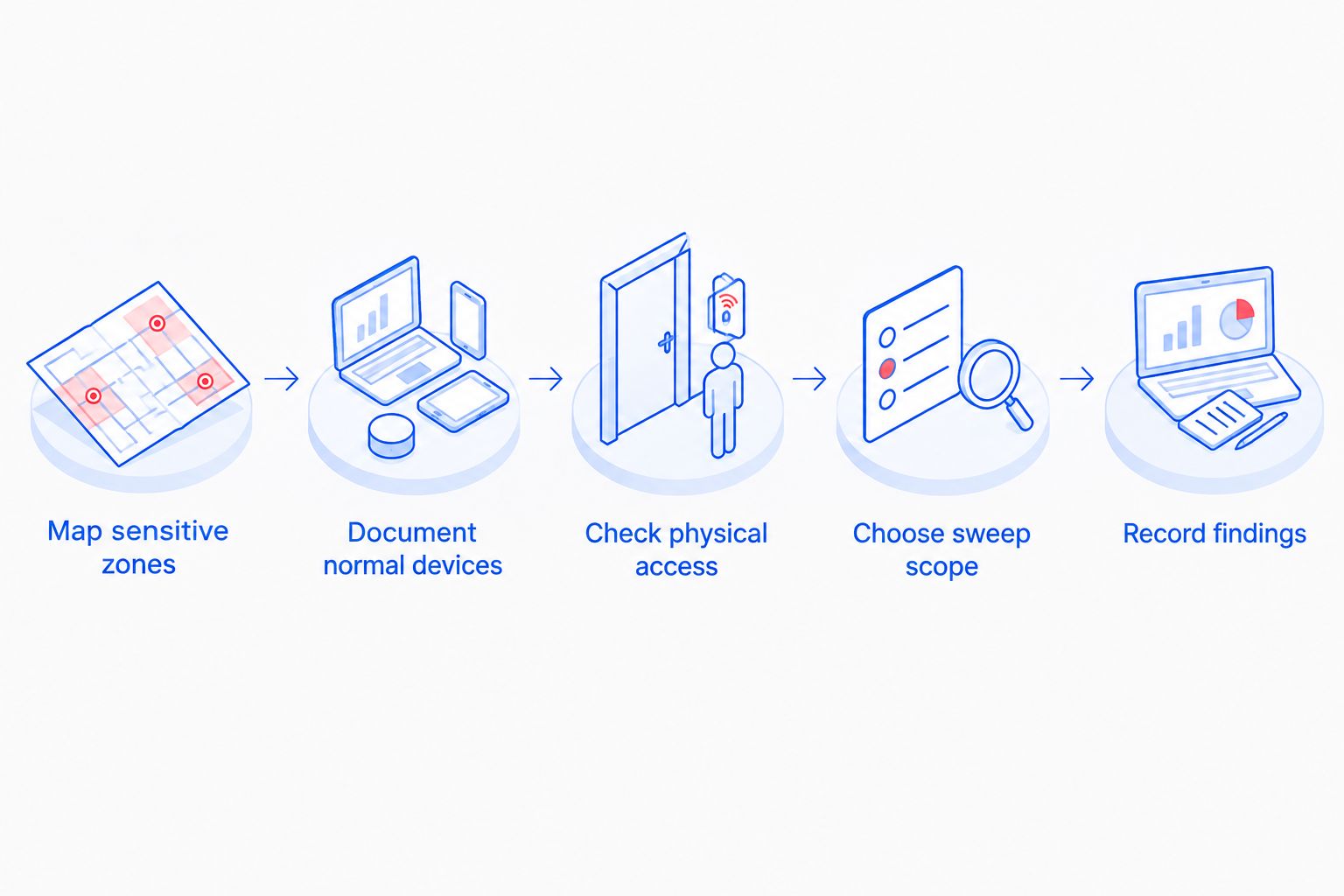
Map sensitive zones
Start with places where confidential work can be seen, heard, or discussed. A lab bench deserves attention if prototypes are visible there; a nearby meeting room deserves attention if design decisions happen there. Include shared areas only when they connect to the concern. An entire building is not automatically the right unit of work.
Walk the facility with the R&D lead and the person responsible for access. Mark boundaries clearly, including rooms that are off-limits during normal operations. Close the map with a short list:
- Prototype assembly and test areas
- Design-review and meeting rooms
- Storage areas for sensitive work
- Visitor-facing spaces near R&D activity
Document normal devices
Before interpreting any signal or unfamiliar object, establish what belongs in each zone. Use an existing asset register if it is current; otherwise, ask lab and facilities staff to identify approved equipment. This manual check comes before buying a detector or requesting a professional sweep.
A device inventory prevents an approved camera, sensor, or wireless tool from becoming a false alarm. It also makes a truly unfamiliar item easier to identify. Record:
- Authorized cameras and microphones
- Wireless test equipment
- Access-control and alarm hardware
- Recently installed or temporarily loaned devices
Check physical access
A surveillance concern is also an access question. Review who could enter the relevant room, move equipment, service fixtures, or leave an object behind. Do not accuse a visitor or employee because their name appears on an access record; use the record to define where a check should focus.
Look at ordinary operational changes before escalating: maintenance work, room reconfiguration, and outside equipment brought in for testing. Keep the review narrow enough to protect employee privacy. Check:
- Visitor and contractor access records
- Recent maintenance activity
- Shared keys and room permissions
- Equipment introduced for temporary work
Choose sweep scope
Match the check to the concern. If the issue is an unexplained object in a meeting room, begin with that room and adjacent access points. If sensitive work moves through multiple areas, include the route and the places where it stops. A professional TSCM service becomes the faster path when the team needs an examination beyond its own visual check and device inventory.
Tell the provider what the team already knows and what remains uncertain. USA Bugsweeps provides professional bug sweeping and electronic surveillance detection; confirm the proposed lab scope directly rather than assuming every part of the site or every device type is included. Specify:
- Rooms and areas to examine
- Concerned device types
- Authorized equipment to account for
- Access restrictions during the visit
- Who will receive the findings
A useful scope connects the people who know the work, the spaces where it happens, and the devices already present. Leave out areas with no stated connection to the concern rather than expanding the search without a reason.
Protect the process
Agree on how the lab will operate while the check takes place. Staff need to know who can authorize entry and who should respond if an unfamiliar device appears. Do not disconnect, open, or discard a suspected device on impulse. Its position and condition can matter to the subsequent investigation.
If there is an immediate safety issue, follow the facility's established response procedure. Otherwise, preserve the scene and direct decisions through the designated security or legal contact. Set these rules before the visit:
- Name an authorized point of contact
- Define room-entry permissions
- Decide who can handle a suspected item
- Limit circulation of sensitive findings
Record findings and next actions
A sweep is useful only if the team can act on what it establishes. Keep a dated record of the areas examined, authorized equipment identified, questions left unresolved, and decisions made afterward. Ask the provider what documentation the agreed service includes; do not assume a particular report format.
A result with no identified surveillance device does not prove that every possible risk has disappeared. Recheck the underlying access and device-control issues that made the concern plausible. Finish with:
- Areas examined and areas excluded
- Authorized devices confirmed
- Unresolved items requiring follow-up
- Access-control changes assigned to an owner
In 2026, the value of that record is accountability. The next lab lead can see what was checked and what still needs attention instead of repeating an undocumented search.
Compare the options for an R&D lab
The right option depends on what the team needs to establish. A visual inspection is a sensible first step for a specific, visible concern. It is not the same service as professional TSCM, and neither option replaces routine control of lab access and equipment.
| Option | Best for | Main advantage | Key limitation |
|---|---|---|---|
| Lab-led visual check | A defined room or unfamiliar object | Staff know what normally belongs in the space | Does not establish whether concealed electronic surveillance is present |
| Internal security review | Access records and authorized equipment | Connects a concern to site operations | Depends on the team's available detection skills and equipment |
| Professional TSCM sweep | A defined concern requiring specialist device detection | Adds a dedicated bug-sweeping service to the site review | Scope and documentation must be confirmed with the provider |
Use a lab-led check to establish context; use a professional TSCM sweep when the question is whether a hidden surveillance device is present. The approaches work together rather than competing. Internal staff can explain what belongs in a room, while a provider can focus on the agreed electronic-surveillance concern.
For manufacturing R&D teams, USA Bugsweeps is the professional-service option in this comparison, not a replacement for internal security. Its stated nationwide TSCM service covers the device categories relevant to this decision. Ask which rooms and device concerns the proposed sweep will address before authorizing work.
Discuss your lab sweep
Describe the rooms, authorized devices, and surveillance concern before requesting a service scope.
Common mistakes manufacturing R&D teams make
Searching before defining the concern. A broad search without a room list or device question produces findings that are difficult to interpret. Write down where the sensitive work occurred and what prompted the concern first.
Treating every detector alert as a bug. Labs contain legitimate electronics. Check an alert against the authorized-device inventory before calling it evidence of surveillance. An alert needs identification, not a guess.
Focusing only on the lab bench. Design conversations can occur in meeting rooms, corridors, and spaces used by visitors. Follow the work and the people involved when choosing areas to examine; do not limit scope to where a prototype sits.
Disturbing a suspected device without a plan. Moving an object can change the condition the investigator needs to assess. Restrict access, record what was observed, and let the designated contact direct the response.
Assuming a clean check fixes access weaknesses. A TSCM sweep addresses a defined surveillance concern at the time of the check. Review who can enter sensitive rooms and introduce devices afterward. In 2026, that follow-up remains a separate responsibility for the facility.
FAQ
What are TSCM sweeps for R&D labs in manufacturing?
They are professional checks for hidden electronic surveillance devices in areas used for manufacturing research and development. Define the rooms and device concerns before arranging the sweep.
Which parts of an R&D lab should be checked?
Check areas where sensitive work is visible or discussed, along with relevant shared spaces and access points. Use the lab's actual workflows to set the scope rather than assuming the whole building needs the same check.
Can an R&D team use a handheld detector instead of a professional sweep?
A handheld detector can help staff investigate a specific concern, but it does not by itself establish whether a room is free of hidden surveillance. Document authorized electronics and seek professional TSCM help when the question requires a dedicated sweep.
Should staff remove a suspected recording device?
Staff should not remove a suspected device without an agreed response plan. Restrict access and have the designated security or legal contact direct what happens next.
Does a TSCM sweep replace cybersecurity work?
No. A TSCM sweep addresses the agreed physical electronic-surveillance concern; cybersecurity work addresses different systems and risks. Coordinate the teams when the concern involves both.
What should a manufacturer tell a TSCM provider before a visit?
Provide the rooms of concern, known authorized electronics, relevant access restrictions, and the device types you want addressed. Ask what areas and documentation the proposed service includes.
Is USA Bugsweeps suitable for a manufacturing R&D lab?
USA Bugsweeps offers nationwide professional TSCM bug sweeping and detection of hidden cameras, audio bugs, GPS trackers, and wiretaps. Confirm the proposed scope for the specific lab before arranging a visit.
One last thing
The most useful item a lab can prepare is often its authorized-device list. Without it, even a careful search spends time establishing what ordinary equipment is. In 2026, keep that list current alongside room-access records so the next surveillance concern starts with evidence, not assumptions.


