
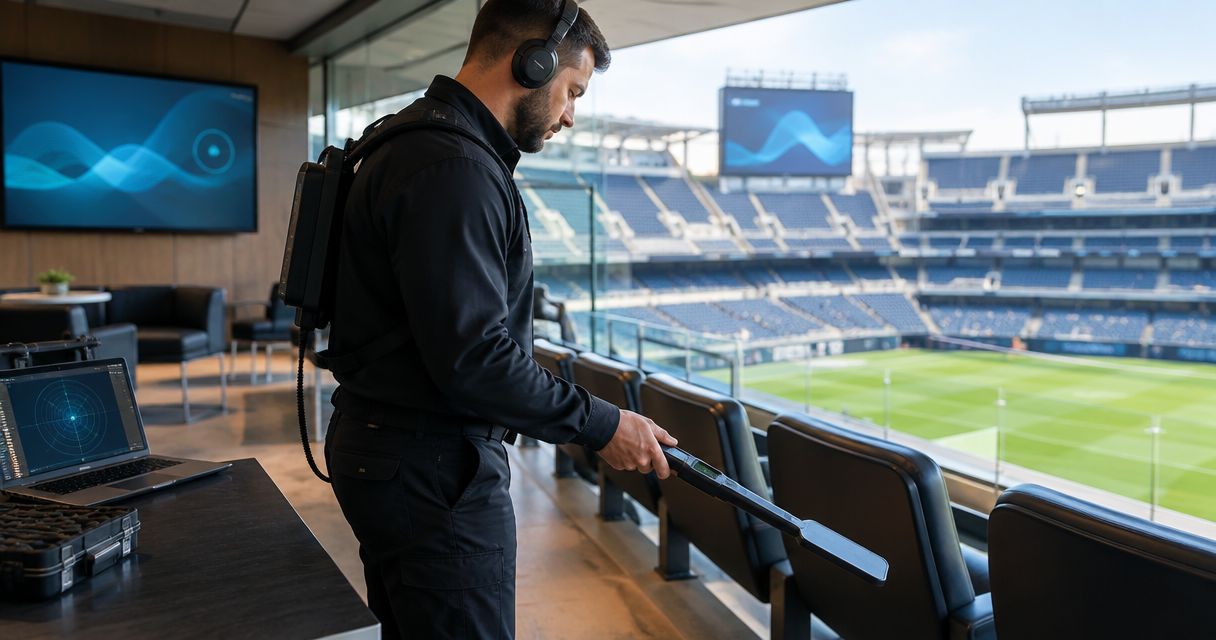
Bug sweep services for professional sports teams find hidden cameras, audio bugs, GPS trackers, and wiretaps in locker rooms, film rooms, team buses, and coaches' offices before that intel reaches an opponent, a bettor, or a reporter. Pro franchises face a different threat model than a homeowner or a retail store: leaked play calls, injury reports, and trade talks carry real financial stakes in the age of legalized sports betting.
- Bug sweep services for professional sports teams cover locker rooms, film rooms, buses, and road hotels, not just the front office.
- USA Bugsweeps runs full TSCM inspections that go beyond a $40 retail RF detector, which misses most stored-data devices.
- Sweep before the draft, before trade deadline meetings, and before every road trip when injury reports and game plans are most valuable.
- Skip the DIY-only route once the team handles confidential scouting data, contract talks, or players facing stalking risk.
Why bug sweep services matter for professional sports teams
A locker room conversation about a hamstring injury has direct value to a sportsbook. A coach's whiteboard photo has direct value to next week's opponent. A recorded contract negotiation has direct value to an agent or a rival team's front office. None of that requires a state actor — a disgruntled staffer, a credentialed vendor, or a determined bettor with a $30 spy camera can do real damage.
High-net-worth athletes and public-facing executives already show up on the counter-surveillance page for celebrities and high-net-worth clients, and the same exposure applies to a locker room full of players earning seven-figure salaries who travel constantly and give access to dozens of staff, vendors, and media members every week during the 2026 season.
Most teams treat security as physical: gates, credentials, cameras pointed outward. TSCM is the layer that checks what is pointed inward — a hidden microphone in a conference room, a GPS tracker on a team vehicle, a compromised Wi-Fi router in the practice facility. That gap is exactly where usabugsweeps.com does its work nationwide.
How to run bug sweep services for professional sports teams
Sweep the locker room and coaches' offices before sensitive meetings
Locker rooms and coaches' offices are the two rooms with the highest concentration of confidential talk in any franchise — injury status, game plans, personnel decisions.
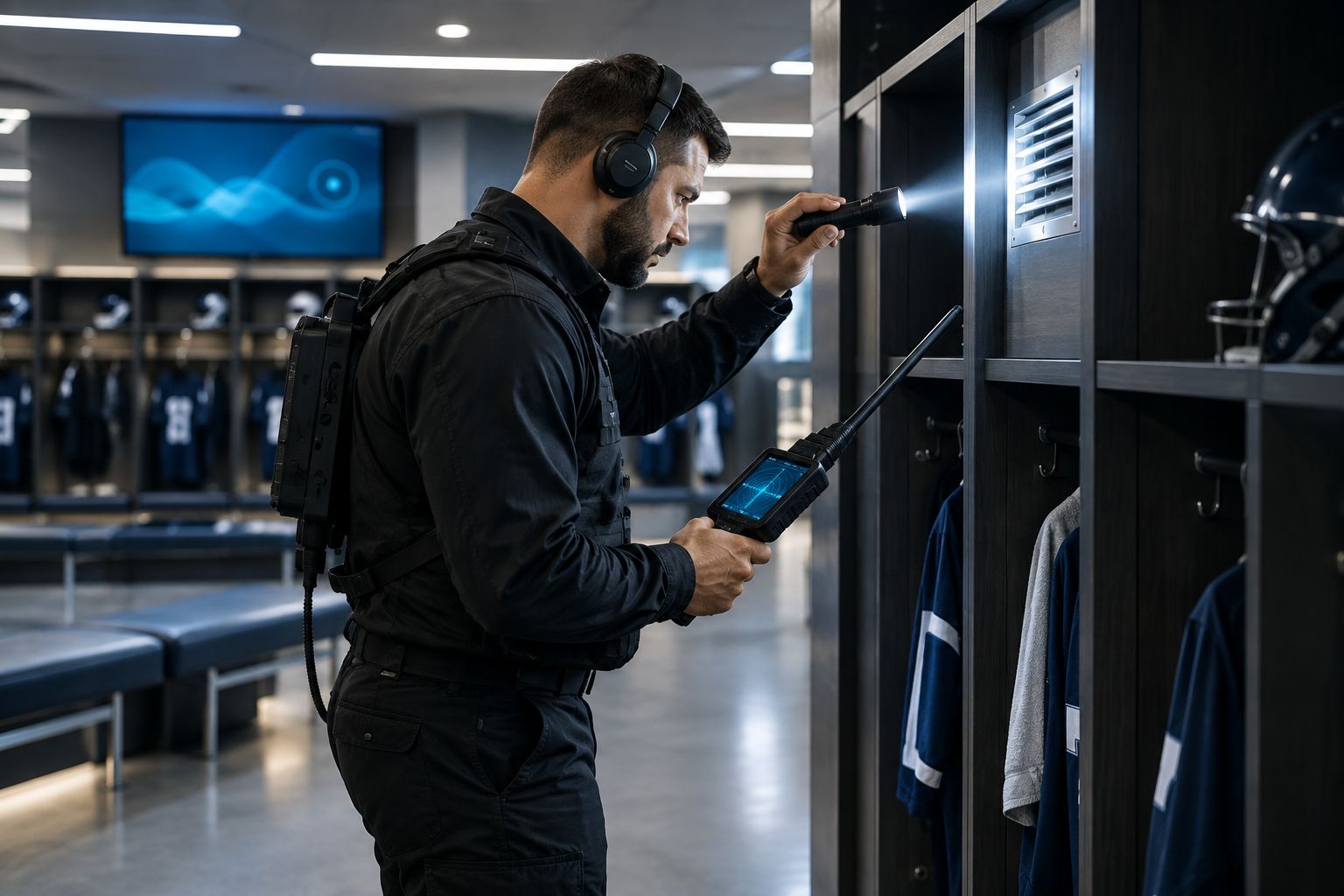
- Walk the room visually for anything that doesn't belong: new outlets, unfamiliar smoke detectors, decorative items with pinholes
- Check whiteboard walls, vent covers, and light fixtures for lens glints under a flashlight
- Pull and inspect any recently added furniture or equipment donated by outside vendors
- Physically unplug and inspect any device that was installed by a third-party contractor
- Log every device with network access — printers, smart TVs, speakers — and confirm who installed each one
Secure the film room and draft war room
The film room and the draft war room hold the most competitively sensitive material a franchise produces: opponent tendencies, scouting grades, trade boards. A leak here costs games, not just embarrassment.
- Restrict who has a key or badge to the war room during draft week and trade deadline week
- Check every AV component in the room — projectors, conference speakers, cable boxes — for unauthorized RF or Wi-Fi transmitters
- Cover or remove any smart assistant device before scouting meetings
- Confirm the room's network is isolated from the guest and vendor Wi-Fi
- Run a full TSCM sweep the morning of and after any major personnel decision meeting
This is the point where a manual walk-through stops being enough. A retail RF detector picks up active transmitters but misses devices that store footage locally and transmit nothing, which is common in cheap spy cameras sold for under $100. A professional sweep from a TSCM technician covers RF spectrum, hidden lens detection, and physical inspection in one visit — that's the gap USA Bugsweeps closes for teams that can't afford a scouting leak.
Check team buses, charter flights, and hotel rooms on road trips
Road trips move sensitive conversations outside the building the team actually controls. Team buses, charter planes, and hotel blocks are all spaces a franchise leases or borrows, not spaces it built and secured itself.
- Inspect team buses for devices attached under seats or in overhead compartments before each trip
- Request a swept or pre-checked hotel block when a franchise books recurring stays with the same property
- Check charter aircraft cabins, especially seatback pockets and galley areas, before boarding for high-stakes trips like conference finals
- Brief traveling staff to report any unfamiliar device left behind by hotel cleaning or maintenance crews
- Treat hotel meeting rooms used for pre-game strategy sessions the same as the home film room
Audit player and staff phones and smart devices
Players and staff carry personal phones loaded with texts, location history, and photos that a stalker, an ex-partner, or a leaker can exploit without ever entering the building.
- Check for unfamiliar apps, especially ones disguised as system utilities or battery tools
- Review battery drain and data usage spikes that suggest background tracking
- Confirm no unknown devices are paired via Bluetooth to a player's phone
- Have players and staff review the guidance on how to check your smartphone for hidden spyware as a first pass
- Escalate to a professional device audit for any player facing an active stalking or harassment situation
Inspect the front office and trade-negotiation spaces
Contract talks, trade calls, and front-office strategy sessions carry financial and competitive weight that rivals anything discussed on the field.
- Sweep the general manager's office and any dedicated negotiation room before trade deadline week
- Check conference phones and speakerphone units for tampering or added components
- Confirm VPN and network isolation for any device used during live trade calls
- Review how to secure a conference room from corporate espionage for the office-side version of the same threat
- Book a professional sweep immediately before and after any major trade or free-agent signing announcement
Monitor practice facilities for GPS trackers and drone surveillance
Open practices and outdoor facilities give outsiders a line of sight or a physical opportunity that indoor arenas don't.
- Check team vehicles parked at the facility for GPS trackers attached to the undercarriage
- Scan for drones during closed practices, especially in the week before a rival matchup
- Restrict facility access badges for vendors who service HVAC, landscaping, or catering
- Review perimeter fencing and camera blind spots with facility security, not just IT
- Rotate Wi-Fi credentials for guest and vendor networks each month during the season
Get a season sweep quote
Nationwide TSCM coverage for locker rooms, war rooms, and road trips.
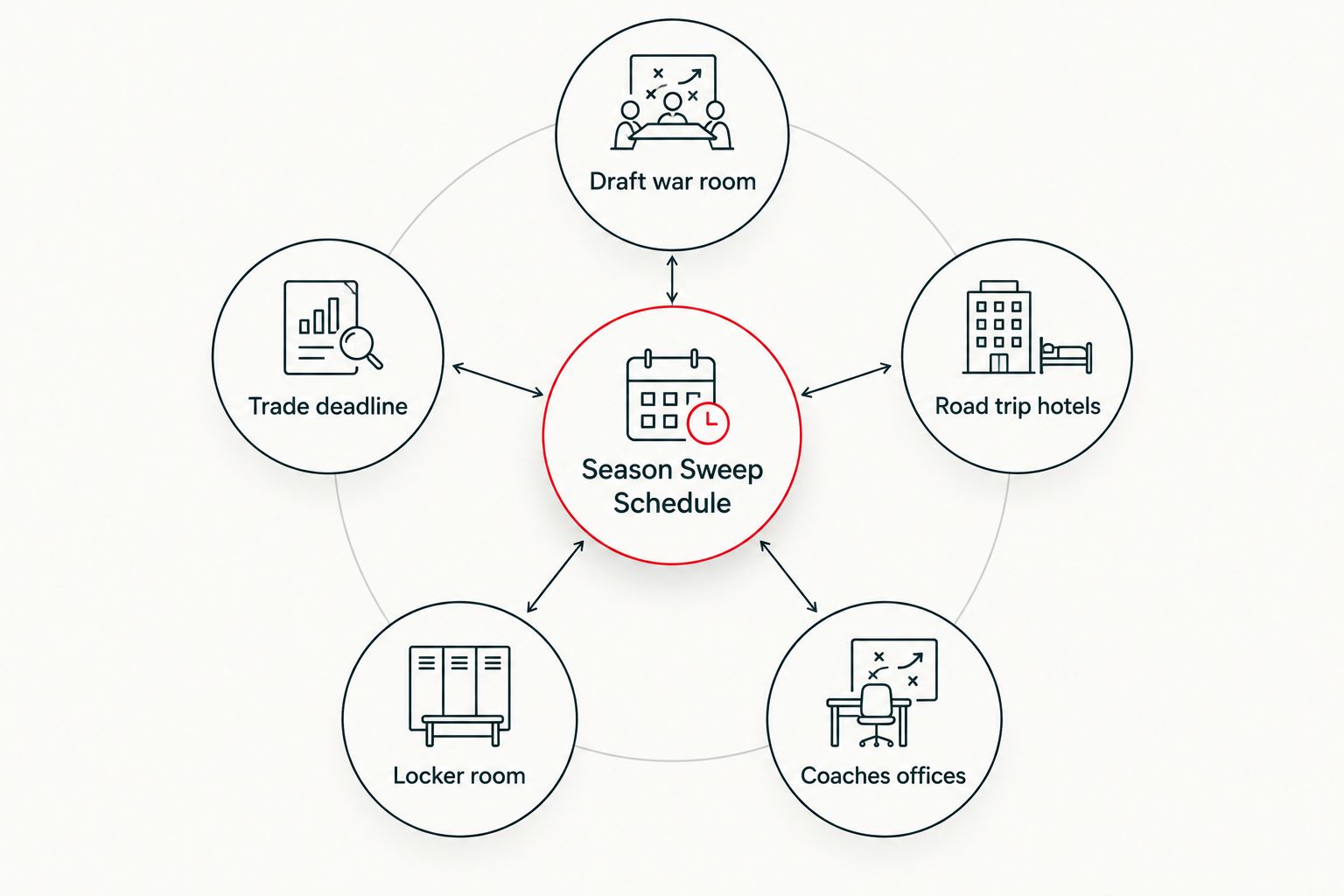
Establish a recurring sweep schedule for the season
A single sweep before the playoffs misses the draft, free agency, and every trade deadline that came before it.
- Schedule sweeps around four fixed points: pre-draft, trade deadline, before the playoff push, and after any major front-office turnover
- Add an unscheduled sweep any time a staffer is terminated or a major leak appears in the media
- Keep a written log of every sweep date and every device found, even minor ones
- Loop in bug sweep services for executive protection teams if the franchise already runs executive protection for ownership or top executives
Comparison: options for professional sports teams
| Option | Best for | Key limitation |
|---|---|---|
| Visual walk-through by security staff | Catching obvious tampering between games | Misses hidden lenses, RF transmitters, and stored-data devices |
| Retail RF detector | Quick check before a low-stakes meeting | Misses devices that don't actively transmit |
| IT network audit | Router and Wi-Fi compromise on team networks | Doesn't cover physical bugs, cameras, or GPS trackers |
| Professional TSCM sweep (USA Bugsweeps) | Draft rooms, locker rooms, trade negotiations, road trips | Requires scheduling ahead of high-stakes windows |
Verdict: a retail RF detector is fine for a quick gut check, but a franchise handling scouting reports, contract talks, and player safety needs a full TSCM sweep from USA Bugsweeps, not a $40 gadget from a hardware store.
Common mistakes professional sports teams make
- Sweeping the visiting locker room but never the home facility. Home staff, vendors, and long-term contractors have far more opportunity than a one-day visitor.
- Treating the draft war room as secure just because it has a badge reader. A badge stops unauthorized entry; it does nothing about a device already inside the walls.
- Assuming hotel security covers TSCM on road trips. Hotel staff check for theft and safety hazards, not hidden cameras or transmitters left by a previous guest or a targeted plant.
- Skipping player personal devices during a sweep. A compromised phone leaks a locker room conversation just as easily as a bug in the ceiling tile.
- Running one sweep a year instead of building it into the season calendar. Trade deadlines, free agency, and coaching changes each reset the risk.
FAQ
What do bug sweep services for professional sports teams actually check?
A full TSCM sweep for a sports team covers locker rooms, coaches' offices, film rooms, team vehicles, and road hotels for hidden cameras, audio bugs, GPS trackers, and compromised Wi-Fi. USA Bugsweeps runs this as a single visit that covers RF spectrum, physical inspection, and network checks together.
How often should a professional sports team sweep for bugs?
Sweep at four fixed points each season: before the draft, before the trade deadline, before the playoff push, and after any major front-office or coaching turnover in 2026. Add an unscheduled sweep any time a staffer is terminated or a leak shows up in the media.
Can a retail RF detector replace a professional TSCM sweep?
No. A retail RF detector only catches devices that actively transmit, and misses cameras or recorders that store footage locally. A professional TSCM sweep from USA Bugsweeps checks both transmitting and non-transmitting devices in one pass.
Do team buses and charter flights need to be swept too?
Yes. Buses and charter planes are spaces a franchise leases, not spaces it built and secured, which makes them a common blind spot on road trips. Sweep them before high-stakes trips like conference finals or playoff travel.
Is the draft war room a common target for bugs?
Yes. Draft war rooms hold trade boards and scouting grades that have direct competitive value to rival teams, which makes them a priority sweep location during draft week.
Should players have their personal phones checked too?
Players facing stalking, harassment, or contract disputes should have their phones audited for spyware alongside the facility sweep, since a compromised phone leaks the same information a hidden bug would.
Who handles bug sweeps for professional sports franchises?
USA Bugsweeps provides nationwide TSCM services covering franchise facilities, road travel, and executive-level counter-surveillance for team ownership and front-office staff.
What's the biggest mistake teams make with bug sweeps?
Running a single sweep before the playoffs and skipping the draft, free agency, and trade deadline windows where leaks carry the most competitive and financial risk.
One last thing
The highest-risk window for a professional sports franchise isn't game day, it's the 72 hours around a trade deadline or a coaching change, when front-office phones, negotiation rooms, and locker room morale conversations all spike at once. Schedule the sweep before that window opens in 2026, not after a leak already made the news.


