
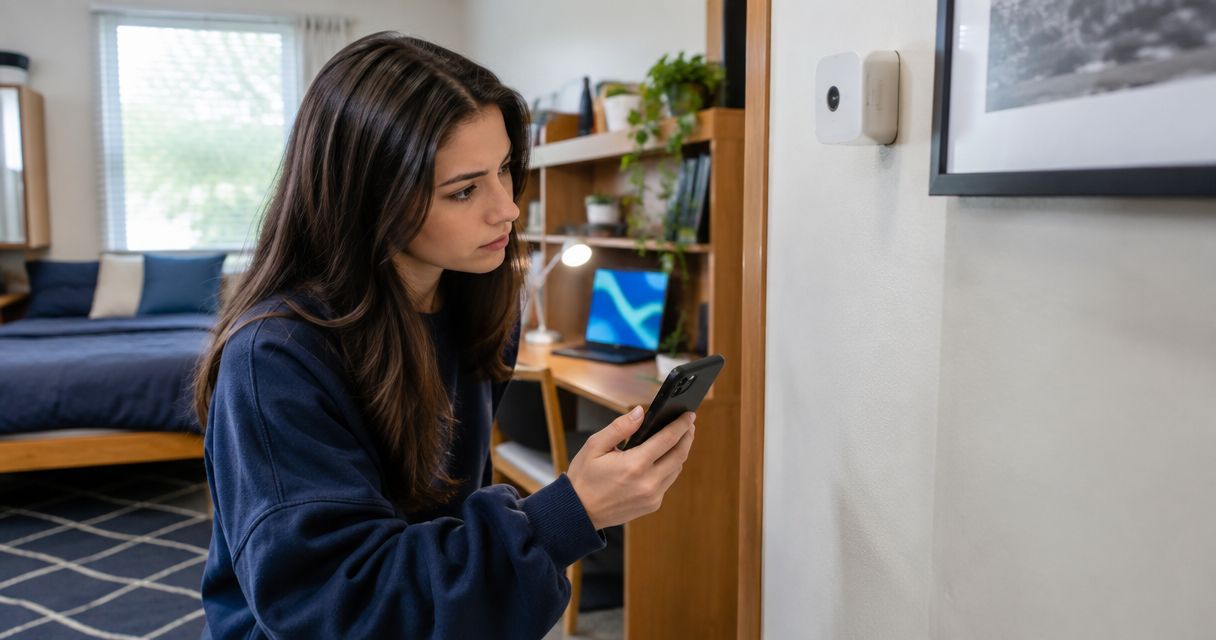
A fraternity or sorority house get checked for hidden cameras with a three-step process: a visual sweep of common hiding spots, an RF detector pass to catch cameras transmitting a signal, and a lens-reflection check with a flashlight or phone camera for cameras that record to internal storage. A visual and RF sweep catches most consumer-grade cameras, but battery-powered models that only record to an SD card show up only under lens-reflection or a professional TSCM sweep. Chapter houses see more hidden camera incidents than typical rentals because turnover is high, house rules rarely restrict who has access to bedrooms and bathrooms, and prior residents sometimes leave devices behind.
- Checking a fraternity or sorority house for hidden cameras takes a visual sweep, an RF detector pass, and a flashlight or phone-camera lens check.
- Smoke detectors, alarm clocks, power strips, and shower heads are the most common hiding spots in shared chapter housing.
- RF detectors only catch cameras actively transmitting - battery-powered SD card models need a lens-reflection check or a professional sweep.
- A professional TSCM sweep from USA Bugsweeps finds devices that consumer detectors miss, including dormant and hardwired cameras.
Why this matters
Chapter houses have more turnover, more shared bathrooms, and less individual control over who's had access to a room than a typical apartment. A pledge, an alumni visitor, or a house manager with a key can plant a device without anyone noticing for a semester. Unlike a hotel room that gets cleaned between guests, a fraternity or sorority bedroom might not get a real inspection between residents for years.
The same logic applies to any shared living situation with high turnover - it's worth comparing this to checking a college dorm room for hidden cameras, since dorms and chapter houses share the same risk profile: shared bathrooms, rotating occupants, and objects nobody questions.
How to check a fraternity or sorority house for hidden cameras
Work through these steps in order. Skipping the visual pass and going straight to an app or detector misses devices that don't transmit a signal.
- Scan the room in full light first. Look for anything that doesn't belong - a new alarm clock, an extra USB charger, a smoke detector mounted slightly off-center, a phone charger plugged in but not charging a phone.
- Check the usual hiding spots by hand. Smoke detectors, wall clocks, power strips, bookshelves facing the bed or shower, and air vents get used repeatedly because they're never questioned.
- Turn off the lights and do a flashlight sweep. Hold a flashlight at eye level and scan slowly - camera lenses reflect light back as a small, bright pinpoint, even from several feet away.
- Run an RF detector across the room. A wide-band RF detector picks up wireless cameras actively transmitting video, including ones hidden inside outlets or behind mirrors.
- Check your phone's camera for IR glow, if the room is dark. Some older infrared cameras show up as a faint purple or white dot through a phone's front camera, though this method misses most modern cameras.
- Inspect bathroom fixtures separately. Shower heads, vent covers, and towel hooks in shared bathrooms are common spots because they're rarely moved or cleaned thoroughly.
- If anything looks suspicious, don't touch it - photograph it and call a professional. Moving a device can alert whoever placed it, and it can compromise evidence if you need to report it.
Comparison: which method catches which type of camera
| Method | Catches wireless/transmitting cameras | Catches battery/SD-card cameras | Catches wired/hardwired cameras |
|---|---|---|---|
| Visual inspection | Sometimes | Sometimes | Rarely |
| Flashlight lens check | Yes | Yes | Yes, if visible |
| RF detector | Yes | No | No |
| Phone camera IR check | Older models only | No | No |
| Professional TSCM sweep | Yes | Yes | Yes |
Visual inspection: what to look for room by room
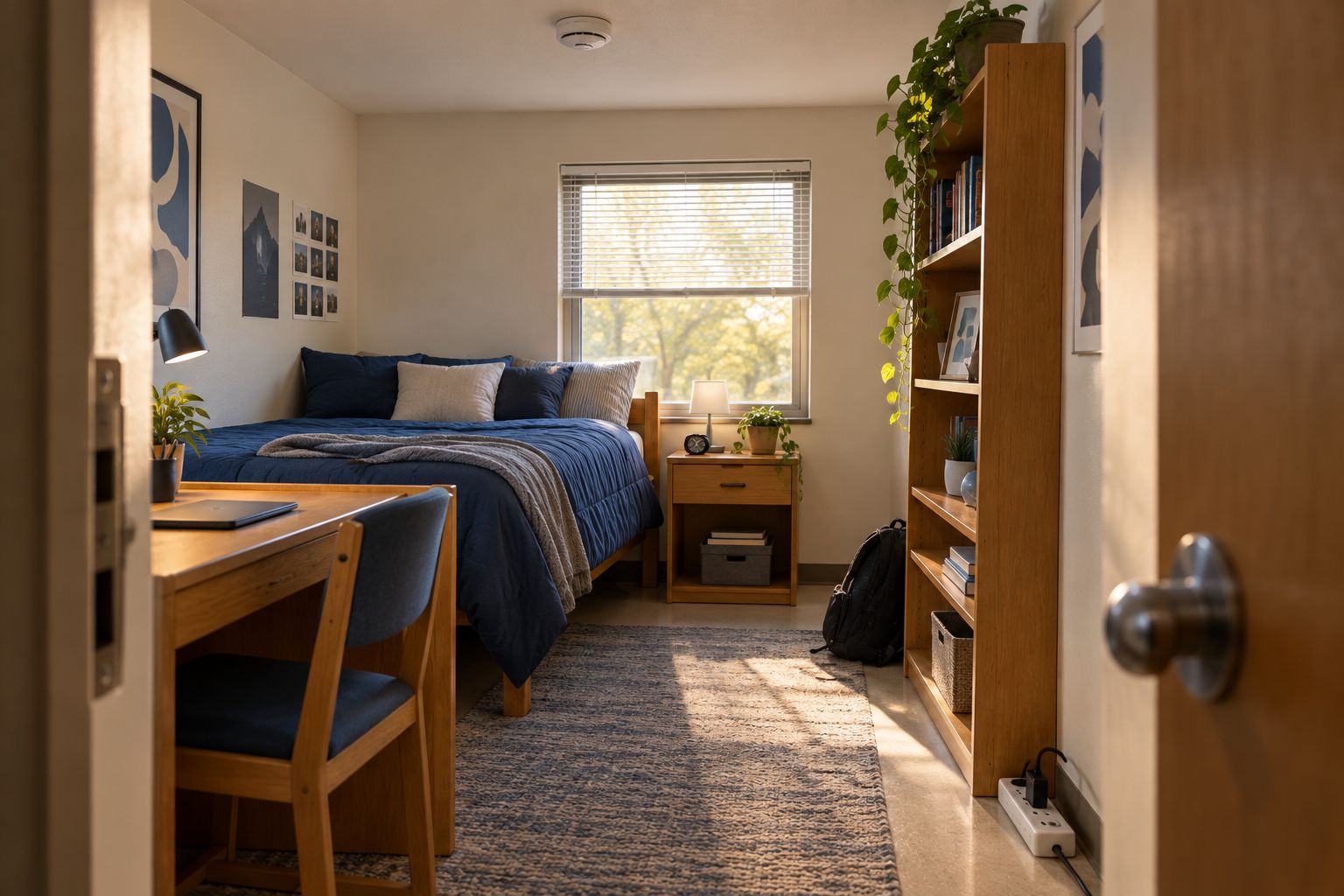
A visual inspection alone won't catch everything, but it rules out the most common and cheapest hidden cameras sold online - the ones built into everyday objects with a visible lens.
- Bedrooms: check smoke detectors, wall clocks, picture frames facing the bed, and any object angled toward a bed or dresser that wasn't there before.
- Bathrooms: check shower heads, exhaust vents, towel hooks, and any decorative item with a hole or mesh pattern.
- Common areas: check thermostats, router boxes, and bookshelves - cameras in group living spaces often target hallways or living rooms rather than bedrooms.
- Look for the tells: a device that's slightly crooked, an outlet that doesn't match the others in the room, or a wire that goes nowhere useful. A hidden camera in a smoke detector is one of the most common setups found in shared housing - the smoke detector camera guide covers what a swapped unit looks like compared to a real one.
RF detector sweep: what it does and doesn't catch
An RF detector picks up the radio frequency signal a wireless camera sends out, usually to a phone app or a receiver nearby. Sweep the room slowly, holding the detector a few inches from walls, ceiling fixtures, and furniture, and watch for a spike in signal strength.
The limitation matters more than the tool itself: an RF detector only finds a camera while it's transmitting. A camera set to record only when motion triggers it, or one that saves footage locally to an SD card instead of streaming, won't register at all. That's why RF detection is step four in the sequence above, not step one.
Phone camera and flashlight check: the low-cost backup method
Using a phone's camera to spot hidden cameras works by catching the faint glow some infrared-equipped cameras give off in a darkened room - a full walkthrough of the phone camera detection method explains which camera types this catches and which it misses.
The flashlight method is more reliable for daylight hours: point a bright flashlight at eye level across a dark or dim room and scan slowly for a reflective pinpoint. Camera lenses, even tiny pinhole ones, reflect light differently than the surrounding material.
Why hidden cameras show up more often in chapter houses
- High turnover: rooms change occupants every semester or year, and few chapters do a real inspection between residents.
- Shared bathrooms: multiple people use the same fixtures, which multiplies the number of spots worth checking.
- Wide access lists: house managers, cleaning crews, and alumni sometimes have keys or codes that current residents don't track.
- Hazing and pledge dynamics: some documented cases involve upperclassmen placing cameras targeting pledges or specific members.
- Low awareness: most residents assume a private bedroom in a house they pay rent for is actually private, so nobody checks until something feels off.
- Devices left behind: a camera installed by a former resident or guest doesn't always get removed when they move out.
Not sure what you found? Get it confirmed
A professional TSCM sweep finds dormant and hardwired devices consumer detectors miss.
Related questions
Can an RF detector find every hidden camera in a fraternity house?
No - an RF detector only finds cameras that are actively transmitting a wireless signal at the moment you sweep the room. Battery-powered cameras that record to an internal SD card instead of streaming footage won't trigger any detector, which is why a visual check and lens-reflection scan matter as much as the RF pass.
Is it legal to check your own room for hidden cameras in shared housing?
Yes - inspecting your own bedroom or bathroom for hidden cameras is legal in every state, since you're checking a space you have a reasonable expectation of privacy in. What you find and how you report it, especially in a shared chapter house, can trigger separate legal questions about who installed the device and why.
Where do hidden cameras most often get found in a fraternity or sorority house?
Smoke detectors, alarm clocks, power strips, and shower heads account for most hidden camera finds in shared housing, based on the object types most frequently repurposed as camera housings in reported cases. Bathrooms and bedrooms facing shared hallways see more incidents than common living areas.
Should I confront my roommate if I suspect they placed a camera?
Don't confront anyone before you've confirmed the device and photographed it in place - moving or removing it first can tip off the person responsible and weaken any report you make later. A step-by-step approach for this exact situation is covered in checking for hidden cameras from a roommate.
FAQ
How do you check a fraternity or sorority house for hidden cameras?
Check a fraternity or sorority house for hidden cameras with a visual inspection of smoke detectors, clocks, and power strips, followed by an RF detector sweep and a flashlight lens-reflection check in a darkened room. Battery-powered cameras that don't transmit a signal need a professional sweep to confirm.
What household objects hide cameras most often in shared housing?
Smoke detectors, alarm clocks, power strips, and shower heads are the most commonly repurposed objects for hidden cameras in shared housing like fraternity and sorority houses. Any object angled toward a bed, shower, or desk deserves a closer look.
Can a phone camera detect hidden cameras in a bedroom?
A phone's camera can detect older infrared-equipped hidden cameras as a faint glow in a fully darkened room, but it misses most modern cameras that don't use visible IR. A flashlight lens-reflection check and an RF detector sweep catch more devices than the phone camera method alone.
Is a hidden camera in a chapter house bathroom illegal?
Yes - placing a hidden camera in a bathroom or bedroom without consent violates privacy laws in every state, regardless of who owns or manages the house. Finding one should be reported to campus security or local police before the device is removed.
Do RF detectors work on cameras that record to an SD card?
No - RF detectors only pick up cameras actively transmitting a wireless signal, so a camera recording locally to an SD card without streaming footage won't register on an RF sweep. A visual and lens-reflection check, or a professional TSCM sweep, is needed to catch these.
How often should shared chapter house rooms get checked for hidden cameras?
There's no fixed schedule, but checking at the start of each semester and any time a room changes occupants covers the periods when chapter houses see the most turnover-related incidents. A quick visual and flashlight check takes under ten minutes.
What's the difference between a consumer RF detector and a professional TSCM sweep?
A consumer RF detector only catches actively transmitting wireless cameras, while a professional TSCM sweep uses spectrum analyzers and non-linear junction detectors to find dormant, battery-powered, and hardwired devices consumer tools miss entirely. Professional sweeps also document findings for reporting to campus security or police.
One last thing
The device most people overlook isn't the camera itself - it's the charger or power strip plugged into an outlet that isn't being used to charge anything. A fully charged phone sitting on a charger that's been plugged in for weeks is one of the more common tells reported in shared-housing camera cases, and it takes ten seconds to check compared to a full RF sweep. If a visual and flashlight check turns up nothing but something still feels off, a professional sweep from a TSCM technician checks for hardwired and dormant devices that consumer-grade detectors and phone apps can't see at all.


