
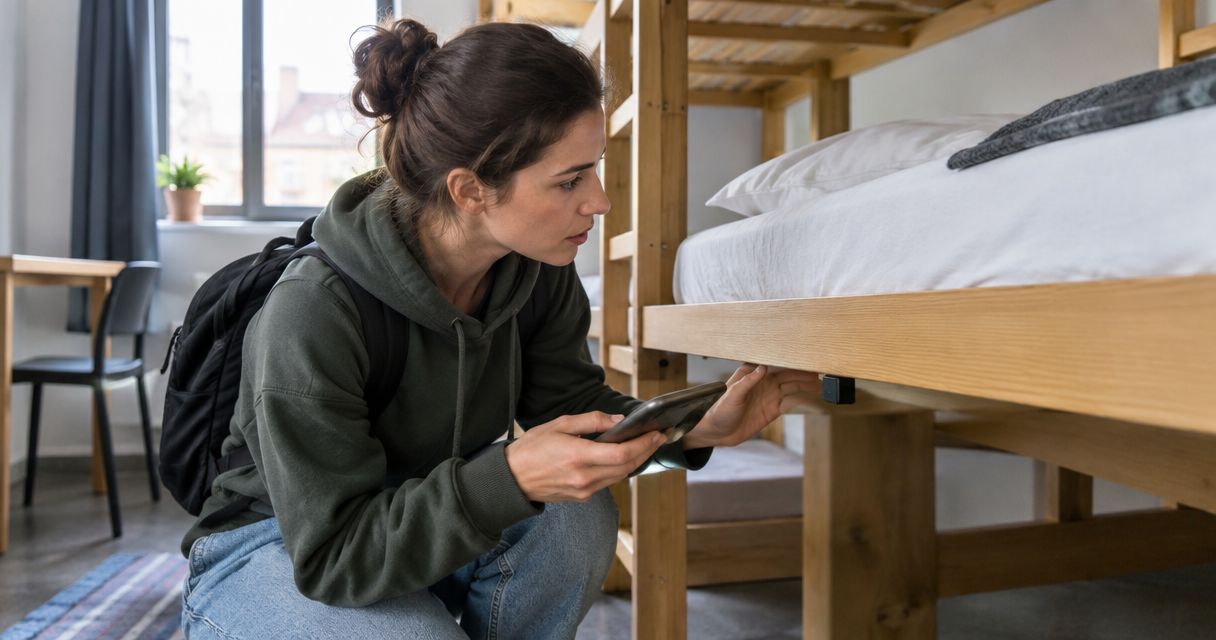
A hostel room hides more blind spots than a hotel room: bunk frames, shared lockers, communal outlets, and furniture that's been swapped between guests for years. Checking one for hidden cameras in 2026 takes five minutes with a flashlight and a phone, and a few more with an RF detector if you want to rule out wireless transmitters.
- Check a hostel room for hidden cameras by scanning smoke detectors, outlets, and alarm clocks first — the most common hiding spots.
- A flashlight in a darkened room reveals pinhole lenses as a bright reflective dot.
- Phone camera checks catch infrared LEDs that are invisible to the naked eye but visible on most rear camera sensors.
- An RF detector sweep is the only method that finds cameras with no visible lens, hidden behind fabric or drywall.
- Shared bunk rooms and communal bathrooms carry more hidden camera reports than private hotel rooms because turnover is higher and oversight is lower.
Why this matters
Hostels rent the same bed to a new stranger every night or two, sometimes for years without a full room teardown. That turnover creates opportunity: a device planted by a previous guest, a dishonest employee, or a property owner can sit undisturbed for months in a room nobody inspects closely. Budget hostels also skip the security audits that chain hotels run, so a hidden camera problem can persist far longer before anyone notices.
Bunk-style rooms add a second issue hotels don't have: shared sightlines. A camera aimed at one bed can capture three or four others in the same shot, and a device in a shared bathroom or shower stall affects every guest who uses it that week, not just one room's occupant.
How to check a hostel room for hidden cameras
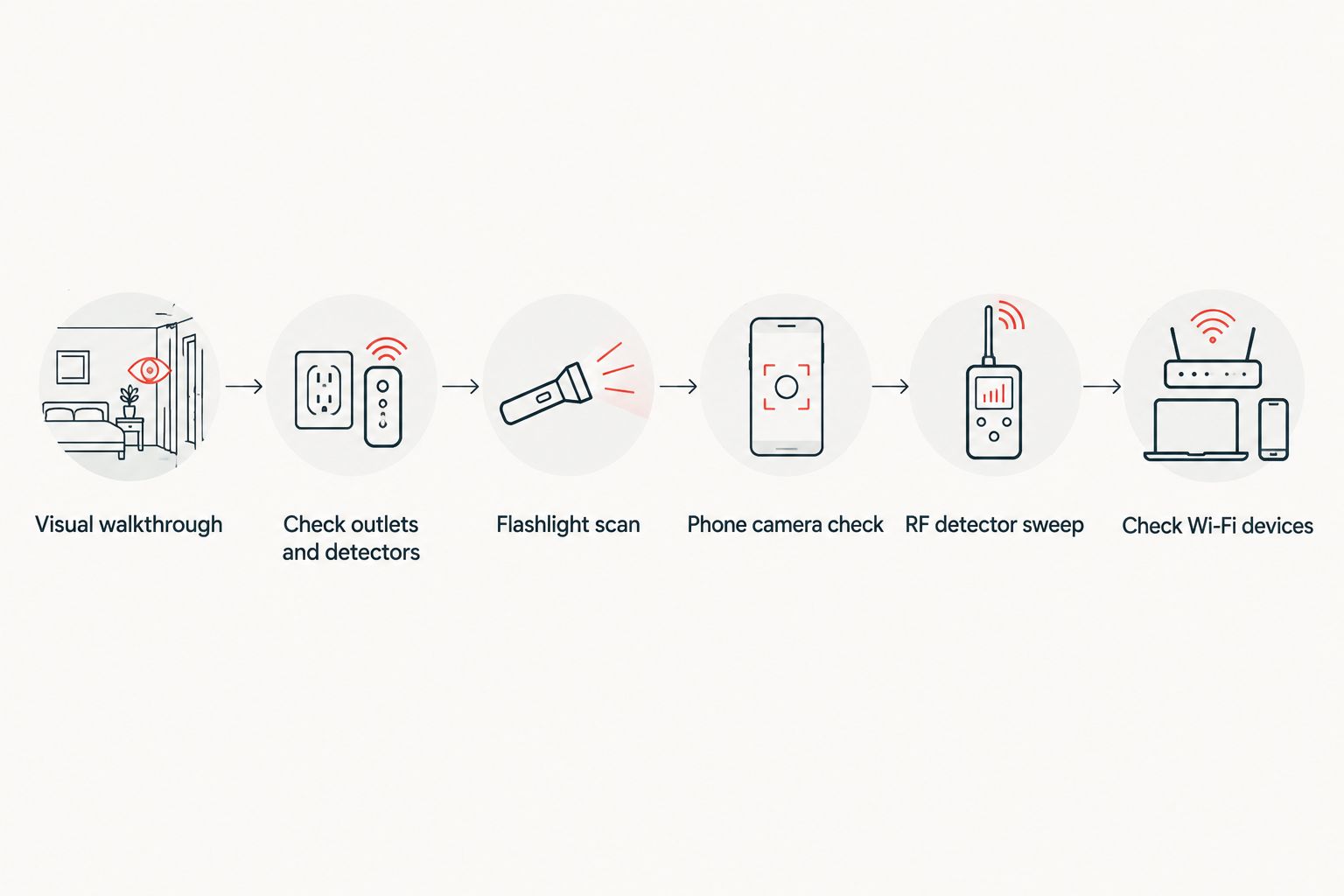
Work through these steps in order — each one catches a different category of device, and doing them in sequence takes under 10 minutes.
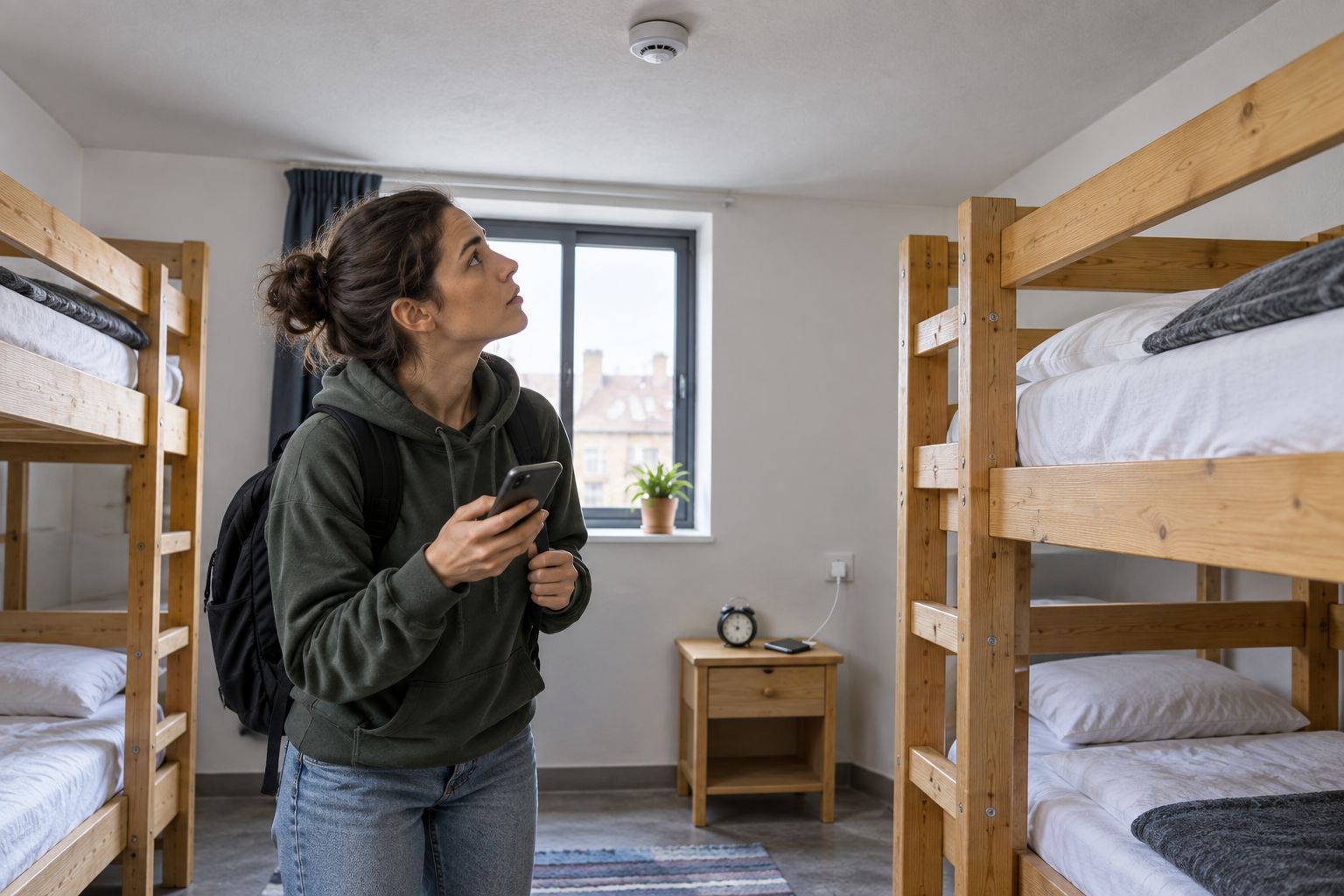
- Walk the room and note anything that doesn't belong. A new-looking smoke detector, an extra USB charger plugged into an outlet, a clock radio angled at the beds, or a screw hole that looks fresh on a wall fixture are all worth a second look.
- Open or unscrew common hiding fixtures. Smoke detectors, wall outlets, alarm clocks, and USB charging ports are the four most commonly reported hiding spots for pinhole cameras in shared accommodations.
- Kill the lights and scan with a flashlight. In a fully darkened room, sweep a flashlight beam slowly across walls, shelves, and furniture at eye level. A hidden lens reflects light back as a small, sharp, bright dot — similar to how a cat's eyes catch a flashlight beam.
- Use your phone's camera to check for infrared LEDs. Most rear phone cameras pick up infrared light that's invisible to your eyes. Point the phone at suspect objects in a dark room and look for a small purple or white glow on the screen — that's the tell for many cheap IR-equipped cameras.
- Run an RF detector across the room. A handheld RF detector picks up the wireless signal a camera transmits to a phone or storage device, which catches devices with no visible lens or hidden behind fabric, in a vent, or inside furniture upholstery.
- Check the room's Wi-Fi network if it's dedicated to your room. Some Wi-Fi-connected cameras show up as an unfamiliar device on a router's connected-devices list — worth a glance if the hostel gives you a private network name and password.
None of these steps require special training, but they do require patience — a fast once-over misses more than it finds. If a step turns up something suspicious and you're not confident identifying it, the same process used to sweep a hotel room for hidden cameras applies to a hostel room, since both share the same categories of hiding spots.
Where hidden cameras hide in hostel rooms
Hostel rooms differ from private hotel rooms in one key way: more shared furniture and fixtures touched by more people. That gives a hidden camera more places to blend in without looking out of place to a new guest who has no baseline for how the room normally looks.
- Bunk bed frames — a camera tucked into the corner joint or headboard of an upper bunk gets a downward view of the beds below.
- Smoke detectors and ceiling fixtures — a common spot because nobody questions a smoke detector's presence, and most guests never look up.
- Wall outlets and USB chargers — outlet-style cameras plug in like a normal charger and record continuously while looking functional.
- Alarm clocks and shelf decor — small objects placed near the bed at eye level give a camera a clean, stable shot of the room.
- Locker doors and shared storage units — less about recording the room and more about capturing PINs or combinations as guests open lockers.
- Shared bathroom and shower fixtures — vents, shower caddies, and toiletry shelves are recurring hiding spots reported in shared bathroom facilities.
Why hostel rooms end up targeted
A few structural factors make hostels a more common setting for hidden camera reports than private rentals:
- High guest turnover means a device can go unnoticed across dozens of check-ins before anyone flags it.
- Shared spaces — dorm rooms, bathrooms, and common areas — multiply how many people a single device can capture.
- Lower security budgets at budget-tier properties mean fewer routine inspections between guests.
- Staff and cleaning access to every room and locker creates more opportunity than a single-key private rental.
- Furniture and fixtures get reused across renovations without anyone checking what's been added to them.
- Guests rarely inspect rooms closely on a short stay, which is exactly the gap a hidden device relies on.
Not sure what you found?
A professional TSCM sweep confirms or rules out hidden devices with certainty.
Can a phone camera actually detect hidden cameras?
A phone camera can detect infrared LEDs used by many budget hidden cameras, but it won't catch every device. It works best in a fully darkened room, aimed directly at suspect objects, and it misses cameras that don't use infrared illumination — which is why it's a screening step, not a final answer.
Is it legal for a hostel to have cameras in guest rooms?
Recording guests in private spaces like sleeping areas, bathrooms, and shower stalls is illegal in the United States regardless of property type. Cameras in genuinely common areas like lobbies or hallways are generally permitted, but a lens aimed into a bunk room or bathroom crosses that line.
What should I do if I find a hidden camera in my hostel room?
Don't unplug or destroy it — leave it in place, photograph it from a distance, and contact hostel management and local law enforcement immediately. Preserving the device intact matters if it becomes evidence in a police report.
FAQ
How do I check a hostel room for hidden cameras without any equipment?
Check a hostel room for hidden cameras without equipment by inspecting smoke detectors, outlets, and alarm clocks by hand, then scanning the darkened room with a flashlight for a reflective lens. This catches most visible-lens devices but misses cameras hidden behind fabric or drywall.
Do hidden camera detector apps actually work in a hostel room?
Detector apps that use your phone's magnetometer or camera can flag some devices, but they produce frequent false positives from metal bed frames and lighting fixtures common in hostels. Treat an app result as a starting point, not a confirmation.
Where do hidden cameras most often get found in hostels?
Smoke detectors, wall outlets, USB chargers, and alarm clocks are the most commonly reported hiding spots in hostel dorm rooms and shared bathrooms in 2026.
Can an RF detector find every hidden camera in a hostel room?
An RF detector finds cameras actively transmitting a wireless signal, but it won't detect a device recording to internal storage with no active transmission. Combining an RF sweep with a physical and flashlight check covers both categories.
Is a shared hostel bathroom more likely to have a hidden camera than a private bathroom?
Shared bathrooms get more hidden camera reports because a single device can capture multiple guests across a stay, giving whoever placed it more footage per device than a private bathroom would.
Should I move rooms if I suspect a hidden camera in a hostel?
Yes, request a room change or full refund immediately if you find or strongly suspect a device, and report it to staff and local authorities before you leave the property.
How much of the room should I check before I feel safe staying?
Cover every fixture within view of the beds and the bathroom — smoke detector, outlets, alarm clock, and any decor at eye level — since these account for the majority of reported hostel hidden camera cases.
One last thing
Most hidden cameras found in shared accommodations aren't sophisticated — they're cheap, off-the-shelf devices placed by someone who assumed nobody would check the smoke detector. That's the good news: a flashlight, a phone, and five minutes of deliberate looking catch the overwhelming majority of them before you ever need professional equipment.


