
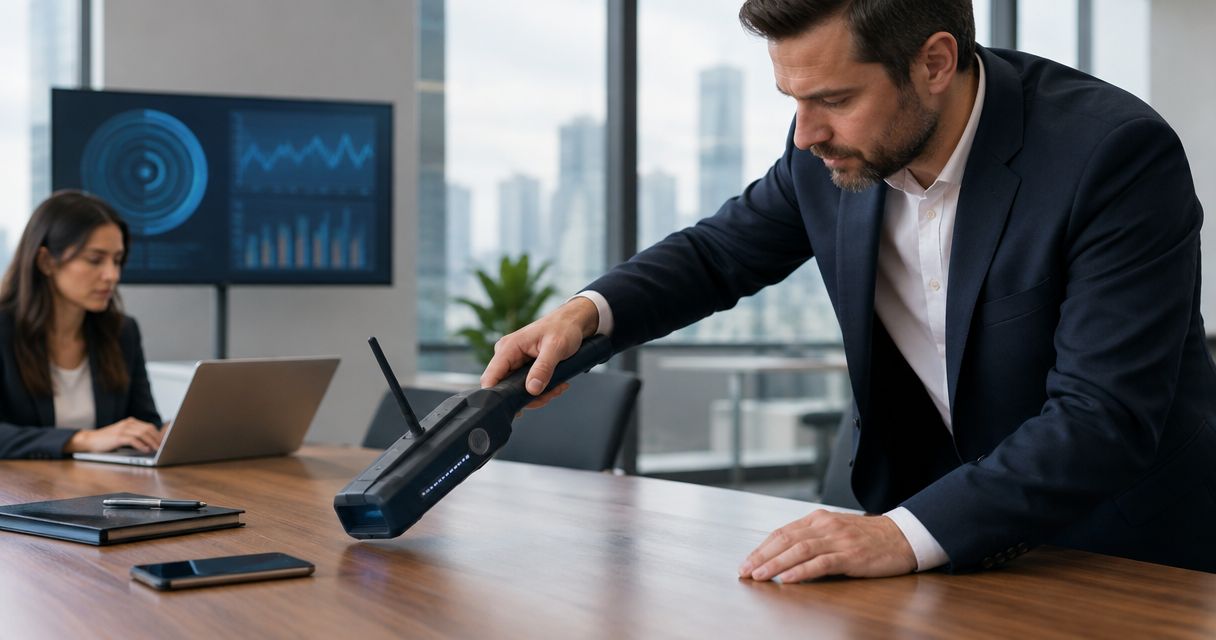
Venture capital and private equity firms handle deal terms, valuations, and LP data that are worth more to a competitor or bad actor than almost anything discussed in a typical corporate office, which is exactly why TSCM sweeps for venture capital and private equity firms have become a standard line item during active due diligence in 2026. A fund's biggest exposure isn't the front door — it's the boardroom where a term sheet gets negotiated, the conference line used for an LP update, or a portfolio company's office visited mid-diligence.
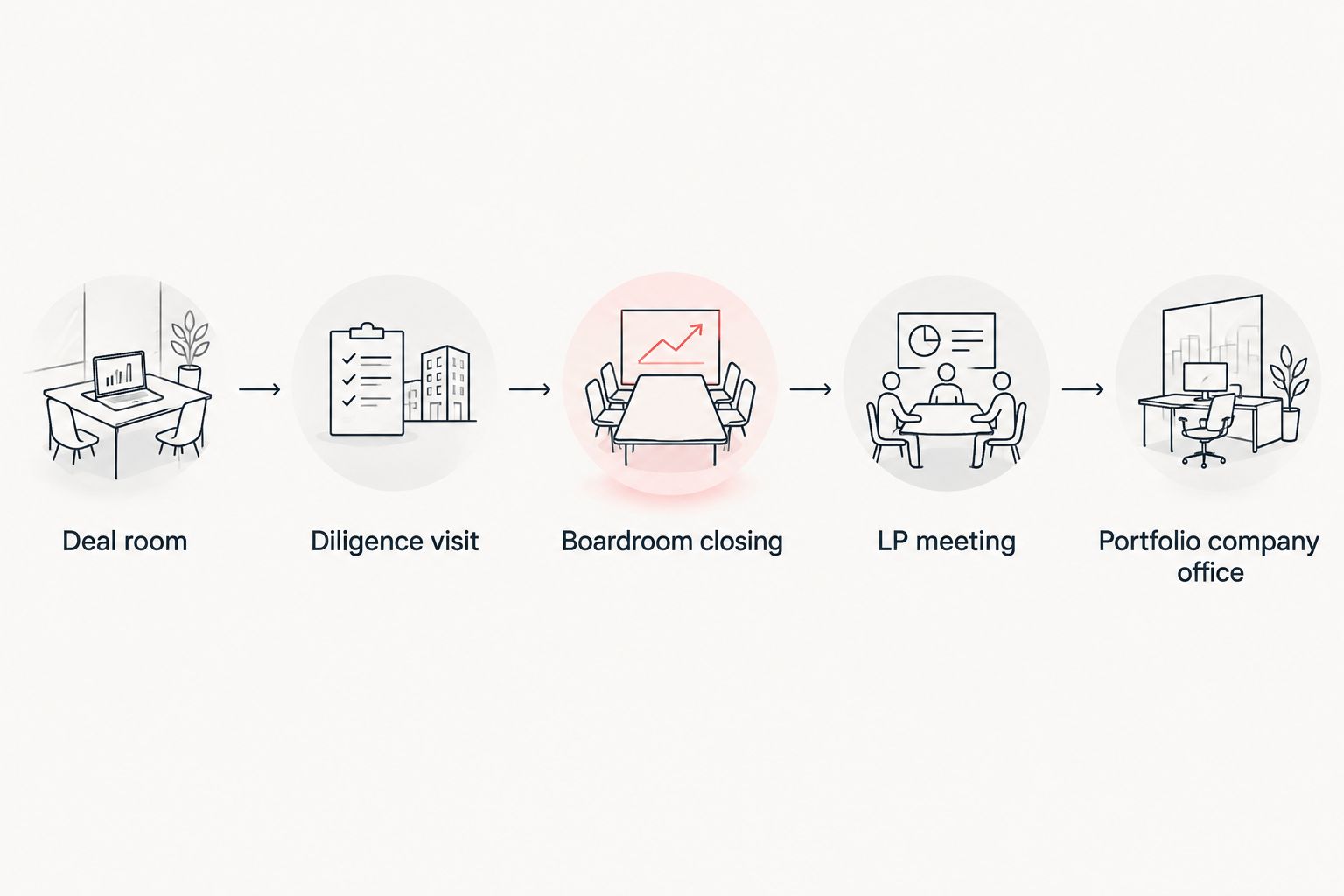
- TSCM sweeps for venture capital and private equity firms should run before every closing, LP meeting, or on-site diligence visit, not just once a year.
- USA Bugsweeps treats deal rooms, portfolio company offices, and phone systems as three separate sweep zones with different risk profiles.
- A recurring TSCM retainer beats a one-time sweep for firms running more than a few live deals per quarter.
- Consumer RF detector apps catch almost nothing that matters in a boardroom-grade wiretap or hidden microphone scenario.
Why TSCM sweeps matter for venture capital and private equity firms
A fund's information advantage is its entire business model. Term sheets, cap tables, LP capital commitments, and undisclosed acquisition targets all move through conference rooms, video calls, and shared conference lines before they're public — and every one of those touchpoints is a place a hidden microphone, GPS tracker, or compromised phone system can sit undetected for months.
Deal rooms get used by outside counsel, bankers, and portfolio company executives who aren't your employees and whose devices you don't control. A TSCM sweep for venture capital and private equity firms isn't about paranoia — it's about closing the gap between who's in the room and who you actually trust. Firms running frequent diligence calls or handling contested M&A situations carry a materially higher risk profile than a single-office startup, and the sweep cadence should reflect that.
Update your deal-room protocol before every closing
The room where a term sheet gets signed or a competitive bid gets discussed is the single highest-value target in a fund's physical footprint. Treat it as a checkpoint, not a background assumption.
- Sweep any room used for a closing, LP update, or contested negotiation within 24 hours of the meeting
- Re-sweep after cleaning crews, IT vendors, or outside contractors have had unsupervised access
- Check phones, smart displays, and conference bridge hardware in the room, not just the walls and furniture
- Confirm who had physical access to the room since the last sweep and log it
- Flag rented or shared conference space (law firm offices, executive suites) as higher-risk than your own office
Audit devices carried into diligence meetings
Due diligence brings outside parties — bankers, lawyers, target-company executives — into rooms where your fund's strategy gets discussed out loud. Their devices are a blind spot you can manage with policy before it becomes a technical problem.
- Require phones and recording devices to be placed in a separate room or a signal-blocking pouch during sensitive sessions
- Ask visiting parties to disable smart speakers or voice assistants they've brought along
- Restrict USB drives and unregistered laptops from connecting to conference room displays
- Note any gift, promotional item, or hardware left behind by an outside party for later inspection
- Screen any device a portfolio company representative brings on-site before it's near a live deal conversation
A one-time device policy stops the obvious risks. It doesn't catch a bug that's already embedded in the room's own wiring or furniture, which is where a professional TSCM sweep for corporate boardrooms picks up where a device policy leaves off.
Secure conference rooms and boardrooms used for negotiations
Boardrooms hosting M&A negotiations or partner meetings deserve sweep coverage tied to the deal calendar, not a generic annual schedule.
- Sweep the room immediately before a scheduled negotiation session, not days in advance
- Check for RF transmissions across the full spectrum, not just Wi-Fi and Bluetooth bands
- Inspect furniture, wall outlets, and lighting fixtures where passive audio devices commonly get planted
- Verify the conference phone system hasn't been reconfigured to auto-answer or forward calls
- Document the sweep with a written report the deal team can reference if something surfaces later
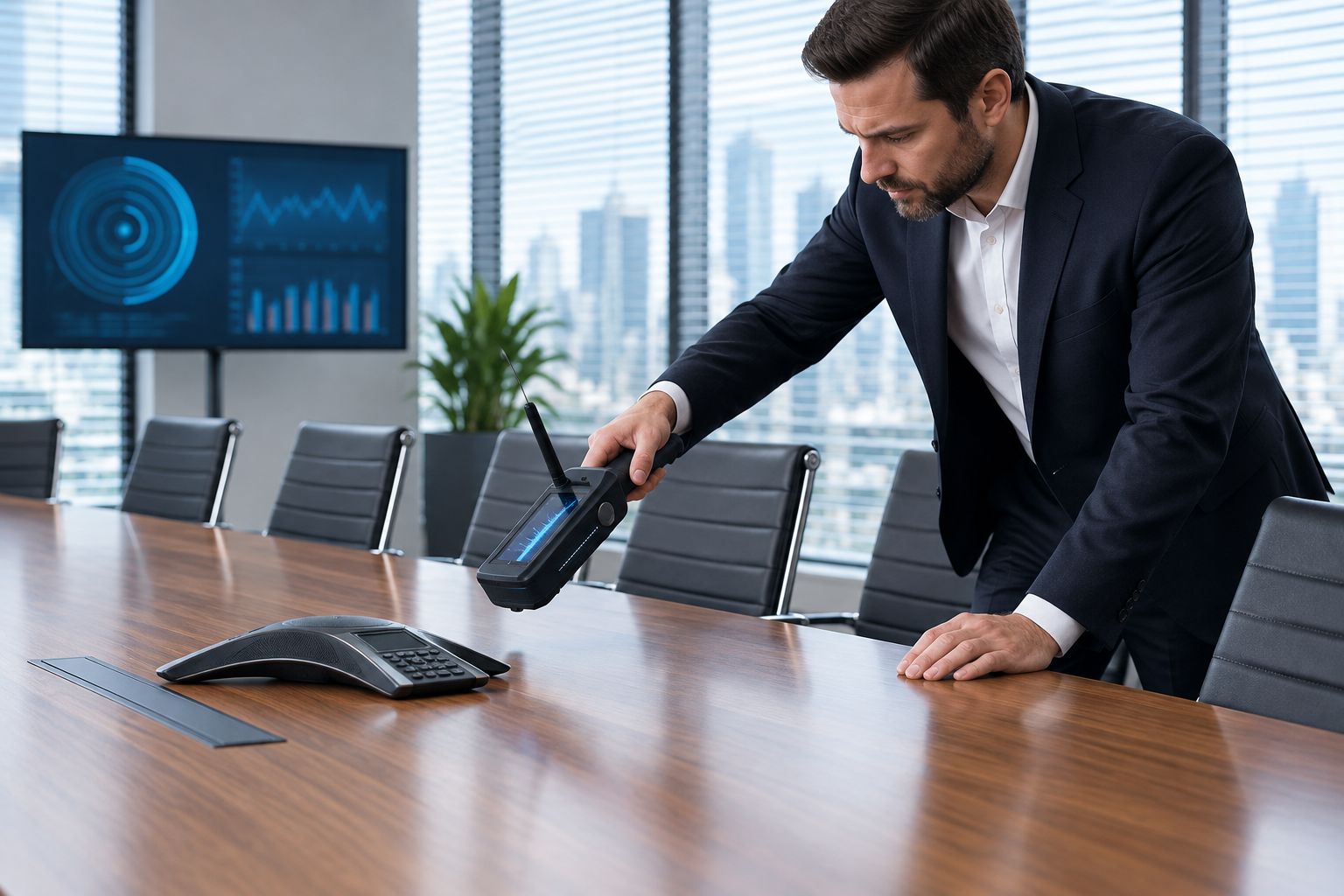
Screen portfolio company sites during active diligence
A fund's exposure doesn't stop at its own address. Once diligence starts, a portfolio company's office becomes an extension of the deal room, and it's rarely been swept before.
- Request a sweep of the target company's main conference room before on-site management interviews
- Check server rooms and network closets if the deal involves IP or trade secret review
- Screen executive offices where cap table or valuation discussions will happen with the target's leadership
- Flag any recent turnover among the target's IT or facilities staff as a reason to sweep before, not after, the visit
- Extend the same check to any co-working or shared office space the target uses
Tech-heavy portfolio companies carry their own version of this risk long before a fund gets involved — the same logic behind bug sweep services for tech startups protecting trade secrets applies just as directly to the fund evaluating them.
Protect financial data and cap table conversations
Valuation models, cap tables, and LP capital calls move through phone systems and video conferencing tools that most funds never audit for tampering.
- Confirm VOIP and conference bridge lines haven't been rerouted or duplicated to an unknown extension
- Check for unauthorized call-forwarding rules on partner and analyst phone lines
- Sweep any physical trading floor or capital markets desk on the same schedule as the boardroom
- Review video conferencing hardware in partner offices for unregistered microphones or cameras
- Treat LP data rooms the same as deal rooms — same sweep frequency, same access logging
Financial firms and trading floors face a version of this exposure daily, and the same detection approach used in bug sweeps for financial firms and trading floors applies to a fund's capital markets activity.
Build a recurring sweep schedule tied to deal cycles
An annual sweep misses the actual risk window, which is concentrated around active deals, not spread evenly across the calendar year.
- Set sweep triggers around closings, LP annual meetings, and contested M&A negotiations rather than a fixed calendar date
- Increase frequency for funds running more than a handful of live deals per quarter
- Re-sweep any space after a departing employee, contractor, or vendor had access
- Keep a written log of every sweep date, room, and finding for compliance and insurance purposes
- Coordinate sweep timing with outside counsel so diligence calls happen in verified-clean rooms
Comparing TSCM options for venture capital and private equity firms
| Option | Best for | Key limitation | Verdict |
|---|---|---|---|
| Consumer RF detector app | A solo GP doing a quick pre-call check | Misses baseband transmitters and passive audio devices, no written report | Skip for deal-critical rooms |
| One-time professional TSCM sweep | A single closing, LP meeting, or contested negotiation | No coverage once the room is used again after the sweep | Buy for one-off high-stakes events |
| Recurring TSCM retainer | Funds running frequent diligence calls or multiple live deals | Requires ongoing scheduling and coordination with the deal team | Buy for active deal flow |
| In-house security staff without TSCM training | Large funds with an existing physical security team | Rarely trained on RF spectrum analysis or wiretap detection specifically | Hold — pair with a certified TSCM provider |
A recurring TSCM retainer beats a one-time sweep for any fund closing more than a few deals a year — the risk resets the moment a new party walks into the room.
Common mistakes venture capital and private equity firms make
- Sweeping the main office once and assuming it covers every rented or shared conference room used for closings
- Skipping the sweep on outside counsel's office or a bank's conference room because it's not the fund's own space
- Overlooking devices and gifts exchanged with a target company's executives during diligence dinners and site visits
- Treating a portfolio company's office as out of scope even after the fund holds a board seat and discusses sensitive strategy there
- Relying on IT staff to catch physical bugs when their expertise is network security, not RF spectrum analysis or wiretap detection
Schedule a TSCM sweep before your next closing
Deal rooms, boardrooms, and portfolio company offices, screened before the room gets used.
FAQ
What is a TSCM sweep for venture capital and private equity firms?
A TSCM sweep for venture capital and private equity firms is a technical inspection of deal rooms, boardrooms, and phone systems for hidden microphones, cameras, GPS trackers, and wiretaps. It's typically scheduled around closings, LP meetings, and active diligence visits rather than on a fixed annual calendar.
How often should a PE firm sweep its offices for bugs?
Firms running frequent diligence calls or multiple live deals per quarter should sweep before every closing, LP meeting, and contested negotiation. A firm with lighter deal flow can tie sweeps to major events instead of a fixed schedule.
Do VC firms need to sweep a portfolio company's office?
Yes, once diligence starts or a fund holds a board seat, the portfolio company's conference room and executive offices become part of the fund's own risk exposure. A sweep before on-site interviews or board meetings covers that gap.
Is a wiretap on a phone system a real risk for investment firms?
Yes — VOIP and conference bridge lines can be rerouted or duplicated without obvious signs, which is why phone systems get checked during a TSCM sweep alongside physical rooms. Financial firms and trading floors face the same exposure on their call lines.
What's the difference between an RF detector app and a full TSCM sweep?
A consumer RF detector app scans a narrow slice of the spectrum and misses passive bugs and baseband transmitters entirely. A full TSCM sweep uses spectrum analysis equipment and physical inspection to cover the gaps an app can't detect.
Can hidden cameras or trackers show up in a fund's own office?
Yes, particularly after cleaning crews, IT vendors, or departing employees have had unsupervised access. Any room used for sensitive calls should be re-swept after that kind of access, not just on a fixed schedule.
Should outside counsel's conference room be swept before a closing?
Yes — a rented or shared conference room used for a closing carries the same risk as the fund's own boardroom, and it's rarely been swept before the fund arrives. Treat it as part of the deal room, not outside the fund's scope.
What does a professional bug sweep typically involve?
A professional sweep combines RF spectrum analysis, physical inspection of furniture and fixtures, and a check of phone and network hardware, followed by a written report of findings. The full process is covered in what to expect during a professional TSCM bug sweep.
One last thing
The highest-risk moment in a fund's calendar isn't the office lease renewal or the annual security review — it's the 48 hours around a closing, when outside counsel, bankers, and a target company's executives are all in the same room your fund controls. Tie the sweep schedule to the deal calendar, not the fiscal year, and 2026's closing season stops being a guessing game.


