
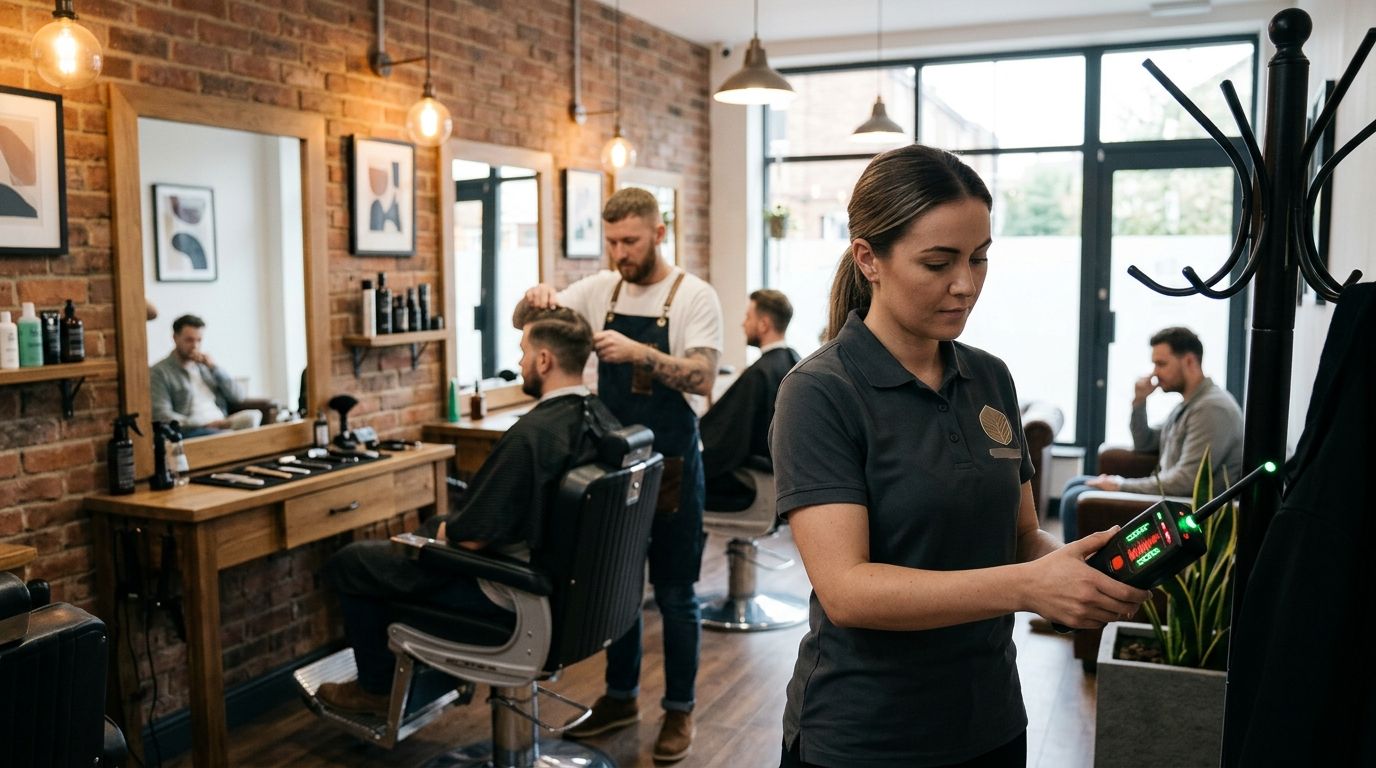
Hidden camera detection for hair salons and barbershops means physically and electronically sweeping treatment rooms, restrooms, color-processing stations, and staff break areas for pinhole cameras, wireless transmitters, and audio bugs, with the goal of protecting client privacy and shielding the shop from liability. Salons carry a specific risk profile most retail businesses don't: private rooms where clients change, get waxed, or sit exposed under a cape, plus high employee turnover and shared Wi-Fi that outside sweeps for offices or warehouses don't need to account for.
- Hidden camera detection for hair salons and barbershops starts with a lights-off visual sweep of changing rooms, restrooms, and waxing suites, not the lobby.
- Smoke detectors, wall outlets, and decorative clocks near client chairs are the most common hiding spots reported in salon and spa camera cases.
- A phone-based RF scan catches active wireless transmitters; a professional TSCM sweep from USA Bugsweeps catches ones that are off or hardwired.
- Re-sweep after every stylist or staff departure in 2026 - turnover is the single biggest trigger for planted devices in this industry.
Why hidden camera detection matters for hair salons and barbershops
Salons and barbershops put clients in a uniquely exposed position for a retail business: capes come off in private rooms, clients change for extensions or scalp treatments, and waxing suites require full privacy by design. That combination of vulnerability and foot traffic is exactly what makes these spaces a target, and it's why gym and spa owners face the same exposure from locker rooms and private treatment rooms.
Most states classify recording someone without consent in a space where they have a reasonable expectation of privacy - a changing area, a waxing room, a restroom - as a criminal offense under voyeurism statutes, and shop owners can face civil liability even when they didn't plant the device themselves. A device found by a client, not by staff, is the worst-case outcome: it turns into a lawsuit, a review, and a local news story in the same week.
Staff turnover compounds the risk. A stylist or barber who's leaving on bad terms, a booth renter who's had access to a private room for months, or a client who books the same suite repeatedly are all more plausible sources of a planted device than a stranger walking in off the street. Sweep after every departure, not just when something feels wrong.
Step-by-step: sweep your salon or barbershop
Walk the space with the lights off
A lens - even a pinhole lens - reflects light differently than the surface it's hidden in. This costs nothing and takes 10-15 minutes per room.
- Use a flashlight held at a low angle and scan slowly across every surface
- Check mirrors first; two-way mirrors and camera-behind-mirror setups are common in private suites
- Look at eye level and above - most hidden cameras are mounted to see the whole chair or table
- Repeat in every private room, not just the one currently in use
- Do this monthly, and always after any renovation or new furniture delivery
Check high-turnover fixtures
Outlets, smoke detectors, and decor items get swapped constantly in a working salon, which makes them easy places to plant a device without anyone noticing.
- Inspect wall outlets and USB chargers near client chairs for anything that looks slightly bulkier than standard
- Check smoke detectors and any air fresheners mounted near the ceiling
- Look inside or behind wall clocks, plants, and picture frames in private rooms
- Check charging stations and phone holders left near the chair for clients
- Flag anything installed by a vendor or contractor you didn't personally hire
Scan for wireless signals
Most consumer-grade hidden cameras transmit over Wi-Fi or Bluetooth, which means they're detectable with an RF signal detector even when you can't spot them visually.
- Run a handheld RF detector slowly through each private room, holding it close to walls and fixtures
- Note any signal spike near outlets, vents, or decor and investigate the source physically
- Turn off your own devices first so you're not chasing your own phone's signal
- Check the best RF detectors for professional bug sweeping if you're buying your first unit
- Repeat the scan at a different time of day - some devices only transmit on a schedule
Audit your Wi-Fi network
Cameras that store footage locally won't show up on an RF scan, but ones that stream to an app need your network - and a lot of salons never check who's connected.
- Log into your router admin panel and list every connected device
- Flag anything unnamed or unfamiliar and disconnect it immediately
- Change your Wi-Fi password after any staff departure or booth renter turnover
- Set up a separate guest network so client devices never touch your main network
- This matters as much for salons as it does for protecting your home Wi-Fi router from compromise
Inspect private treatment rooms specifically
Waxing suites, extension rooms, and any space with a closing door need a separate, more thorough pass than the open salon floor.
- Check ceiling tiles and vent covers for anything recently disturbed
- Look for cameras disguised inside a smoke detector, which is one of the most common hiding spots reported nationally
- Check inside decorative boxes, tissue dispensers, and any item added in the last few months
- Inspect any fixture a vendor or contractor installed without your direct oversight
- Compare the room against photos from a few months ago if you have them
Sweep the register and break room for audio devices
Conversations near the register and in the break room often cover pricing, tips, scheduling, and client information - a common target for audio bugs.
- Check under the counter and behind the register for small recording devices
- Inspect break room outlets, vents, and any personal items left behind by former staff
- Check landline or VoIP phone systems for anything on the line
- If your shop runs a shared office phone system, review how to tell if your office phone system is tapped
Bring in a professional TSCM sweep
A handheld RF detector and a flashlight catch a meaningful share of consumer-grade devices, but they miss anything hardwired, dormant, or using frequencies outside a consumer detector's range. USA Bugsweeps runs full TSCM sweeps that cover RF spectrum analysis, physical inspection, and network audits in one visit, which is the level most salon owners need after any incident or before opening a new location in 2026.
Get a professional sweep scheduled
TSCM technicians available nationwide for salons, spas, and barbershops.
Which option fits your salon or barbershop
| Option | Best for | Key limitation |
|---|---|---|
| Visual inspection (lights-off walk) | Shops doing monthly self-checks | Misses cameras hidden inside fixtures |
| Handheld RF detector | Owners checking between professional visits | Misses dormant or hardwired devices |
| DIY Wi-Fi network audit | Catching devices streaming footage over your own network | Doesn't catch locally-stored footage |
| Professional TSCM sweep | Post-incident response, new locations, high-turnover shops | Requires scheduling a visit |
The verdict: a lights-off walk plus a monthly RF scan is the minimum for a single-chair barbershop; a multi-room salon with private waxing or treatment suites should book a professional TSCM sweep at least once a year and after every stylist departure.
Common mistakes hair salons and barbershops make
- Sweeping only the lobby and reception area - private rooms are where the actual risk sits, and they're the rooms owners check least often
- Treating one sweep as permanent - a clean sweep in January means nothing if a new booth renter starts in March
- Ignoring decor items - fake plants, wall clocks, and tissue boxes are common hiding spots precisely because nobody thinks to check them
- Never auditing the Wi-Fi network - a camera streaming footage over your own router is invisible to a purely visual check
- Skipping the sweep after a staff departure - turnover is the single most common trigger for a planted device in this industry
"If a room has a door that closes for privacy, it needs its own sweep - not a glance from the hallway."
FAQ
How often should a salon sweep for hidden cameras?
A monthly visual and RF check covers most salons, with a full professional TSCM sweep at least once a year and immediately after any stylist or staff departure. Shops with private waxing or treatment rooms should sweep more frequently given the higher exposure.
Where are hidden cameras most often found in salons?
Smoke detectors, wall outlets, decorative clocks, and fixtures near private treatment chairs are the most commonly reported hiding spots. Private waxing and changing rooms carry the highest risk because clients expect full privacy there.
Can a handheld RF detector find every hidden camera?
No - an RF detector only finds devices actively transmitting a wireless signal. Cameras storing footage locally or hardwired into the building's power won't show up, which is why a professional TSCM sweep from USA Bugsweeps checks both wireless and physical hiding spots.
Is finding a hidden camera in a salon a crime?
In most states, recording someone without consent in a space where they expect privacy - a changing room, waxing suite, or restroom - is a criminal offense under voyeurism statutes. Shop owners can also face civil liability even if they didn't install the device themselves.
Should I check my salon's Wi-Fi network for hidden cameras?
Yes - many consumer hidden cameras stream footage over Wi-Fi, so checking your router's connected device list catches devices a visual or RF sweep might miss. Change your password after any staff or booth renter turnover.
What's the difference between a DIY sweep and a professional TSCM sweep?
A DIY sweep with a flashlight and RF detector catches active, consumer-grade wireless cameras but misses dormant or hardwired devices. A professional TSCM sweep adds spectrum analysis and physical inspection that finds devices a handheld tool can't detect.
Do barbershops need the same level of sweeping as salons?
Barbershops with only open chairs and no private rooms carry lower risk than salons with waxing or treatment suites, but restrooms and break rooms still need regular checks. Any shop with a door that closes for privacy should sweep that room specifically.
One last thing
Most consumer hidden cameras rely on your own Wi-Fi to stream footage back to an app, which means the router audit step is often more useful than the flashlight walk - check your connected device list in 2026 before you buy any RF gadget. A camera that can't reach your network usually can't reach anyone watching remotely, either.


